Lever Vertical Leg Press
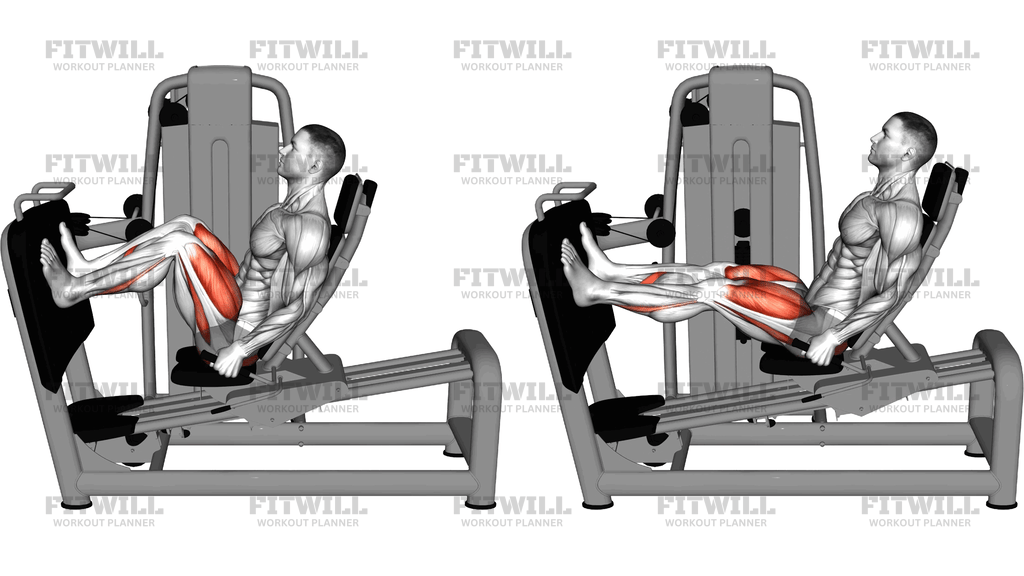
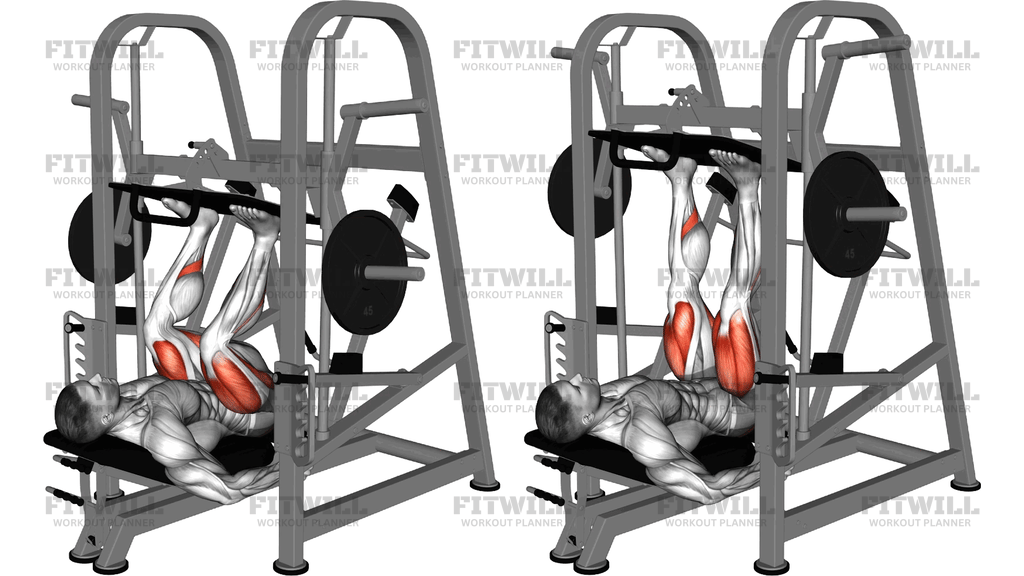
The Lever Vertical Leg Press is a plate-loaded machine exercise where you lie flat on your back on a bench and press the weighted platform straight up above your hips. Unlike the more common 45-degree leg press, the vertical version moves the sled directly upward, which means your legs work against resistance along a pure vertical path. The machine's lever arms and guided rails handle the stabilization, so all you have to think about is driving the platform and controlling it back down.
This movement primarily builds the quadriceps, the large muscles on the front of the thighs, with the glutes and hamstrings contributing significantly as the knees come deep toward the chest. The calves assist at the top of the press when the ankles extend. Because the platform sits directly overhead, the range of motion tends to feel deeper than on an angled press, and many lifters notice the glutes and hamstrings lighting up more when their knees travel close to the torso.
The Vertical Leg Press suits lifters who want heavy leg work without loading the spine with a barbell. Beginners appreciate the guided path and the back support, while more experienced trainees use it to accumulate quad volume after squats or as a standalone pressing movement on days when free-weight squatting is not an option. The fixed leverage also makes it easy to push close to fatigue without a spotter, since you can simply let the arms of the machine catch the load.
Setup matters more than it might seem on this machine. The distance between your seat and the platform determines both your depth and your hip position, so take a moment to adjust before adding weight. Your head, upper back, and hips should stay firmly on the bench throughout, and your feet belong flat on the platform rather than letting the heels lift. If the seat is too close, your lower back will round off the pad at the bottom; if it is too far, you will struggle to reach full depth.
To execute the press well, lower the platform until your knees approach your chest while keeping your hips planted, then drive back up without slamming the knees into lockout. Exhale on the push, inhale on the way down, and keep your hands gripping the machine's handles so the upper body stays anchored. A controlled tempo, especially on the lowering phase, is what turns this from a knee-joint gamble into a genuine muscle builder.
The most common mistakes on this exact machine are bouncing the knees off the chest, pushing so heavy that the hips curl off the bench, and locking out hard at the top. All three shift stress away from the thighs and onto the knees and lower back. Keep the load honest, keep the hips down, and treat the vertical path as the feature it is: a deep, supported press that rewards patience over ego.
[ Workout Log & Planner ]
Put your next workout in Fitwill
Keep your plan and training log ready when you are.


Instructions
- Sit onto the machine's bench and slide your hips back until your lower back and shoulders are fully supported against the pad, then grip the side handles on the frame.
- Place both feet flat on the platform about shoulder-width apart, with your heels centered on the plate surface and your toes pointing slightly outward if that feels natural on your knees.
- Check your knee angle before pressing: at the start your knees should be bent with the sled lowered, and if they would jam into your chest, reposition the seat or foot platform spacing first.
- Press the platform up to extend your legs and disengage the machine's safety stopper, then hold the top briefly with your knees just short of locked.
- Brace your abdominal muscles and press your lower back into the bench so your hips cannot curl upward during the set.
- Inhale and lower the platform under control until your knees travel down toward your chest, keeping your heels flat and your hips glued to the bench.
- Exhale and drive the platform back up by pushing through your whole foot, keeping the sled on its vertical rails without letting it drift or twist.
- Stop the rep just before full knee lockout at the top and flow straight into the next repetition without bouncing at the bottom.
- After your final rep, re-engage the safety stopper with the sled in the lowered position before relaxing your legs and sliding off the bench.
- Add or remove plates on the machine's weight pegs only while the sled is fully secured on its stoppers.
Tips & Tricks
- If your tailbone lifts off the bench at the bottom, your stance is set too deep for your hip mobility — reduce the depth slightly before your lower back takes over the load.
- Pushing through the balls of the feet is a frequent fault on the vertical press; it shifts work to the calves and strains the knees, so cue yourself to drive through the entire foot with the heel planted.
- Bouncing the sled off your chest at the bottom uses tendon recoil instead of muscle, and on this machine the bounce happens right at your ribcage — pause for a beat at the deepest point instead.
- Because the platform is directly overhead, the load presses down on your skeleton when you are not pushing, so always leave the sled engaged on the stoppers when resting between sets.
- Positioning your feet higher on the platform increases glute and hamstring involvement, while a lower foot placement biases the quadriceps — choose based on what you are training that day.
- Do not chase depth by rounding your lower back off the pad; a deep press with a flat back beats a deeper press with a curled pelvis every time.
- If your knees cave inward as fatigue builds, consciously spread your knees slightly outward over your pinky toes for the rest of the set.
- Tempo matters more here than on angled presses because the vertical path removes momentum from the equation — aim for a two-count down and an aggressive but controlled press up.
- Start lighter than you would on a 45-degree press; the vertical angle feels harder at the same weight because the resistance is applied straight down onto your legs.
Frequently Asked Questions
Which muscles does the Lever Vertical Leg Press work?
The quadriceps on the front of the thighs do most of the pressing, with the glutes and hamstrings contributing heavily as the knees travel toward the chest. The calves assist as the legs reach extension at the top.
How is the Vertical Leg Press different from a 45-degree leg press?
The sled moves straight up instead of along an incline, so your legs press the weight directly against gravity and the range of motion feels deeper. Most lifters need less weight on the vertical version for the same effort.
Is the Lever Vertical Leg Press safe for beginners?
Yes, as long as the seat position is set correctly and the weight is kept moderate. The machine guides the sled along fixed rails, and the safety stoppers catch the load, so no spotter is required.
Why do my hips lift off the bench at the bottom of the press?
That happens when the load or the depth exceeds your hip and hamstring mobility, causing your pelvis to curl and your lower back to round. Reduce the weight or the depth so your hips stay pinned to the pad throughout.
Where should I place my feet on the platform?
A shoulder-width stance with feet centered on the platform works for most people. Placing the feet higher up the platform shifts more work to the glutes and hamstrings, while a lower placement emphasizes the quads.
Can I replace squats with the Lever Vertical Leg Press?
It is a solid substitute for building pressing strength in the legs when squatting is not an option, but it does not train the core and stabilizers the same way a free-weight squat does. Treat it as a complement or an alternative, not a complete replacement.
Should I lock my knees at the top of each rep?
No — stop just short of full lockout so the thighs stay under constant tension and the knee joint is not slammed into extension under load. Hard lockouts also encourage you to rest between reps instead of working.
How do I breathe during the Vertical Leg Press?
Inhale as you lower the platform toward your chest and exhale forcefully as you press back up. Holding your breath under a heavy vertical load raises pressure in the chest and makes reps feel far harder than they are.
How close should the sled come to my chest at the bottom?
Lower until your knees approach your ribcage or until your hips are about to lift, whichever comes first. That point marks your controllable range, and everything beyond it is borrowed from your lower back.
What should I do if the machine has no seat adjustment?
Adjust your foot placement on the platform instead: sliding your feet slightly higher on the plate gives you clearance for deeper knee travel without your hips curling off the bench.