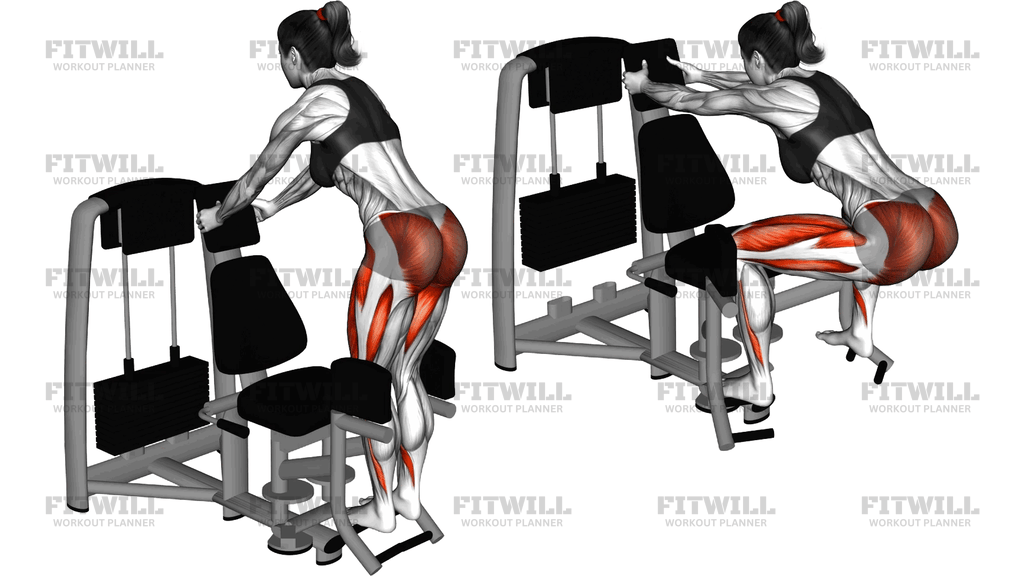
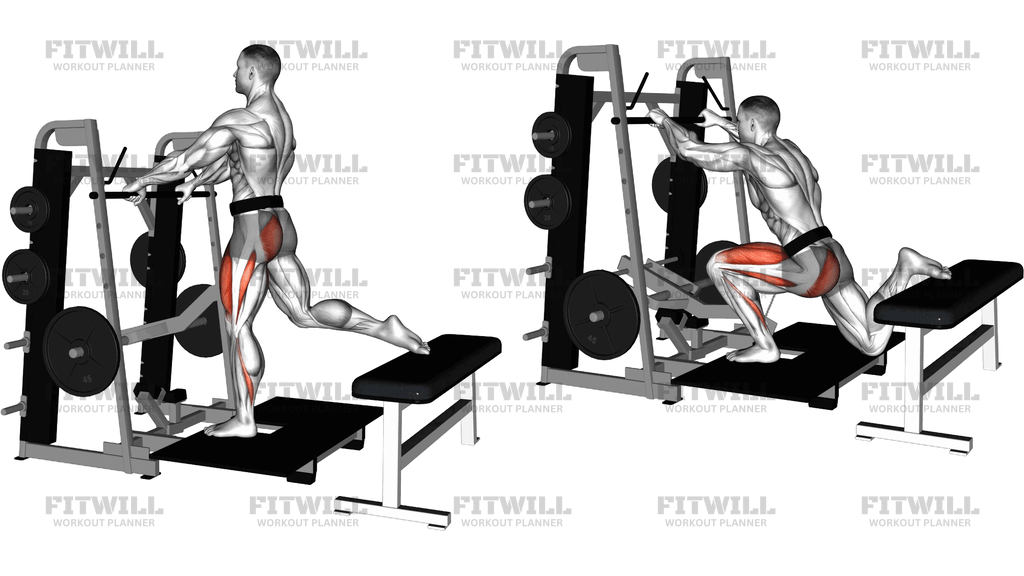
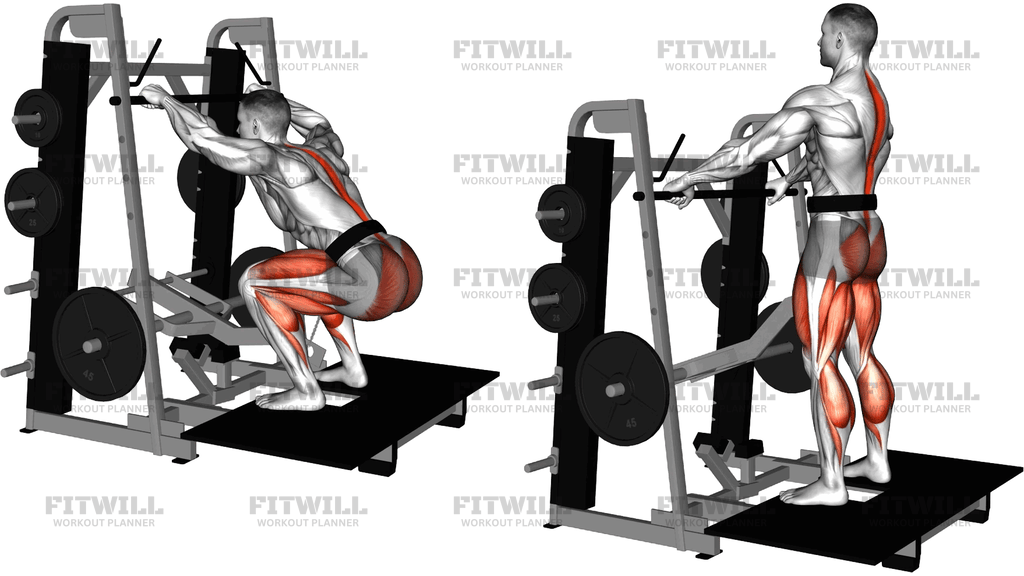
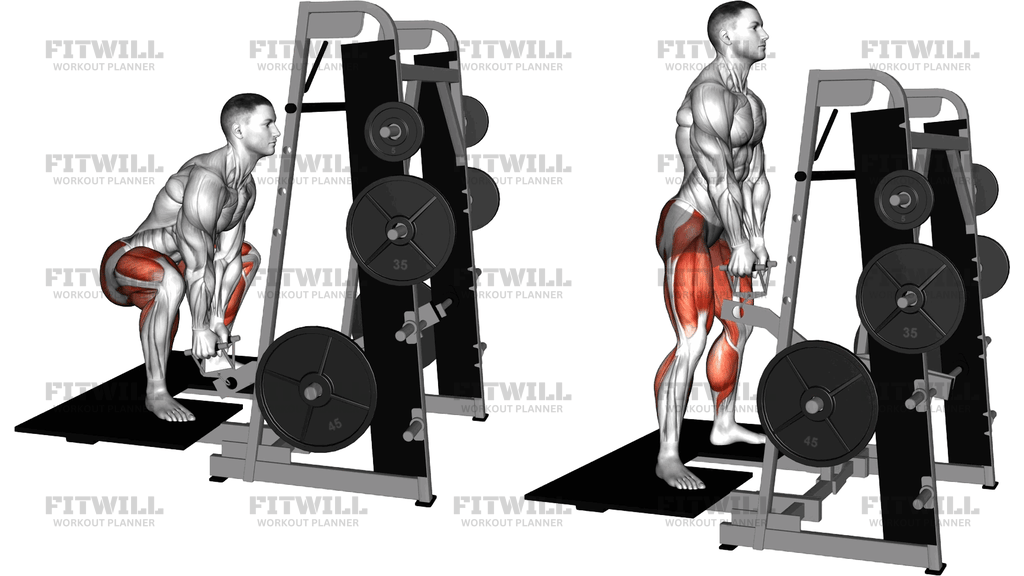
Lever Angled Leg Press
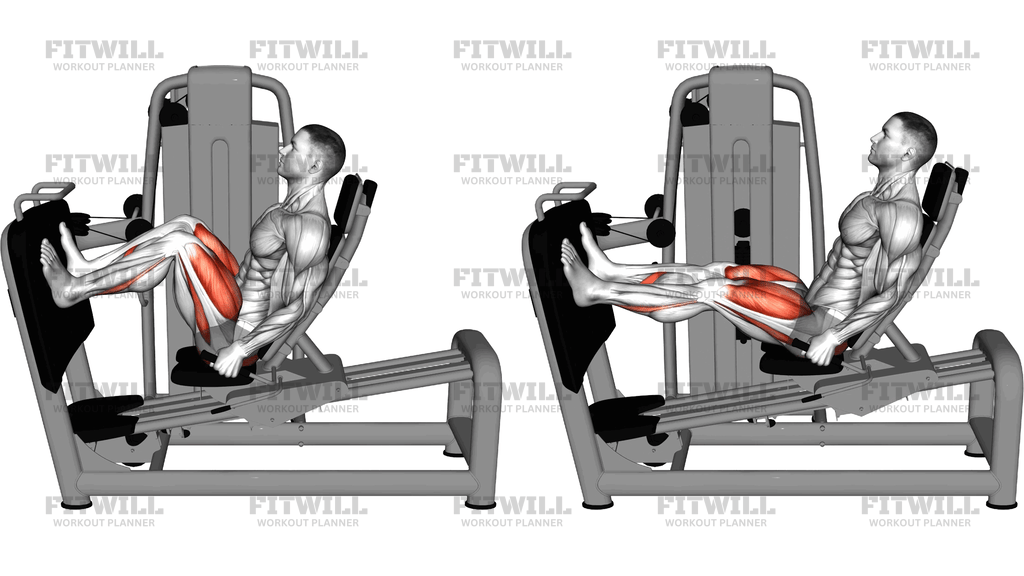
The Lever Angled Leg Press is a plate-loaded machine exercise performed from a reclined seat with the feet placed on a large platform set at an angle above the hips. You press the weighted platform away by extending the hips and knees, then lower it back down under control. Because the machine rides on a fixed lever arm, the resistance path stays consistent from rep to rep, which lets you focus entirely on driving with your legs rather than balancing a barbell.
This movement is a staple for building the quads, with strong contributions from the glutes and hamstrings, especially as you descend into the deeper part of each rep. Compared with a free-weight squat, the angled setup places you in a supported reclined position, so there is far less demand on the lower back and trunk. That makes it a practical choice for lifters who want serious leg volume without spinal loading, and for anyone returning from time away from training who needs a stable way to rebuild strength.
Setup details matter more than people expect. The position of your hips on the seat, the placement of your feet on the platform, and the depth of each descent all change which muscles do the work and how comfortable the movement feels on your knees and hips. A foot placed higher on the platform shifts more effort toward the glutes and hamstrings, while a lower placement biases the quads. Your knees should travel in line with your toes rather than collapsing inward as you press.
Execution is straightforward but rewards discipline. Press the platform away until your legs are nearly straight without locking the knees hard, then lower it back until your knees bend to roughly 90 degrees or slightly deeper if your mobility and control allow. Keep your lower back and hips in contact with the seat pad throughout — if your pelvis tucks under at the bottom, you have gone deeper than you can currently control.
The Lever Angled Leg Press fits well as a primary lower-body strength lift or as a high-volume accessory after squats or deadlifts. Typical programming runs 3 to 5 sets of 8 to 15 reps, though the fixed path of the lever arm makes it forgiving enough for higher-rep work near the end of a session. Add plates in modest increments, since the leverage can make the weight feel lighter than a comparable free-weight load.
Safety on this machine comes down to two habits: never place your hands under the moving platform, and make sure the safety stop or range limiter is set so the sled cannot descend into your body if you lose control. Press with the whole foot in contact with the platform, breathe out on the push, and reset your position on the seat between sets rather than grinding reps with a collapsed posture.
[ Workout Log & Planner ]
Put your next workout in Fitwill
Keep your plan and training log ready when you are.


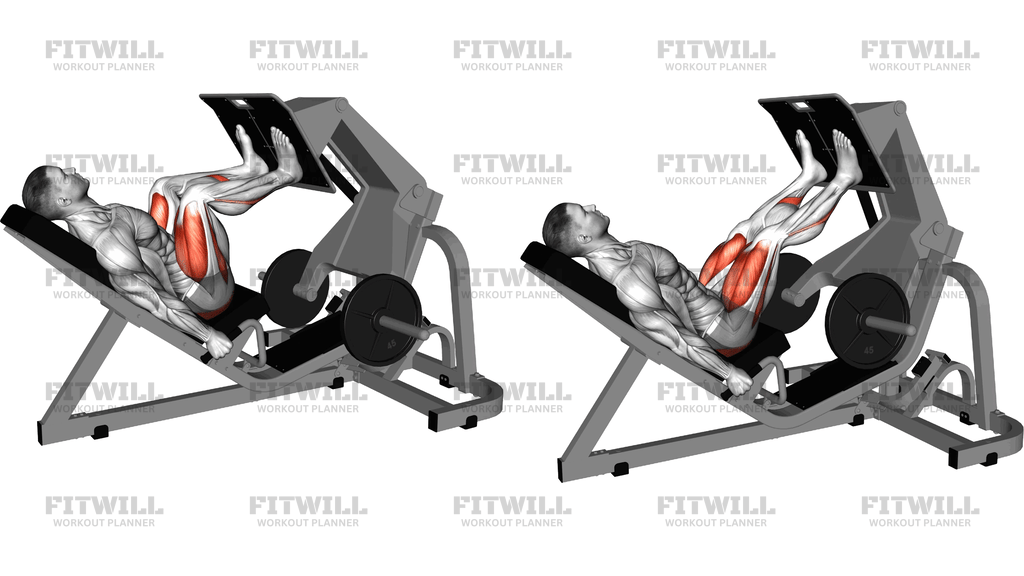
Instructions
- Sit on the leg press seat and place your back and hips firmly against the padded support, with your head resting back on the pad.
- Position your feet on the large platform about shoulder-width apart, heels flat, with your knees bent around 90 degrees at the start of each rep.
- Grip the side handles beside the seat so your upper body stays anchored and your hands stay clear of the moving sled at all times.
- Disengage the safety stop and brace your trunk lightly, keeping your ribs down and your lower back in contact with the pad.
- Press the platform away by driving through your heels and the middle of your feet, extending your hips and knees together until your legs are nearly straight.
- Stop just short of locking your knees so tension stays on the leg muscles rather than the joints.
- Lower the platform slowly by bending your knees and hips at the same rate, letting your knees track in line with your toes as they travel outward.
- Descend until your knees reach roughly 90 degrees — stop earlier if your hips begin to lift off the seat or your lower back rounds.
- Exhale as you press up and inhale as you lower the weight, keeping the rhythm steady through every rep.
- Complete your set, re-engage the safety stop before letting the sled settle, then adjust your seat or foot position as needed before the next set.
Tips & Tricks
- If your hips curl off the pad at the bottom of the rep, reduce the depth rather than forcing a deeper range — a tucked pelvis under load is the most common way this exercise irritates the lower back.
- Knees caving inward on the press usually means the stance is too narrow or you are pushing through the inside of your feet; widen your stance slightly and think about spreading the floor with your heels.
- Do not fully straighten and lock your knees at the top — this unloads the quads and sends the force into the joint, especially with heavy plates loaded.
- Bouncing the sled off the bottom turns the leg press into a momentum exercise; pause for a beat at the deepest point to keep the muscles doing the work.
- Placing your feet lower and closer together shifts the emphasis toward the quads, while a higher, wider stance pulls the glutes and hamstrings in — adjust deliberately instead of randomly.
- Because the lever arm reduces the stabilization demand, it is easy to load far more than you can control through the full range; progress in small plate jumps and keep the descent slow.
- Keep constant contact between your whole foot and the platform — lifting your heels or toes changes knee stress and usually signals the stance or depth is wrong for your mobility.
- Set the safety stop before your first rep, not after, so the sled has a hard limit if a rep stalls or your foot slips.
- If your lower back feels compressed rather than your legs worked, check that your head, shoulders, and hips are all resting back on the pad instead of sliding down the seat.
Frequently Asked Questions
Which muscles does the Lever Angled Leg Press work?
The quads are the primary movers, with the glutes and hamstrings contributing strongly as the knees and hips bend and extend. The adductors and calves assist, especially with different foot placements on the platform.
Is the Lever Angled Leg Press good for beginners?
Yes — the fixed lever path and supported back make it one of the safest ways to learn pressing mechanics and build leg strength. Start light, focus on controlled depth, and only add plates once your form is consistent.
How deep should I lower the platform on the Lever Angled Leg Press?
Lower until your knees reach about 90 degrees, or slightly deeper if you can keep your hips and lower back pressed into the seat. If your pelvis tucks under at the bottom, that depth is too much for now.
Should my feet be high or low on the leg press platform?
A lower placement emphasizes the quads, while a higher placement shifts more work to the glutes and hamstrings. Shoulder-width in the middle of the platform is a solid default before you start biasing specific areas.
Can I use the Lever Angled Leg Press instead of squats?
It can replace a large share of squat training volume, particularly if back loading is a concern, but it trains the trunk stabilizers far less. Many lifters use both, with the press as a secondary or high-volume movement.
Why do my knees hurt when pressing on the leg press machine?
Knee discomfort usually comes from locking out hard at the top, descending too deep with heels lifting, or letting the knees collapse inward. Keep the whole foot flat, track your knees over your toes, and stop just short of a full lockout.
How much weight should I load on the Lever Angled Leg Press?
The lever arm makes the load feel easier than a free-weight equivalent, so judge it by performance, not comparison to your squat. Choose a weight you can press for 8 to 15 controlled reps without your hips lifting off the seat.
What can I substitute for the Lever Angled Leg Press at home?
Barbell or dumbbell squats, goblet squats, lunges, and split squats all train similar muscles without the machine. Resistance-band or sled-style presses can also mimic the horizontal pushing pattern.
Where should my hands be during the Lever Angled Leg Press?
Hold the fixed handles beside the seat for the entire set. Never reach toward or under the moving sled — if a rep fails, let the safety stop catch the weight.
Should I lock my knees at the top of each rep?
No — extend to nearly straight but keep a soft bend in the knees. Full lockout under heavy load transfers force into the joint and removes tension from the quads.