Front To Under Knee Clap
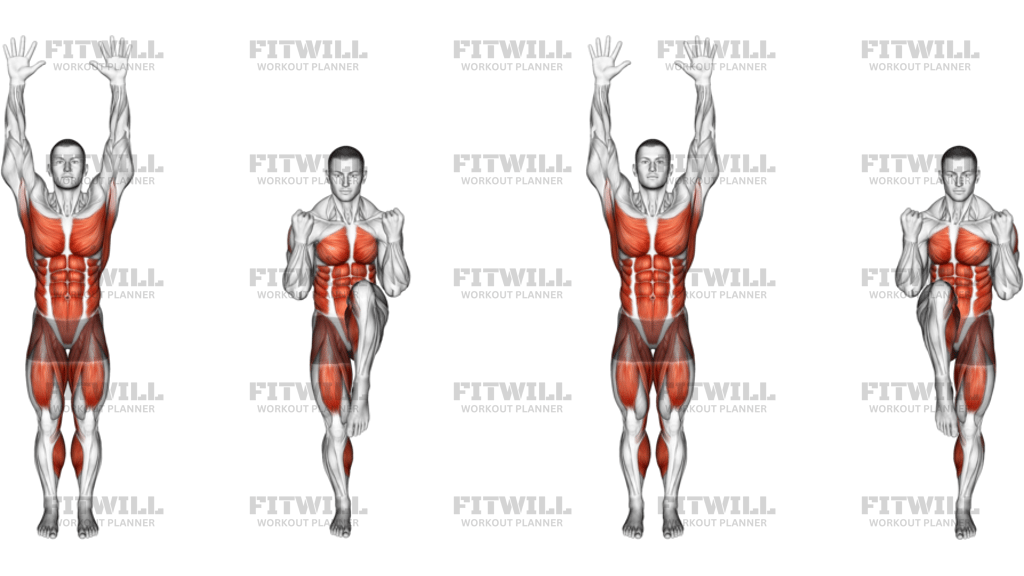
The Front To Under Knee Clap is an explosive bodyweight jump where your hands perform two claps in a single flight: one in front of your body as you rise, and a second one under your knees after you tuck your legs toward your chest. It takes the basic tuck jump and adds a timing and coordination layer, forcing your arms and legs to move through a precise sequence while you're airborne. You need no equipment and very little space, only enough ceiling height to jump and tuck safely.
This drill is best suited for athletes who need reactive leg power and fast hip flexion — basketball, volleyball, soccer, sprinting, and martial arts all transfer directly. It also works well in general conditioning circuits because it elevates the heart rate quickly, and in warm-ups as a way to wake up the nervous system before heavier lower-body lifting. Because every rep demands a crisp, quiet landing, it doubles as practice in sound landing mechanics, which is one of the most transferable skills a jumper can own.
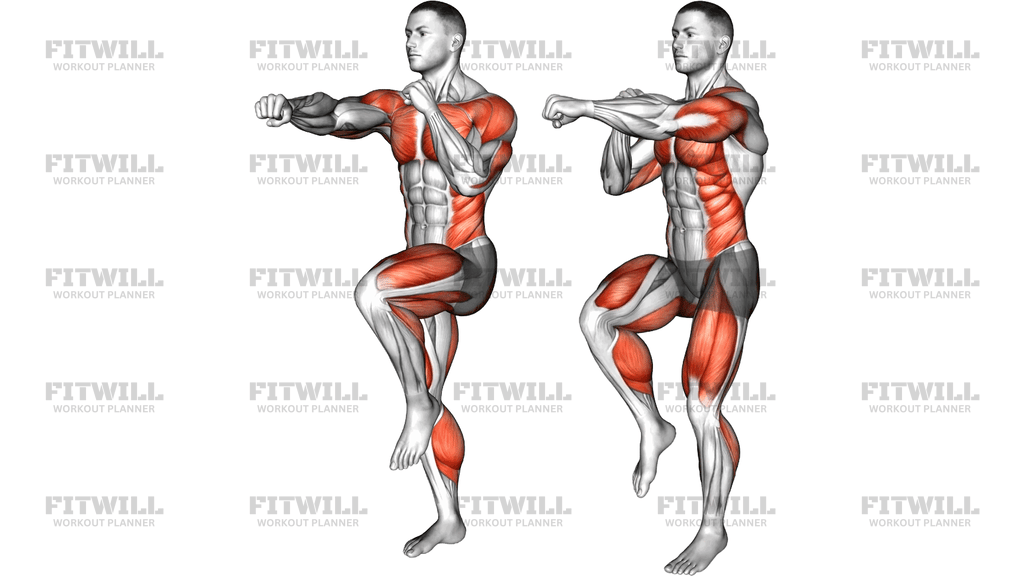
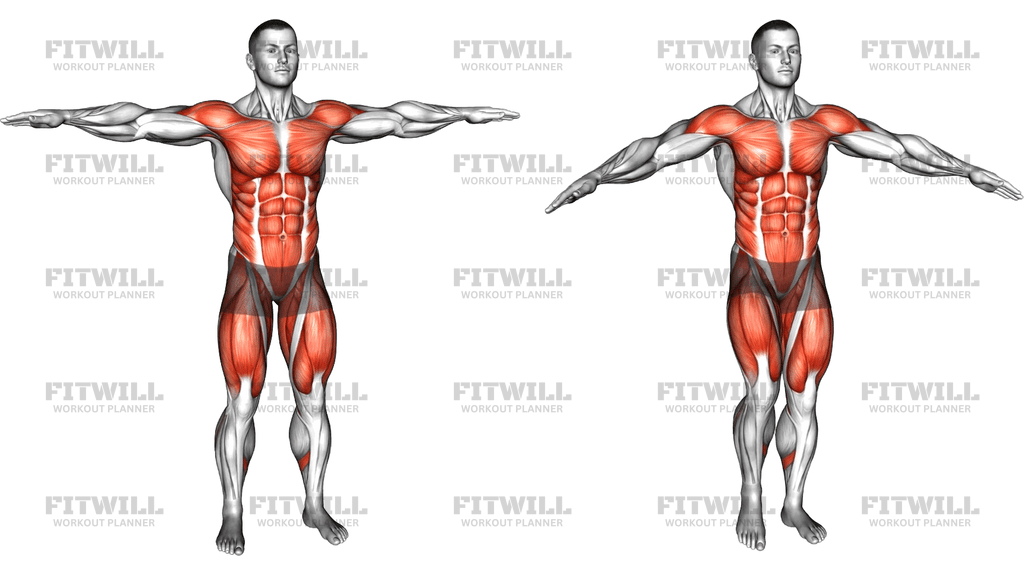
Physically, the jump itself is driven by the quads, glutes, and calves, while the knee tuck pulls in the hip flexors and the abs working hard to lift your legs mid-flight. The two claps mean your arms travel a long path — forward and down behind your thighs — so your shoulders and chest get a dynamic, speed-oriented demand rather than a slow strength one. The real training effect, though, comes from the timing: rushing one clap usually costs you the other.
Setup is simple but matters. Stand tall with feet about hip-width apart, weight spread across the mid-foot, and arms relaxed at your sides. A small, quick dip before the jump loads the legs, but the dip should be shallow — sinking too deep turns this into a slow squat jump and robs you of the snap you need to get both claps in.
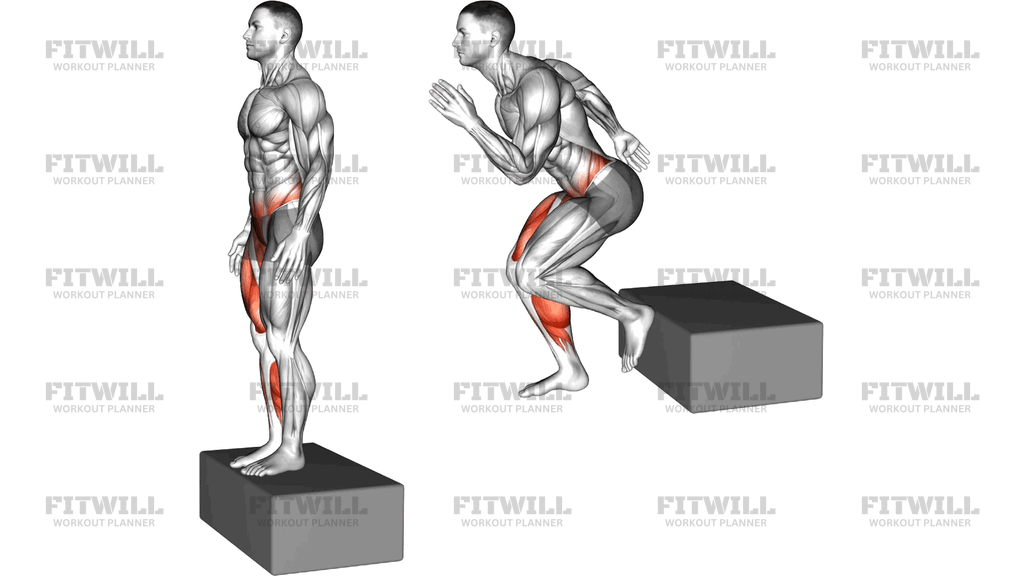
To execute well, jump straight up rather than forward. As you leave the floor, sweep your hands together in front of your thighs or hips for the first clap, then immediately pull your knees up and swing your arms down and behind your legs to slap hands beneath your knees. Release quickly, drop your legs, and land on the balls of your feet with knees bent and hips sitting back, absorbing the landing quietly.
Treat this as a quality-over-quantity movement. Fatigue destroys the timing, and sloppy timing usually means a lazy tuck or a hard, noisy landing. Keep sets short, rest between them, and use a forgiving surface such as a gym floor or grass rather than bare concrete, especially when you're first learning the clap sequence.
Fitwill
Log Workouts, Track Progress & Build Strength.
Achieve more with Fitwill: explore over 9600 exercises with images and videos, access built-in and custom workouts, perfect for both gym and home sessions, and see real results.
Start your journey. Download today!




Instructions
- Stand tall with your feet hip-width apart, arms hanging relaxed at your sides, and your gaze on a fixed point ahead of you.
- Brace your core lightly and shift your weight onto the mid-foot with a slight bend in the knees, ready to move.
- Take a quick, shallow dip by pushing your hips back and bending your knees a few inches — no deeper.
- Explode straight up, driving through the balls of your feet and extending your hips, knees, and ankles fully.
- As you rise, bring both hands together in front of your thighs or hips for the first clap.
- Immediately pull your knees up toward your chest and swing your hands down and behind your legs to clap under your knees.
- Release your hands fast, lower your legs, and get your feet under your hips before you descend too far.
- Exhale as you jump, then land on the balls of your feet with knees bent and hips back, making the landing as quiet as possible.
- Inhale as you stand up tall from the landing, reset your posture, and take a beat before starting the next rep.
Tips & Tricks
- If you can only get the front clap, your tuck is too slow — focus on snapping the knees up the instant your feet leave the floor rather than at the top of the jump.
- Jumping forward is the most common fault with this drill; pick a line on the floor and try to land on it to keep the jump vertical.
- Don't chase the under-knee clap by rounding your lower back — the knees should come to you through hip and knee flexion, not by collapsing your torso forward.
- A deep pre-jump dip kills the timing. Keep the dip to a few inches so the jump stays fast and sharp.
- If your landings are loud, your knees and hips are stiff on impact; cue yourself to land like you'd land from jumping off a curb, with joints soft and hips back.
- Learn the pattern in stages: master the front clap with a straight-leg jump, then add the tuck, then add the under-knee clap.
- Keep reps low — three to six per set. Once the claps get late or the tuck drops, the set is over; this is a speed drill, not an endurance one.
- Give your arms a full, aggressive swing on the descent into the dip; arm drive adds real height and buys time for the second clap.
- Avoid doing this on concrete or when your calves and Achilles are already sore from jumping volume the day before.
Frequently Asked Questions
What muscles does the Front To Under Knee Clap work?
The jump is powered mainly by the quads, glutes, and calves, while the knee tuck brings the hip flexors and abs in strongly. The shoulders and chest work dynamically as the arms travel through both claps.
Where exactly do the two claps happen during the Front To Under Knee Clap?
The first clap happens in front of your thighs or hips as you rise into the jump, and the second happens beneath your knees after you tuck your legs toward your chest at the top of the flight.
I can clap in front but can't get my hands under my knees. What should I change?
Your knee tuck is likely starting too late. Snap the knees up the moment your feet leave the floor, and swing your arms down and behind your legs in one continuous motion instead of pausing after the front clap.
Is the Front To Under Knee Clap suitable for beginners?
Yes, as long as you build up to it. Start with plain tuck jumps or a straight jump with only the front clap, and only add the under-knee clap once you land quietly and consistently.
How is this different from a regular tuck jump?
A tuck jump only asks for height and knee lift, while the Front To Under Knee Clap adds a double-clap arm sequence that demands much tighter timing between your upper and lower body.
How many reps should I do?
Keep sets in the three-to-six rep range with full rest between sets. Stop the set as soon as the claps get late or your landings get loud, because quality timing is the whole point of the drill.
What surface is best for the Front To Under Knee Clap?
A sprung gym floor, rubber flooring, or grass is ideal. Concrete works in a pinch, but the repeated landings are kinder to your ankles, knees, and shins on a more forgiving surface.
Why do I keep landing with stiff legs?
Stiff landings usually mean you're focused entirely on the claps and forgetting the descent. Cue yourself to drop your feet under your hips early and land on the balls of your feet with knees bent and hips back.
Can I use the Front To Under Knee Clap in a warm-up?
Yes, a few easy reps make a great nervous-system primer before sprinting or lower-body lifting. Keep the intensity around seventy percent and save the all-out jumps for your main plyometric work.