Seated High Row With A Towel On A Padded Stool
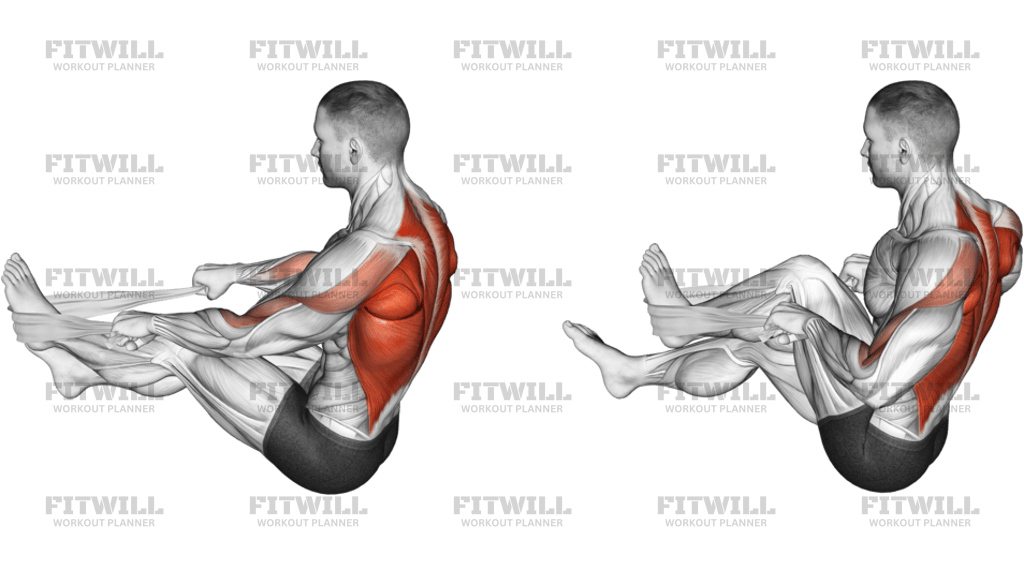
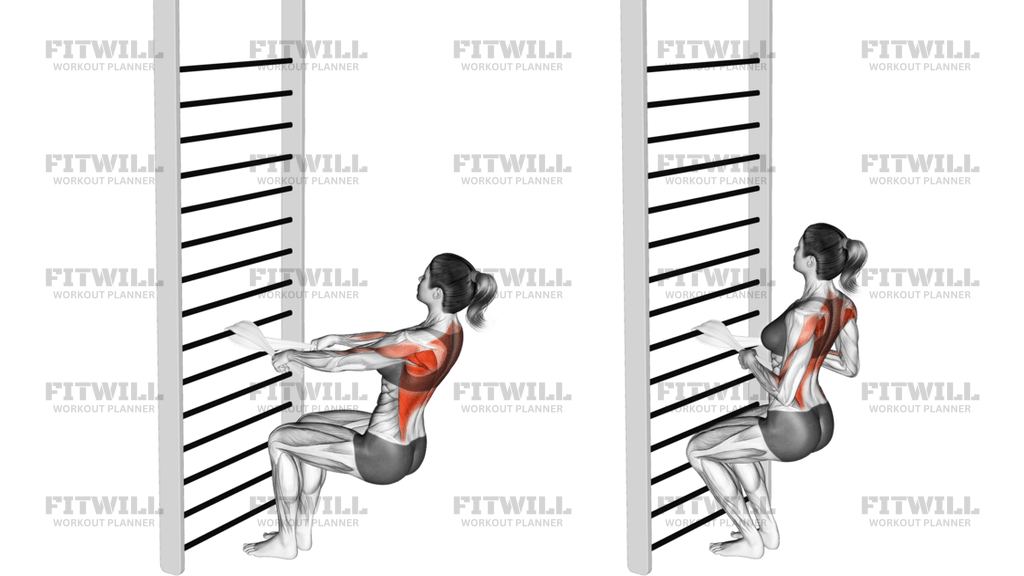
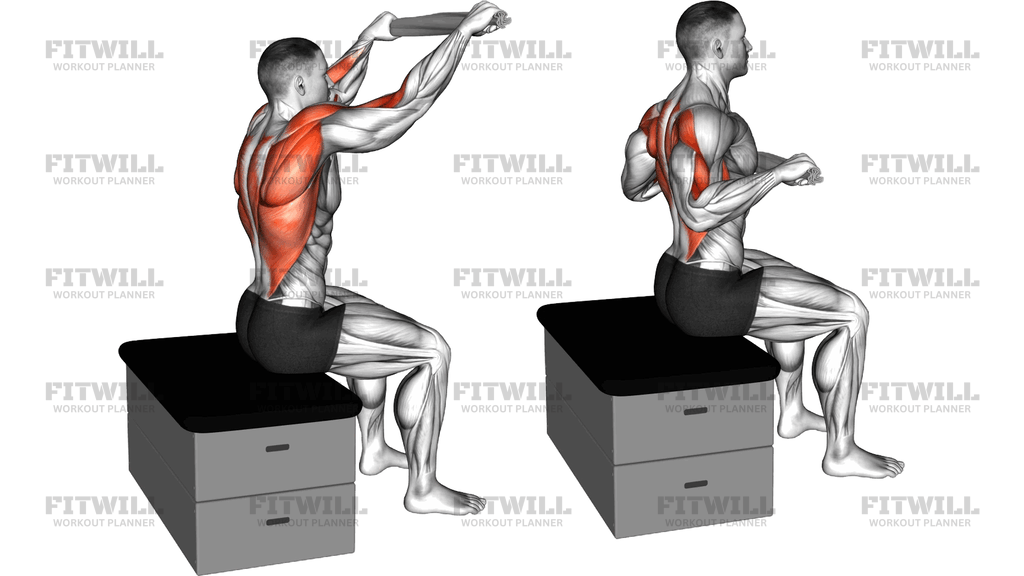
The Seated High Row With A Towel On A Padded Stool is a self-resisted pulling exercise that turns an ordinary towel into your training tool. You sit on a padded stool with your feet planted, hold the towel by both ends above shoulder height, and pull it down toward your upper chest while keeping the towel stretched taut between your hands. Because you create the resistance yourself by actively pulling the towel apart, you control exactly how hard the muscles work on every rep.
This movement is a solid option when you have no cable machine, bands, or dumbbells available. It suits home trainees, people who travel, and lifters who want extra pulling volume without loading the spine. It is also useful as a teaching exercise: the slow, deliberate path from arms overhead to elbows drawn back makes it easier to feel the shoulder blades retract, which many people struggle to do on machine rows.
The primary work comes from the lats and upper back, with the rhomboids, rear shoulders, and middle traps driving the shoulder blades together. The biceps and forearms assist the pull and handle the sustained gripping demand, and your core works quietly to keep your torso upright as you row. Because the tension is generated through your own effort rather than a weight stack, the load stays honest only as long as you stay focused.
Setup matters here. Sitting on a stool or box puts you in an upright torso position with no backrest to lean against, so your posture does part of the work. The towel length and how tightly you stretch it determine the resistance — a shorter grip or harder pull makes the row noticeably tougher. Start seated with feet flat and knees around hip width, arms extended up and slightly forward, and the towel already under tension before the first rep begins.
To execute well, think of driving your elbows down and out toward your sides until your hands arrive near chest height and your shoulder blades are pulled together. Keep pressing your hands away from each other into the towel the whole time so the resistance never disappears. Return the arms overhead slowly under the same tension rather than letting the towel go slack.
The main safety point is control. Since you provide the resistance, rushing turns the set into empty arm swings. Keep the pull smooth, avoid shrugging your shoulders toward your ears, and stop if you feel any pinching at the front of the shoulder as your arms travel overhead.
[ Workout Log & Planner ]
Put your next workout in Fitwill
Keep your plan and training log ready when you are.


Instructions
- Sit on a padded stool or sturdy box with your feet flat on the floor, knees about hip width apart, and your torso upright.
- Grip a towel firmly at both ends and raise both arms up and slightly forward so the towel sits above head height.
- Pull your hands away from each other to stretch the towel taut — this tension is your resistance for the set.
- Brace your core and keep your chest tall; do not arch backward or round your upper back before you start the pull.
- Row by driving your elbows down and out to the sides, letting the towel travel from overhead down toward your upper chest.
- Finish with your hands around chest or lower-face height, elbows behind your torso line, and your shoulder blades squeezed together.
- Hold the squeezed position for a beat while continuing to press your hands apart into the towel.
- Slowly raise your arms back up and forward to the overhead start, keeping the towel stretched the entire way.
- Exhale as you pull down and inhale as you return your arms overhead.
- Complete your set, then shake out your forearms and regrip the towel before the next set to restore a fresh, secure hold.
Tips & Tricks
- The most common mistake is letting the towel go slack at the top of the rep, which removes all resistance — actively press your hands apart before every pull begins.
- If your shoulders creep up toward your ears during the pull, drop the imaginary weight by relaxing the pull slightly and think about pulling with your elbows, not your hands.
- Resist the urge to lean your torso back as the towel comes down; with no backrest on the stool, staying upright is what keeps the work on your upper back instead of momentum.
- Shorten your grip on the towel if the movement feels too easy — a tauter, more compressed towel raises the effort without any extra equipment.
- If you only feel your biceps, slow the tempo down and focus on the shoulder blades sliding toward each other; the arms should just connect the towel to your back.
- Keep a small bend in the elbows at the overhead start rather than locking the arms straight, which protects the shoulder joint as the towel travels up.
- Because your forearms and grip work isometrically the whole set, expect them to fatigue first — regrip or wrap the towel around your hands if your hold starts slipping.
- If you feel pinching at the front of the shoulder when the arms go overhead, bring the start position slightly more forward instead of directly above your head.
- Pair this with a band or cable row when available and use it as a finisher, since self-resisted tension is hard to measure precisely set to set.
Frequently Asked Questions
What muscles does the Seated High Row With A Towel On A Padded Stool work?
The lats and upper back do the main work, with the rhomboids, rear shoulders, and middle traps pulling the shoulder blades together. The biceps and forearms assist the pull and handle the constant gripping demand.
How does the resistance work if there is no weight involved?
You generate resistance by pulling the towel taut between your hands — one side fights the other as you row. The harder you press your hands apart and the shorter your grip, the more tension your back muscles face.
Is this exercise suitable for beginners?
Yes, it is a low-risk way to learn the rowing pattern because you self-select the load. Beginners should start with light towel tension and focus on feeling the shoulder blades retract before adding effort.
Why sit on a padded stool instead of standing?
The stool removes leg drive and backrest support, so your torso stays upright and the pulling muscles do the work. It also makes the setup repeatable from set to set.
Where should my elbows finish on each rep?
Drive them down and out until they pass just behind your torso line, with your hands near chest or lower-face height. Your shoulder blades should feel fully squeezed together at that point.
What is the most common mistake with this movement?
Letting the towel go slack, usually at the top of the rep or when fatigue sets in. If you cannot keep the towel stretched through the whole rep, reduce the tension and finish the set with honest resistance.
Can I substitute the towel with a resistance band or cable?
A band anchored in front of you or a seated cable row covers the same pattern with adjustable external load. The towel version is best when you have no equipment or want a self-paced, joint-friendly pull.
How many reps should I do?
Since the resistance is self-generated, use higher rep ranges — around 12 to 20 controlled reps per set. Stop the set when you can no longer keep the towel taut and the elbows driving back.
Is it safe for the shoulders if overhead positions bother me?
The arms do travel overhead at the start, so if that range causes pinching, angle the start position forward or limit how high the towel rises. Move within a pain-free arc and stop if discomfort persists.