Bridge Alternate Leg Lift
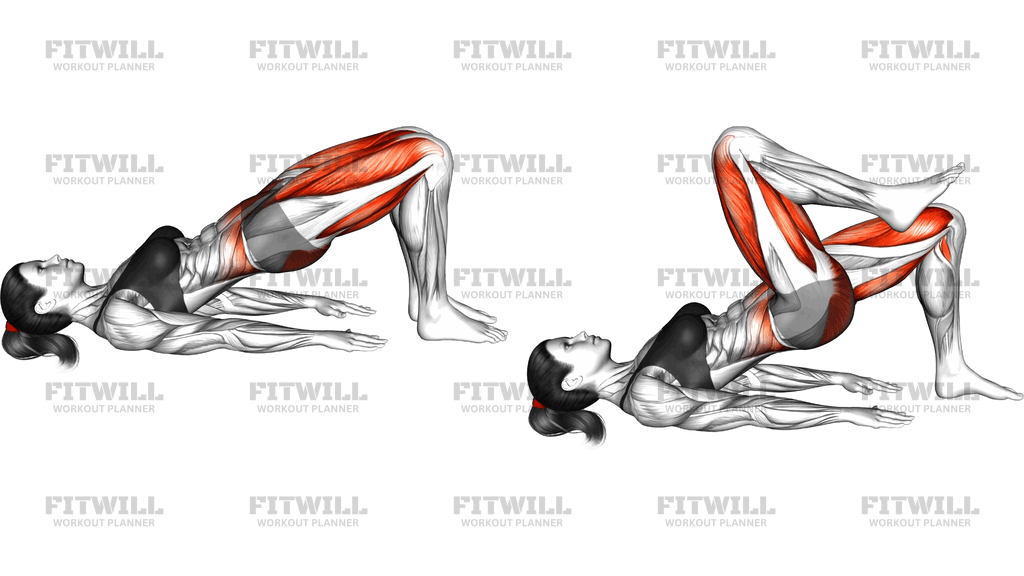
The Bridge Alternate Leg Lift is a bodyweight floor exercise that combines a standard glute bridge with single-leg knee lifts. You start by lying on your back with knees bent and feet flat, drive your hips up into a bridge, and then, while holding that elevated hip position, draw one knee in toward your chest before returning it to the floor. You then repeat the lift with the opposite leg, alternating sides while your hips stay raised. It looks simple, but the moment one foot leaves the ground, the demand on your glutes, hamstrings, and trunk stabilizers increases sharply.
This movement is especially useful for people who have mastered the basic glute bridge and want more challenge without adding equipment or load. Because you are asking the pelvis to stay level while one leg is moving, it trains anti-rotation and anti-lateral-flexion control through the core, which carries over to walking, running, climbing stairs, and single-leg strength work like lunges and step-ups. It is a common fixture in glute-focused sessions, warm-up routines, Pilates-style mat work, and lower back rehabilitation programs where controlled hip extension matters.
The primary muscles working are the glutes, particularly the gluteus maximus, which holds the hips in extension the entire time. The hamstrings assist with hip extension, while the muscles of the lower back and deep core work hard to keep the pelvis from tilting or rotating each time a foot lifts. The hip flexors of the moving leg drive the knee pull toward the chest, and they also work eccentrically as that foot returns to the floor.
Setup matters more here than in a standard bridge. Your foot position determines how much you feel in the glutes versus the hamstrings, and your starting hip height determines how stable you will be when one leg comes off the floor. Set your feet about hip-width apart, close enough that you can touch your heels with your fingertips when your arms rest at your sides. Squeeze the glutes to lift, rather than arching the lower back into the lift, and aim for a straight line from shoulders to knees at the top.
Execution should be slow and deliberate. Lift one knee toward your chest without letting the opposite hip drop or the whole body sway, set the foot back down softly, and only then switch sides. Breathing stays steady: exhale as you lift the knee, inhale as you return it. If your hips wobble or drop between reps, that is a sign to slow down or hold the bridge for shorter intervals before progressing.
A few practical points will keep this exercise productive. Keep your ribs from flaring and your lower back from over-arching by maintaining tension in the glutes and abs throughout. Stop the set when you can no longer keep the pelvis level, not when your glutes simply feel tired. Those with acute lower back discomfort should keep the range of the knee lift smaller or regress to a standard bridge with both feet planted until control improves.
[ Workout Log & Planner ]
Put your next workout in Fitwill
Keep your plan and training log ready when you are.


Instructions
- Lie on your back on an exercise mat with your knees bent and feet flat on the floor, hip-width apart, heels roughly a hand's distance from your glutes.
- Rest your arms at your sides with palms facing down, so your fingertips can lightly brush your heels; this position helps you gauge foot placement.
- Brace your abdominals gently and squeeze your glutes to lift your hips until your body forms a straight line from shoulders to knees.
- Hold this bridge position and keep your weight evenly spread across both shoulders and the planted foot.
- Exhale and lift one foot off the floor, drawing that knee in toward your chest until the shin is roughly parallel to the floor.
- Pause briefly at the top of the knee lift without letting the opposite hip drop or your torso rotate.
- Inhale and lower the foot back to the floor with control, keeping the hips elevated the entire time.
- Repeat the knee lift with the opposite leg to complete one full repetition.
- Continue alternating legs for your target number of reps, then lower your hips back to the mat and rest before the next set.
Tips & Tricks
- If your hips sag between knee lifts, you are likely losing glute tension at the top; re-squeeze the glutes on the working side before each lift instead of relying on your lower back to hold the bridge.
- Avoid pulling the knee so far in that your pelvis tilts backward and your hips drop; stop the knee lift at the point where your torso and pelvis stay still.
- Watch for the common mistake of pushing through the toes when raising into the bridge, which shifts work to the quads; drive through the heels to keep the emphasis on the glutes and hamstrings.
- Keep both arms pressed lightly into the floor for extra stability, but do not use them to push your hips higher than your glutes can hold.
- If you feel the movement in your lower back instead of your glutes, reduce the height of your bridge slightly; a modestly lower bridge with glute tension beats a tall arch.
- Alternate which leg lifts first each set so neither side always gets the freshest repetition.
- Slow the lowering phase of each knee lift down to a two-count; the return is where most people lose pelvic control.
- If balancing the bridge is too hard, regress to a shoulder-tap variation: hold the bridge and simply lift one heel an inch off the floor while keeping the foot close to the ground.
- Place the mat on a non-slip surface, because your shoulder blades and feet anchor the whole exercise and sliding feet collapse the bridge quickly.
Frequently Asked Questions
What muscles does the Bridge Alternate Leg Lift work?
The glutes and hamstrings do the main work of holding hip extension, while the deep core and lower back stabilize the pelvis as each knee lifts. The hip flexors of the moving leg power the knee pull toward the chest.
How is the Bridge Alternate Leg Lift different from a regular glute bridge?
In a regular glute bridge both feet stay planted, so the pelvis is easy to keep level. In the Bridge Alternate Leg Lift you hold the bridge while lifting one knee at a time, which removes a base of support and forces the glutes and core to work much harder to prevent the hips from dropping or rotating.
Is the Bridge Alternate Leg Lift suitable for beginners?
Yes, provided you can already hold a solid two-leg glute bridge for 20 to 30 seconds. Beginners can shorten the knee lift range or lift one heel only slightly off the floor until pelvic control improves.
Why do my hips drop when I lift one knee?
This usually means the glute on the planted-leg side is not staying engaged, or the knee is being pulled in faster than you can control. Re-squeeze the working-side glute before each lift and slow the movement down so the pelvis has time to stay level.
Should I feel this in my lower back?
You may feel mild effort in the lower back because the erector spinae help hold the bridge, but it should not be the dominant sensation. If your back takes over or strains, lower your bridge height slightly, brace the abs more, and focus on driving the hips up with the glutes rather than arching.
How far should I pull each knee toward my chest?
Pull the knee in only as far as you can keep the opposite hip from dropping and your torso from rotating. For most people that means the shin ends up roughly parallel to the floor; pulling higher often costs you pelvic position.
Can I do the Bridge Alternate Leg Lift without a mat?
Yes, on carpet or another firm, padded surface. A mat is recommended on hard floors because your shoulder blades, spine, and bare feet bear your weight throughout the exercise.
What can I substitute if the exercise is too difficult?
A standard glute bridge with both feet planted is the best regression. An intermediate option is a bridge with heel raises, lifting one heel just off the floor while keeping the foot close to the ground.
How many reps and sets should I do?
Two to three sets of 8 to 12 alternating lifts per side works well for strength and control. Stop the set when your pelvis can no longer stay level, since sloppy reps defeat the purpose of the exercise.
Is it safe to do this exercise every day?
Because it is a low-load bodyweight movement, most people can perform it frequently, even as part of a warm-up. If your lower back or hips feel persistently sore afterward, reduce frequency or volume and rebuild with the standard bridge.