Half Lotus Pulse
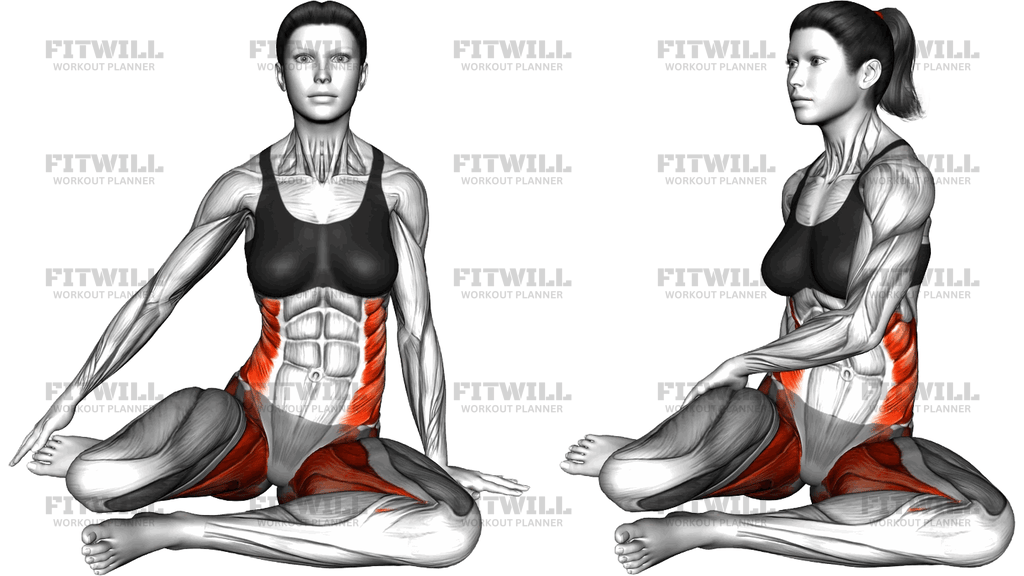
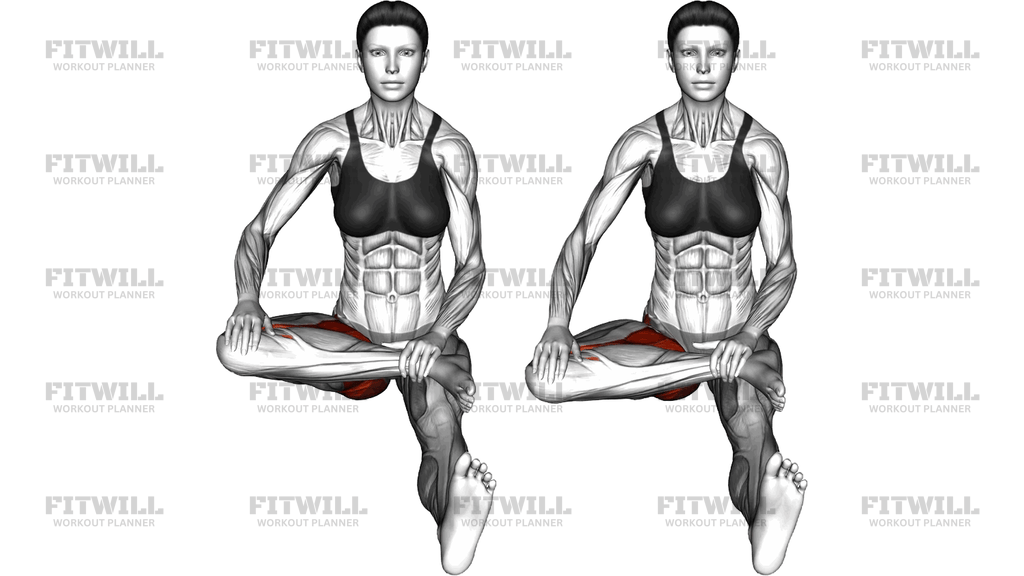
Half Lotus Pulse is a seated hip-opening stretch where you rest one ankle across the opposite thigh in a figure-four position, then apply small, rhythmic pulses of pressure to the raised knee with your hand. Instead of holding a static stretch, the gentle pulsing action rhythmically lengthens and relaxes the muscles along the outside of the hip, making it a useful way to ease into deeper mobility work without forcing the joint.
This movement primarily targets the outer hip muscles, including the gluteus medius and the deep rotators beneath it, along with the glutes themselves. These areas commonly become tight from long hours of sitting, running, cycling, or any activity with a repetitive forward-and-back leg pattern. People with stiff hips from desk work, lifters who want better squat depth, and anyone preparing for activities that demand hip rotation will find this stretch especially practical.
The setup matters more than it looks. Sitting tall on the floor with one knee bent in front of you and the opposite ankle crossed over that thigh places the hip in external rotation with the knee flexed. Your hand rests on the raised knee and provides the light downward-and-outward pulse, while the other hand can support the ankle or foot to keep the lower leg stable. If your torso leans or your lower back rounds, the stretch leaks into the spine instead of staying in the hip, so an upright posture is worth protecting throughout.
To perform it well, keep the pulses small and rhythmic rather than sharp. Think of pressing the knee a little further toward the floor on each pulse, then letting it ease back an inch or two. Exhale as you press and let the breath settle your shoulders and jaw. The sensation should sit deep in the outer hip and buttock, never in the knee joint itself. If you feel pinching at the knee, back off the angle of the crossed ankle before you press further.
Half Lotus Pulse fits well at the end of a workout, after a run, or as part of a dedicated mobility session. It also works as a gentler alternative to aggressive hip stretches because the pulsing gives the nervous system repeated, low-intensity exposure to the end range. Two to three rounds of ten to fifteen pulses per side is a typical dose, and switching sides keeps the hips balanced.
As for safety, move within a range that feels like a stretch, not strain. Anyone recovering from a hip or knee injury, or with a history of joint replacements, should keep the range shallow and check with a qualified professional before adding pressure to this position. The pulse should always come from your hand and breath working together, never from bouncing the torso or forcing the knee down.
[ Workout Log & Planner ]
Put your next workout in Fitwill
Keep your plan and training log ready when you are.


Instructions
- Sit on the floor or an exercise mat with your legs extended, then bend your right knee and place your right foot flat on the floor in front of you.
- Cross your left ankle over the right thigh so the left shin rests horizontally above the bent right knee, foot flexed.
- Sit up tall on your sit bones, lengthen through the spine, and relax your shoulders away from your ears.
- Place your left hand on the top of the crossed left knee and hold the left ankle or foot with your right hand to keep the lower leg stable.
- Brace lightly through the core to keep your torso upright, avoiding any rounding in the lower back.
- Press the crossed knee gently down and slightly outward with your hand, feeling the stretch in the outer left hip and buttock.
- Release the pressure slightly, then repeat in small, controlled pulses, moving about an inch or two each time for 10-15 repetitions.
- Exhale as you press the knee down and inhale as you ease off, matching the pulse rhythm to your breath.
- After the final pulse, hold the deepest comfortable position for a slow 5-10 second breath, then uncross the leg, extend it, and reset before switching to the other side.
Tips & Tricks
- Flex the foot of the crossed ankle to engage the muscles around the knee and protect the joint while the hip does the stretching.
- If the knee floats high and you cannot feel the hip working, bring the crossed foot closer to your torso rather than pressing harder on the knee.
- A common mistake is rounding the lower back to chase the knee toward the floor; sit on the edge of a folded towel or cushion so your hips sit higher than your knees and the spine stays tall.
- Keep the pulses slow, roughly one per second. Fast bouncing triggers a protective contraction in the outer hip and defeats the purpose of the pulse.
- Watch the standing-side hip: it tends to tip backward as you press. Square both sit bones to the front so the stretch stays in the crossed hip.
- The sensation belongs deep in the buttock and outer hip. Any sharp feeling at the inner knee means the shin angle is too aggressive, so lower the crossed leg slightly.
- Pair this with a few slow hip circles afterward to integrate the new range before you stand up.
- If your hand tires from pressing, rest the forearm on the knee instead and let gentle bodyweight do the work.
Frequently Asked Questions
Which muscles does the Half Lotus Pulse stretch?
It mainly targets the outer hip, including the gluteus medius and the deep hip rotators, with supporting stretch through the glutes. The pulsing action rhythmically lengthens these muscles rather than holding them under one long static load.
Is the Half Lotus Pulse suitable for beginners with very tight hips?
Yes, and the pulse format actually helps because each press is brief and controlled. Beginners can keep the crossed ankle further from the torso and use lighter pressure until the hip gradually accepts more range.
Why does my knee, not my hip, feel the Half Lotus Pulse?
That usually means the shin is angled too flat or the ankle is being pressed too hard. Flex the foot, reduce the downward pressure, and slightly lower the crossed leg until the sensation moves back into the buttock and outer hip.
Should I hold the stretch or only pulse in the Half Lotus Pulse?
The pulses are the core of the exercise, but finishing with a short 5-10 second hold at your deepest comfortable point gives the tissues a final sustained stretch. Alternating pulse and hold also keeps the nervous system relaxed in the end range.
How many pulses should I do per side?
Ten to fifteen controlled pulses per side, repeated for two to three rounds, works well for most people. Spend more time on the side that feels tighter rather than forcing equal pressure on both hips.
Can I do the Half Lotus Pulse before a workout?
It works best as part of a warm-up when the pulses are kept light and brief, since it prepares the hips for squatting, lunging, and rotational movement. Save longer, deeper holds for after training when the muscles are warm.
What can I substitute if sitting on the floor is uncomfortable?
Sit on a low bench or the edge of a chair and perform the same figure-four crossing with the hand on the knee. The pulse mechanics stay identical, and elevating the hips often makes the upright torso easier to maintain.
Is it normal for one hip to move much better than the other in the Half Lotus Pulse?
Yes, side-to-side differences are common, especially for people who habitually cross the same leg or favor one side in sports. Work each side to its own comfortable range instead of matching depth to the looser hip.
Who should be cautious with the Half Lotus Pulse?
Anyone with a recent hip or knee injury, a hip replacement, or significant knee pain in the crossed position should keep the range shallow and consult a qualified professional first. The pressure should always feel like a stretch in the hip, never a strain in the knee joint.