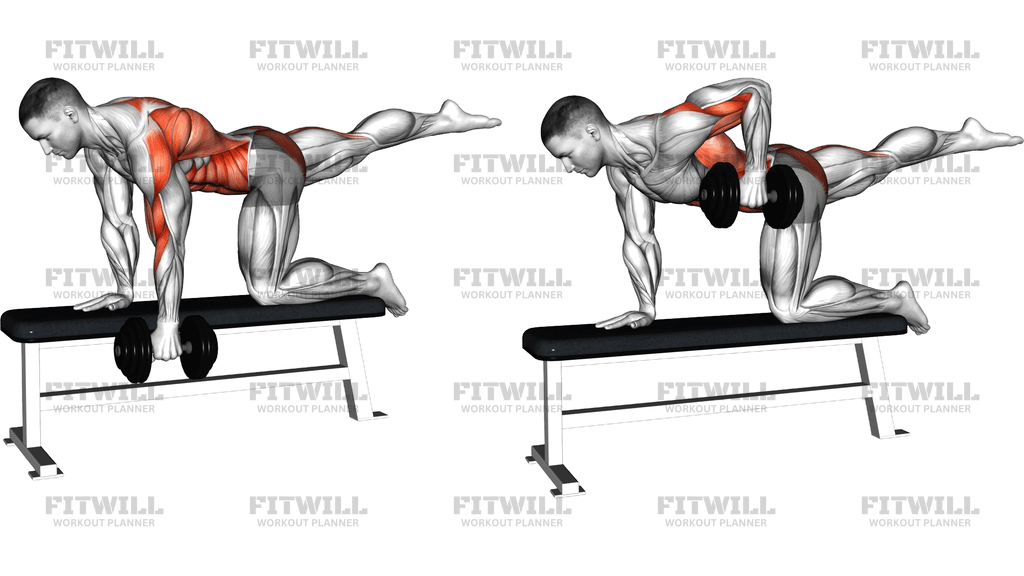
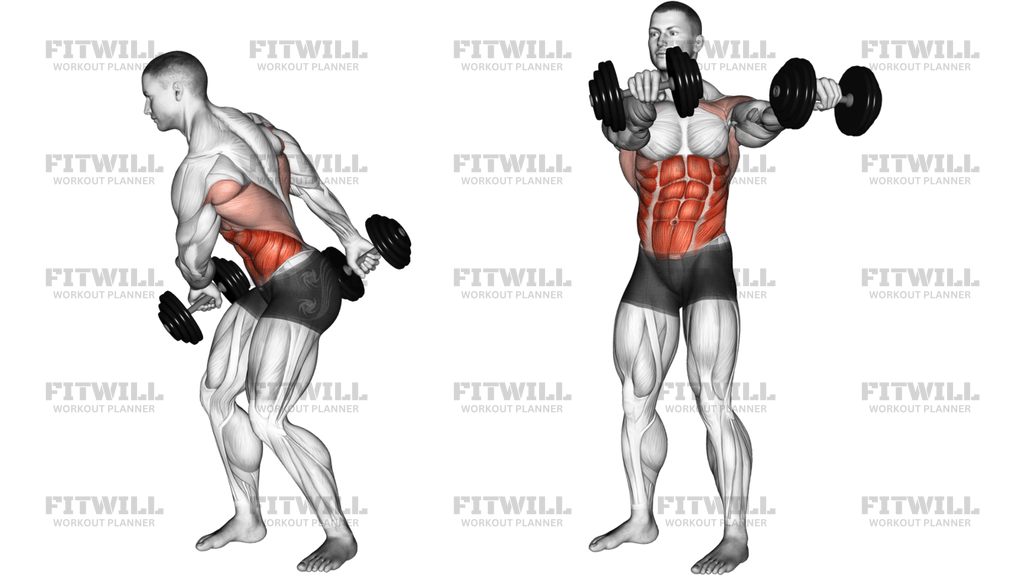
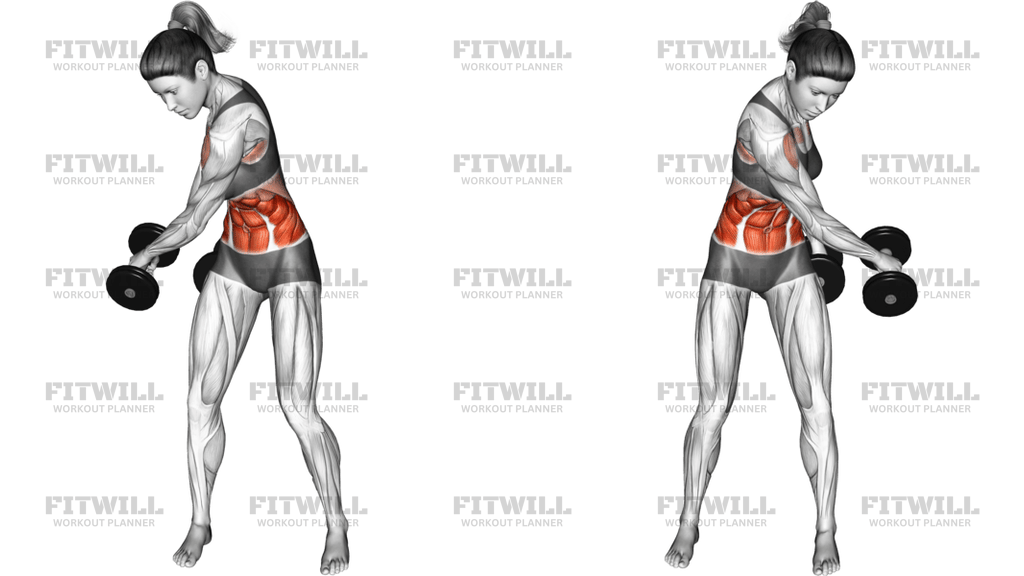
Dumbbell Kneeling Twist Down Up Raise
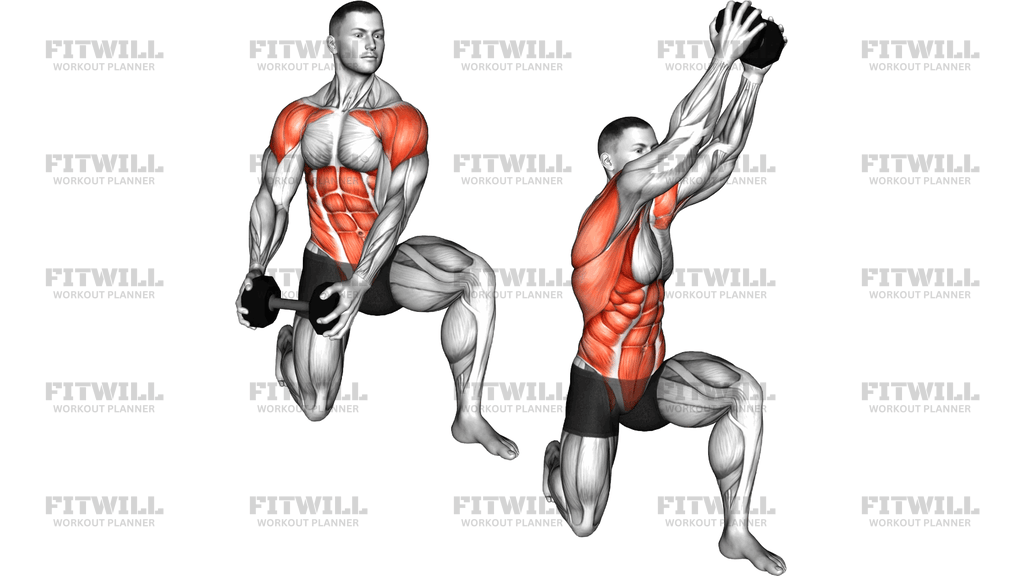
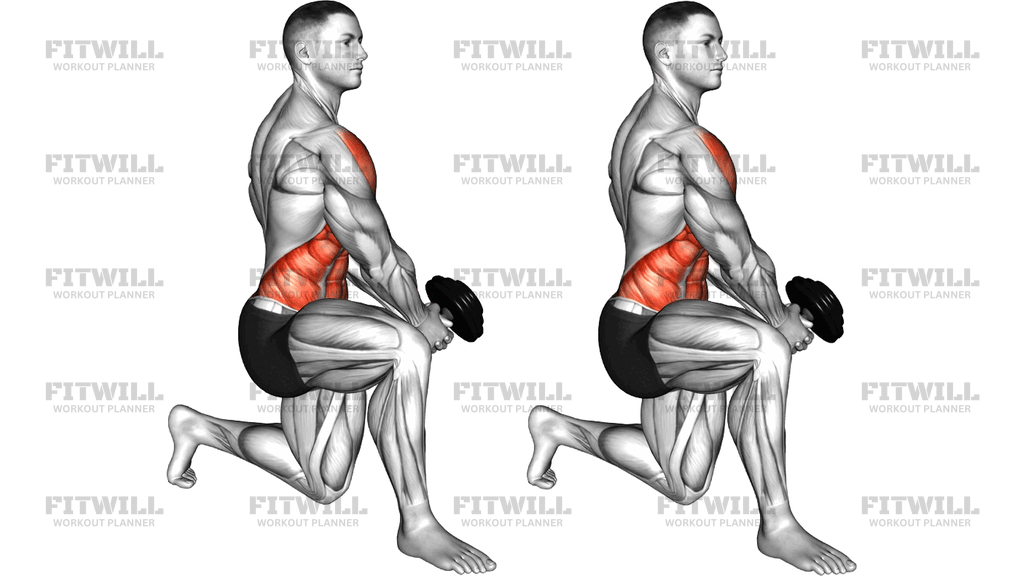
The Dumbbell Kneeling Twist Down Up Raise is a rotational core exercise performed from a half-kneeling stance, with one knee resting on the floor and the opposite foot planted in front. You hold a single dumbbell with both hands and drive it through a diagonal path, twisting your torso down toward one hip and then raising it up across your body in the reverse direction. The kneeling base removes your legs from the equation, forcing the midsection to produce and control every bit of the rotation.
The main work comes from the obliques on both sides of your waist, which alternate between rotating the trunk and resisting unwanted twist. Your deep core and lower back stabilize the spine throughout the arc, while the front delts and upper arms simply carry the dumbbell along its path. The down knee and front leg also work quietly to keep your hips square and level, which makes this a surprisingly demanding drill for hip stability even though the weight stays relatively light.
This setup matters more than in a standing twist because the half-kneeling position narrows your base and locks the pelvis in place. If your hips drift or your front knee wobbles, the rotation leaks into the lower back instead of traveling through the waist, which is exactly what you want to avoid. Keeping a tall spine, a braced midsection, and a deliberate turning range is what separates a productive rep from a sloppy one.
The movement suits lifters who want direct rotational strength for sports like baseball, golf, tennis, or martial arts, as well as anyone who spends long hours sitting and needs to restore control through the trunk. It is commonly placed at the end of a core session or as part of a warm-up circuit before lower body or athletic training, using a light to moderate dumbbell for higher reps.
To execute it well, move the dumbbell with intent rather than momentum. Think of your ribcage and the weight as one unit: twist them down together, pause briefly, then sweep them up together. If you find yourself yanking the weight or leaning sideways to finish the arc, drop to a lighter dumbbell and slow the tempo. Controlled rotation in both directions is the entire point of this exercise, so treat the lowering phase with the same care as the raise.
[ Workout Log & Planner ]
Put your next workout in Fitwill
Keep your plan and training log ready when you are.


Instructions
- Kneel on the floor with your right knee down and your left foot planted in front so both knees form roughly 90-degree angles; your front shin should be vertical.
- Grip a dumbbell with both hands, wrapping your fingers around the handle from opposite sides, and hold it at chest height with your elbows bent.
- Sit tall through your spine, squeeze the glute of your down leg, and brace your abdominal wall as if preparing for a light push to the midsection.
- Rotate your torso and lower the dumbbell down and across your body toward the outside of your front hip, letting your shoulders and ribcage turn together.
- Pause briefly at the bottom of the twist without letting your lower back round or your hips rotate off center.
- Drive the dumbbell back up along the same diagonal path until your hands finish raised up and across toward the opposite shoulder.
- Keep your front knee tracking over your foot and your hips square the entire time; the twist should come from your waist, not your pelvis.
- Exhale as you raise the weight, and inhale as you twist it back down under control.
- Complete all reps on one side, then switch your stance so the opposite knee is down and repeat the same down-and-up diagonal on the other side.
Tips & Tricks
- A common mistake is letting the front knee cave inward as you twist. Press the outside edge of your front foot into the floor and keep the knee stacked over the ankle.
- If your torso leans sideways at the top of the raise, the weight is too heavy. Reduce the load until you can stay vertical through the spine for every rep.
- Do not let the down knee slide backward or lift. Anchoring it in place is what forces the obliques to do the rotating instead of the hips.
- Squeeze the glute on the kneeling side the whole set. This locks the pelvis down and keeps the rotation in the waist where it belongs.
- The dumbbell should travel on a consistent diagonal line, like you are drawing a slash across your body. A wandering path usually means the shoulders are leading without the ribcage turning.
- Keep both elbows tucked close to the torso rather than flaring outward, so the weight stays connected to your center of rotation.
- Move slower on the downward twist than on the raise. Most people rush the lowering phase and lose the anti-rotation benefit entirely.
- Start with the knee of your weaker or tighter side down first, so your freshest reps go to the side that needs the most work.
- If you feel the movement in your lower back instead of your waist, shorten the range at both ends and rebuild the arc gradually over a few sessions.
Frequently Asked Questions
Which muscles does the Dumbbell Kneeling Twist Down Up Raise work the most?
The obliques on the sides of your waist are the primary movers, rotating the trunk through the diagonal path. Your deep core, lower back, and the hip stabilizers of the kneeling leg work isometrically to keep the spine and pelvis controlled.
Why is this exercise done from a half-kneeling position instead of standing?
The half-kneeling base removes momentum from the legs and locks the pelvis, so the rotation has to come from the trunk itself. This makes the obliques work harder and keeps the lower back from compensating.
How heavy should the dumbbell be for the Dumbbell Kneeling Twist Down Up Raise?
Start lighter than you think you need, usually 5 to 15 pounds, and only increase the load once you can twist down and up without leaning or losing your hip position. This is a control exercise, not a max-load lift.
How many reps and sets should I do?
Two to three sets of 8 to 12 controlled reps per side works well for most people. Because the movement is rotational and coordination-heavy, quality matters more than volume.
Should I do all reps on one side before switching, or alternate?
Finish all reps on one side, then switch your stance and complete the other side. Alternating every rep forces you to reset your kneeling position constantly and breaks your focus on the twist.
What is the most common mistake in this exercise?
Rotating from the hips and lower back instead of the waist, usually because the load is too heavy or the down-knee glute is relaxed. Keeping the hips square and squeezing the kneeling-side glute fixes most cases.
Can beginners do the Dumbbell Kneeling Twist Down Up Raise?
Yes, and it is actually a good entry point to rotational training because the kneeling position limits how much momentum you can cheat with. Beginners should use no weight or a very light dumbbell until the twisting pattern feels smooth.
What can I use if I do not have a dumbbell?
A kettlebell held by the horns, a medicine ball, or a small plate all work well since you only need one object you can grip with both hands. A cable set to a low or high pulley is a useful alternative that adds constant tension through the arc.
Is this exercise safe for people with lower back sensitivity?
The kneeling position and controlled range generally make it friendlier to the lower back than standing twists, but anyone with a history of back issues should keep the range modest and stop if twisting causes discomfort. Checking with a qualified professional is a sensible step before adding rotational loading.