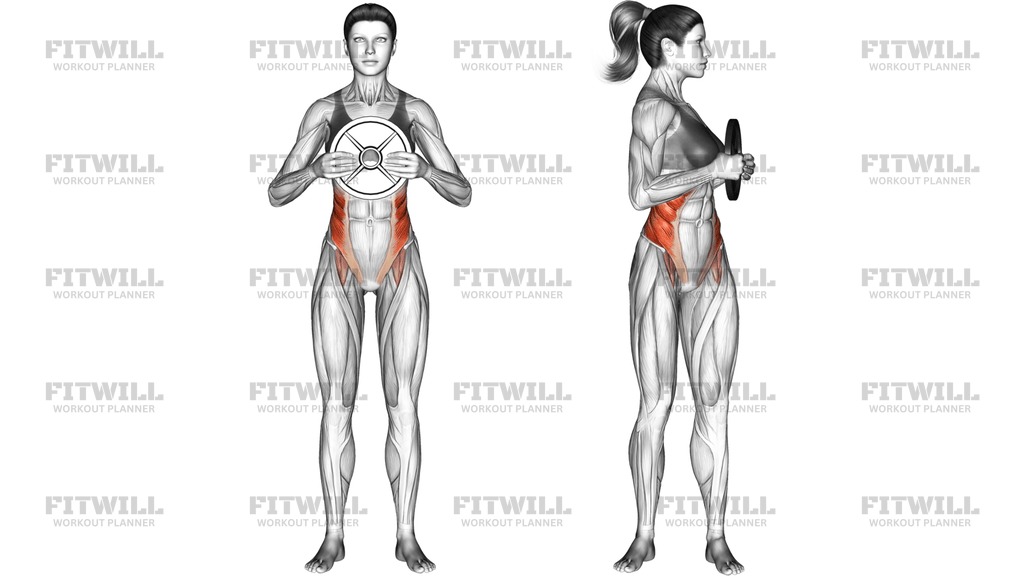
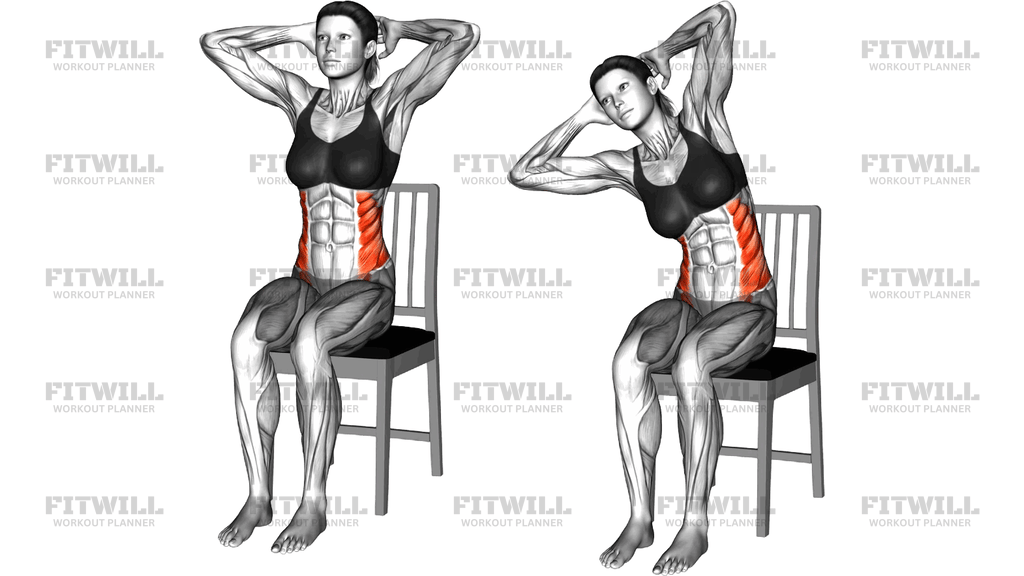
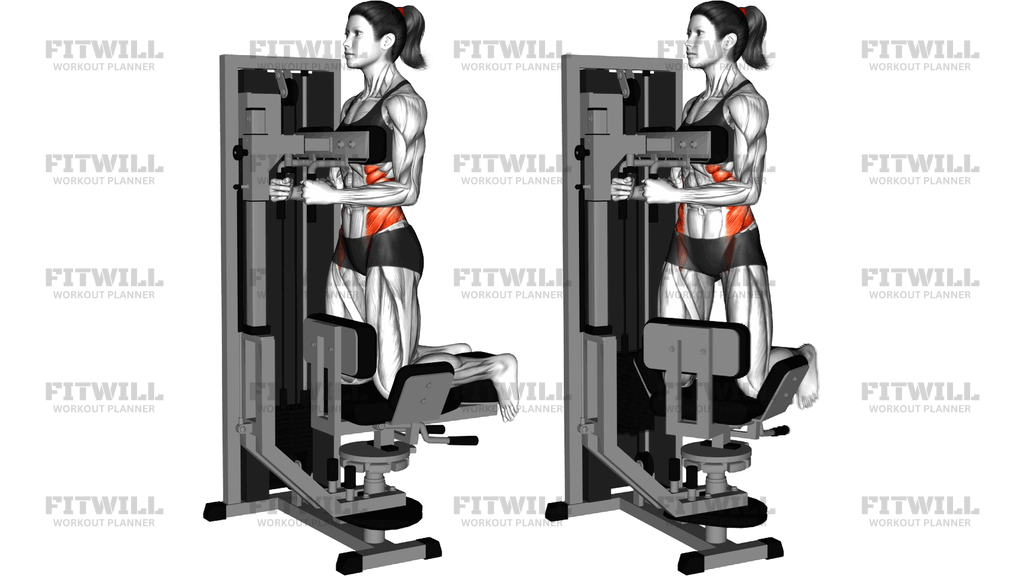
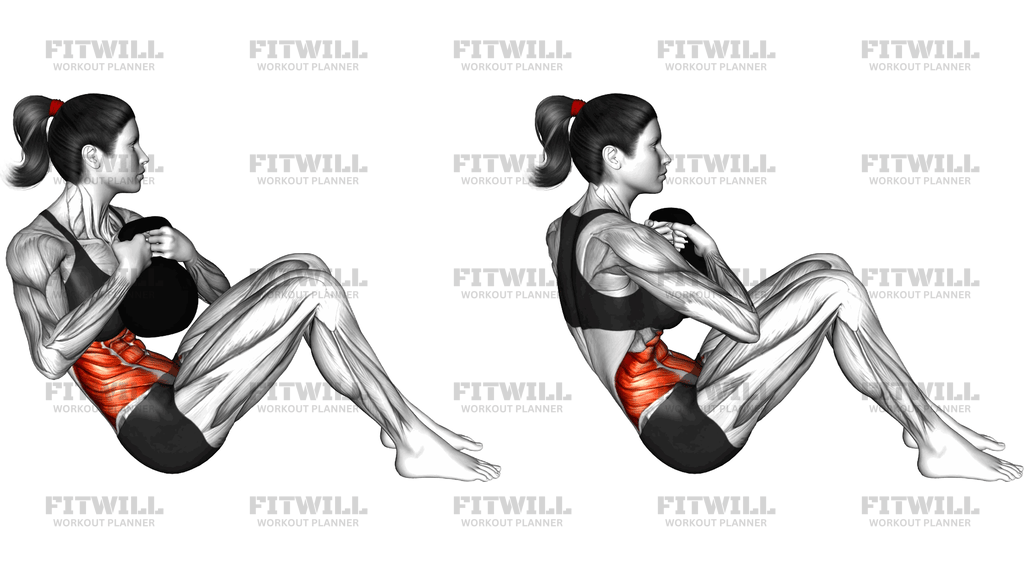
Weighted Seated Twist On Stability Ball
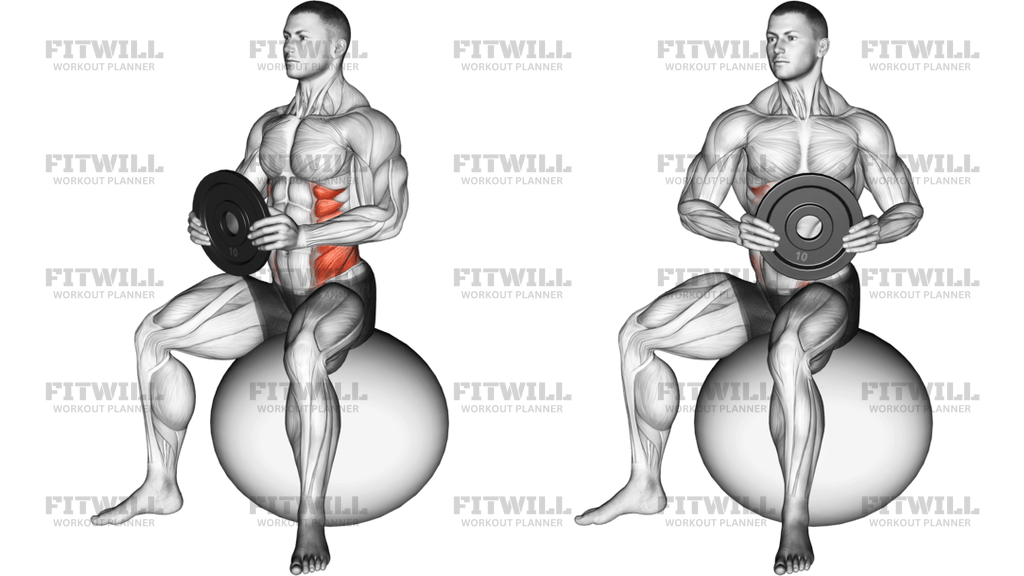
Weighted Seated Twist On Stability Ball is a core rotation exercise performed while sitting tall on a stability ball and holding a weight close to the chest. It is designed to train the obliques through controlled trunk rotation while the ball adds an instability challenge to the hips, pelvis, and deep abdominal muscles. The movement is most useful when you want rotational strength without turning it into a fast, swinging motion.
The main work comes from the obliques, with the rectus abdominis, transverse abdominis, and spinal stabilizers helping you keep the torso organized on top of the ball. Because the ball can roll or wobble, your setup matters as much as the twist itself. A centered seat, firm foot placement, and a tall chest help keep the load on the waist instead of letting the hips drift or the lower back take over.
During each repetition, rotate the rib cage and shoulders as one unit while keeping the weight close to the sternum. The twist should be smooth and deliberate, with only as much range as you can control without collapsing forward, leaning back, or bouncing off the ball. The end position should feel like a strong abdominal squeeze, not a joint dump or a yank through the arms.
This exercise fits well in core training, athletic accessory work, or warm-up circuits when you want rotational control and midline stability. It can also be a useful regression for harder rotary core drills because the seated position limits leg drive and helps you feel the torso turn more clearly. Use a light to moderate load and stop the set when the ball starts to slide, the shoulders stop turning cleanly, or the low back begins to do the work.
Keep the goal simple: stable base, quiet hips, and deliberate rotation through the waist. When done well, the rep finishes with the chest turned, the abs braced, and the return to center just as controlled as the twist away.
[ Workout Log & Planner ]
Put your next workout in Fitwill
Keep your plan and training log ready when you are.


Instructions
- Sit centered on the stability ball with both feet flat on the floor, slightly wider than hip width, and hold the weight plate close to your chest.
- Stack your ribs over your pelvis, lift through the crown of your head, and lightly brace your abs before you start the first twist.
- Keep your elbows bent and the plate close so the load stays near your torso instead of pulling your shoulders forward.
- Rotate your shoulders and rib cage to one side while keeping your hips as steady as possible on the ball.
- Turn only as far as you can without bouncing, leaning back, or letting the ball roll under you.
- Pause for a brief squeeze at the end of the twist, then control the return back to center.
- Twist to the other side with the same tempo, keeping the movement smooth and even from rep to rep.
- Breathe out as you rotate and breathe in as you come back to center.
- Stop the set if your lower back starts to take over or if you can no longer keep the ball stable.
Tips & Tricks
- Keep the weight plate close to your chest; letting it drift forward turns the rep into a shoulder and arm exercise.
- Use a small, deliberate twist rather than chasing a huge range that makes the ball shift or your pelvis slide.
- Think about turning your ribs first and letting the hips follow only a little, not whipping the knees side to side.
- Plant the feet firmly and widen your stance if the ball feels slippery or you cannot stay centered.
- Choose a load that lets you keep the chin neutral and the chest tall through the whole set.
- Move slowly on the way back to center; the return should be just as controlled as the twist away.
- If the low back feels pinched, reduce the range and rotate less aggressively through the waist.
- Keep the elbows soft and the shoulders relaxed so the obliques do the rotating instead of the arms holding tension.
Frequently Asked Questions
What does the Weighted Seated Twist On Stability Ball train most?
It mainly targets the obliques, with help from the deeper abdominal muscles and spinal stabilizers that keep you balanced on the ball.
Why do I need a stability ball for this twist?
The ball adds an instability challenge, so your core has to control rotation while the hips and pelvis stay centered instead of bracing against a bench.
How should I hold the weight plate?
Hold it close to your chest with bent elbows so the load stays near your torso and does not pull you forward.
Should my hips rotate with the shoulders?
Some natural movement is fine, but the hips should stay mostly quiet; the main twist should come from the rib cage and waist.
How much weight should I use?
Use a light to moderate load that lets you keep the ball steady and rotate without swinging or arching your lower back.
What is the most common mistake on this exercise?
People usually twist too fast or too far and end up bouncing on the ball, which shifts the work away from the obliques.
Is this a good beginner core exercise?
Yes, if the load is light and the twist stays small and controlled. The seated position can make rotary core work easier to learn.
What should I do if the ball keeps moving around?
Widen your foot position, sit more squarely on top of the ball, and reduce the load or range of motion until you can stay centered.