Kickstand Reach Lat Lean
The Kickstand Reach Lat Lean is a bodyweight lateral mobility drill that combines a kneeling kickstand stance with a long side reach over your extended leg. One knee stays down on the floor while the other leg stretches straight out to the side, foot planted, giving you a stable three-point base. From there you lean your torso out over the extended leg and reach with your arm, which lengthens the lat, the side of the rib cage, and the obliques on the leaning side while the inner thigh of the straight leg gets a steady stretch at the same time.
This setup is useful because it does three jobs in one position. The kneeling leg anchors your hips so they cannot swing away from the movement, the extended leg opens up the adductors and outer hip, and the lateral lean with the reach pulls stretch through the lat all the way from the armpit toward the lower back. People with tight lats from overhead lifting, pulling work, or long hours at a desk tend to feel this immediately, and the added hip component makes it a efficient warm-up or cooldown choice for squatting, deadlifting, or any overhead training day.
To perform it well, the key is keeping your hips square and low while the lean happens through your spine and shoulder, not by tipping your whole pelvis sideways. Move slowly into the lean, let the reach lengthen your arm as far as your shoulder allows, and breathe steadily while you hold the stretched position. The movement should feel like a deep but tolerable pull along your side and inner thigh, never a sharp grab in the hip or lower back.
A common use case is as a targeted mobility break between sets of pressing or pulling, since opening the lat can improve shoulder position for overhead work. It also fits well at the end of a leg session because the extended leg position doubles as an adductor and hip stretch. Beginners can reduce the lean angle and keep the reach closer to the body, while more flexible trainees can lower the chest further toward the extended thigh for a longer stretch.
Keep weight distributed through the kneeling knee, the extended foot, and, if helpful, a hand on the floor for support. If your inner thigh complains before your lat does, shorten the spread slightly by bringing the extended foot closer. As with any stretch, consistency matters more than intensity, so a moderate hold repeated on both sides beats one aggressive attempt.
[ Workout Log & Planner ]
Put your next workout in Fitwill
Keep your plan and training log ready when you are.


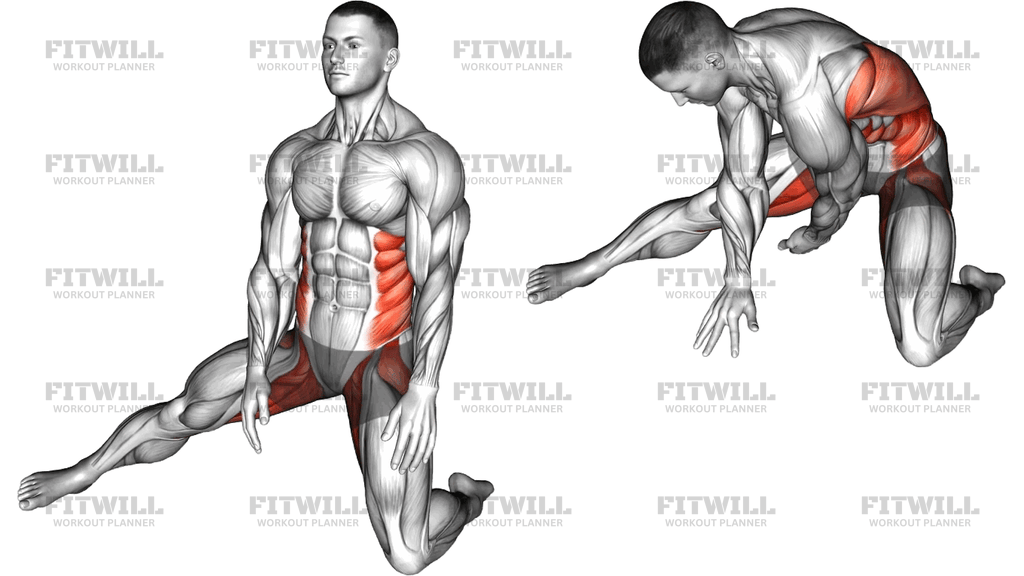
Instructions
- Kneel down with your hands free, then extend your left leg straight out to your left side with the foot flat on the floor and toes pointing forward, keeping your right knee on the ground directly under your right hip in a kickstand position.
- Set your hips square to the front and sit your weight down onto the kneeling knee so your torso stays tall before you begin the lean.
- Brace your trunk lightly, keep both hips pointing forward, and let your shoulders relax down away from your ears.
- Initiate the lean by side-bending your torso out over the extended left leg, leading with your chest rather than twisting through the waist.
- Reach your left arm down and across toward your left foot or the floor, letting the arm lengthen fully so the stretch travels from your armpit down the side of your ribs.
- Continue until you feel a strong but comfortable pull through the lat, the side of the trunk, and the inner thigh of the extended leg, then hold that end position for several steady breaths.
- Keep the right knee and hip pressing down throughout so the pelvis does not rotate away as you lean deeper.
- Exhale slowly as you move into the lean, then keep breathing evenly during the hold instead of holding your breath.
- Return upright by pushing through the extended foot and engaging the opposite side of your trunk, coming back to the tall kneeling position under control.
- Reset your stance, then switch sides so the other leg is extended and repeat for the same number of holds.
Tips & Tricks
- If you feel a pinch at the hip of the kneeling leg rather than a stretch along your side, widen your kickstand slightly and sit further back onto the kneeling knee.
- Do not let the extended foot roll onto its outer edge; keep the sole flat and the toes forward or the adductor stretch gets sloppy and the knee takes extra stress.
- Reach with your palm facing down or inward and think about lengthening the arm first, then leaning; leading with a short, tense arm kills the lat stretch.
- Avoid collapsing your chest toward the floor and rotating instead of side-bending, which turns this into a twist and offloads the obliques and lat.
- If the inner thigh of the straight leg is far tighter than your lat, bend that knee a few degrees or narrow the stance until both areas feel worked evenly.
- Place a pad under the kneeling knee if you are on a hard floor, since discomfort there will make you rush the hold.
- Use a hand lightly on the floor for balance if you wobble, but keep most of your reach effort in the extended arm so the stretch stays active.
- Ease out of the end range slowly rather than bouncing back upright, especially if your hips feel tight that day.
- Hold each side for 20 to 40 seconds and do the tighter side first if one side is noticeably more restricted.
Frequently Asked Questions
What muscles does the Kickstand Reach Lat Lean target?
The main targets are the lats and obliques on the side you lean toward, with a strong supporting stretch through the adductors and outer hip of the extended leg. The glutes of the kneeling side work to keep your hips square.
Why is one knee on the floor in this exercise instead of standing?
The kneeling kickstand leg anchors your hips so they cannot drift or rotate as you lean, which forces the stretch into your lat and the side of your trunk instead of letting your pelvis escape the position.
Is the Kickstand Reach Lat Lean suitable for beginners?
Yes. Beginners should narrow the stance, keep the lean shallow, and optionally support themselves with a hand on the floor. The position is low-load, so it is easy to scale by adjusting the spread and the lean angle.
Should I feel this more in my lat or my inner thigh?
Both are normal, since the extended leg stretches the adductors while the lean targets the lat and obliques. If the inner thigh dominates, shorten the spread so you can still get a meaningful pull along your side.
How long should I hold the Kickstand Reach Lat Lean?
Twenty to forty seconds per side works well as a standalone stretch, and shorter holds of ten to fifteen seconds are fine as a warm-up before pressing or pulling sessions. Repeat two to three rounds if needed.
What is the most common mistake with the reach portion?
Twisting the torso toward the floor instead of true side-bending. Keep your chest facing forward as you lean over the extended leg, and let the arm lengthen fully so the stretch runs from your armpit down your ribs.
Can I use this before squats or deadlifts?
Yes, it pairs well before lower-body sessions because it opens the adductors and lats together, both of which influence your ability to brace and set your upper back. Keep the holds brief and moderate before training.
What can I substitute if kneeling is uncomfortable?
You can sit on a low box or bench with one leg extended to the side and perform the same lean and reach, or use a folded mat under the knee. The key elements to preserve are the anchored hips, the extended leg, and the side bend with a long reach.
Is it safe if my knee or lower back hurts during the movement?
Mild stretch discomfort in the lat, obliques, or inner thigh is expected, but sharp joint pain is not. Reduce the lean, shorten the stance, and add padding under the knee; if pain persists, stop and have the area assessed before continuing.