Kneeling Thread The Needle
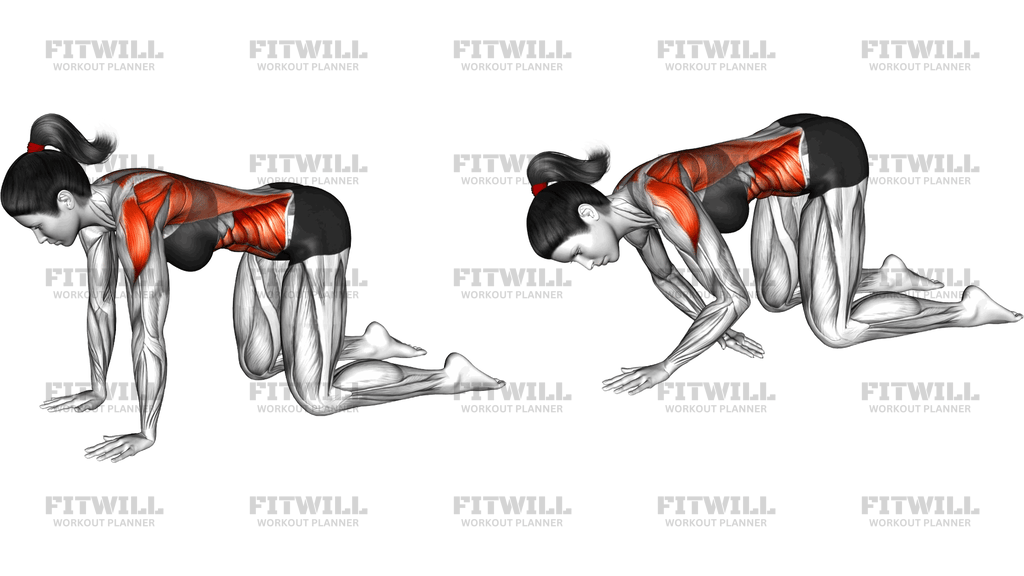
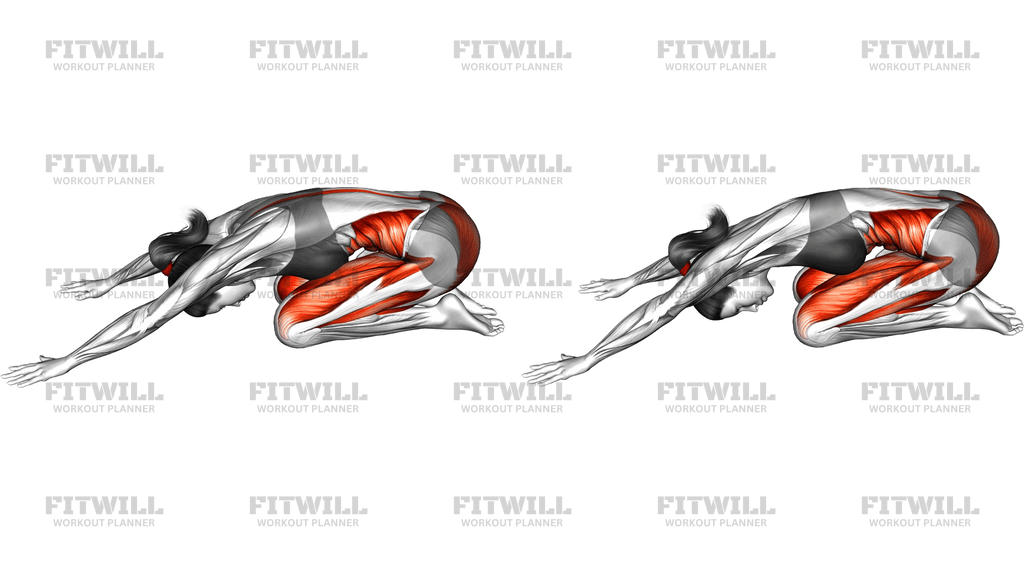
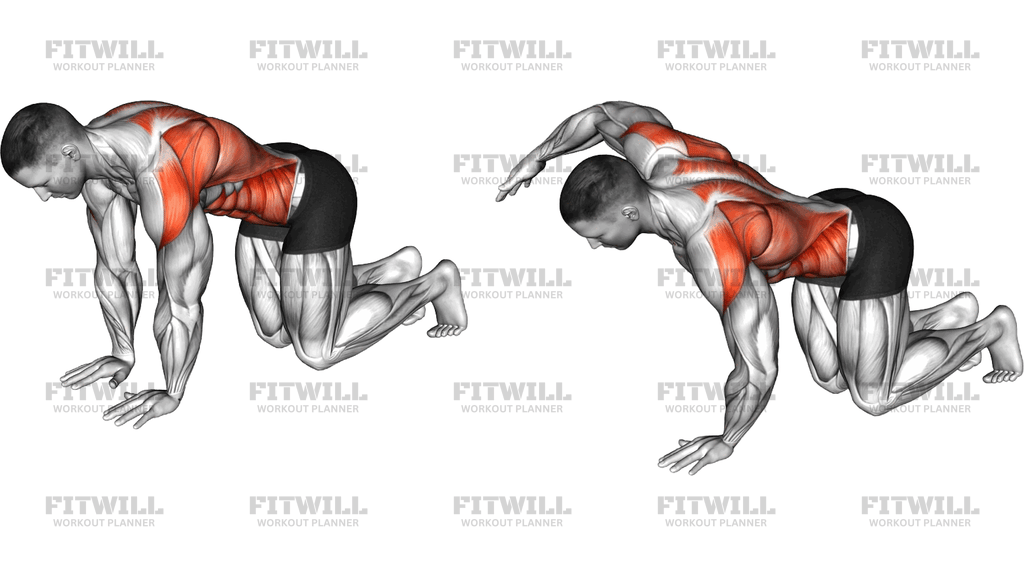
Kneeling Thread The Needle is a floor-based mobility drill performed from an all-fours position, where you sweep one arm across your body under your torso and rest your shoulder and the side of your head on the mat. The name describes the path literally: your arm slides under the gap between your supporting arm and your leg, like thread passing through the eye of a needle. It is one of the simplest ways to create a rotational stretch through the thoracic spine and the back of the shoulder at the same time.
The main targets are the posterior shoulder and rotator cuff area, the muscles between the shoulder blades, and the tissues along the side of the trunk that get lengthened as your torso rotates toward the floor. Because the stretch happens in a supported kneeling position, your weight is carried by the opposite arm and your hips, so you never have to fight for balance or stabilise a load. That makes the movement easy to scale by simply shifting more or less weight onto the reaching shoulder.
This drill suits a wide range of people. Desk workers who spend long hours with rounded shoulders often feel immediate relief through the upper back, lifters use it to maintain shoulder rotation for pressing and pulling, and it is a staple in warm-ups for sports that demand trunk rotation such as golf, tennis, baseball, and throwing events. It also pairs naturally with the opposite open-book or reach-through rotations to take the joint through its full range in both directions.
Setup matters more than it looks. Your knees should sit directly under your hips and your supporting hand under your shoulder so the stretch comes from rotation, not from sagging or bracing into a bad position. If your hips drift back toward your heels, you lose the rotational component and the stretch becomes a passive fold rather than a true thread. Keeping the hips stacked and squared forward is what isolates the upper back and shoulder.
To execute it well, slide the reaching arm along the floor rather than dropping into it, exhale as your shoulder and temple settle onto the mat, and let gravity ease you deeper over several breaths rather than forcing the twist. The palm can face up, which encourages the shoulder to rotate externally and deepens the stretch along the back of the joint. Move slowly in both directions; the return sweep is where most people rush and lose the benefit.
The most common fault is cranking the neck against the floor or pushing the stretch until the hip collapses. Neither is dangerous in small doses, but both defeat the purpose. Stay on the fleshy part of the shoulder, keep the head heavy but relaxed, and treat this as a breathing-driven mobility drill, not a stretch to win. Two to four slow reps per side before upper-body training or at the end of the day works well for most people.
[ Workout Log & Planner ]
Put your next workout in Fitwill
Keep your plan and training log ready when you are.


Instructions
- Kneel on an exercise mat and place your hands and knees on the floor in a quadruped position, with knees directly under hips and the supporting hand directly under the shoulder.
- Keep a soft bend in the elbows, a long neutral spine, and square your hips so both knees and hips point forward.
- Reach one arm straight out to the side, then begin sweeping it across the floor toward the opposite side, rotating your torso as it passes under your body.
- Continue sliding the arm until the shoulder and the outside of the upper arm rest on the mat, palm facing up.
- Allow the side of your head and temple to lower onto the mat, and let your chest rotate toward the ceiling so the stretch reaches your upper back and the rear of the shoulder.
- Exhale slowly as you settle into the end position, and keep the hips stacked over the knees rather than shifting them back toward the heels.
- Hold or pulse gently for several breaths, letting gravity ease you slightly deeper each exhale without forcing the twist.
- To return, press the supporting hand into the floor, slide the reaching arm back out the way it came, and rotate the torso back to the starting quadruped position.
- Reset your hand position and spine before repeating on the other side.
Tips & Tricks
- If your hip drifts back toward your heels during the reach, place a cushion between your calf and hamstring or simply check that your hips stay stacked over the knees — the stretch loses its rotational focus once you fold backward.
- Rest on the fleshy part of the shoulder, not the bony point, and ease off the depth if you feel pinching at the front of the shoulder joint.
- Turning the palm to face up as the arm slides under biases external rotation of the shoulder and lengthens the tissues along the back of the joint more effectively.
- Let the head be heavy on the mat but keep the neck free; pushing your temple into the floor to force more rotation usually just aggravates the neck.
- If you cannot lower the shoulder fully, that is fine — the height of the shoulder will improve as thoracic rotation improves, so stay at your available range.
- Breathe into the side of the ribcage that is stretched; each exhale typically gives you a small, natural increase in rotation.
- Pair the movement with the opposite position — reaching the top arm up toward the ceiling — to open both directions of rotation before pressing or throwing.
- Avoid bouncing at the end range; the drill works best with slow slides in and out rather than pulses driven by momentum.
- On a hard floor, use a mat or folded towel under the kneeling side shoulder and knee, since the pressure there is concentrated in a small area.
Frequently Asked Questions
What muscles and areas does Kneeling Thread The Needle target?
It primarily stretches the rear of the shoulder and rotator cuff area, the rhomboids and mid-trap region between the shoulder blades, and the obliques and side trunk muscles as the torso rotates. The thoracic spine also gets rotational mobility that it rarely gets from daily sitting.
Is Kneeling Thread The Needle a strength exercise or a stretch?
It is best treated as a mobility and stretching drill. The muscles work lightly to control the rotation, but the purpose of the movement is lengthening and joint range, not loading.
Why do my hips keep drifting back toward my heels during the reach?
That is the most common compensation — your body folds backward to avoid rotation. Cue your hips over your knees and imagine your chest rotating toward the ceiling instead of your pelvis moving backward.
Should my palm face down or up when my arm goes under?
Palm facing up is the standard finish because it encourages the shoulder to rotate and deepens the stretch along the back of the joint. If that position is uncomfortable, keep the palm neutral and rotate gradually over time.
Is it normal to feel this stretch mostly in the shoulder rather than the upper back?
Yes, especially if your thoracic rotation is limited. Focus on driving the rotation from the ribcage and letting the arm simply follow, and the sensation will spread into the upper back as your range improves.
Can beginners do Kneeling Thread The Needle?
It is very beginner-friendly because the floor supports your weight the entire time. A beginner can simply limit how far the arm slides across and how much weight shifts onto the reaching shoulder.
When should I include this drill in my workout?
It works well in a warm-up before pressing, pulling, or rotational sports, and also as a standalone reset after long sitting. Two to four slow repetitions per side is enough for either use.
What can I use if I do not have an exercise mat?
A folded towel or carpeted floor works fine. The only reason a mat matters is cushioning for the knee, the supporting hand, and the shoulder and temple that rest on the floor.
When should I avoid Kneeling Thread The Needle?
Skip it if you have an acute shoulder injury, recent surgery, or knee pain in the kneeling position, or if pressing the shoulder into the floor causes sharp or pinching pain. Discomfort that feels like a gentle stretch is expected; joint pain is not.