Child Pose Back Shift
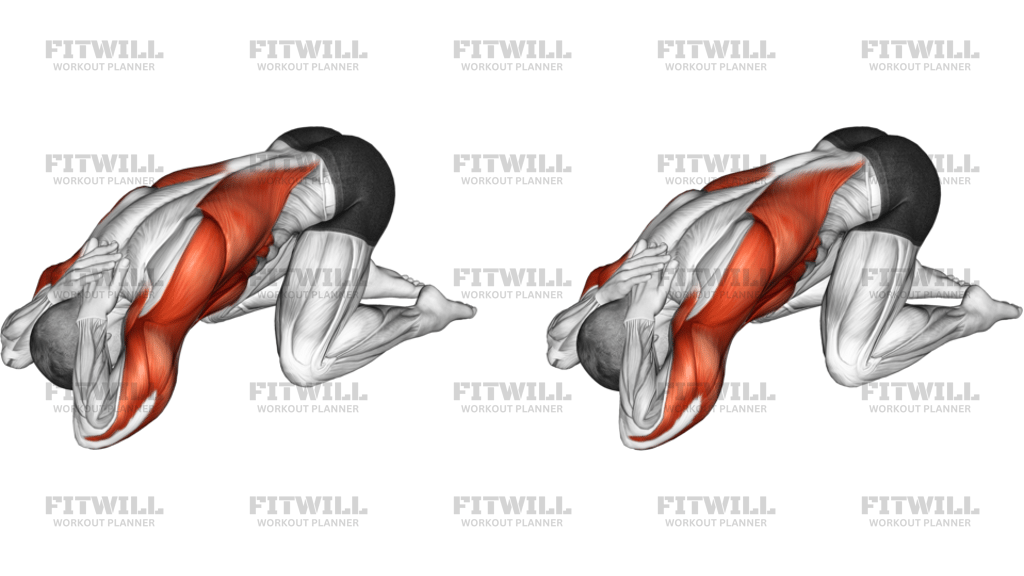
Child Pose Back Shift is a kneeling mobility drill built around the child pose position: knees on the floor, arms stretched long overhead, and hips repeatedly shifting backward toward the heels. The movement takes the classic resting pose and turns it into an active stretch by adding a slow rocking motion of the pelvis. Each shift back deepens the stretch through the lats and the sides of the trunk, while the kneeling position settles the hips, thighs, and lower back into a lengthened, supported shape.
This drill is a good fit for anyone whose shoulders or upper back feel locked up after long sessions of sitting, pressing, or pulling. Desk workers, lifters who train overhead movements, and swimmers all tend to carry tightness in the lats, and the extended-arm position with the hips driving back puts that tissue under a gentle, controllable stretch. It also works well as a cooldown at the end of a training day or as a low-effort reset between harder sets of back or shoulder work.
The main targets are the latissimus dorsi along the sides of the back, supported by the rear shoulders, the muscles of the lower back, and the glutes as they settle toward the heels. Because the knees stay anchored and the arms stay long, the stretch is guided by the pelvis: when the hips travel further back and down, the torso is pulled into more flexion and the lats lengthen; when the hips drift slightly forward, the tension eases. This makes the exercise self-scaling without any equipment beyond a mat.
Setup matters more than it might seem. Kneel with the knees about hip-width apart, big toes touching or close together, and let the hips sink toward the heels. Walk the hands well forward so the arms are fully extended and the chest can drop toward the floor. If the hands are too close, the shoulders will never reach the range where the back shift actually lengthens the lats; if the knees are too wide or too narrow for your hips, the pelvis cannot rock freely and the lower back will compensate instead.
To perform it well, keep the arms planted and let the pelvis do the work. Shift the hips slowly back and down, letting the forehead and chest lower as the sit bones move toward or onto the heels, pause briefly where the stretch feels noticeable but not sharp, then drift the hips a small distance forward to release. The motion is small and unhurried, closer to a tidal rhythm than a stretch-and-bounce.
Common uses include warm-up preparation for pressing or pulling days, post-workout recovery, and general evening mobility. Keep the movement pain-free: mild tension across the back, shoulders, or hips is the goal, and any pinching in the knees or wrists is a signal to pad the mat, narrow the range, or shorten the session rather than push through it.
[ Workout Log & Planner ]
Put your next workout in Fitwill
Keep your plan and training log ready when you are.


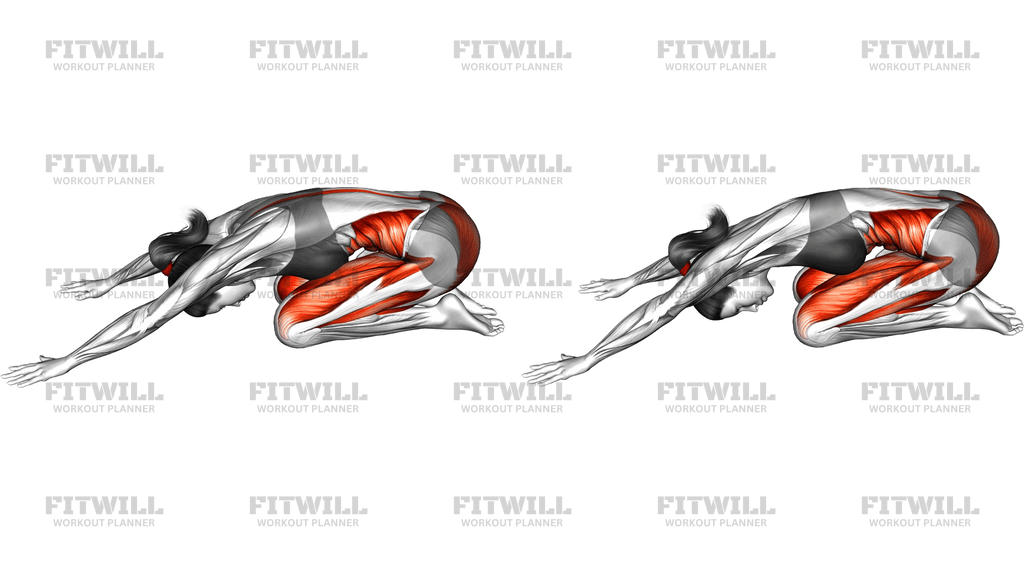
Instructions
- Kneel on an exercise mat with your knees about hip-width apart and your big toes touching or nearly touching behind you.
- Sit your hips back toward your heels and walk both hands forward along the floor until your arms are fully extended overhead and your chest lowers toward the mat.
- Rest your forehead lightly on or just above the mat and let the back of your neck stay long, with your palms flat and fingers spread for a stable base.
- Take a slow breath in, and as you exhale, shift your hips further back and down toward your heels, letting your chest sink lower between your extended arms.
- Pause at the end of the shift for two to three seconds, feeling the stretch along the sides of your back and the back of your shoulders.
- Keeping your palms planted, drift your hips a short distance forward to release the tension slightly, maintaining contact between your arms and the floor the whole time.
- Continue this slow back-and-forth shift of the pelvis, moving only as far as the stretch stays comfortable and never bouncing at the end range.
- Breathe steadily throughout, inhaling as the hips drift forward and exhaling as they shift back toward the heels.
- Complete eight to ten slow shifts, then walk your hands back under your shoulders, come up to an upright kneeling position, and reset before your next set.
Tips & Tricks
- If your wrists ache in the extended-arm position, make loose fists and rest on your forearms instead, or place your hands slightly wider so the pressure spreads across the palm rather than the wrist crease.
- A common mistake is pulling with the arms to force the hips back. The arms should stay passive anchors; if you find yourself dragging your hands backward, reset with your palms flat and let the pelvis lead.
- Tight thighs or knees can stop the hips from settling toward the heels. Slide a folded towel or cushion between your calves and hamstrings to fill the gap so the back shift stays comfortable.
- Watch that the forehead and chest lower together with the hips. If your head drops but your hips stay high, the stretch is collapsing into the upper spine instead of lengthening the lats.
- Keep the toes tucked or untucked consistently between reps. Changing foot position mid-set subtly alters where the hips end up and makes the stretch uneven.
- Shift back at a speed that takes two to three full seconds. Rushing the movement turns it into momentum-driven rocking and you lose the pause that makes the stretch effective.
- If one side of your back feels tighter, angle your hands slightly toward the tighter side during a shift to bias the stretch, then return to a symmetrical position for the remaining reps.
- Stop short of any sharp pulling sensation at the back of the shoulders. The lats respond better to a moderate hold than to forcing the chest all the way to the floor.
Frequently Asked Questions
What muscles does the Child Pose Back Shift stretch?
It primarily lengthens the lats along the sides of the back, with supporting stretch through the rear shoulders, lower back, and glutes as the hips settle toward the heels. The kneeling position also places the thighs in a gentle lengthened position.
How is the Child Pose Back Shift different from a normal Child Pose hold?
A standard child pose is a static rest position, while this version adds repeated pelvic shifts back and forward, turning it into an active mobility drill where you control the depth of the stretch rep by rep.
Is this exercise suitable for beginners?
Yes. It requires no strength, no equipment beyond a mat, and the range is set entirely by how far you shift your hips. Beginners should simply stay shy of any pinching at the knees or wrists.
Should my forehead touch the floor during the back shift?
It can, but it is not required. If the floor is out of reach, resting the head on a folded towel or a closed fist keeps the neck relaxed and lets you focus on the hip movement.
Why do my hips lift off my heels when I shift back?
This usually means tight thighs or hips are limiting the range, which is completely normal early on. Reduce how far you shift, or place a cushion between your calves and hamstrings so the pelvis can travel without forcing the knees open.
How many repetitions should I do?
Eight to ten slow shifts with a two to three second pause at the back end works well, and you can repeat that for two to three rounds as a warm-up or cooldown.
Can I do the Child Pose Back Shift before lifting?
Yes, it works well as a warm-up before pressing or pulling sessions because it opens the shoulders and upper back without fatiguing anything. Keep the shifts gentle and unhurried so it prepares rather than exhausts.
What can I use if I do not have an exercise mat?
A folded blanket, towel, or any padded carpeted surface works fine. The main goal is cushioning the knees, which take the most direct pressure in the kneeling setup.
When should I avoid this stretch?
Skip it or reduce the range if you have an acute knee injury that kneeling aggravates, recent shoulder surgery limiting overhead reach, or significant wrist pain that padding does not resolve. Adjust the setup rather than pushing through discomfort.