Dumbbell Standing Close Grip Shoulder Press
The Dumbbell Standing Close Grip Shoulder Press is an overhead press performed with a pair of dumbbells held just a few inches apart in front of your shoulders. Unlike a standard dumbbell press where the hands sit out at shoulder width, the close grip keeps the weights nearly touching throughout the set, which changes the path of the elbows and shifts more of the work onto the front of the shoulders while still challenging the side delts and triceps. Standing instead of seated also forces your legs, glutes, and core to hold your torso upright, so you get a genuine full-body stability demand on every rep.
This variation suits lifters who want a strict shoulder press without a bench or backrest. Because the dumbbells stay close together, the elbows track more forward than outward, and many people find that position more comfortable at the shoulder joint than a wide-elbow press. It is a common choice in general strength programs, home workouts where equipment is limited to dumbbells, and as an accessory press for anyone whose main lifts suffer from weak front delts or sloppy overhead posture.
The primary muscles worked are the front shoulders, with strong assistance from the side shoulders and triceps as you lock the weights out overhead. Your upper traps and serratus engage to stabilize the shoulder blades as the arms extend, and the entire midsection works isometrically to stop your lower back from arching. Since the load is held in front of the body rather than balanced on a bar behind the neck, the demand on shoulder mobility is modest, which makes the movement accessible to a wide range of trainees.
Setup matters here more than in most presses because the close hand position only works if you create it deliberately. Bring the inner heads of the dumbbells almost together at collarbone height, keep your wrists stacked over your elbows, and pull your ribs down so your torso is a solid column before the first rep. If you start with the weights drifting wide or your back already arched, the whole set becomes a looser, less effective version of the exercise.
To execute well, press the dumbbells up along a slight inward path so they finish nearly touching over the middle of your head, then lower them under control back to the starting position at your shoulders. Keep your feet about hip width, squeeze your glutes, and breathe out as you press. Common use cases include pressing strength work in the 5 to 12 rep range, muscle-building sets for the delts, and as a teaching press for beginners learning to move weight overhead with a neutral spine.
For safety, choose a weight you can press for clean reps without leaning back, and stop the set as soon as your torso starts to collapse into an arch. If you feel pinching at the shoulder, narrow your path slightly or reduce the range until the movement feels smooth rather than forcing through discomfort.
[ Workout Log & Planner ]
Put your next workout in Fitwill
Keep your plan and training log ready when you are.


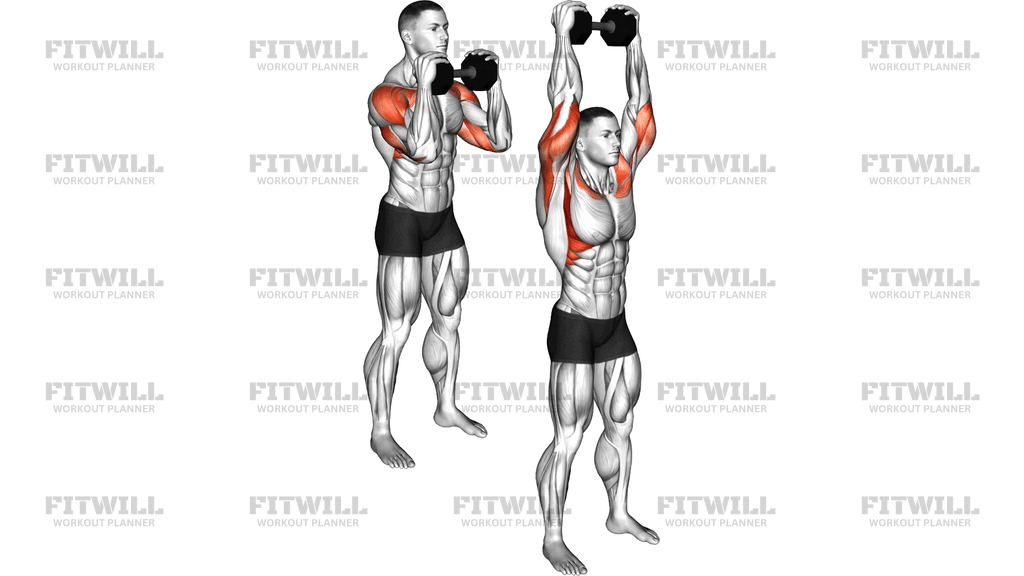
Instructions
- Stand with your feet about hip width apart and pick up a dumbbell in each hand using a neutral grip, palms facing inward.
- Raise the dumbbells to collarbone height in front of your shoulders and bring the inner heads of the weights close together, only a few inches apart.
- Stack your wrists directly over your elbows and let your elbows point forward and slightly out, staying in front of your torso rather than flared to the sides.
- Squeeze your glutes, brace your abs, and pull your ribs down so your lower back stays neutral and your torso stands tall.
- Press both dumbbells up together in a slight inward arc until your arms are fully extended and the weights are nearly touching over the top of your head.
- At the top, keep your shoulders down away from your ears rather than shrugging the dumbbells higher.
- Lower the dumbbells along the same path under control until they are back at shoulder height with the inner heads close together again.
- Exhale as you press up and inhale as you lower the weights, keeping your breathing steady through the set.
- Reset your brace and foot position between reps if you feel your stance or torso shift, then continue for your target repetitions.
Tips & Tricks
- The most common fault is letting the dumbbells drift out to shoulder width as the set gets hard, which turns the movement into a regular press. Cue yourself to keep the inner heads of the weights a few inches apart on every rep.
- If your lower back arches as you press, the load is too heavy or your brace is loose. Squeeze your glutes hard before each rep and consider dropping the weight a size.
- Keep your elbows slightly in front of your shoulders at the bottom rather than fully tucked or fully flared. This lets the front delts do the work while keeping the shoulder joint in a comfortable track.
- Do not bounce the dumbbells off your shoulders at the bottom of each rep. Pause for a beat at collarbone height so the muscles, not momentum, drive the next press.
- Your head should move slightly back and then forward as the dumbbells pass your face, not your whole torso leaning backward. If your chest rises toward the ceiling, your body is substituting an incline angle for a strict press.
- Use a full grip with your thumbs wrapped around the handles. An open palm grip with heavy dumbbells overhead is an unnecessary risk if your hands sweat.
- If locking out feels easy but the bottom half feels shaky, the issue is usually stability, not strength. Slow down the lowering phase to two or three seconds before adding load.
- Press to a point where the dumbbells are nearly touching but not clanging together. Smashing the weights at the top wastes tension and can pull you off balance.
- Because you are standing with no backrest, expect your core and legs to fatigue before your shoulders on heavy sets. Treat that as part of the exercise rather than a reason to sit down.
Frequently Asked Questions
What muscles does the Dumbbell Standing Close Grip Shoulder Press work?
The front shoulders are the primary movers, with the side shoulders and triceps assisting strongly. Your upper traps, serratus, and core also work to keep the shoulder blades and torso stable overhead.
How is the close grip position different from a regular standing dumbbell shoulder press?
In the close grip version the inner heads of the dumbbells stay a few inches apart at collarbone height and overhead, so your elbows track more forward than outward. This biases the front delts and often feels friendlier to the shoulder joints than a wide-elbow press.
Is the Dumbbell Standing Close Grip Shoulder Press good for beginners?
Yes, it is a reasonable first overhead press because the neutral grip and forward elbow path are easy on the shoulders. Start with light dumbbells and focus on keeping your ribs down and back neutral before adding weight.
Why do my lower back and legs feel this exercise if it is a shoulder press?
Standing with no bench means your glutes, legs, and entire core must hold you upright while weight moves overhead. That full-body stabilization is a feature of the standing setup, and it is why some people feel their midsection working hard.
Should the dumbbells touch at the top of the press?
They should come close together over the top of your head but you do not need to clang them. Aim for nearly touching so the arms finish fully extended without losing tension or balance.
What is the most common mistake with this exercise?
Leaning back and turning the press into an incline angle is the biggest one, followed by letting the dumbbells drift out wide. Squeeze your glutes, keep the weights close together, and reduce the load if you cannot stay strict.
Can I do this exercise seated if standing is difficult?
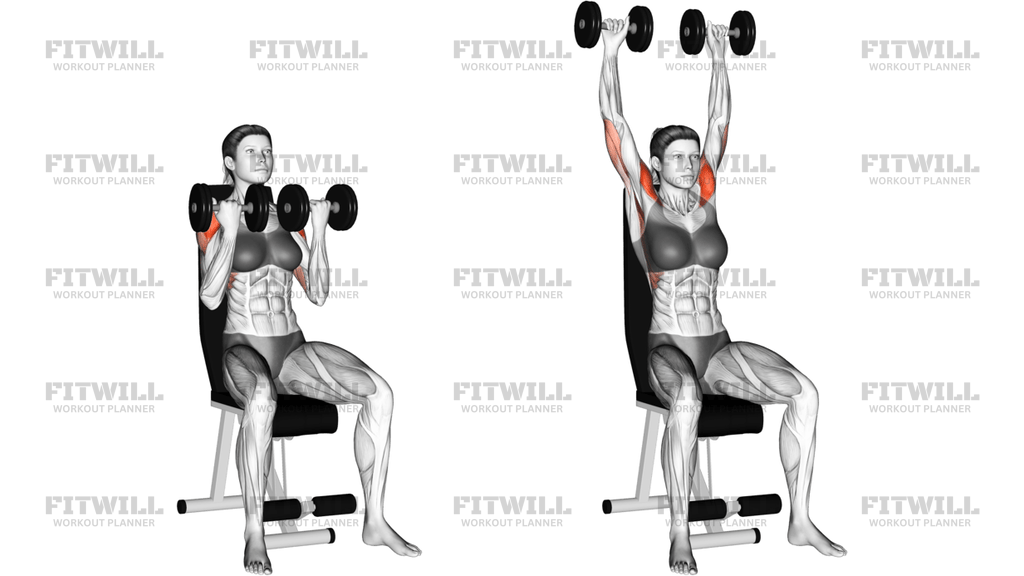
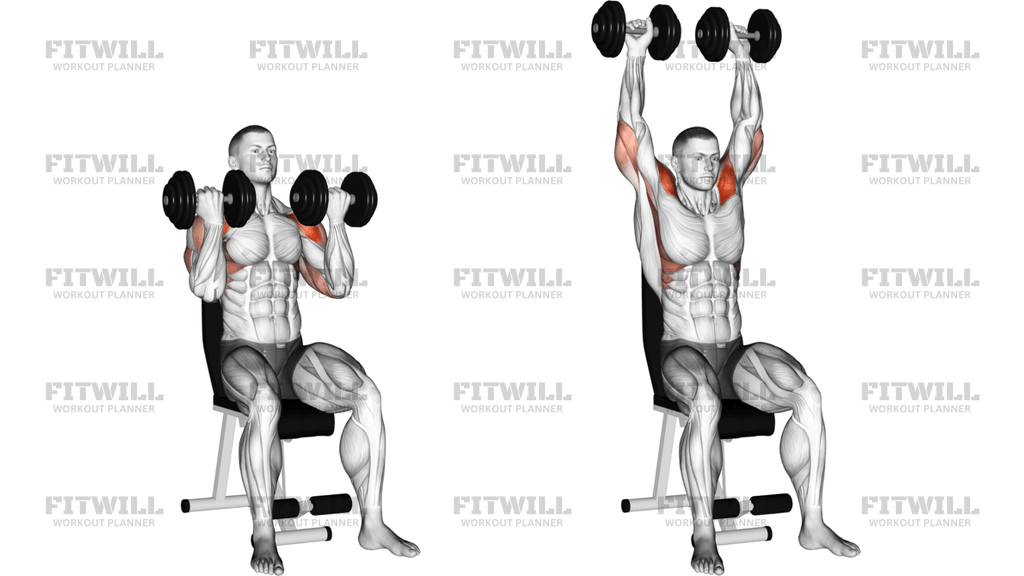
You can perform the same close-grip press seated with an upright backrest, which removes the standing stability demand and lets you focus purely on the shoulders. The standing version trains more of your body, so keep it in the program when possible.
How heavy should the dumbbells be for the close grip press?
Choose a weight you can press for clean reps with a vertical torso and no arch in your lower back. Because there is no backrest and the weights are controlled overhead, most lifters use slightly less load than they would on a seated machine press.
Is pressing overhead with dumbbells close together safe for the shoulders?
For most people yes, because the neutral grip and forward elbow path avoid extreme rotation at the joint. If you feel pinching, reduce the range slightly, check that your wrists are stacked over your elbows, and progress gradually.