Cable Incline Close Grip Shoulder Press With V Bar
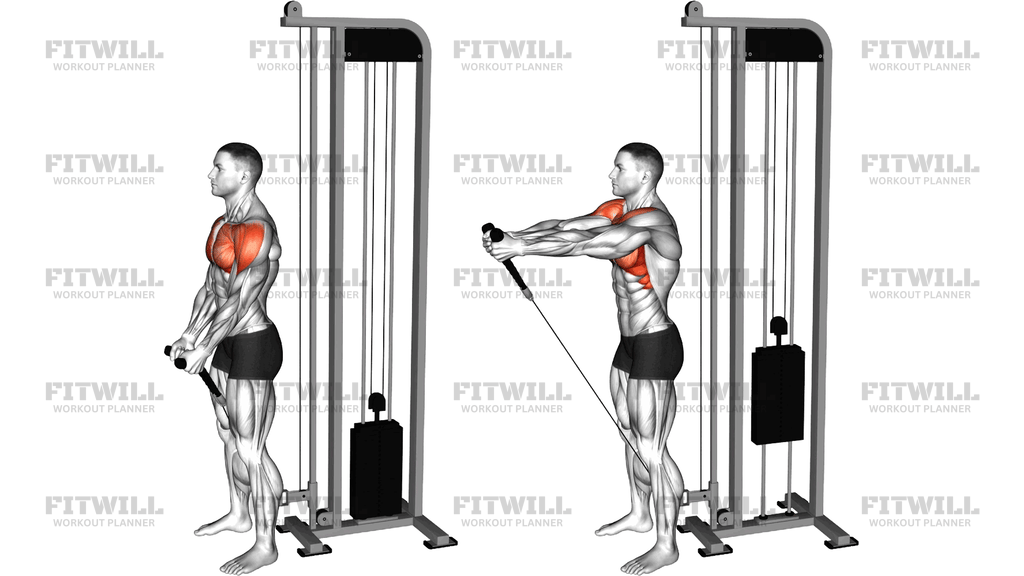
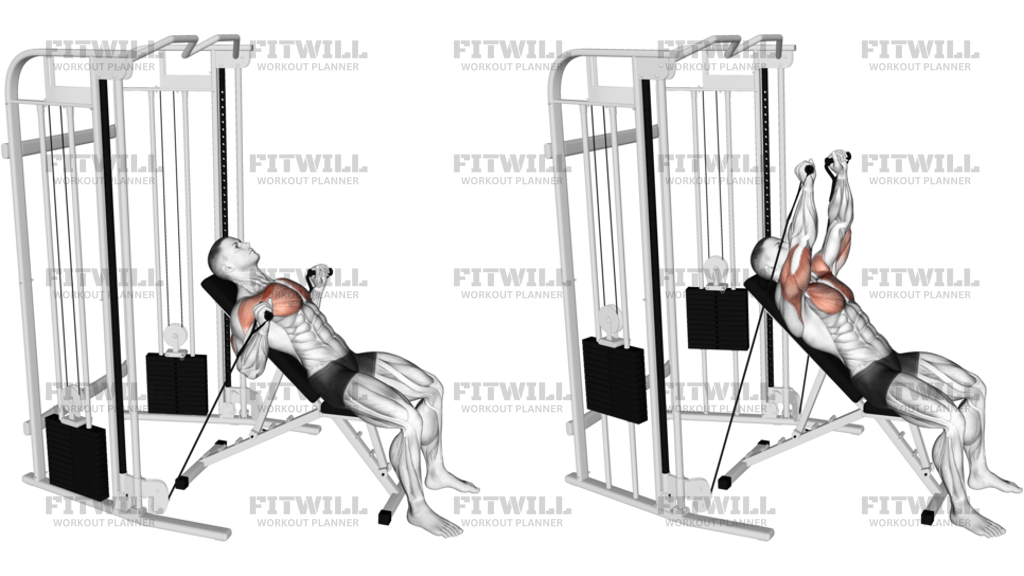
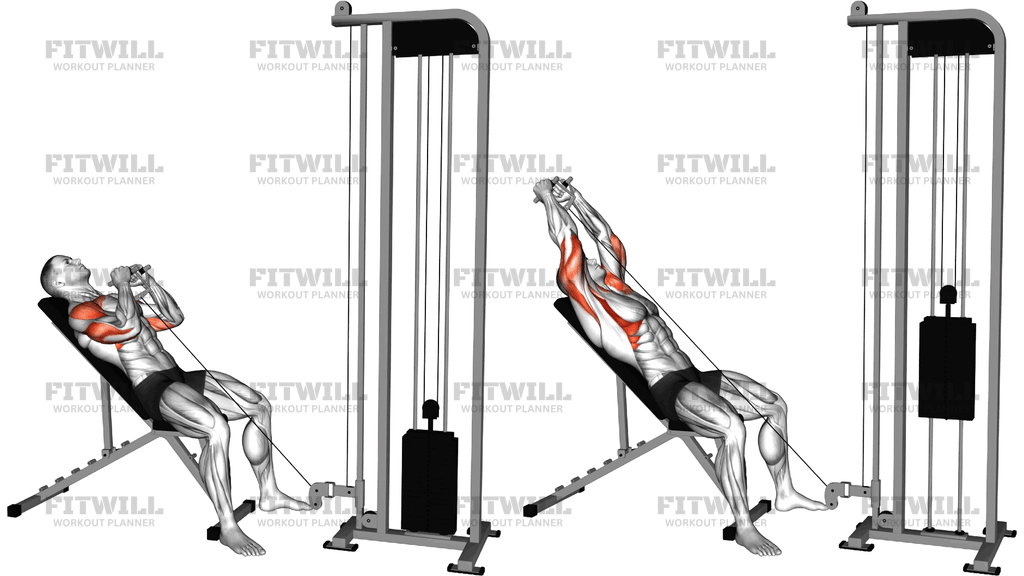
The Cable Incline Close Grip Shoulder Press With V Bar is a seated overhead press performed on an incline bench positioned facing away from a low cable pulley. You hold a V-bar attachment with a narrow, neutral grip and press up and slightly forward, working against cable resistance that pulls down and back behind you. Because the cable runs from a low point behind the bench, the resistance angle is different from a dumbbell or barbell press, keeping tension on the shoulders through the entire range, including the top of the movement where free weights often go slack.
This setup is a good fit for lifters who want constant tension on the front and side delts without the joint compression that can come from heavy pressing with a straight bar. The close neutral grip with the V-bar keeps your elbows tracking close to your body, which many people find more comfortable for the shoulder joint while still loading the triceps hard through the lockout. The incline angle tips your torso back, shifting some of the work toward the upper chest and making the press feel somewhere between a standard shoulder press and an incline press.
To set it up, place an incline bench at roughly 30 to 45 degrees a step or two in front of a low pulley, facing away from the machine. Attach a V-bar to the low pulley, sit back against the bench, and reach down to grab the handle. The cable should run alongside your torso, past your ribs and over your shoulders, so the pull is vertical-ish rather than dragging you backward.
Execution is straightforward but deserves attention: from shoulder height, press the handle up and slightly forward until your arms are extended overhead, then lower with control back to the start position. Because the cable wants to pull you backward and down, your trunk has to stay braced the whole time, which adds a subtle core demand you don't get from a machine press.
This movement works well as a secondary press on shoulder day, as a higher-rep finisher after barbell or dumbbell pressing, or as an alternative for lifters whose shoulders tolerate the neutral grip better than a pronated barbell press. It's also useful in busy gyms since one cable station covers both the resistance and the anchor point.
A few practical points matter here. Keep the weight moderate at first, because the backward cable pull becomes very noticeable as the stack gets heavy and can compromise your position on the bench. Keep your head neutral, ribs down, and avoid pushing the handle so far forward that your lower back arches off the pad. Stop each rep just short of letting the plates slam down, and keep tension in the shoulders even at the bottom.
[ Workout Log & Planner ]
Put your next workout in Fitwill
Keep your plan and training log ready when you are.


Instructions
- Set an incline bench to about 30-45 degrees and place it facing away from a cable machine, roughly a step in front of the low pulley so the cable has a clear path behind the bench.
- Attach a V-bar handle to the low pulley, select your weight, then sit back against the bench with your feet flat on the floor and your upper back supported on the pad.
- Reach down and grip the V-bar with both hands, palms facing each other in a narrow, neutral grip, and bring the handle up to shoulder height with your elbows tucked close to your sides.
- Brace your core and press your lower back into the bench so the cable's backward pull doesn't arch your spine or pull you off the pad.
- Exhale and press the handle up and slightly forward until your arms are fully extended overhead, keeping your elbows from flaring out wide.
- At the top, your arms should be nearly in line with the cable's pull, with your shoulders shrugged slightly up and the V-bar stacked above your head, not drifting far in front of your face.
- Inhale and lower the handle under control back to shoulder height, letting your elbows drop down and slightly behind your ribs without letting the weight stack touch down.
- Keep your wrists straight and the cable running alongside your torso throughout each rep, avoiding any twisting of the V-bar.
- Complete your reps, then set the handle down safely at the bottom or guide it back to the stack before standing up from the bench.
Tips & Tricks
- The most common mistake on this exercise is sitting too far from the machine, which makes the cable pull you backward off the bench. Slide the bench closer until the cable path feels vertical alongside your torso.
- If your lower back arches as you press, the weight is likely too heavy or you're pushing too far forward. Pull your ribs down and reduce the load until your back stays flat against the pad.
- Don't turn this into a triceps-only lockout. If you're shifting the handle forward with your chest and elbows at the top, focus on driving the weight up in line with your head instead.
- Keep the elbows close to your sides on the way down rather than letting them flare wide; the narrow V-bar grip is the whole point of this variation and is usually what makes it shoulder-friendly.
- Lower the handle slowly for the last third of the descent. Dropping it fast lets the stack yank your shoulders down and steals the tension you're chasing.
- If the V-bar rotates in your hands during the set, check that you're gripping it centered and evenly; uneven hand placement will make the press pull to one side.
- Use a lighter weight and higher reps here than on a dumbbell shoulder press. The constant cable tension makes the same load feel considerably harder at the top.
- Warm up your shoulders with a few light presses or band rotations first, since the bottom position of this movement places the front delts under a stretch with tension already applied.
- If your shoulders complain about the depth at the bottom, cut the range slightly and stop when your upper arms are just below parallel instead of forcing a full stretch.
Frequently Asked Questions
Which muscles does the Cable Incline Close Grip Shoulder Press With V Bar work?
The front shoulders are the primary movers, with the side shoulders, triceps, and upper chest assisting throughout the press. Your core also works isometrically to keep you stable against the backward cable pull.
Why use a V-bar with a close neutral grip instead of a straight bar?
The neutral grip keeps your elbows tucked and your shoulders in a more natural position, which many lifters find easier on the shoulder joint than a pronated straight-bar press. It also shifts a bit more emphasis to the triceps during lockout.
Is the Cable Incline Close Grip Shoulder Press With V Bar good for beginners?
Yes, as long as the weight is kept light at first. The cable path is fixed and the neutral grip is joint-friendly, but the backward pull of the cable takes a few sessions to get used to, so start conservative.
Why does the cable pull me backward off the bench during the press?
The handle is attached to a low pulley behind you, so the resistance pulls down and back at an angle. Move the bench closer to the machine and brace your core firmly; if you're still being pulled around, the weight is too heavy.
How does this compare to a regular dumbbell incline press?
The incline angle and pressing motion are similar, but the cable provides resistance from a low rear angle rather than gravity pulling straight down, so tension stays high even at lockout. Dumbbells load the top of the rep less because the weight stacks over your joints there.
What bench angle should I use?
Around 30 to 45 degrees works best. Lower angles turn it more into a standard shoulder press, while steeper angles shift work toward the upper chest and can make the low cable pull harder to control.
What can I substitute if my gym has no V-bar attachment?
A rope attachment or a pair of single cable handles work with the same setup. A rope lets your hands drift slightly apart at the top, which changes the feel a little but keeps the same pressing pattern.
Where should I put this exercise in my routine?
It fits well as a second or third pressing movement on shoulder day, or as a high-rep finisher after heavier barbell or dumbbell work. Because of the constant tension, it's particularly effective in the 10-15 rep range.
Is it safe to press overhead with the cable pulling from behind?
For most healthy lifters, yes, provided the weight is reasonable and your back stays flat against the bench. If you have a history of shoulder or lower back issues, start with a light load and a partial range to confirm the movement feels comfortable.