Seated Alternate Arms Archer Back Rotation
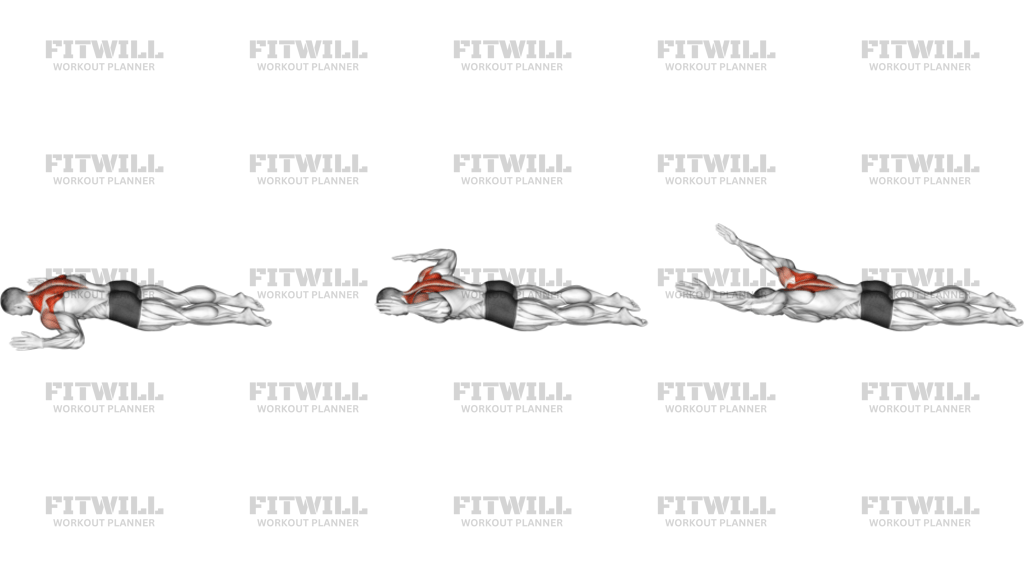
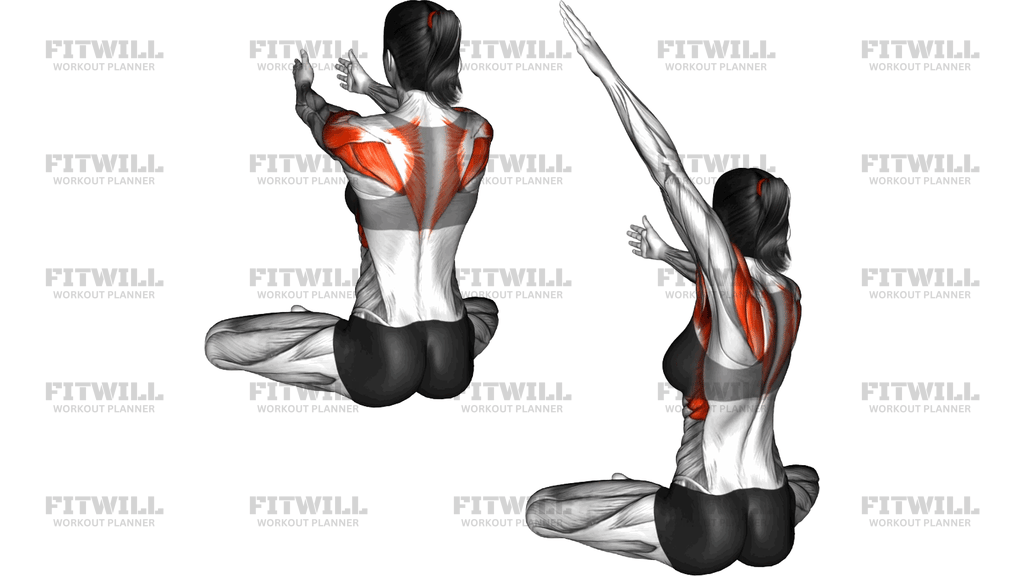
The Seated Alternate Arms Archer Back Rotation is a body-weight mobility drill that combines thoracic rotation with a sweeping, archer-style arm pattern. You sit on the floor with your legs folded to one side, extend both arms forward at chest height, and then rotate your upper back while one arm reaches up and back and the other arm sweeps out behind you. The whole thing looks like drawing a bow and arrow, which is exactly where the name comes from.
This movement is most useful for people whose upper backs feel stiff and locked up from long hours of sitting, typing, or driving. The highlighted work falls on the muscles between the shoulder blades — the rhomboids and mid-traps — along with the rear shoulders, which control the reaching arm as it travels overhead. Because you are seated with your hips anchored, your lumbar spine has far less freedom to cheat, so the rotation is forced to come from the thoracic spine where you actually want it.
The seated position is not a small detail; it is the entire point of the exercise. When you fold your legs to one side and plant your seat firmly on the floor, you build a stable base that locks the pelvis down. From there, the reaching arm pulls the ribcage into rotation, stretching the chest and front shoulder on one side while the mid-back muscles on the other side contract to control the return. The alternating arm pattern means each repetition rotates you in one direction and then the other, so you get balanced work without needing to reposition.
To get the most from it, keep the arms long and active rather than limp. Imagine pushing your fingertips away from your body as the top arm arcs up toward the ceiling and the bottom arm tracks back behind you. Let your eyes follow the reaching hand — the neck naturally participates in thoracic rotation, and following the hand keeps the movement smooth. Stay tall through the crown of your head instead of collapsing into the reach.
This drill fits well as a warm-up before pressing, pulling, or overhead work, and it also works as a standalone desk-break mobility reset. Desk workers, swimmers, and throwers who need rotational range will notice the payoff quickly, and because it requires no equipment and very little space, it is easy to do almost anywhere. Move within a comfortable range, never force the rotation, and let the range improve gradually over sessions.
[ Workout Log & Planner ]
Put your next workout in Fitwill
Keep your plan and training log ready when you are.


Instructions
- Sit on the floor with your legs folded to one side so both knees point in the same direction and your seat is firmly planted, or use a simple cross-legged position if that feels more stable.
- Sit tall and extend both arms straight out in front of your chest at shoulder height, hands relaxed with fingers long, as if you are reaching toward a wall.
- Brace your core lightly and lock your pelvis down against the floor so your hips cannot twist during the rotation.
- Begin the rep by rotating your upper back to one side: sweep one arm up and back overhead while the other arm travels out behind you, keeping both elbows straight.
- Reach the top arm toward the ceiling and the back arm away from you until you feel a stretch through your chest and a contraction between your shoulder blades, following your hand with your eyes.
- Pause briefly in the end position, keeping your seat down and your torso tall rather than leaning back to gain range.
- Reverse the sweep under control, bringing both arms back to the extended position in front of your chest.
- Repeat the pattern immediately on the opposite side so the rotations alternate left and right with each repetition.
- Exhale as you rotate into the reach and inhale as you return to center, keeping the breath steady and unhurried.
- Complete your reps on the alternating pattern, then release the arms down and reset your seated position before standing up.
Tips & Tricks
- The most common mistake is twisting from the lower back instead of the upper back — if your pelvis lifts off the floor mid-reach, exaggerate squeezing your seat down and reduce how far you rotate.
- Bent elbows turn this into an arm exercise; think about pushing your fingertips along an arc so the arms stay long and the shoulder blades do the steering.
- If the overhead reach feels pinched at the front of the shoulder, angle the reaching arm slightly out to the side rather than straight up, and shorten the range until it clears.
- Do not let your ribs flare forward as the top arm lifts — keep your front ribs drawn down so the rotation comes from the spine, not from arching your lower back.
- Keep your head stacked over your ribcage; craning the neck to chase the hand while the torso barely moves defeats the purpose of the drill.
- Alternate sides every rep rather than doing all reps one way — the alternating pattern is what keeps the rotation balanced without resetting your seat.
- If you feel wobbly seated on the floor, place a folded mat or firm cushion under your seat to raise your hips and give the legs more room to fold.
- Treat the first two repetitions as scouts — move small, find where the rotation naturally stops, and only then settle into your working range.
- Slow is the point here; a rushed sweep uses momentum from the arms and skips the mid-back muscles the drill is meant to target.
Frequently Asked Questions
What muscles does the Seated Alternate Arms Archer Back Rotation work?
It primarily targets the muscles of the upper back between the shoulder blades, especially the rhomboids and mid-traps, while the rear shoulders control the sweeping arms. The obliques assist with the rotation, and the chest on the stretching side gets a lengthening effect.
Is the Seated Alternate Arms Archer Back Rotation good for beginners?
Yes, it is low-load and self-paced, so beginners can do it safely. Start with a smaller rotation and focus on keeping the seat planted and the elbows straight before trying to reach further.
Why should I sit with my legs folded to one side instead of standing?
The seated, legs-folded position anchors the pelvis, which limits the lower back from substituting for the thoracic spine. That is what makes the rotation train the upper back rather than just twisting at the waist.
How far should I rotate during the Seated Alternate Arms Archer Back Rotation?
Rotate only until you feel a comfortable stretch through the chest and a clear squeeze between the shoulder blades. If your pelvis lifts or your torso leans back to gain range, you have gone past the point where the upper back is doing the work.
Can I do this exercise every day?
Yes, body-weight rotation drills like this respond well to frequent practice, and many people use them as daily desk breaks. Just keep the intensity gentle so the joints never feel forced.
Should I follow my hand with my eyes during the rotation?
Following the reaching hand with your eyes is recommended because it lets the neck contribute naturally to the turn and keeps the movement coordinated. Avoid jerking the head ahead of the torso, though — the eyes lead, the spine follows.
What can I use instead if sitting on the floor is uncomfortable?
Sit on a folded mat, cushion, or the edge of a sturdy bench to raise your hips, which makes folding the legs much easier. The arm pattern and rotation stay exactly the same.
When is the best time to use the Seated Alternate Arms Archer Back Rotation?
It works well as a warm-up before overhead pressing, pulling, or any rotational sport, and equally well as a midday reset after long sitting. Either way, keep it before heavy loading rather than as a cool-down stretch for fatigued muscles.
Is it normal to feel one side rotate better than the other?
Very common — most people have a side-to-side difference in thoracic rotation. The alternating arm pattern already addresses this, so simply match the range on each side to what the stiffer side allows.