Lever Single Leg Deadlift On Hack Squat Machine
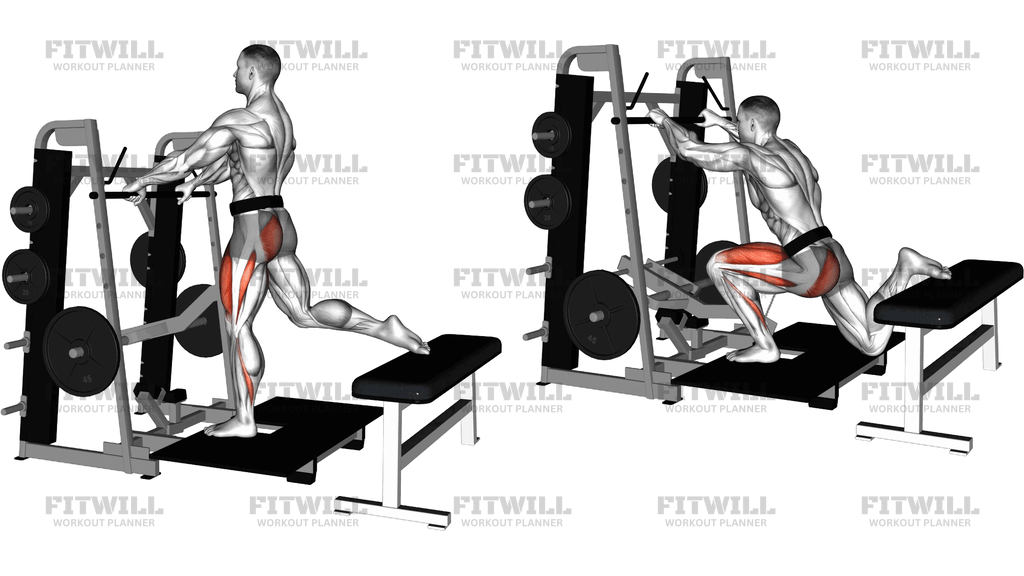
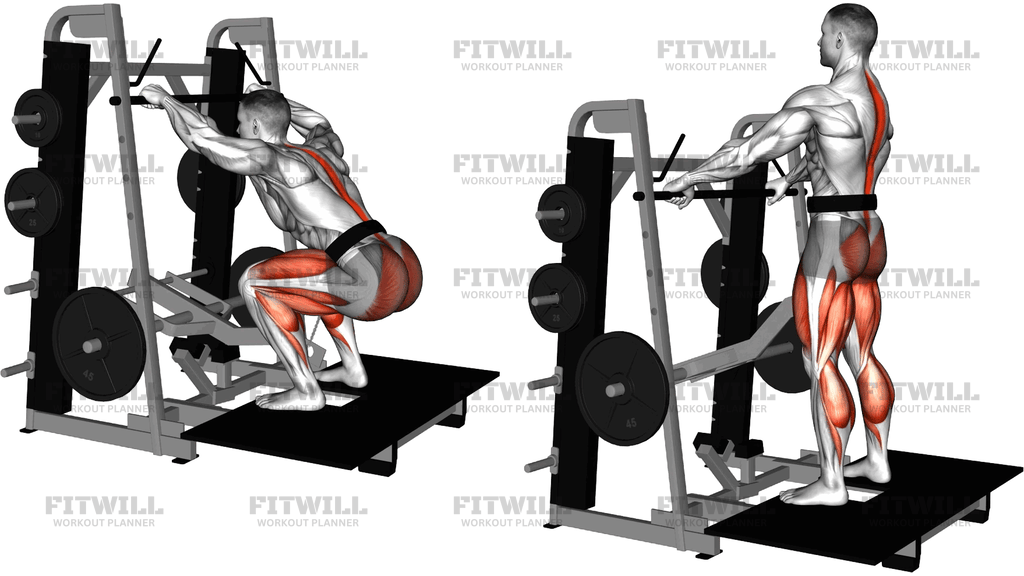
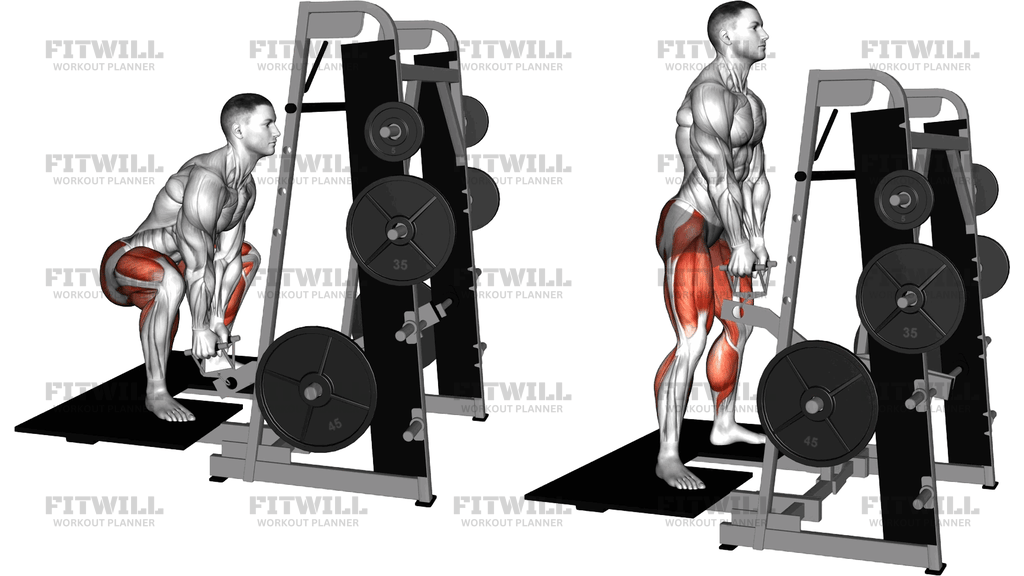
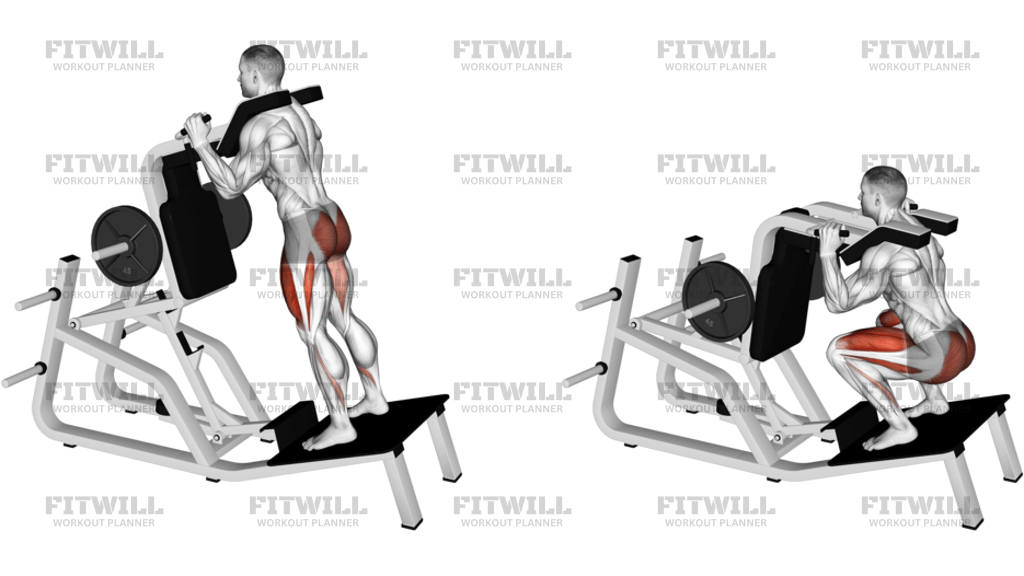
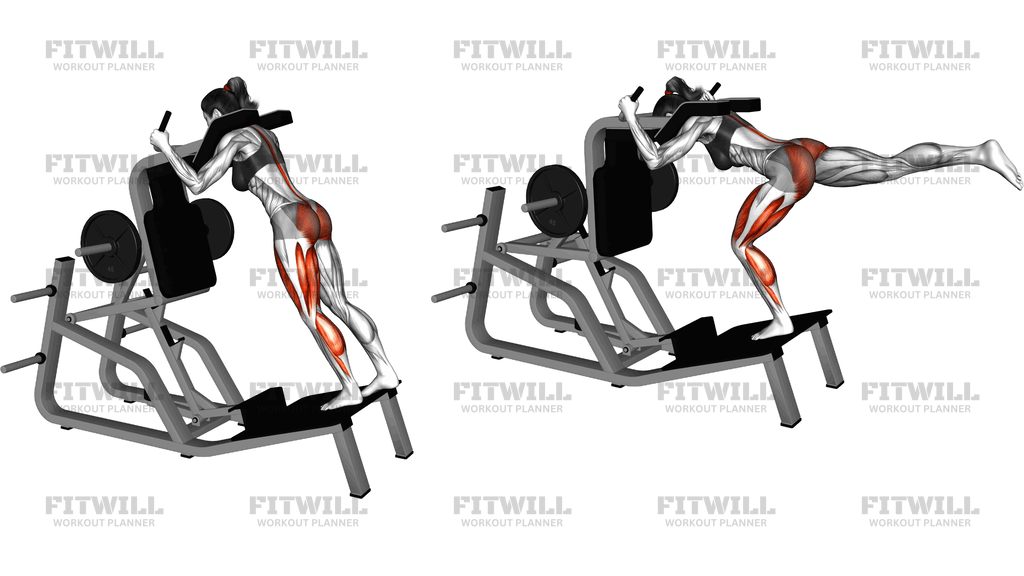
The Lever Single Leg Deadlift On Hack Squat Machine turns a hack squat machine into a hip hinge station. Instead of squatting, you stand on the foot platform facing the machine with the shoulder pads resting on your traps, then hinge forward at the hips while one leg stays planted and the other extends straight back behind you. The working leg's hamstrings and glutes load heavily through the hinge, and the machine's fixed lever arm provides resistance on the way down and the way up.
This setup solves a common problem with free-weight single-leg deadlifts: balance. Because the shoulder pads and handles anchor you to the machine, you can load the hinge meaningfully without your balance being the limiting factor. That makes it a strong choice for lifters whose hamstrings lag behind their quads, for people rebuilding single-leg strength after time away from barbell work, and for anyone who wants a targeted hamstring stretch under load without needing heavy dumbbells.
The primary work comes from the hamstrings of the standing leg, which lengthen as your torso lowers and contract to pull you back upright. The glutes drive the return and control the position of the lifted leg, the lower back muscles hold your spine in a neutral line, and the calf complex of the planted leg works to keep you stable on the platform. The elevated rear leg adds a hip extension demand similar to the top of a Romanian deadlift.
Setup details matter more here than on most machines. Your planted foot needs to sit squarely on the platform with the knee tracking over it, and the pads should rest on the muscular part of your shoulders, not your neck. If you stand too far forward or too low on the platform, the hinge arc changes and the pads can dig in or lift off as you lean. Take a moment to adjust before adding weight.
Execution is a push-back, not a bend. Think about driving the hips backward and letting the rear leg travel back with the torso so they move as one line, keeping a soft knee on the standing leg. Stop when you feel a strong hamstring stretch or the pads begin to shift, then squeeze the glute of the working leg to return. The range should be yours, not the machine's.
In practice, this movement fits best as an accessory after your main squat or hinge lift, typically for 2 to 4 sets of 8 to 12 reps per side. Start lighter than you think you need, because the single-leg stance changes how the load feels on the machine. Move deliberately, keep the ribs stacked over the pelvis, and treat the descent as the working part of the rep rather than something to rush through.
[ Workout Log & Planner ]
Put your next workout in Fitwill
Keep your plan and training log ready when you are.


Instructions
- Load the hack squat machine with a light weight to start, then step onto the foot platform facing the machine.
- Position your shoulders squarely under the pads, grip the handles in front of you, and place one foot flat in the center of the platform with the other foot lifted off.
- Set your standing knee in a soft, slightly bent position and square your hips so both point toward the machine.
- Brace your core and pull your shoulder blades back so the pads sit securely on your upper back.
- Push your hips backward and hinge forward, letting the free leg extend straight behind you so your torso and rear leg lower together as one line.
- Descend until you feel a deep stretch in the hamstring of the standing leg or the pads begin to lift from your shoulders, keeping the standing knee from collapsing inward.
- Drive the hips forward and squeeze the glute of the working leg to stand back up to the start, keeping the rear foot off the platform.
- Exhale as you hinge down under control and inhale as you return to standing.
- Complete all reps on one side, then reset your stance carefully before switching legs.
- Adjust the weight only after both sides feel stable at the same range of motion.
Tips & Tricks
- If the pads ride up your neck as you hinge, you are rounding forward instead of pushing the hips back; reset with the pads lower on your shoulders and lead with the hips.
- A common mistake is letting the rear leg swing out to the side for balance. Keep it in line with your torso so the hip extension work stays on the glutes rather than the outer hip.
- Do not chase depth at the cost of the standing knee. If the knee drifts inward or the heel lifts as you go lower, shorten the range before adding plates.
- Keep a soft knee on the planted leg, but avoid turning the rep into a squat. If your torso stops moving and only the knee bends, the hamstrings stop doing the work.
- The descent should take about twice as long as the return. Dropping quickly into the hinge is the fastest way to get yanked by the lever arm at the bottom.
- If one side reaches a deeper stretch than the other, match the weaker side's range instead of forcing the tighter side deeper.
- Step onto and off the platform with the weight still set only when you have a secure grip on the handles; otherwise, unload the machine between sets.
- Keep the ribs stacked over the pelvis throughout. If your lower back arches hard at the bottom, you have gone past your hamstring stretch and into spinal extension.
- Warm up the pattern with no weight or a single small plate before working up, since the single-leg stance changes the feel of a familiar machine.
Frequently Asked Questions
What muscles does the Lever Single Leg Deadlift On Hack Squat Machine work?
The hamstrings of the standing leg do most of the work, with the glutes driving the return and controlling the extended rear leg. The lower back stabilizes the spine and the calf complex of the planted leg handles stability.
Is this exercise good for beginners?
It can be, because the shoulder pads and handles remove most of the balance challenge that makes free-weight single-leg deadlifts difficult. Beginners should start with minimal weight and a modest range before progressing.
How is this different from a dumbbell single-leg Romanian deadlift?
The machine fixes the resistance path and anchors your shoulders, so balance stops being the limiting factor and you can load the hamstring stretch more directly. The rear leg also extends behind you into the machine's open space rather than being used for counterbalance.
How far down should I hinge on the hack squat machine?
Descend until you feel a strong hamstring stretch in the standing leg or the shoulder pads start to lift from your upper back. Going deeper than that usually means rounding the lower back rather than working the hamstrings more.
Should my standing leg be straight or bent?
Keep a soft, slightly bent knee. A locked knee stresses the joint without adding hamstring work, while a deep bend turns the rep into a one-legged squat and takes tension off the hamstrings.
Why does one side feel stronger than the other?
Side-to-side differences are normal with single-leg work and are one reason to train it. Always start with your weaker side and match its reps and range with the stronger side.
Can I substitute this if my gym has no hack squat machine?
A dumbbell or kettlebell single-leg Romanian deadlift trains a similar pattern, and a cable machine with a handle in the opposite hand works well too. Expect to use lighter loads until your balance adapts.
How many reps and sets should I use?
Two to four sets of 8 to 12 reps per leg works well as an accessory after your main lower body lift. The controlled lowering phase matters more here than grinding out heavy reps.
Is it safe for the lower back?
When the spine stays neutral and the hips do the hinging, the load sits on the hamstrings and glutes rather than the lower back. Keep the ribs stacked, stop at your own stretch point, and progress the weight gradually.
Where should my rear leg be during the rep?
It extends straight back roughly in line with your torso, moving with it as one piece. Letting it drift sideways or drop early shifts work away from the glutes and makes balancing harder.