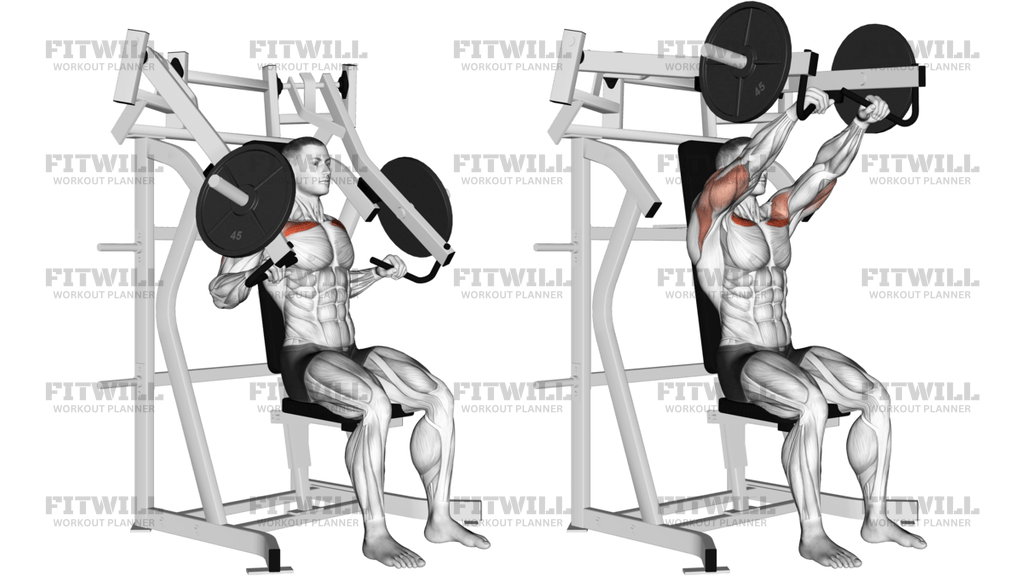
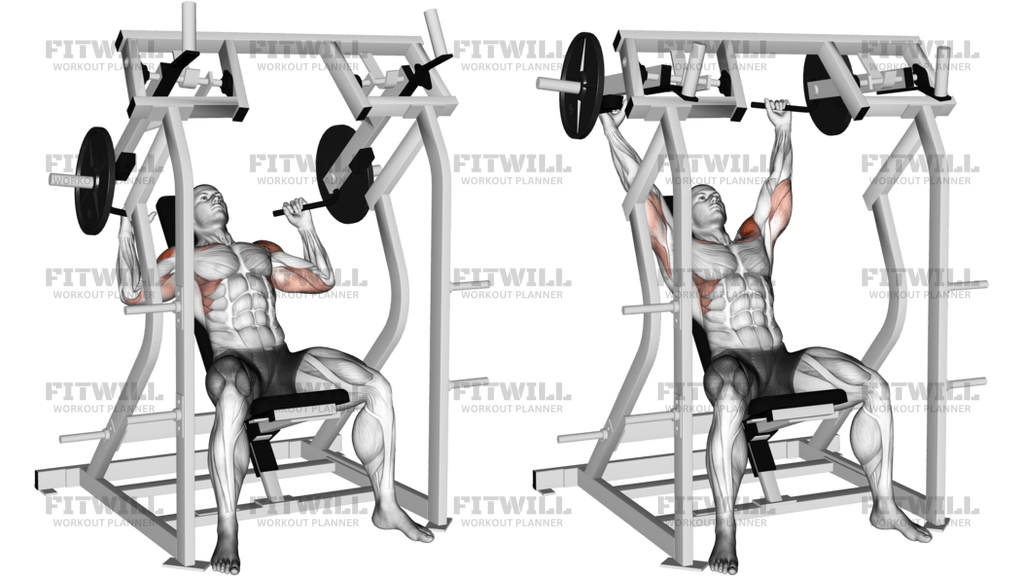
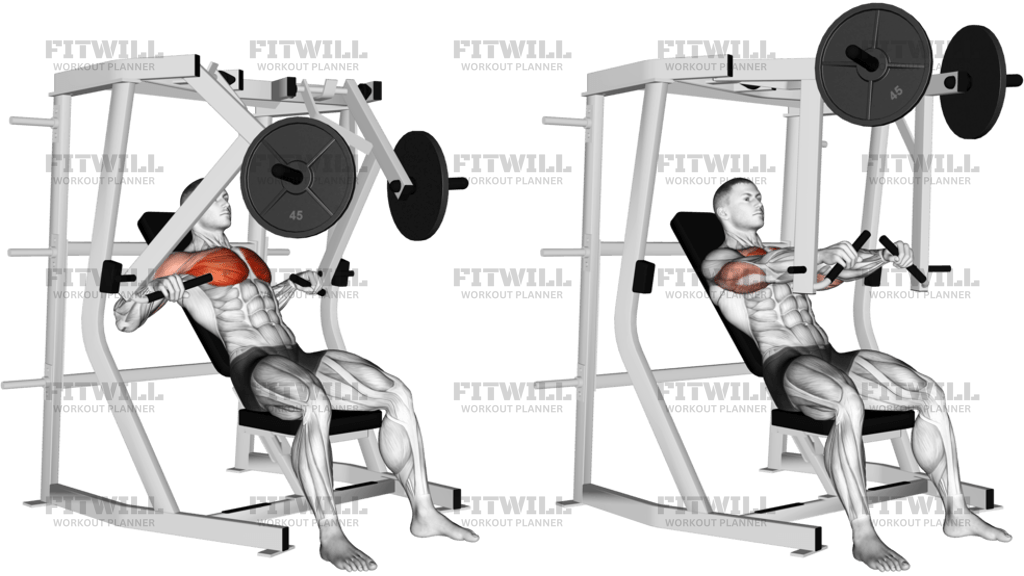
Lever Single Arm Shoulder Press (Plate Loaded) (Ve)
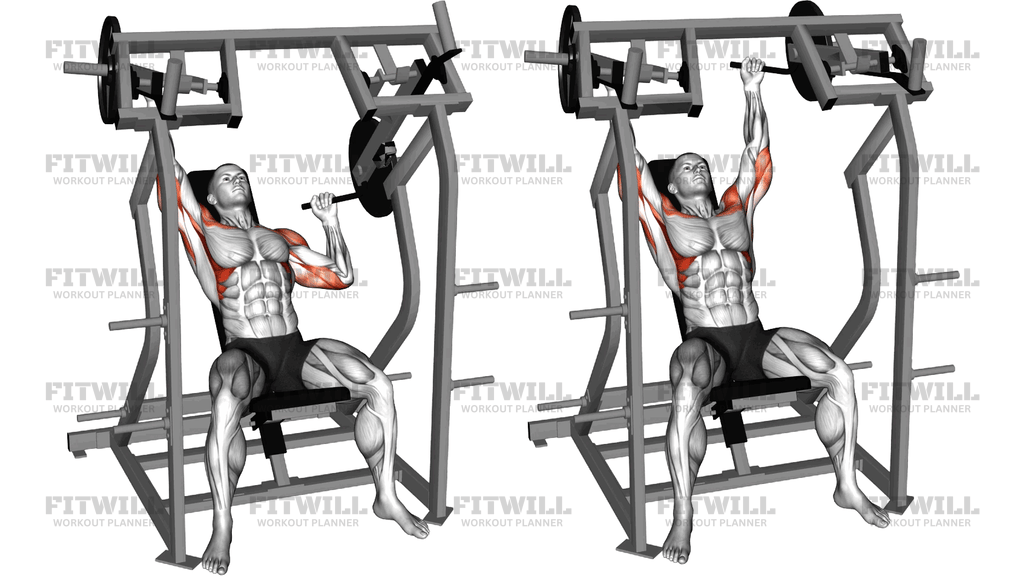
The Lever Single Arm Shoulder Press (Plate Loaded) is a seated machine press that works one arm at a time through a fixed overhead path. You sit on the machine's seat with your back against the pad, take hold of a single handle, and press it from shoulder height up to full extension overhead, exactly as you would in a dumbbell shoulder press but with the movement guided by the machine's lever arm. Weight plates are loaded onto the pegs at the top of the frame, and the lever design keeps the resistance consistent through the whole range of motion.
The single-arm setup is the main reason to choose this exercise over a standard two-hand machine press. Because each side has to do its own work, the stronger arm cannot cover for the weaker one, which makes this a reliable way to even out left-right differences in shoulder strength. The unilateral demand also means your core has to resist rotation toward the working side, adding a subtle trunk-stability element that a two-arm press does not provide.
The primary muscles worked are the front deltoids, with the side delts assisting as the arm travels overhead. The triceps straighten the elbow to finish each rep, and the upper traps help stabilize and slightly elevate the shoulder girdle at the top. The machine's back pad and fixed path remove much of the balance requirement of a free-weight press, letting you concentrate on driving through the deltoid itself.
Setup matters more than people expect on this machine. The seat height should place the handle roughly at ear or chin level in the start position, and your lower back, upper back, and head should stay in contact with the pad throughout. If the seat is too low, the handle starts behind your head and stresses the shoulder joint; too high, and you lose range of motion at the bottom. Take a minute to adjust it before you load plates.
To execute the press well, grip the handle firmly, brace your trunk, and press up until your arm is nearly straight without slamming the elbow into lockout. Lower the handle under control back to shoulder level, letting the machine's path guide the bar without dropping into the stretch. Keep the working-side elbow tracking slightly forward rather than flaring straight out to the side. Exhale as you press, inhale as you lower.
This exercise fits well as a main strength movement on shoulder day, as a finishing press after heavy free-weight work, or as a rehab-friendly alternative for lifters who want overhead pressing without the stabilization demands of a barbell or dumbbells. Because you work one side at a time, expect each set to take twice as long as a two-arm press and start with a lighter load than you would use bilaterally.
[ Workout Log & Planner ]
Put your next workout in Fitwill
Keep your plan and training log ready when you are.


Instructions
- Adjust the seat height so the handle lines up at about chin or ear level when you are seated with your back flat against the pad.
- Sit down with your feet flat on the floor roughly hip-width apart, and press your head, upper back, and lower back against the back pad.
- Grip the single handle with your working hand at about shoulder width relative to your torso, palm facing forward, and position your elbow just below shoulder height.
- Load plates evenly on the machine's weight pegs and secure the collars before you begin.
- Brace your core and slightly tuck your chin so your torso stays square and does not twist toward the working side.
- Press the handle up and slightly back along the machine's guided path until your arm is fully extended overhead.
- Pause briefly at the top with the elbow straight but not jammed into lockout.
- Inhale and lower the handle slowly back down to shoulder level, keeping tension in the deltoid rather than letting the weight drop.
- Complete all repetitions on one arm, then switch hands and match the rep count on the other side.
- After your final set, re-rack the lever arm fully, then unload the plates before standing up.
Tips & Tricks
- If your lower back arches off the pad as you press, the seat is likely too low or the weight too heavy; raise the seat or reduce the load so your back stays in contact.
- A common mistake is shrugging the working shoulder up toward the ear at the top of the press. Keep the shoulder blade controlled and let the deltoid finish the rep instead of the traps.
- Do not let your torso rotate toward the opposite side as the arm fatigues. If you catch yourself twisting, the core is failing before the shoulder does, so drop the weight.
- Stop the descent when your elbow reaches roughly shoulder level. Dropping deeper than that on a loaded machine lever can pinch the front of the shoulder.
- Start with your weaker arm first and match that rep count with your stronger arm to close any side-to-side gap.
- Keep your wrist stacked directly over your elbow at the start position; a bent-back wrist under load strains the forearm and shifts work away from the deltoid.
- Because the lever arm amplifies momentum, avoid bouncing out of the bottom. A one-second pause at shoulder level keeps the front delts under continuous tension.
- If the machine lets you set the seat angle, a slight backward lean of the pad opens the chest and gives the shoulder a comfortable pressing angle without rounding the lower back.
- Grip the handle as far around the fingers as is comfortable rather than choking it deep into the palm; this reduces wrist fatigue on higher-rep sets.
Frequently Asked Questions
What muscles does the Lever Single Arm Shoulder Press (Plate Loaded) work?
The front deltoids are the main movers, supported by the side delts and triceps. The upper traps assist with shoulder girdle stability, and the core works to keep your torso from rotating as you press with one arm.
Why press one arm at a time instead of using both handles?
Single-arm pressing prevents your stronger side from compensating for the weaker one, which helps correct imbalances over time. It also adds a light anti-rotation demand on the trunk that you do not get from a two-arm press.
How high should I set the seat on this machine?
Set it so the handle sits at about chin or ear level with your back flat against the pad. If the handle starts behind your head or above it, the shoulder joint is placed in a compromised position at the bottom of the press.
Is this exercise good for beginners?
Yes. The fixed lever path and back pad remove the balance and stabilization requirements of a dumbbell or barbell press, so beginners can learn the overhead pressing pattern with a low risk of the weight drifting out of position.
Should I lock my elbow out at the top of each rep?
Extend fully but do not slam the joint into a hard lockout, especially under heavy load. A brief controlled pause with the arm straight is enough to complete the range without dumping stress onto the elbow.
How far down should I lower the handle?
Lower until your elbow is around shoulder level, which is typically the natural bottom of the machine's path. Forcing the handle deeper than that can pinch structures at the front of the shoulder, particularly with heavy plates loaded.
What can I use if my gym does not have a plate-loaded shoulder press machine?
A seated dumbbell shoulder press done one arm at a time is the closest substitute, or a unilateral cable press from a low-to-mid pulley. Both let you train one side while keeping the trunk braced against rotation.
Why does my torso twist when my arm gets tired?
As the deltoid fatigues, your body recruits rotation and trunk lean to help finish the press. Reduce the weight so the working shoulder, not your torso, does the lifting.
Should I do both sides in every set or alternate arms rep by rep?
Finish all reps on one arm before switching so you can focus on the working shoulder's position and path. Alternating mid-set makes it easy to lose count and to let form drift as you swing between sides.