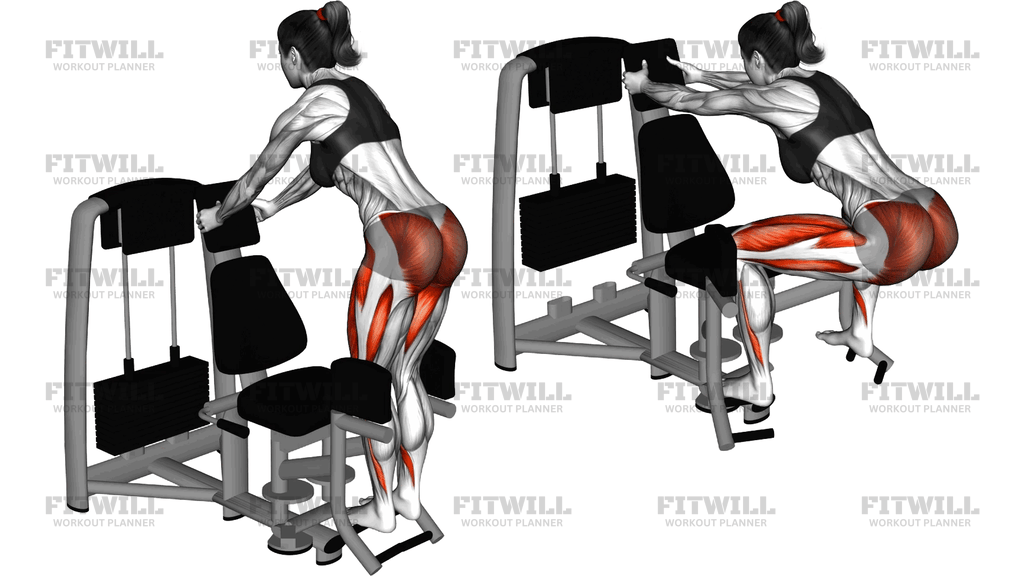
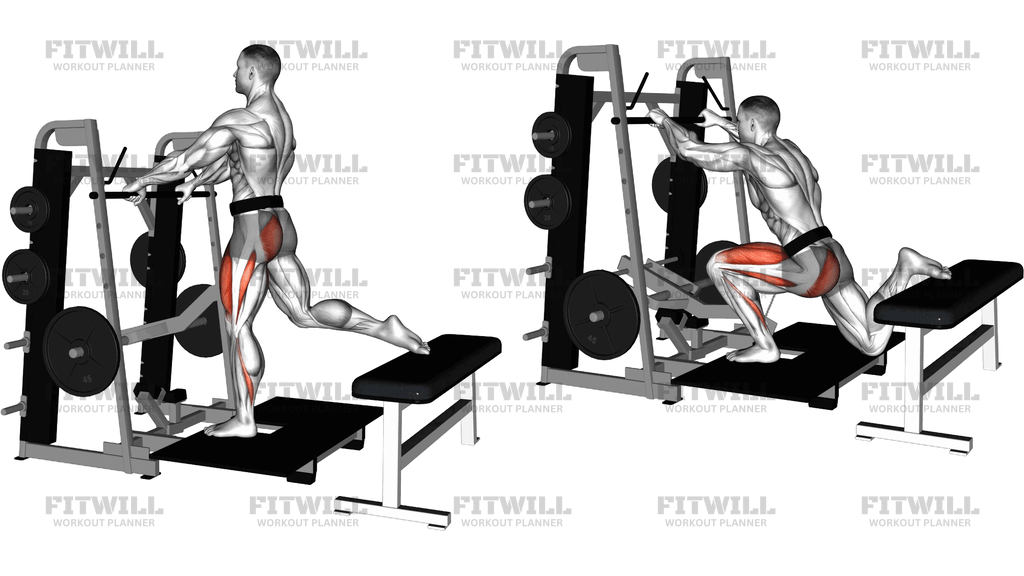
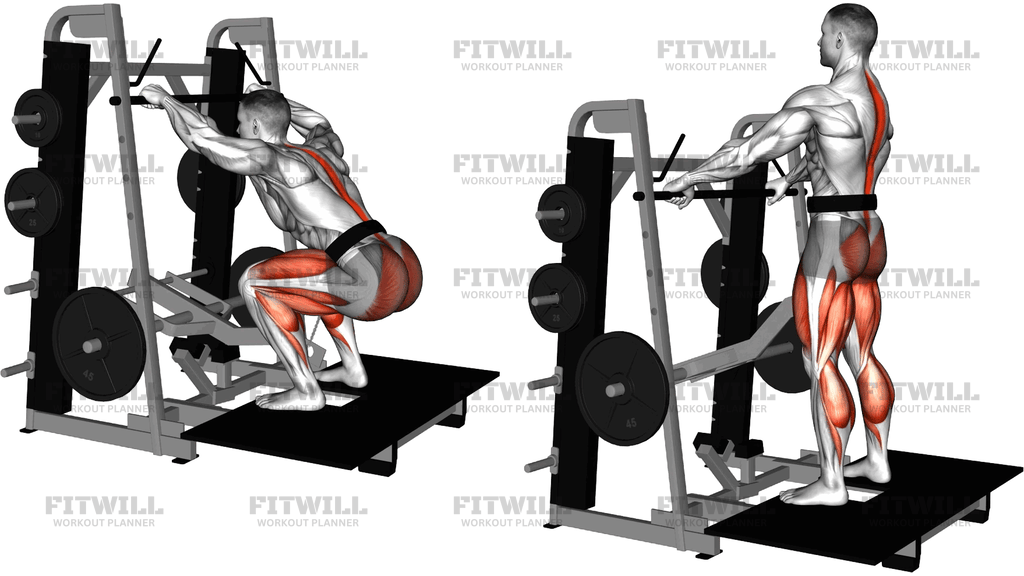
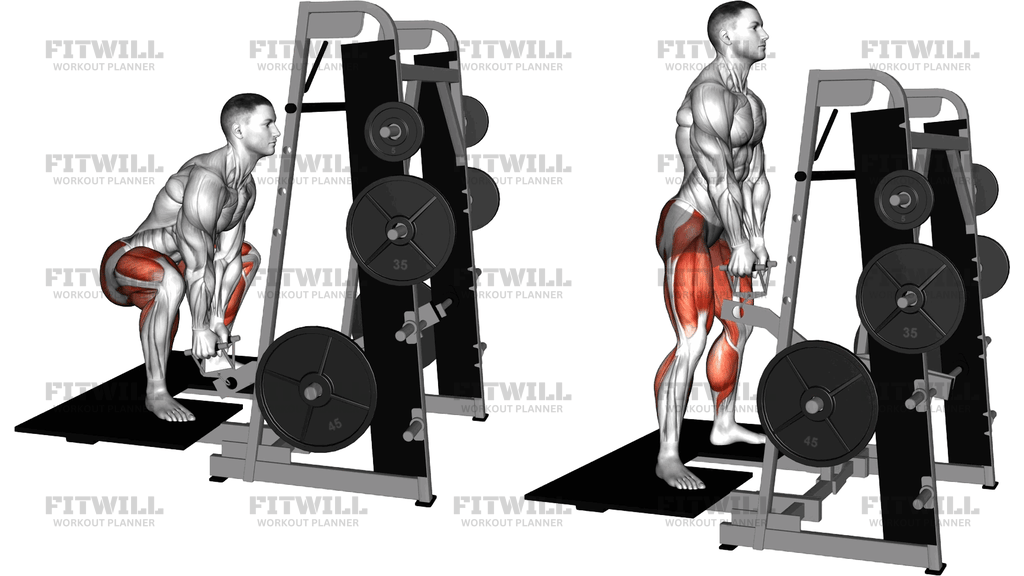
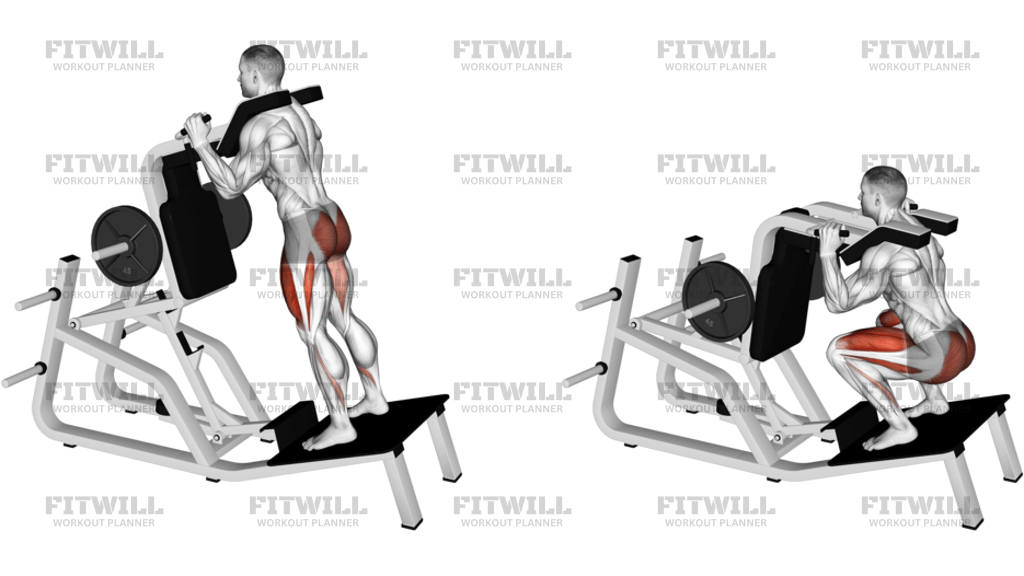
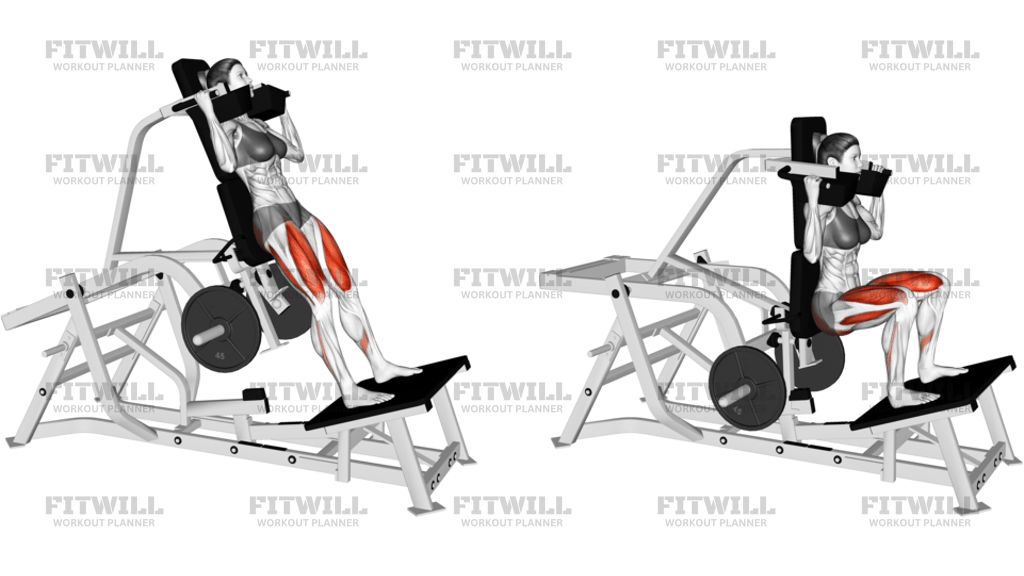
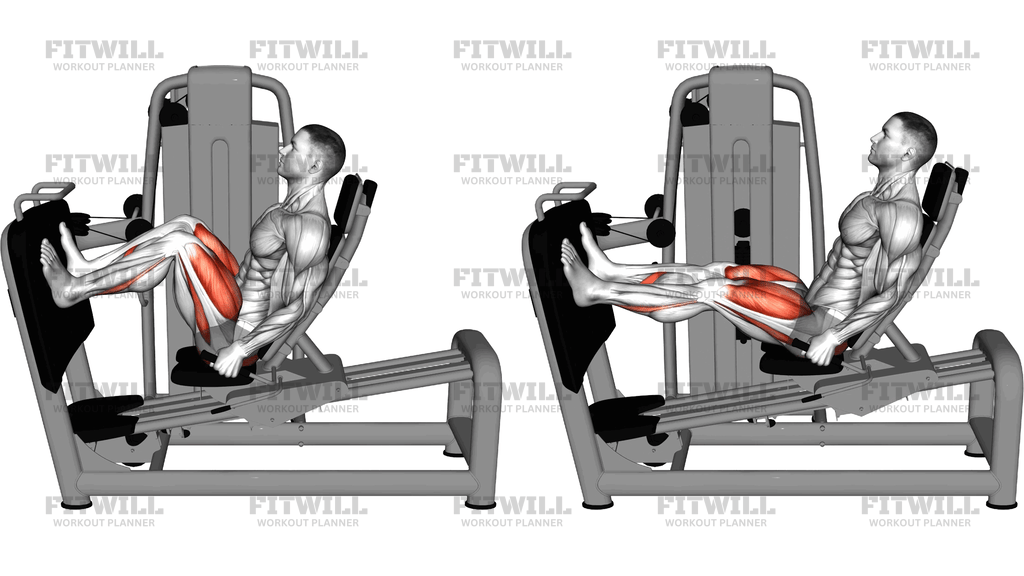
Lever Angled Leg Press
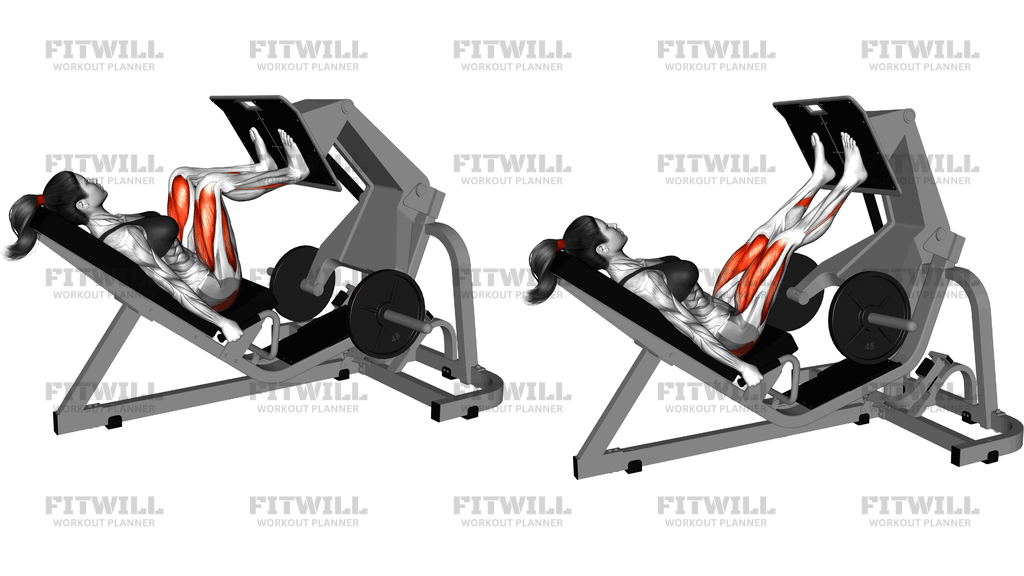
The Lever Angled Leg Press is a plate-loaded machine exercise performed from a reclined seat with the feet planted on a large angled platform. Because the resistance arm travels along a fixed lever path, the movement combines the heavy loading potential of a free-weight leg press with the stability of a guided track, making it one of the most reliable ways to train the legs hard without demanding balance or spinal loading.
The primary work is done by the quadriceps, which extend the knees as you drive the platform away from you. Depending on foot placement and depth, the glutes and hamstrings contribute significantly as the hips extend, and the adductors help control the knees throughout. The calves assist at the top of the press when the legs approach full extension. The fixed seat and backrest keep your torso locked in place, so the effort stays in the legs rather than leaking into the lower back.
Setup matters more on this machine than most people realize. The angle of the seat, the position of your hips in the pad, and the width and height of your foot placement all change which muscles dominate and how comfortable the movement feels at the bottom. Sitting too high or sliding forward on the seat rounds the lower back under load, while placing the feet too low shifts stress toward the knees. Take a moment before each set to get your glutes and back flat against the pad.
To perform the press, place your feet about shoulder-width apart on the platform, release the safety catch, and lower the sled by bending the knees until they reach roughly 90 degrees or slightly deeper if your mobility allows. Drive through the whole foot, keeping the heels down, and press back up without snapping the knees straight. Exhale on the push, inhale as you lower, and keep the movement smooth from start to finish.
This exercise suits a wide range of lifters. Beginners appreciate the guided path and the reduced coordination requirement, while more experienced lifters use it to load the legs with heavy weights after squats or on days when fatigued stabilizers would otherwise limit the work. It is also a common choice for people managing lower back sensitivity, since the backrest supports the torso and the weight never compresses the spine the way a barbell squat does.
Practical safety points are simple but important. Never place your hands under the sled, keep the safety stop engaged until your feet are planted, and avoid bouncing out of the bottom position. If your hips lift off the seat as you lower, you have gone deeper than your current mobility supports; reduce the range and rebuild it gradually.
[ Workout Log & Planner ]
Put your next workout in Fitwill
Keep your plan and training log ready when you are.


Instructions
- Sit on the machine seat and press your lower back and glutes firmly against the backrest before touching the platform.
- Place your feet on the platform about shoulder-width apart, centered so your knees track over the middle of your feet, and grip the side handles.
- Check the weight plates are secure on the loading pegs and confirm the safety stop is set to an appropriate depth for your range.
- Brace your core lightly, then release the safety catch and extend your legs to bring the sled to the starting position with knees nearly straight but not locked.
- Inhale and lower the sled under control by bending the knees, letting them travel in line with your toes until you reach about 90 degrees or just past.
- Pause briefly at the bottom without letting your hips roll off the seat.
- Exhale and drive through your heels and mid-foot to press the platform back up, extending the knees with control.
- Stop just short of full knee lockout at the top, keeping tension on the leg muscles.
- Complete your repetitions, then re-engage the safety catch before releasing your feet from the platform.
Tips & Tricks
- A common mistake is lowering the sled until the lower back rounds off the pad. If your hips start to tuck at the bottom, stop a few degrees higher and work on that depth over time.
- Placing the feet too low on the platform shifts stress to the knees and shortens the glute involvement. Move them an inch or two higher if you feel pinching at the front of the knee.
- Do not let the knees cave inward as you press. Think about pushing the floor apart with your feet to keep them tracking over the toes.
- Avoid bouncing the sled off the bottom of the stroke. The stretch reflex makes the weight feel lighter but robs the quadriceps of the hardest part of the rep.
- Because the lever arm is fixed, you cannot lean or shift to grind out ugly reps. If the last rep stalls halfway, rack it rather than fighting it with a rounded back.
- Keep even pressure across the whole foot. Lifting the heels at the bottom usually means the depth is beyond your ankle mobility, not that you need to push harder.
- Adjust the seat so your knees stay slightly bent even at full extension; a seat set too far back forces you to reach with the hips and strain the lower back at the bottom.
- Load plates evenly on both sides of the machine so the sled does not pull to one side during the press.
Frequently Asked Questions
Which muscles does the Lever Angled Leg Press work most?
The quadriceps do the majority of the work as you extend the knees. The glutes and hamstrings assist strongly as the hips extend, especially when your feet are placed higher on the platform.
Is the Lever Angled Leg Press good for beginners?
Yes, it is one of the most beginner-friendly leg exercises because the sled follows a fixed path and the backrest supports the torso. Start with a light load to learn your comfortable depth before adding plates.
How does foot placement change the Lever Angled Leg Press?
Feet placed higher on the platform increase hip and glute involvement and reduce knee flexion demand. Feet placed lower and closer together emphasize the quadriceps but place more stress on the knees.
How deep should I go on the Lever Angled Leg Press?
Lower the sled until your knees reach roughly 90 degrees, or slightly deeper as long as your glutes and lower back stay glued to the seat. The moment your hips tuck off the pad, the range is too deep for now.
Should my knees lock out at the top of the press?
No, stop just short of full lockout so the quadriceps stay under tension. Slamming the knees straight at the top with heavy plates loaded is a habit worth avoiding.
Can I use the Lever Angled Leg Press instead of squats?
It can replace much of the leg training stimulus when squats are not an option, since it loads the quads, glutes, and hamstrings heavily. It does not train the core and stabilizers to the same degree as a barbell squat, so combining both when possible is ideal.
Why do my heels lift off the platform at the bottom?
That usually points to limited ankle mobility or excessive depth for your current range. Raise your foot placement slightly, reduce the depth, and keep pressure spread across the whole foot.
Is the Lever Angled Leg Press safe for people with lower back sensitivity?
The backrest supports the torso and the fixed sled path removes balance demands, which many people with back sensitivities find more tolerable than free-weight squats. Keep the depth within a range where the lower back stays flat against the pad and consult a professional if you have a specific condition.
How should I breathe during the Lever Angled Leg Press?
Inhale as you lower the sled and exhale as you drive it back up. A light brace through the torso helps, but there is no need to hold your breath on machine work at moderate loads.