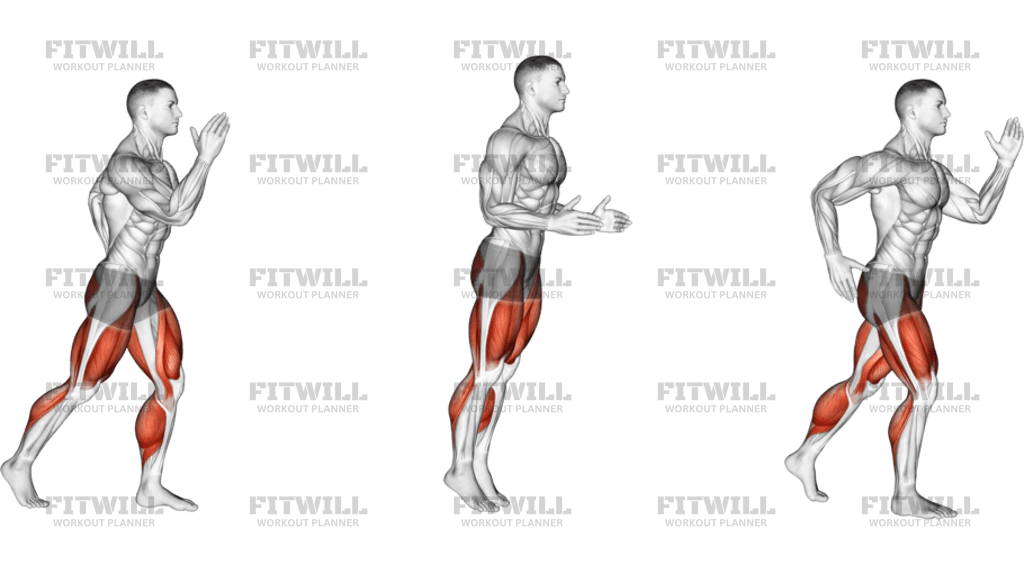
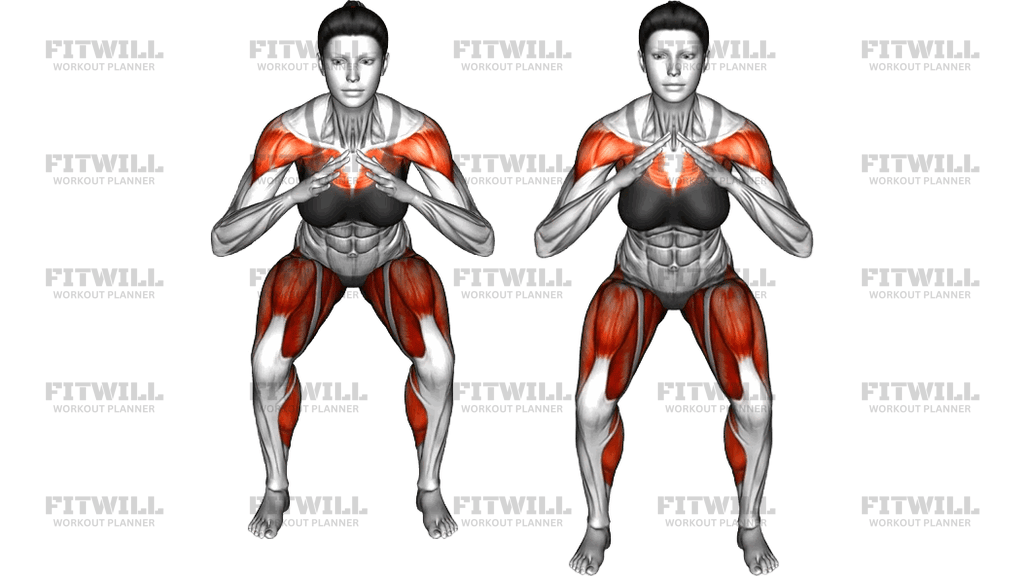
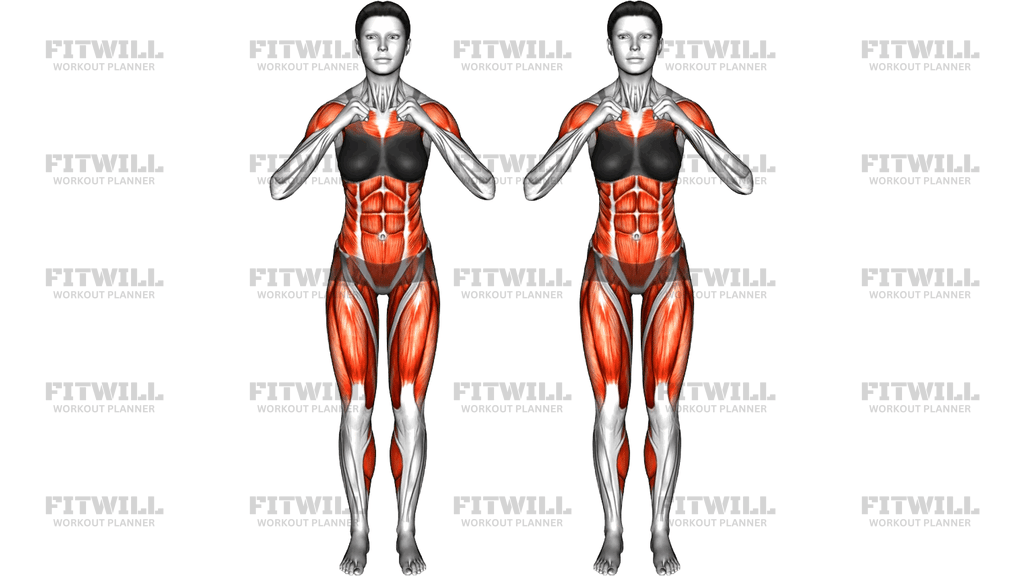
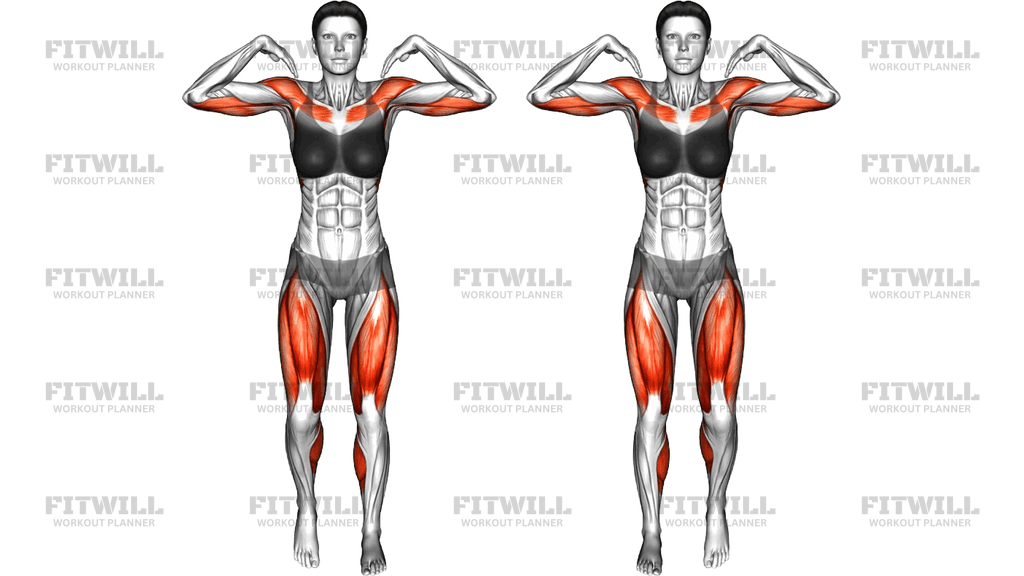
Walk In And Out Arm Swing
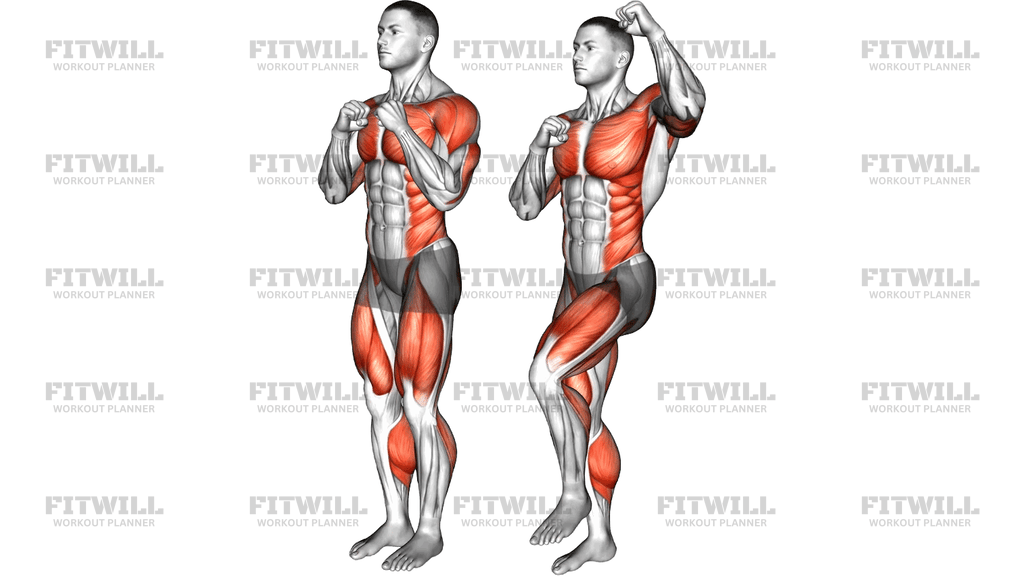
Walk In And Out Arm Swing is a standing, low-impact movement where you step your feet out to a wide stance and back in again while your arms swing in a natural, coordinated rhythm. There is no jumping and no equipment, which makes it one of the simplest ways to raise your heart rate, loosen up your shoulders and hips, and rehearse cross-body coordination before harder training. Think of it as a marching jack: the legs walk wide and narrow, the arms swing with purpose, and everything stays under your control.
Because the feet stay in contact with the floor, this movement suits a wide range of people. Beginners use it to build confidence and rhythm, people returning from time away from training use it to reintroduce full-body movement gently, and experienced lifters use it as a warm-up that wakes up the legs, shoulders, and core without fatigue. It is also a practical option for small spaces or quiet environments where jumping jacks would be too loud or too jarring.
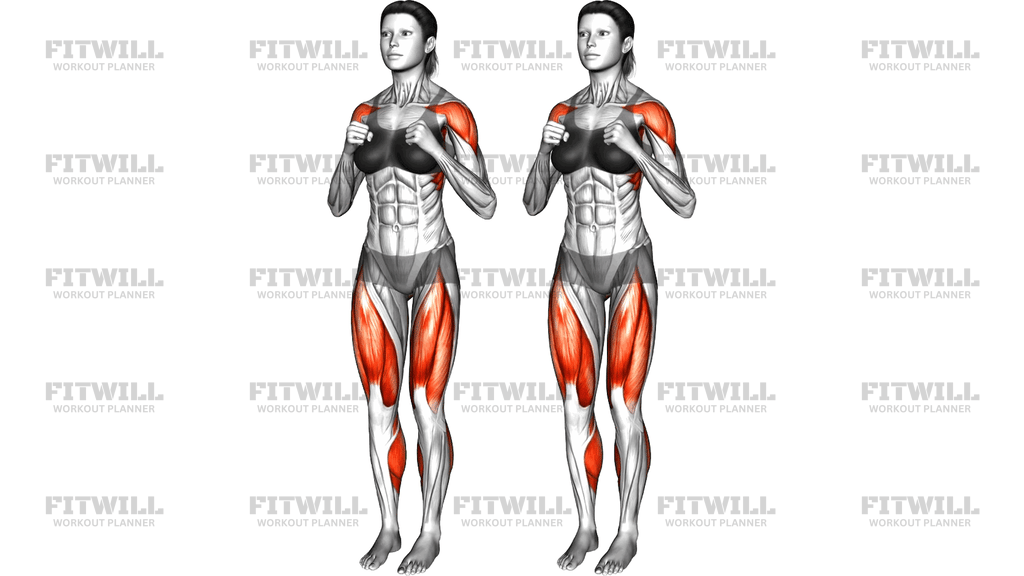
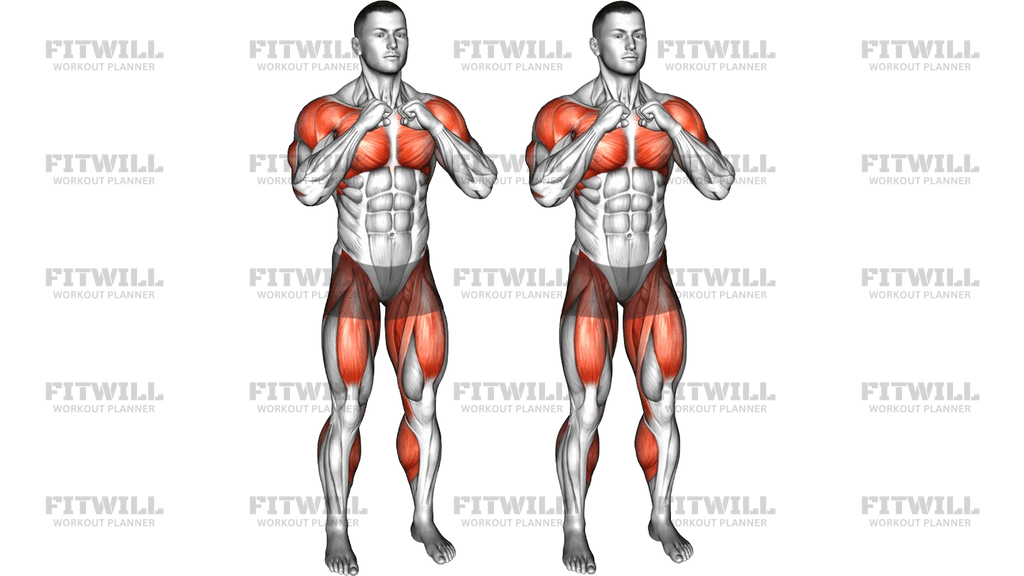
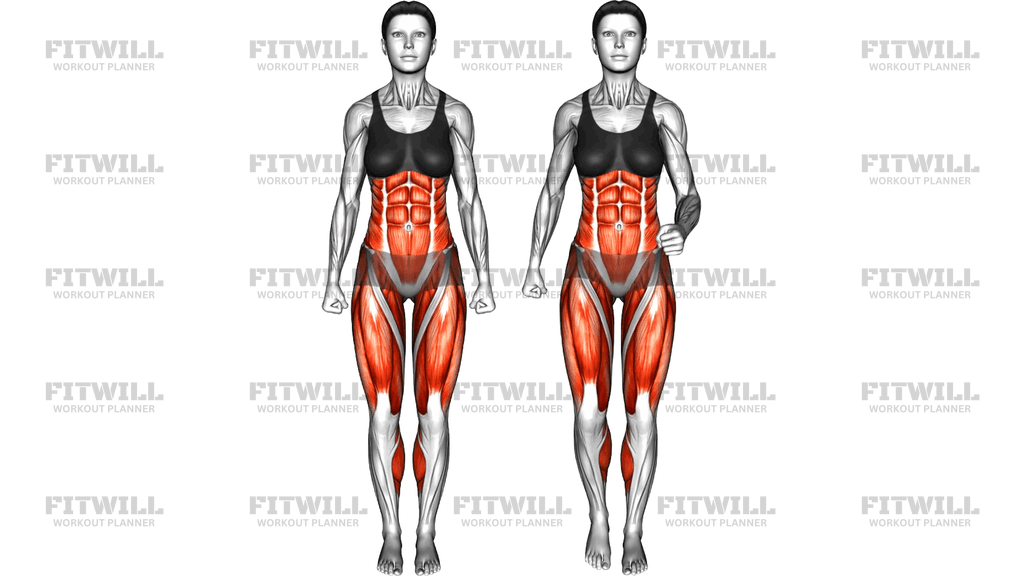
The work is distributed across the whole body. The quads, glutes, and calves handle each step out and in, the hip flexors control the leg return, and the shoulders and arms drive the swing. Your core stays quietly busy the entire time, stabilizing your trunk as your limbs move in opposite directions and your weight shifts from side to side with every step.
Setup matters more than it looks. Stand tall with soft knees, feet together, arms hanging at your sides. Your posture determines whether the arm swing becomes a smooth, shoulder-led pendulum or a stiff, jerky shrug. Keep your chest open, ribs stacked over your pelvis, and let the swing start from the shoulder rather than the elbow.
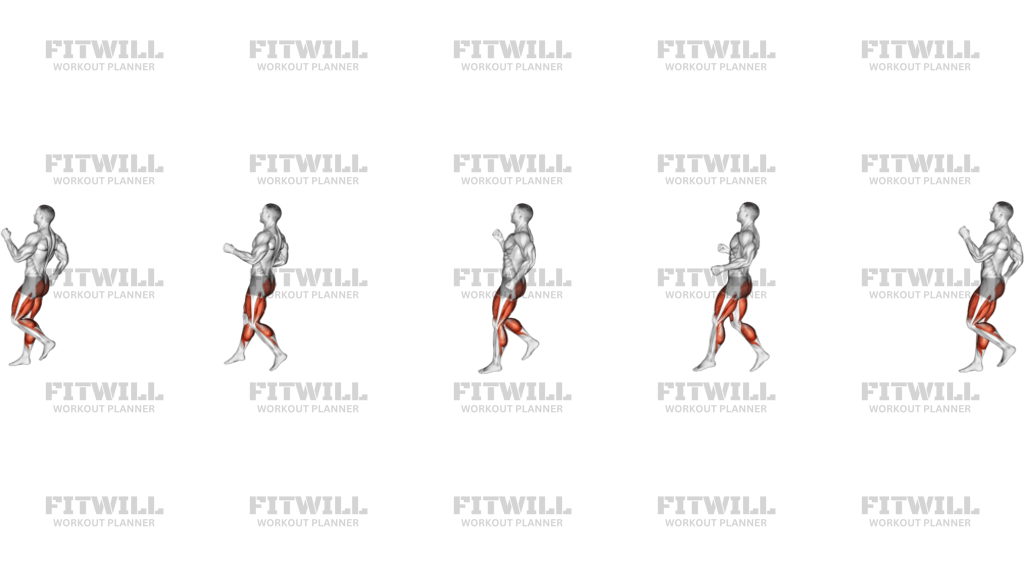
To execute it well, step one foot out to the side into a comfortable wide stance while both arms swing forward or upward in front of you, then step that foot back in as the arms return to your sides. Immediately repeat with the other leg so you keep alternating and keep a walking rhythm. The arms should move opposite to each other, one forward as the other swings back, just like natural walking but exaggerated. Stay light on your feet, roll from heel to toe on each step, and keep the tempo steady rather than rushed.
Common use cases include general warm-ups, low-impact cardio intervals, active recovery between strength sets, and coordination drills for older adults or anyone rebuilding movement patterns. Form-wise, the two things to watch are tempo and posture: if you rush, the arm swing collapses into random flailing, and if you slump, your lower back takes stress it does not need. Keep the steps deliberate, the swing smooth, and breathe steadily throughout.
[ Workout Log & Planner ]
Put your next workout in Fitwill
Keep your plan and training log ready when you are.


Instructions
- Stand tall with your feet together, arms relaxed at your sides, and your weight evenly distributed across both feet.
- Soften your knees slightly, brace your abdominals gently, and lift your chest so your ribs sit over your pelvis.
- Look straight ahead and let your shoulders hang down and back, away from your ears.
- Step your right foot out to the side into a stance slightly wider than your shoulders, rolling from heel to toe.
- As you step out, swing both arms forward and up in front of your body to roughly chest or shoulder height.
- Step your right foot back in to meet the left while your arms swing back down to your sides.
- Immediately repeat the step-out with your left foot, keeping the same arm rhythm, and continue alternating legs.
- Breathe in a steady, even rhythm — inhale through your nose, exhale through your mouth — without holding your breath.
- Keep each step controlled and quiet; if you hear a heavy slap, slow the tempo down.
- To finish, take one last step in, let your arms settle at your sides, and stand still for a few breaths before moving on.
Tips & Tricks
- Lead the arm swing from the shoulder, not the hand — driving from the elbows or fists is the most common reason the movement looks stiff and uneven.
- If you drift forward or backward across the room, pick a spot on the wall to face and step straight out to the side each time.
- Keep the step-out width comfortable rather than maximal; a stance where you could still bend your knees easily beats a wide sprawl that strains your hips.
- Land each step from heel to toe. Flat-footed stepping with locked knees turns a fluid movement into a jarring one.
- Match your arm swing to your leg rhythm instead of letting the arms race ahead — one full swing cycle per step-out and step-in.
- If your shoulders creep up toward your ears as you fatigue, reset once, shake your arms out, and restart with deliberately loose shoulders.
- Keep your abdominals lightly braced the whole time; a fully relaxed trunk combined with side-stepping can make your lower back sway with each step.
- For a slightly harder version, deepen the knee bend on each step-out so the quads and glutes do more work, or add a light pair of dumbbells once your rhythm is solid.
- For an easier version, reduce the step width and keep the arm swing below chest height until the coordination feels natural.
Frequently Asked Questions
What muscles does Walk In And Out Arm Swing work?
The quads, glutes, and calves handle the stepping, the hip flexors control the leg return, and the shoulders and arms drive the swing. Your abs work continuously to stabilize your trunk as your weight shifts from side to side.
Is Walk In And Out Arm Swing suitable for complete beginners?
Yes. Because one foot stays on the floor at all times, it is one of the most accessible full-body movements. Beginners can start with a narrow step and a small arm swing and expand the range as coordination improves.
How is Walk In And Out Arm Swing different from jumping jacks?
Jumping jacks move both feet at once with an impact landing, while this exercise walks one foot out and in at a time with no impact. That makes it quieter, easier on the knees, and better for warm-ups or low-impact cardio.
Should my arms swing forward together or opposite each other?
Both versions exist, but the most natural pattern is opposite-arm swinging, like exaggerated walking, with both arms moving forward together as you step out. Choose one pattern and keep it consistent rather than mixing them mid-set.
How wide should I step out?
Step to a width slightly beyond your shoulders where you still feel balanced and could bend your knees comfortably. Going much wider adds little benefit and makes the step-in harder to control.
How long should I perform Walk In And Out Arm Swing?
As a warm-up, 30 to 60 seconds is usually enough to raise your heart rate and loosen your shoulders and hips. As a low-impact cardio interval, you can continue for one to three minutes as long as your rhythm and posture hold up.
Why do I keep stumbling or losing rhythm?
It usually means the tempo is too fast for your coordination. Slow the movement down, let one step-out and one arm swing complete fully before starting the next, and the rhythm will click into place.
Can I do Walk In And Out Arm Swing as a substitute for jumping jacks?
Yes, it is a standard low-impact swap for jumping jacks in circuits and warm-ups. You sacrifice some intensity from the jump, so compensate with a slightly longer duration or a deeper knee bend on each step-out.
Is this movement safe for my knees?
With soft knees, a moderate step width, and quiet heel-to-toe landings, it is generally well tolerated because there is no jumping or impact. If you have a current knee issue, keep the step narrow and stop if you feel pain rather than simple muscle effort.