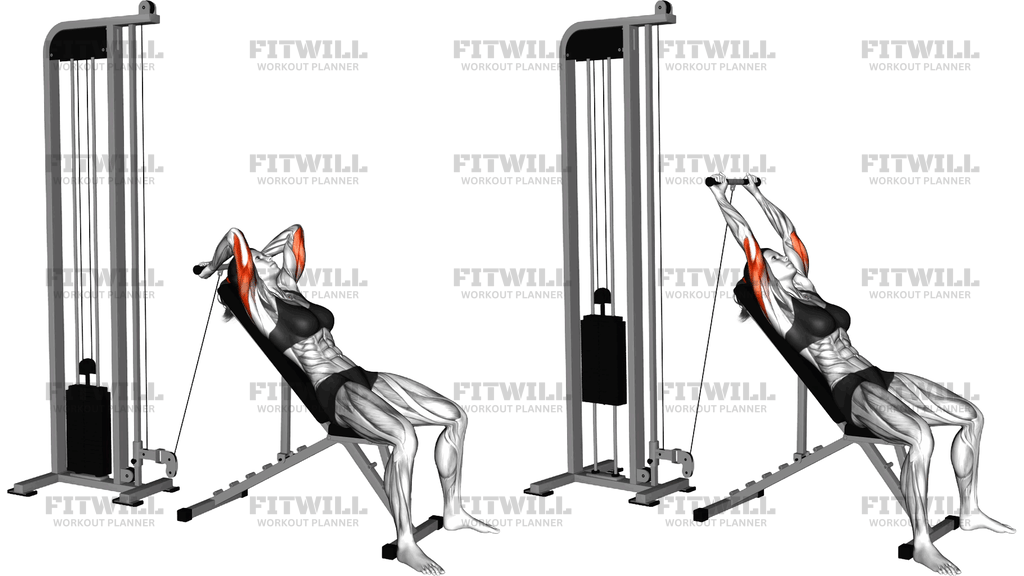
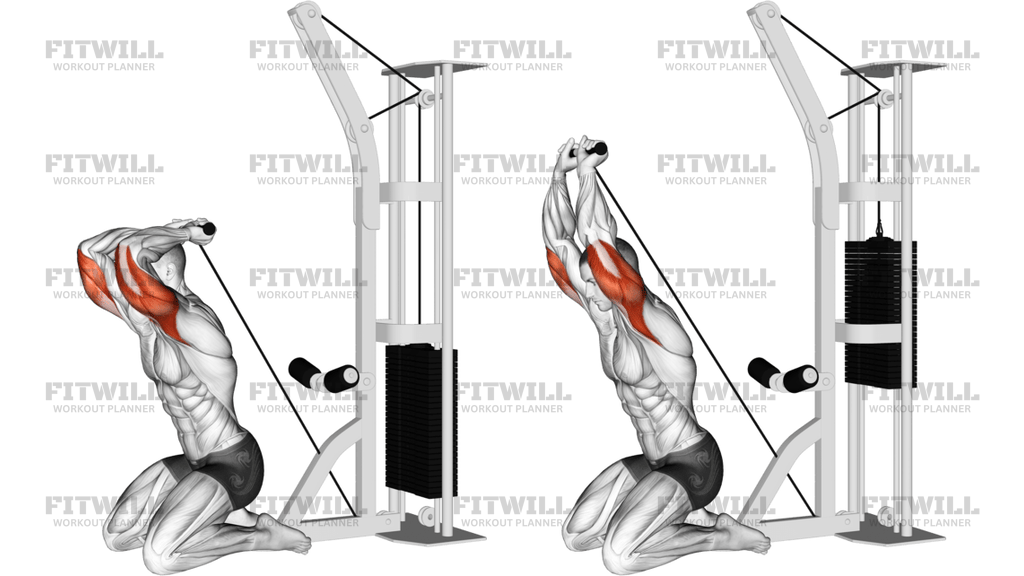
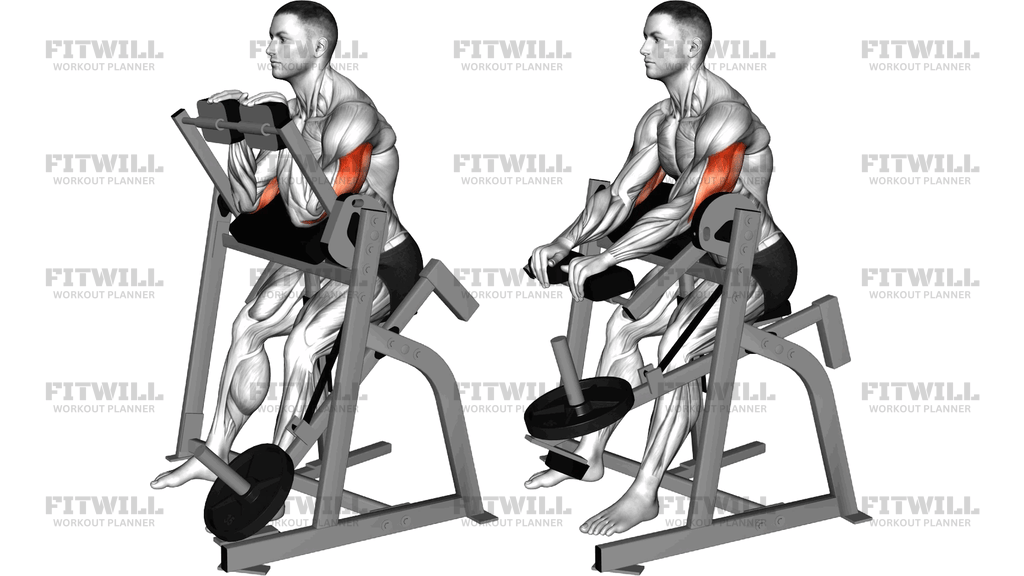
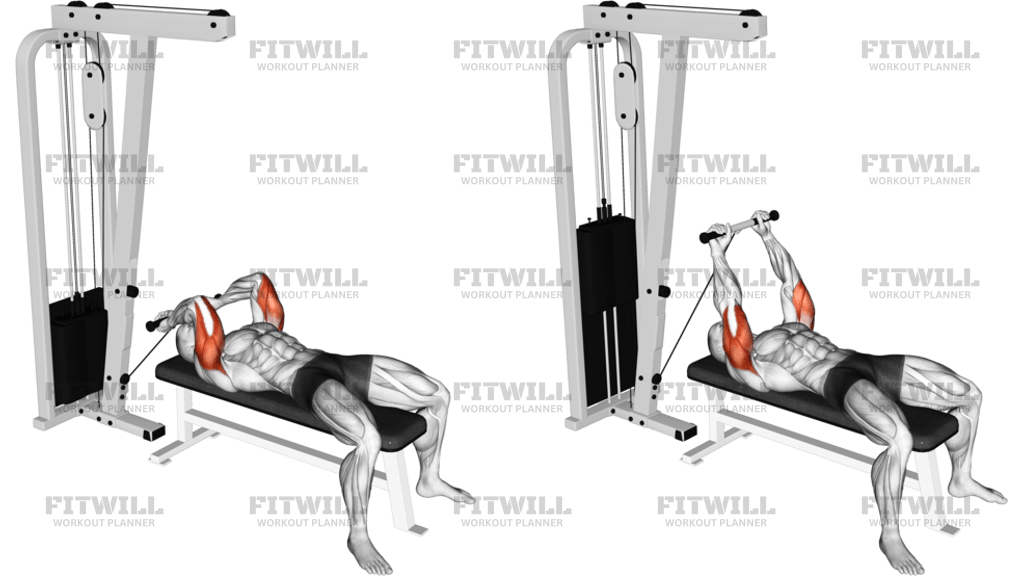
Cable Triceps Pushdown (Sz Bar)
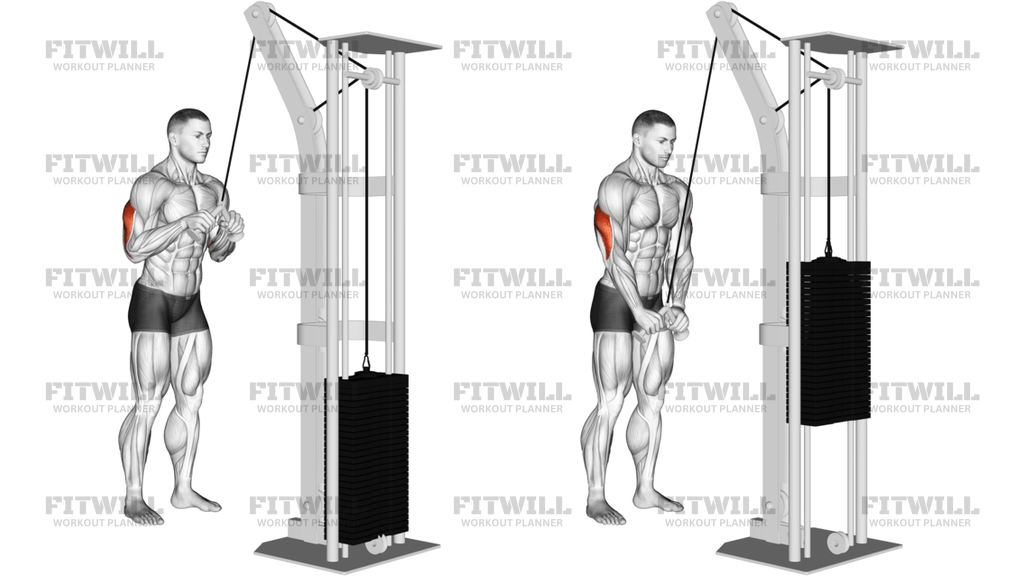
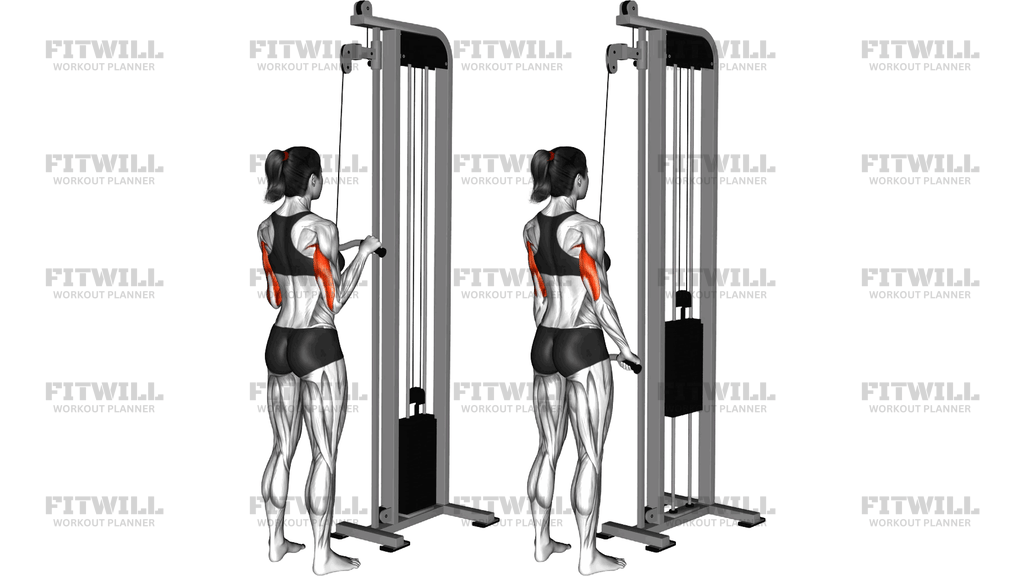
The Cable Triceps Pushdown (Sz Bar) is a standing isolation exercise performed at a cable stack with a straight bar attachment set at the top pulley. You face the machine, take an overhand grip on the bar, pin your upper arms against your sides, and press the bar down by straightening your elbows until it reaches thigh level. The cable keeps tension on the triceps through the entire range, including the fully stretched position at the top where a dumbbell pressdown would go slack.
This movement is one of the most reliable ways to build the triceps because it loads all three heads of the muscle with constant resistance while the shoulder stays fixed. That fixed shoulder position lets you focus entirely on elbow extension, which makes it easier to feel the triceps working and to spot left-right imbalances. The forearms and wrist stabilizers work isometrically to hold the bar, and the core quietly does its job keeping you upright, but the triceps are doing the actual work.
Setup matters more here than most people realize. Standing too far back turns the pressdown into a leaning body push and steals work from the arms. Gripping the bar too wide or letting the elbows flare forward and back turns it into a partial chest or shoulder press. Set the pulley high enough that the cable runs close to vertical, stand close to the stack with a slight forward lean, and keep the elbows glued to your ribs for the whole set.
To execute it well, start with the bar around lower chest height, elbows bent past 90 degrees. Exhale and press the bar down in a smooth arc until your arms are fully straight and the bar touches or nearly touches your thighs. Squeeze the triceps hard at the bottom for a beat, then let the bar rise slowly back up under control until your forearms approach your biceps without letting the elbows drift forward. The lifting phase is forceful; the return should take about twice as long.
The Cable Triceps Pushdown (Sz Bar) fits almost any training goal. Use moderate weight and higher reps at the end of an arm or upper body session to finish the triceps, or work it heavier with strict form early in the session if arm size is a priority. It is also a friendly choice for beginners: the cable path guides the movement, the standing position is stable, and the weight can be adjusted in small increments, making it easier to learn than free-weight pressing variations where the triceps only assist.
The main safety points are simple. Keep the wrists straight and neutral rather than bending them backward under load, never let the shoulders roll forward as you fatigue, and choose a weight you can stop at any point without jerking. If your elbows complain during the pressing motion, reduce the load and shorten the range slightly before pushing deeper again.
[ Workout Log & Planner ]
Put your next workout in Fitwill
Keep your plan and training log ready when you are.


Instructions
- Set the pulley of the cable machine to its highest position and attach a straight bar to the carabiner.
- Select your weight, then stand facing the machine about one to two feet from the stack with your feet roughly hip-width apart.
- Take an overhand grip on the bar with hands a little narrower than shoulder width, and pull it down until your elbows are bent at your sides and the bar is around lower chest height.
- Lean forward slightly from the hips, brace your core, and tuck your elbows firmly against your ribs; this is the starting position.
- Exhale and press the bar down in a smooth arc by extending your elbows, keeping your upper arms completely still.
- Continue until your arms are fully straight and the bar is at or near your thighs, then squeeze your triceps for a moment at the bottom.
- Inhale and let the bar rise back up slowly, bending only at the elbows until your forearms come close to your biceps.
- Keep the movement controlled so the weight stack never slams down between reps, and avoid leaning your body weight into the bar.
- Complete your target reps, then release the bar in a controlled manner and let the stack settle before stepping away.
Tips & Tricks
- If your shoulders creep up toward your ears as you press, consciously pull them down and back before starting the set; shrugging shifts tension away from the triceps.
- A common mistake is letting the elbows drift forward as the bar comes down, which shortens the triceps range. Imagine your elbows are pinned to your ribs with tape.
- Do not bend your wrists backward under load. Keep them straight and in line with your forearms, since hyperextended wrists are a frequent source of discomfort on straight-bar pushdowns.
- Using too much weight forces you to lean your torso into the press. If your chest or shoulders move the weight, drop the load until only your arms are working.
- Pause for a full second with your arms locked out at the bottom. Many people rush through the position where the triceps contraction is actually strongest.
- Control the negative for two to three seconds instead of letting the bar fly back up. The lowering phase is where constant cable tension pays off most.
- Keep your grip about shoulder width or slightly narrower. A very wide grip on a straight bar can irritate the wrists and makes it harder to keep the elbows tucked.
- Your knees should stay soft, not locked. Slightly bent knees help you hold the slight forward lean without swinging.
- If your elbows ache at full extension, reduce the weight and stop just short of lockout for a few sessions, then gradually work back into the full range.
Frequently Asked Questions
Which muscles does the Cable Triceps Pushdown (Sz Bar) work?
The triceps brachii, covering all three heads of the muscle, is the prime mover. The forearms and wrist stabilizers hold the bar isometrically, and the core helps you stay upright, but they play only a supporting role.
Is the Cable Triceps Pushdown (Sz Bar) good for beginners?
Yes. The cable path guides the bar, the standing position is stable, and the weight can be adjusted in small steps, so it is one of the easiest triceps exercises to learn with good form.
Why use a straight bar instead of a rope attachment for pushdowns?
A straight bar with an overhand grip gives you a fixed, stable hand position that lets you load heavier and press with a rigid wrist. A rope allows more wrist freedom and a slightly deeper split at the bottom, so the two work well as complements.
How close should I stand to the cable machine?
Stand close enough that the cable runs nearly straight down from the pulley to the bar, usually one to two feet from the stack. Standing too far back pulls the cable at an angle and encourages you to lean and push with your body weight.
Why do my shoulders rise during Cable Triceps Pushdowns?
Shrugging usually means the weight is too heavy or you are initiating the press from your shoulders instead of your elbows. Lower the weight, set your shoulder blades down and back before each rep, and think about driving the bar down with your elbows only.
How deep should the range of motion be?
Press down until your elbows are fully straight and the bar is at thigh level, and let the bar rise until your forearms nearly touch your biceps. If full lockout bothers your elbows, stop just short and rebuild the range gradually with lighter weight.
Can I use the Cable Triceps Pushdown (Sz Bar) to replace dips or close-grip bench presses?
It can substitute when elbow or shoulder pressing is uncomfortable, since it isolates the triceps without loading the shoulder joint through a press arc. It does not train the chest or front delts the way those presses do, so treat it as an arm-focused swap.
Where should this exercise go in my workout?
It works well as a primary triceps movement early in an arm session, or as a high-rep finisher after heavy compound presses. Because it is easy to recover from, it fits at either point depending on your priority.
How should I breathe during the exercise?
Exhale as you press the bar down and inhale as you let it return. Keep the breathing steady rather than holding your breath through the whole set.
Is it safe for my elbows to lock out at the bottom?
For most people, controlled full extension is fine and actually strengthens the triceps through a complete range. If locking out causes pain, use a lighter weight, slow the rep down, and extend only to a comfortable endpoint, checking your wrist position as well.