Cable Incline Triceps Extension
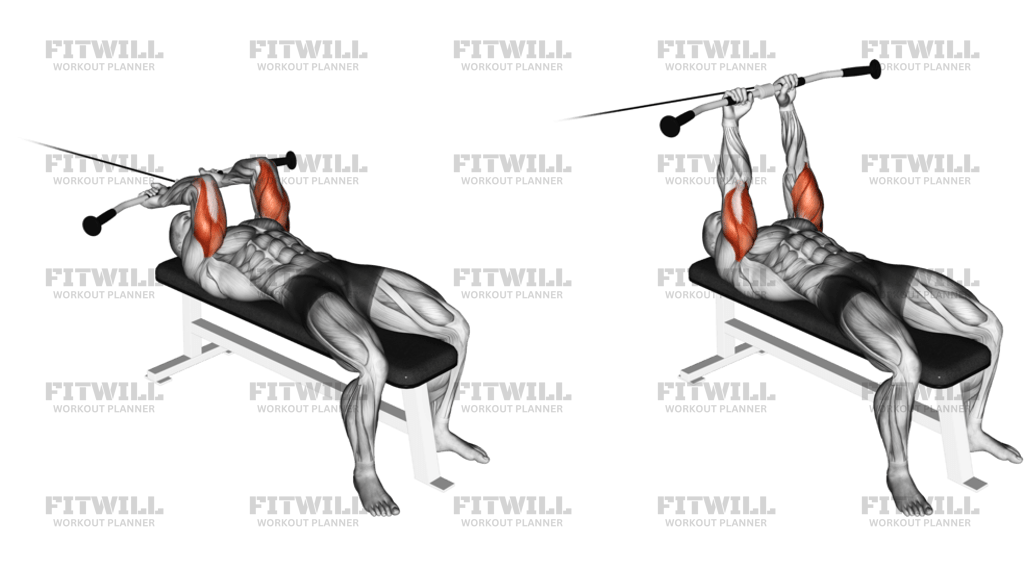
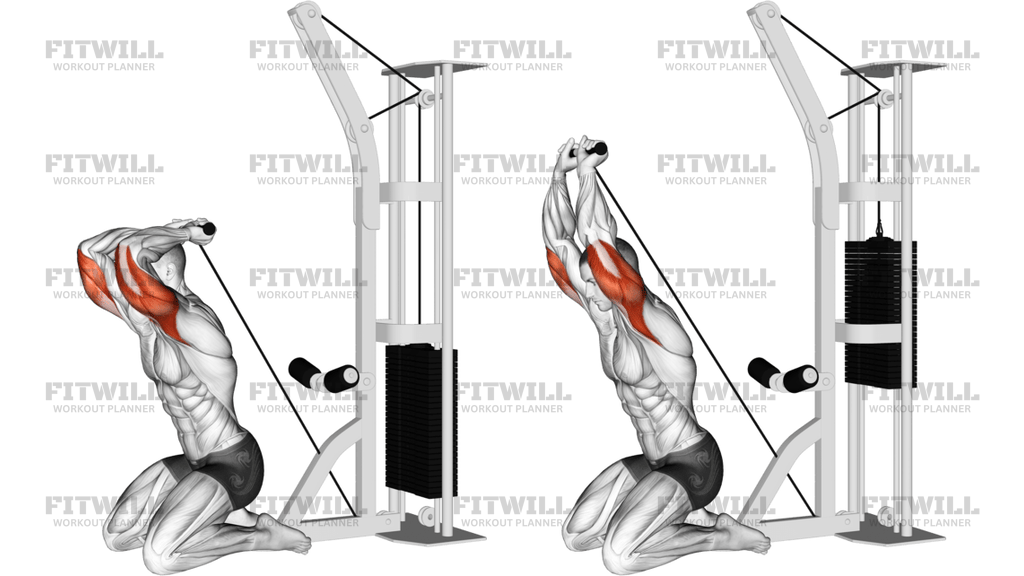
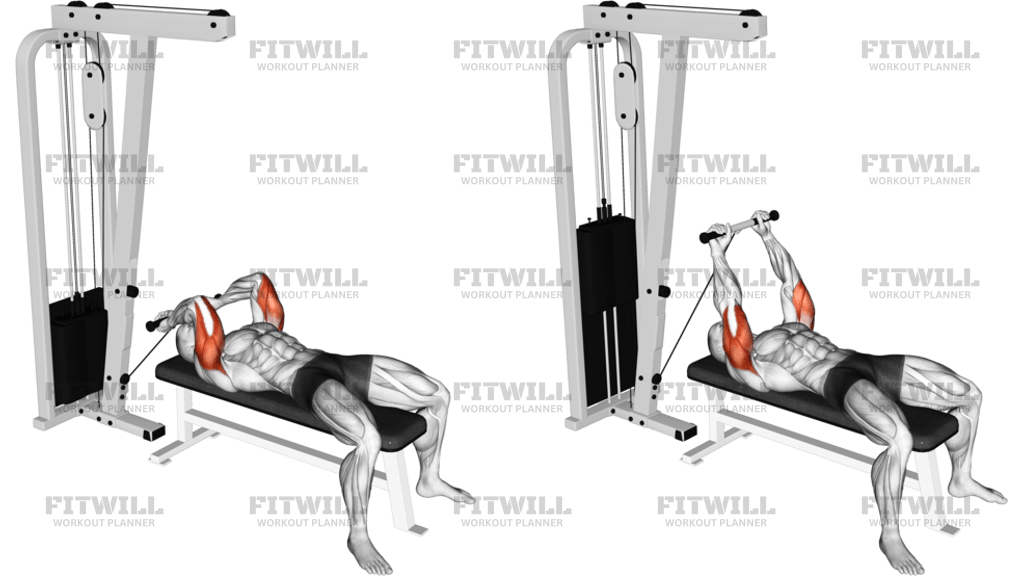
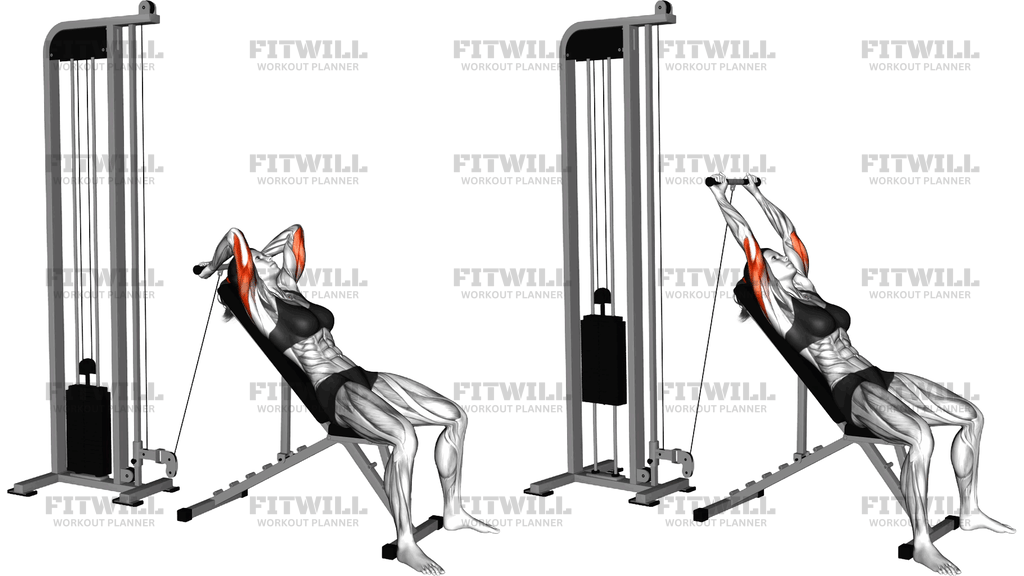
The Cable Incline Triceps Extension is an overhead triceps exercise performed while seated on an incline bench, using the low pulley of a cable machine. You lean back against the bench with the cable running behind your head, grip the bar attachment with an overhand grip, and extend your elbows from a bent position behind your head until your arms are fully straightened overhead. Because the cable pulls downward and behind you rather than gravity pulling straight down on a weight, the tension on the triceps stays continuous through the entire range of motion.
This movement is especially useful for lifters who want consistent resistance at every point of the extension. With dumbbells, overhead triceps extensions tend to feel easiest at the top and heaviest near the bottom; the cable setup flips that problem by keeping the triceps loaded even when the elbows are fully extended. The incline bench position also anchors your torso, so your shoulders and upper back can relax out of the movement and the work stays on the back of the upper arms.
The triceps are the prime movers throughout, and the long head in particular gets strong stimulation because the shoulder is flexed overhead while the elbow extends. This stretched, overhead position is one of the most demanding positions for the triceps and is often the missing piece for people whose arm training is built entirely around pushdowns. Your forearms, shoulders, and stabilizing muscles contribute modestly to control, but the intent of the exercise is to keep all of the effort in the elbows.
Setup matters more here than in most triceps work. The bench needs to sit far enough forward of the pulley that the cable travels behind your head without catching, and the seat angle should support an upright but slightly reclined torso. If the bench is too close, the cable will drag across your head or pull you backward at the top of the rep; if you sit too far forward, you lose the back support and the movement turns into a balance exercise.
Execution is straightforward once you are positioned: let the bar come down behind your head by bending the elbows, keep your upper arms close to your ears rather than flaring out, then press the bar up toward the ceiling by straightening the elbows only. The shoulders should stay relatively fixed; if your arms are swinging or your torso is rocking forward, the load is too heavy. Pause briefly with the arms extended, squeeze the triceps, then lower the bar back behind your head under control before starting the next rep.
Use this exercise as a main triceps builder or as a secondary movement after pressing or pushdowns, typically for moderate sets in the 8 to 15 rep range. Because the bar travels behind your head with a cable pulling from behind, start lighter than you think you need, confirm the path is comfortable, and only progress once your elbows track smoothly through every rep.
[ Workout Log & Planner ]
Put your next workout in Fitwill
Keep your plan and training log ready when you are.


Instructions
- Position an incline bench facing away from a cable machine's low pulley, leaving enough space that the cable can run behind your head without catching on the bench frame.
- Attach a straight bar to the low pulley, sit back on the bench, and take an overhand grip on the bar with your hands roughly shoulder-width apart.
- Lean your back against the pad and raise the bar overhead, letting the cable trail behind your head, with your feet flat on the floor for stability.
- Brace your core and pin your upper arms beside your head so they stay vertical and near your ears throughout the set.
- Bend your elbows to lower the bar behind your head until you feel a stretch across the back of your upper arms, keeping the elbows pointed up and forward.
- Press the bar up toward the ceiling by straightening your elbows only, letting your forearms do the traveling while your upper arms stay fixed.
- Finish each rep with your arms nearly straight overhead and squeeze the triceps briefly at the top before reversing.
- Lower the bar back behind your head slowly and deliberately, resisting the cable's pull rather than letting it yank the bar down.
- Exhale as you press the bar up and inhale as you lower it behind your head.
- At the end of the set, keep control of the bar on the final lowering, then carefully lean forward and release the handle before standing up.
Tips & Tricks
- If the cable scrapes your head or the bar pulls backward at the top, move the bench slightly farther from the pulley rather than adjusting your arm path.
- A common mistake is letting the elbows drift forward and down as the weight lowers, which turns the movement into a partial press; consciously keep the elbows high and pointed at the ceiling.
- Flaring the elbows outward behind your head reduces triceps tension and can strain the shoulder joints, so keep them narrow, roughly in line with your ears.
- The cable keeps pulling even when your elbows are straight, so do not rush the lockout; the top of the rep is where this setup earns its advantage.
- Keep your lower back in contact with the bench pad instead of arching into it, since a heavy overhead stretch plus an arched spine is where most discomfort with this movement comes from.
- Choose a weight you can lower with a full two-second count; because the stretched position is the most vulnerable, dropping the bar behind your head quickly is the usual cause of elbow strain.
- If your wrists bend backward under the load, widen or narrow your grip slightly until the bar sits comfortably across your palms, or use a rope attachment for a more neutral wrist angle.
- Your head can rest lightly against the bench pad, but do not push it back hard against the cable's path as the bar passes overhead.
- Warm up your elbows with a couple of light, higher-rep sets before working weight, since the fully stretched overhead position loads the triceps tendon more than pushdowns do.
Frequently Asked Questions
Which muscles does the Cable Incline Triceps Extension work?
The triceps are the primary muscle, with strong emphasis on the long head because your shoulder is flexed overhead while your elbow extends. The forearms and shoulders assist only in stabilizing and controlling the bar.
Why use an incline bench instead of standing for an overhead cable extension?
The bench pins your torso so your shoulders and lower back cannot compensate, which keeps the effort on the triceps. It also gives you a consistent head position and a stable base while the cable pulls from behind.
Is the Cable Incline Triceps Extension suitable for beginners?
Yes, as long as beginners start with a light weight and first learn the path of the bar behind the head. Because the cable provides smooth resistance, it is actually easier to control than a heavy dumbbell in the same position.
Why does the bar feel easier at the top of the rep than at the bottom?
Actually, the cable keeps the tension fairly even, which is the main advantage of this setup. If the bottom position feels hardest, that is the stretched triceps position talking, not the equipment.
What is the most common mistake with the Cable Incline Triceps Extension?
Letting the elbows flare outward or drift forward as the bar lowers behind the head. Keep the upper arms vertical and close to your ears so the elbows do the only moving.
Can I use a rope attachment instead of a straight bar?
Yes, a rope allows your wrists to angle outward at the top, which many lifters find more comfortable on the elbows. The setup and movement path stay exactly the same.
How close should the bench be to the cable machine?
Far enough that the cable runs behind your head without scraping it or catching on the bench frame. If the cable drags across your head at the top of the rep, move the bench a step farther forward.
What can I substitute if my gym has no low pulley free?
A dumbbell overhead triceps extension on the same incline bench follows a nearly identical path, though the resistance will drop off at the top. A single-arm version with a light dumbbell is a good substitute while you wait for the cable station.
Is it safe for my elbows to lower the bar that far behind my head?
For most lifters, a comfortable depth with a controlled tempo is fine, and the stretch is part of what makes the exercise effective. Lower only as far as feels smooth and strain-free, and reduce the depth or weight if you feel pinching.
How many sets and reps should I do for this exercise?
Two to four sets of 8 to 15 reps works well, either as a primary triceps movement or after pushdowns and pressing. The continuous cable tension makes even moderate loads challenging in the stretched position.