Lying Abdominal Scissors Crunch
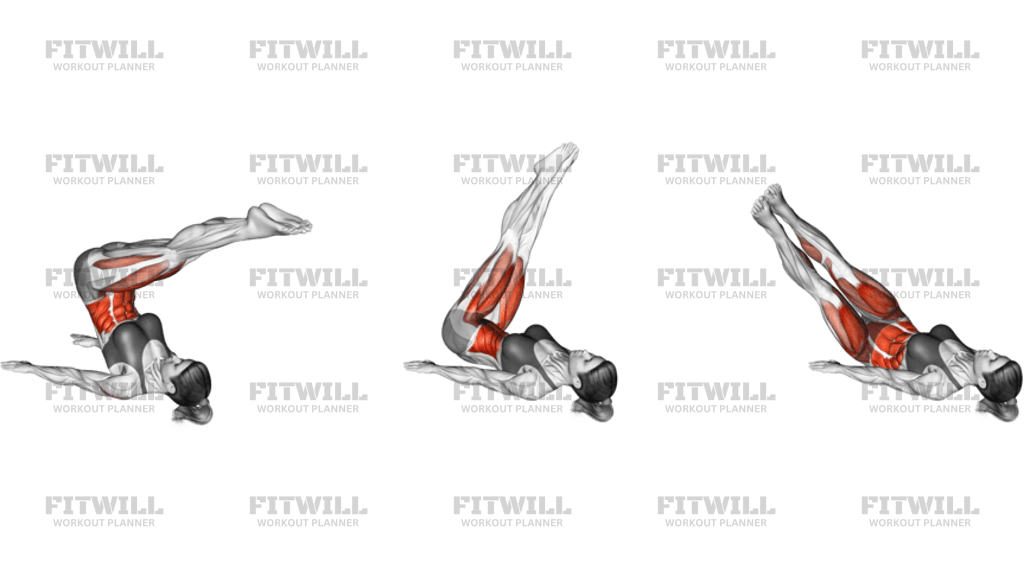
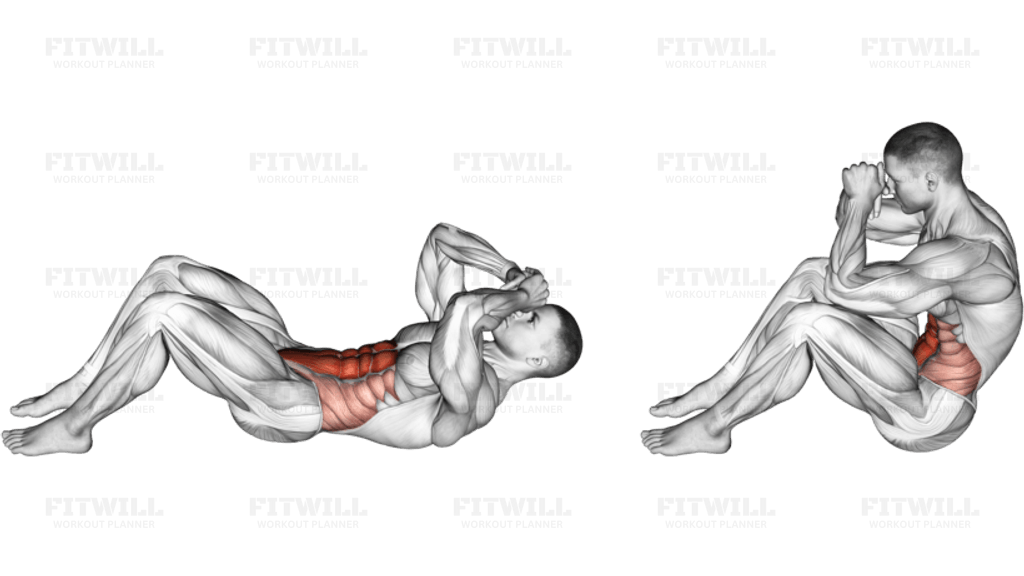
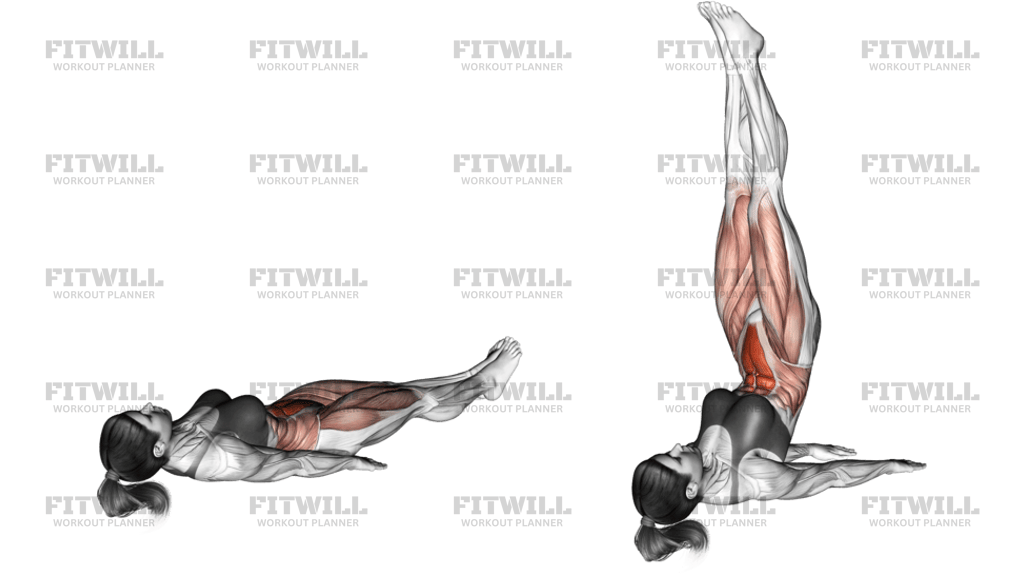
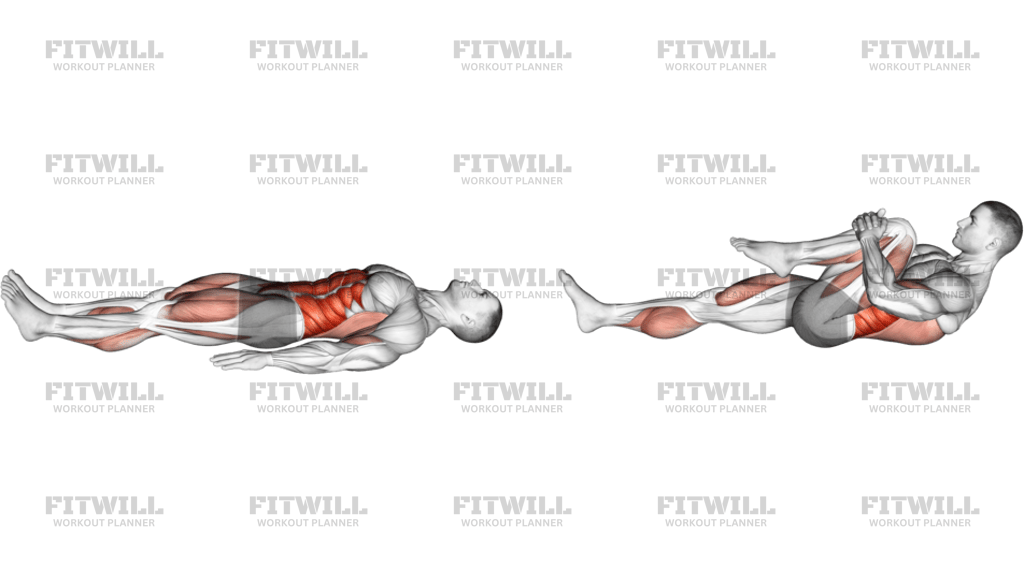
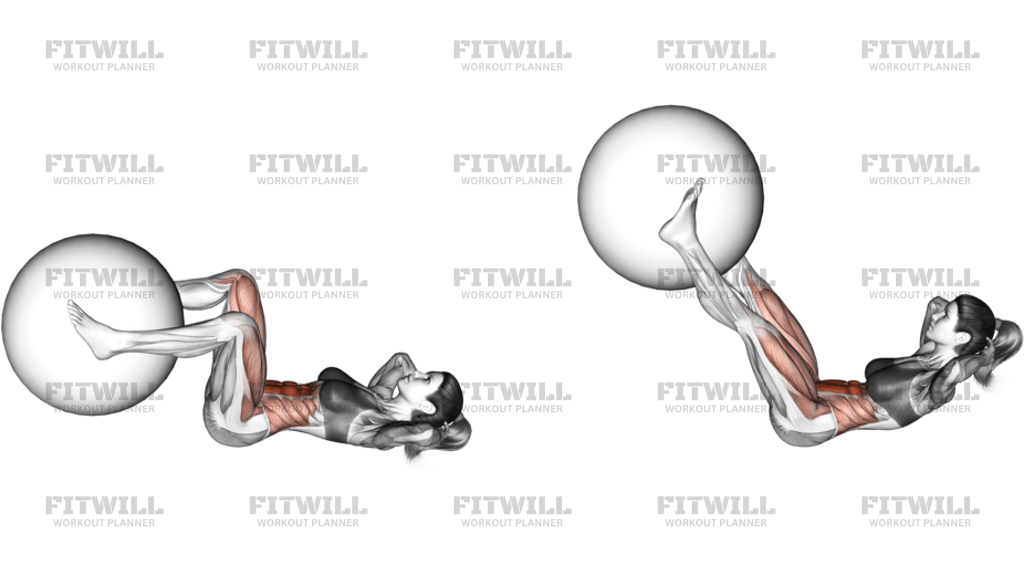
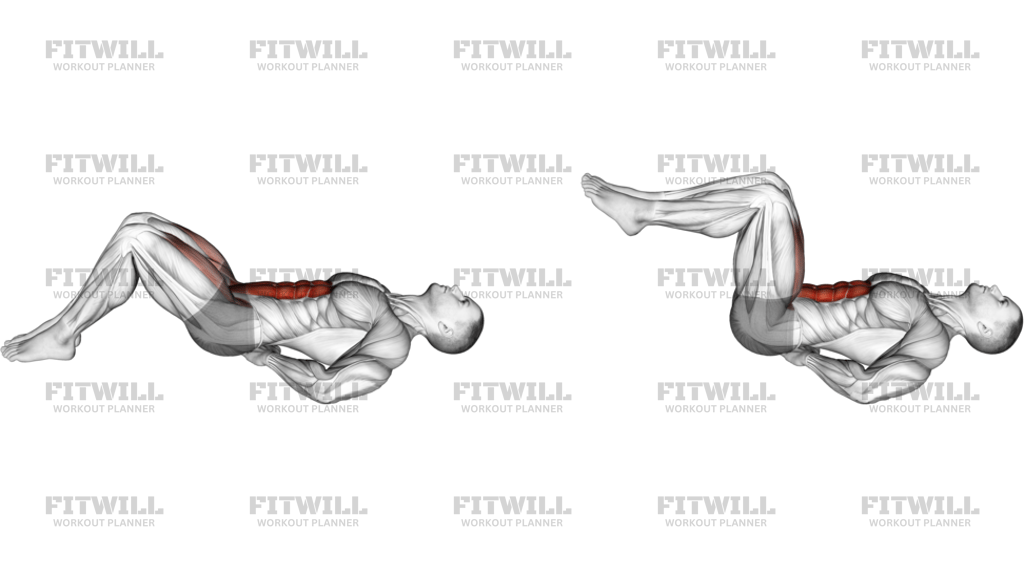
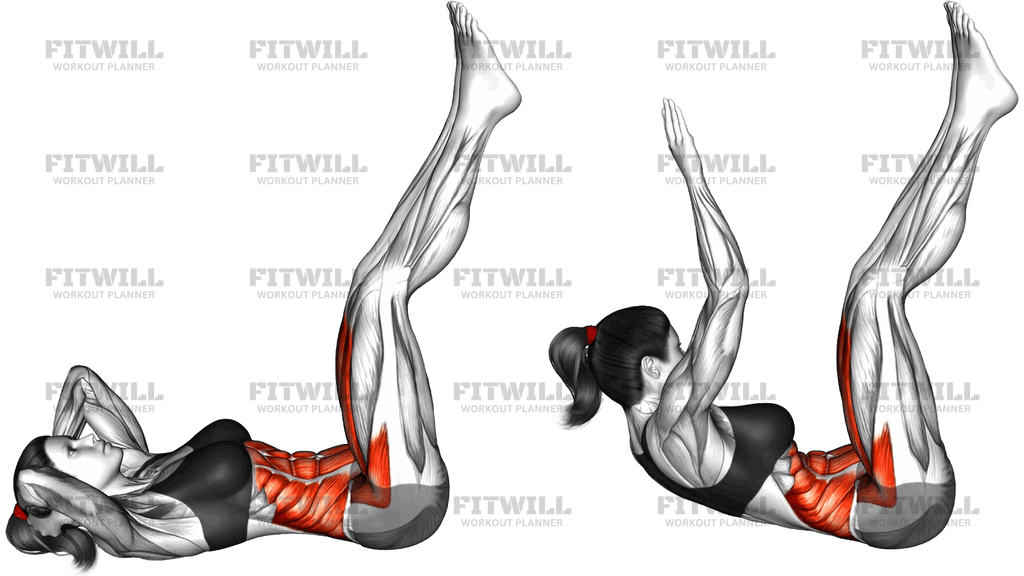
The Lying Abdominal Scissors Crunch is a bodyweight core exercise performed on the floor that combines an upper-body crunch with an alternating scissoring action of the straight legs. You lie flat on your back with your arms extended toward your feet, lift your shoulders and legs off the floor at the same time, and then alternate crossing one leg over the other while your upper body stays crunched forward and your hands reach alongside your thighs. The result is a movement that keeps constant tension on the midsection from start to finish.
The primary muscles worked are the abs, particularly the rectus abdominis and the lower portion of the abdominal wall, which has to hold the torso in a shortened position while the legs keep moving. Because the legs stay straight and hover above the floor, the hip flexors work hard throughout the set, and the adductors on the inner thighs contribute as the legs cross and squeeze past each other. The obliques assist with stabilizing the ribcage so the trunk does not twist as one leg passes over the other.
This exercise suits people who already have some core training experience and want to progress beyond basic crunches and leg raises. It is a natural fit for home workouts since it needs nothing more than an exercise mat, and it slots well into abdominal circuits, calisthenics routines, or the finisher of a full-body session. Because the torso and legs are loaded simultaneously, it places a high demand on the whole midsection in a short amount of time.
Setup matters more than speed here. Your lower back should stay pressed toward the floor whenever the legs are extended, which only happens if you brace the abdomen before the first rep rather than during the set. Lifting with the arms swinging or yanking the head forward will shift the work away from the abs and strain the neck, so the reach should stay deliberate and controlled.
To execute it well, think of the crunch as a ribcage-to-pelvis pull rather than a sit-up. Raise the shoulder blades off the floor, keep the chin a fist's width from the chest, and hold that position while the legs scissor in a steady rhythm. Each leg should cross fully over the other with straight knees, and the legs should stay at a height you can hold without the lower back arching off the mat.
A practical safety point: if you feel the effort moving into your lower back or hip creases rather than your abdomen, bring your legs higher or shorten the set. Discomfort in the neck is a signal to support your head lightly with one hand between reps or to reduce the range of the crunch. Stop the set when your form changes, not when the burn peaks.
[ Workout Log & Planner ]
Put your next workout in Fitwill
Keep your plan and training log ready when you are.


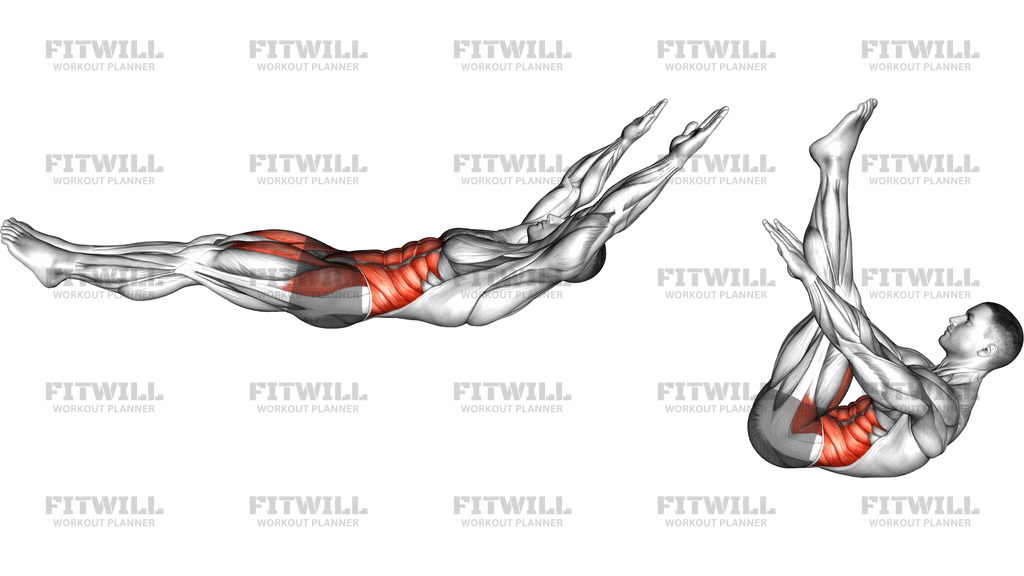
Instructions
- Lie flat on your back on an exercise mat with your legs straight and together and your arms resting alongside your thighs, palms facing down.
- Brace your abdomen and gently press your lower back toward the floor before lifting anything off the mat.
- Exhale and raise your shoulder blades and both straight legs a few inches off the floor so your arms can reach forward alongside your hips.
- Crunch your ribcage toward your pelvis so your upper back is lifted and your chin stays a fist's width from your chest.
- Keeping both knees straight, lift one leg so it crosses over the other, then switch so the opposite leg crosses on top, continuing this scissoring rhythm.
- Hold the crunch position and keep your hands reaching alongside your thighs for the entire set; do not let the shoulders sink back to the mat between reps.
- Breathe in a shallow but steady rhythm, inhaling as one leg crosses and exhaling as the other crosses over.
- Keep the scissor range moderate at first so your lower back stays in contact with the mat and does not arch.
- When the set is done, lower your legs together with control, then lower your shoulders and let your lower back settle before the next set.
- Reset your brace and back position completely before starting each new set rather than lifting off again from a slumped position.
Tips & Tricks
- If your lower back arches when the legs drop low, scissor the legs at a higher angle instead; the abs keep working but the lumbar spine stays supported.
- A common mistake is turning the crunch into a sit-up by pulling the torso all the way upright; the exercise works best with only the shoulder blades lifted off the mat.
- Do not swing the arms to generate momentum — reach alongside the thighs so the shoulders stay curled forward through the whole set.
- Keep the scissoring legs pointed and straight; bent knees turn the drill into an easier hip-flexor movement and reduce the abdominal demand.
- If your neck fatigues before your abs, rest the back of your head lightly in one hand and switch hands halfway through the set, or shorten the set length.
- Cross each leg deliberately past the other rather than making small ankle flicks — a full crossover is what engages the inner thighs.
- Pick a steady scissor tempo, roughly one crossover per second, so the abs stay under tension instead of the movement becoming jerky.
- Squeeze the abs harder at the top of the crunch for a second before each leg switch rather than rushing through the middle position.
- If hip flexor tightness pulls you out of position, stretch the hip flexors between sets or pair the exercise with a short floor stretch afterward.
Frequently Asked Questions
Which muscles does the Lying Abdominal Scissors Crunch target the most?
The rectus abdominis across the front of the trunk is the main mover, with strong involvement from the lower abs and hip flexors because the straight legs stay elevated. The inner thighs assist as the legs cross over each other.
Why do the legs stay straight during the scissor motion?
Straight legs lengthen the lever arm, which makes the abs and hip flexors work harder to keep the legs off the floor. Bent knees make the movement easier but remove much of the lower abdominal demand.
Is the Lying Abdominal Scissors Crunch suitable for beginners?
It is a fairly demanding core exercise, so absolute beginners should build a base with standard crunches and lying leg raises first. Beginners who attempt it can scissor the legs at a higher angle and reduce the crunch range.
How high should my legs be during the scissors?
Keep them as low as you can while your lower back stays pressed toward the mat. If your back starts to arch or you feel strain in the lumbar area, raise the legs until you can hold the position cleanly.
My neck hurts when I hold the crunch — what should I change?
You are likely pulling with your head or over-curling the chin to the chest. Keep a fist's width of space between chin and chest, rest your head lightly in one hand if needed, and drive the crunch from the ribcage instead.
How is this different from a regular V-up?
A V-up lifts the torso and legs together in one pulse and then lowers them. The Lying Abdominal Scissors Crunch holds the crunched position and adds a continuous alternating leg crossover, so the abs stay under tension for the whole set.
How many reps should I do?
Count each leg crossover as one rep and aim for sets of 10 to 20 with clean form. Once you can complete 20 without your lower back arching or shoulders dropping, progress by slowing the tempo or adding a pause.
Can I do this exercise without a mat?
Yes, on carpet or another soft surface the movement works the same way. On a hard floor a mat is worth using because your sacrum and shoulder blades stay in contact with the ground throughout the set.
Who should be cautious with the Lying Abdominal Scissors Crunch?
Anyone with lower back sensitivity or a recent abdominal or hip injury should get clearance first, since the straight-leg position loads the lumbar region and hip flexors heavily. In that case, a bent-knee scissor variation is a gentler substitute.