Sitting Shoulder Press Toe Touch On A Chair
The Sitting Shoulder Press Toe Touch On A Chair is a bodyweight flow that combines two very different actions from one seated position: an overhead press with both arms and a forward fold that reaches your hands toward your toes. You sit upright on a sturdy chair with feet flat on the floor, sweep your arms straight overhead, then hinge forward over your thighs to touch your toes before sitting back up and repeating. Because everything happens from the chair, the movement asks your torso to travel through a large range while your hips and legs stay anchored.
This combination works as a compact mobility and activation drill rather than a heavy strength lift. The overhead phase wakes up the shoulders, upper back, and triceps, while the fold lengthens the entire back line of the body — lower back, glutes, and hamstrings — and challenges the abdominals to control the descent. The chair removes the balance demands of a standing toe touch, which makes the pattern easier to learn and lets you focus on the hinge itself.
It is especially useful for people who spend long hours sitting, for older adults who want a safe way to keep the spine and hips moving, and for beginners building confidence before attempting standing forward folds or loaded overhead work. Office workers can do it beside their desk chair as a movement break, and it also works well as a warm-up before leg or shoulder training, or as a gentle cooldown finisher.
Setup matters more than it looks. A chair without wheels, placed on a non-slip floor, keeps the base stable as your torso folds forward over your legs. Sit toward the front half of the seat with feet about hip-width apart and heels down. If your chair has arms, the fold will be blocked, so a flat-seated chair is the right tool here.
To execute it well, think of two distinct phases instead of one continuous slump. Press tall first — arms fully extended, ears between the biceps, ribs stacked over the hips. Then hinge from the hips with a long spine, sliding your hands down your shins toward your toes rather than rounding and diving. On the way up, lead with the chest and let the arms rise naturally back into the press position.
The most common errors are collapsing the chest during the fold, bouncing at the bottom, and letting the heels lift. None of these are dangerous in small doses, but they rob the movement of its purpose. Move deliberately, exhale as you fold, and treat each repetition as one smooth press-and-reach cycle rather than a stretch to force.
[ Workout Log & Planner ]
Put your next workout in Fitwill
Keep your plan and training log ready when you are.


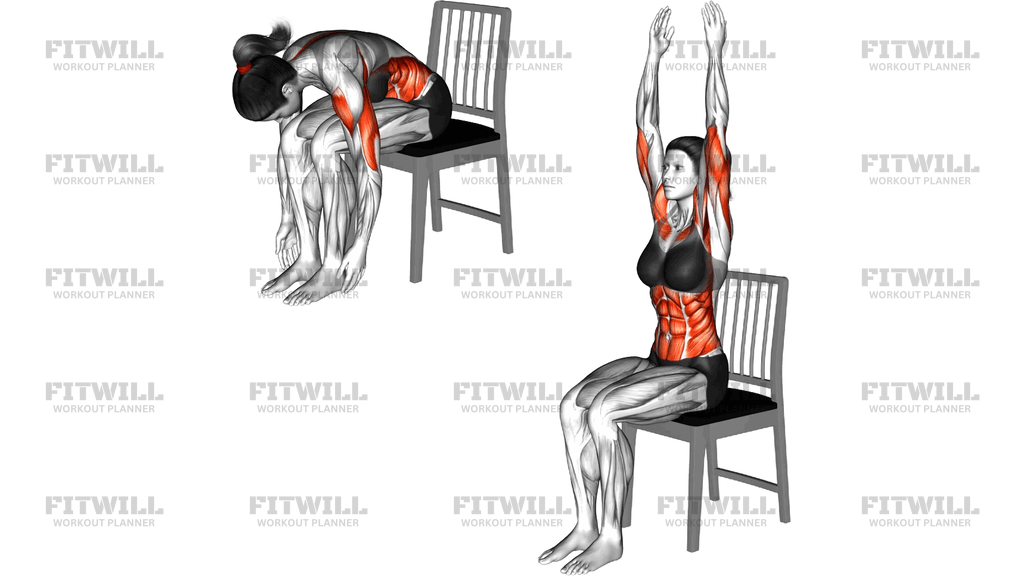
Instructions
- Place a sturdy, armless chair on a non-slip floor and sit toward the front edge with your sitting bones fully supported.
- Set your feet flat on the floor about hip-width apart, knees bent roughly 90 degrees, and rest your hands on your thighs.
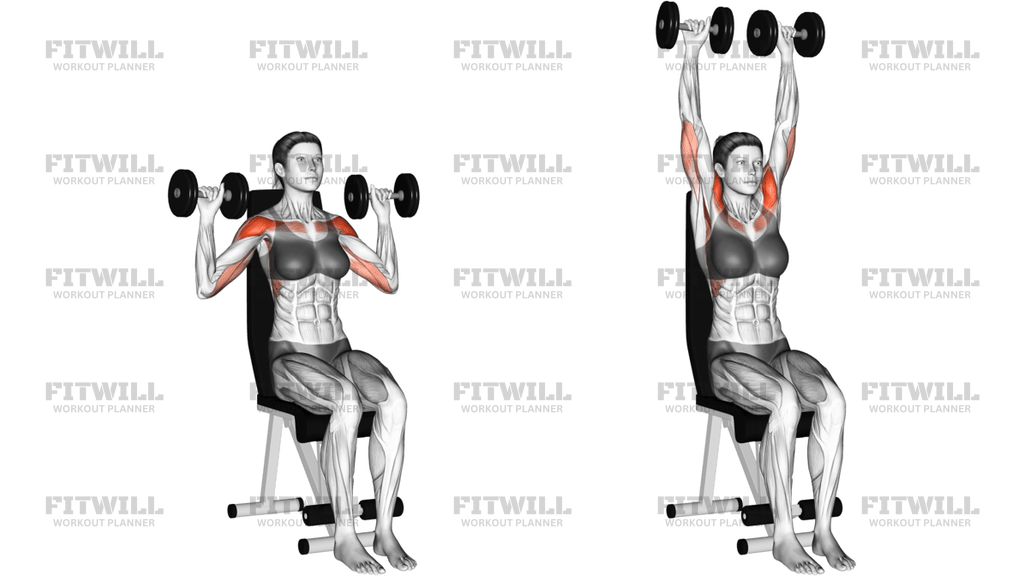
- Sit tall, draw your belly button gently inward, and press both arms straight overhead so your biceps frame your ears.
- From the tall overhead position, hinge forward from the hips, keeping your chest open and your spine long as you descend.
- Slide your hands down the front of your shins and reach for your toes, letting your head follow the line of your spine.
- Pause briefly at the bottom with your fingertips on or near your toes — no bouncing or forcing deeper.
- Roll up through the spine by leading with your chest, and let your arms rise back overhead as you return upright.
- Exhale as you fold toward your toes, and inhale as you sit back up into the press position.
- Complete your repetitions smoothly, then rest your hands on your thighs and reset your posture before the next set.
Tips & Tricks
- If your hamstrings grab sharply at the bottom, bend your knees slightly — the fold still trains the hips without straining behind the knees.
- The most frequent mistake is rounding into a slumped ball during the toe touch; think 'chest toward thighs' instead of 'nose toward knees.'
- Do not let your heels pop up as you fold — press them into the floor to keep the hinge happening at the hips, not at the ankles.
- Separate the two phases: finish the overhead press completely before starting the fold, rather than blending them into one floppy motion.
- On the way up, avoid flinging your arms backward — let the chest lift first and the arms follow so your lower back does not whip into extension.
- If the chair slides forward when you fold, brace your feet harder and sit slightly further back on the seat.
- Keep your neck relaxed at the bottom; the goal is reaching with your fingertips, not craning your chin toward your shins.
- Move slower than feels necessary — this drill rewards a controlled two-second descent more than fast reps.
- If your shoulders feel pinched overhead, widen your grip slightly and stop just short of full lockout.
Frequently Asked Questions
What muscles does the Sitting Shoulder Press Toe Touch On A Chair work?
The overhead phase primarily uses the shoulders and triceps with support from the upper traps, while the toe touch phase lengthens the hamstrings, glutes, and lower back and challenges the abdominals to control the fold.
Is this exercise suitable for complete beginners?
Yes. The chair takes the balance demands out of the movement, so it is one of the safest ways to practice a hinge-and-reach pattern. Beginners can bend the knees more or simply reach toward the shins instead of the toes.
Why sit on a chair instead of doing a standing toe touch?
Seated, your hips and legs are anchored, which isolates the hip hinge and spinal flexion pattern without the added challenge of balancing. It also makes the drill accessible if standing forward folds feel unstable.
What kind of chair should I use for the Sitting Shoulder Press Toe Touch On A Chair?
Use a sturdy, armless chair without wheels, placed on a non-slip surface. Armrests block the fold, and a rolling or wobbly chair creates a real safety problem when your torso leans forward over your legs.
My hands cannot reach my toes — is that a problem?
Not at all. Reach as far as your hamstrings and lower back allow while keeping the spine long, whether that is your knees, shins, or ankles. Flexibility improves with consistent, non-forced repetitions.
Should I keep my legs straight or bent during the toe touch?
Start with a slight knee bend so the fold comes from the hips. Straighter legs intensify the hamstring stretch, but only straighten them if you can keep your chest open and avoid rounding sharply through the lower back.
What is the most common mistake with this movement?
Diving into the fold by rounding the upper back and dropping the chest. The fix is to hinge from the hips first and slide the hands down the shins, keeping the spine long on the way down.
Can I use this as a warm-up?
Yes, it works well as a warm-up before lower body or shoulder sessions, or as a gentle cooldown. A few slow, controlled repetitions get the spine, hips, and shoulders moving without fatigue.
Is it safe for people with lower back issues?
The seated position makes it gentler than many forward folds, but anyone with a back condition should keep the range small, avoid bouncing, and check with a qualified professional before adding the movement.