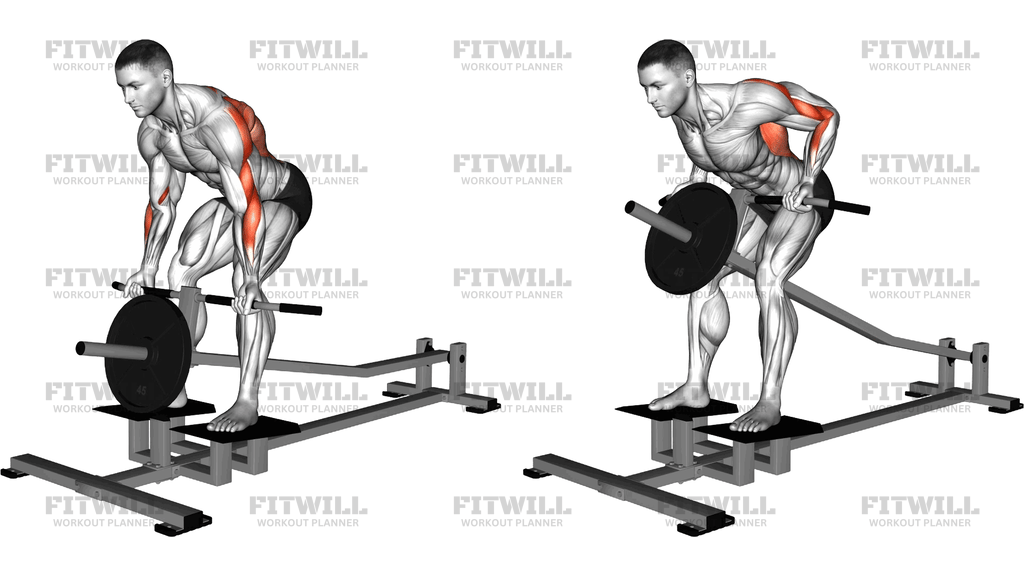
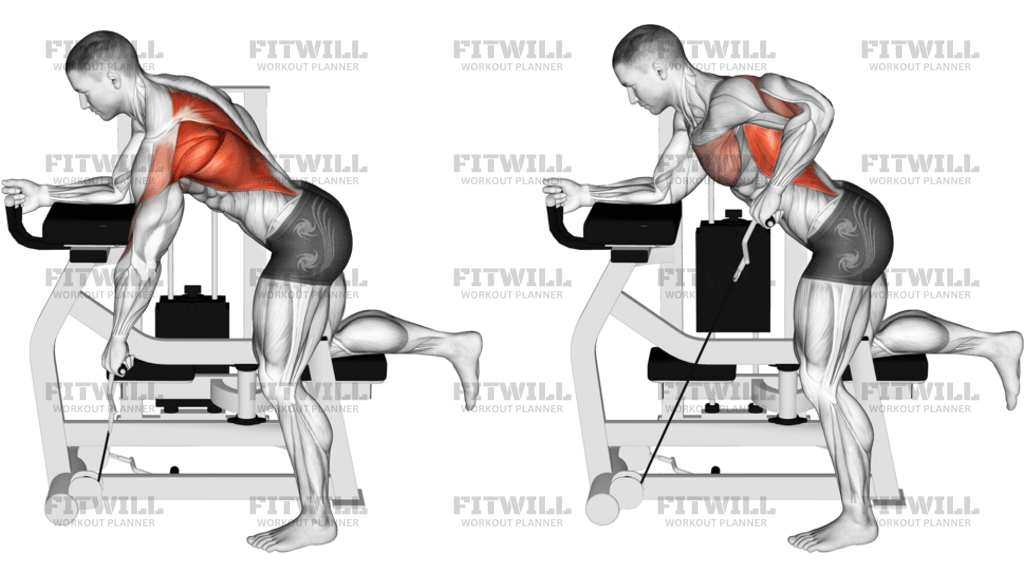
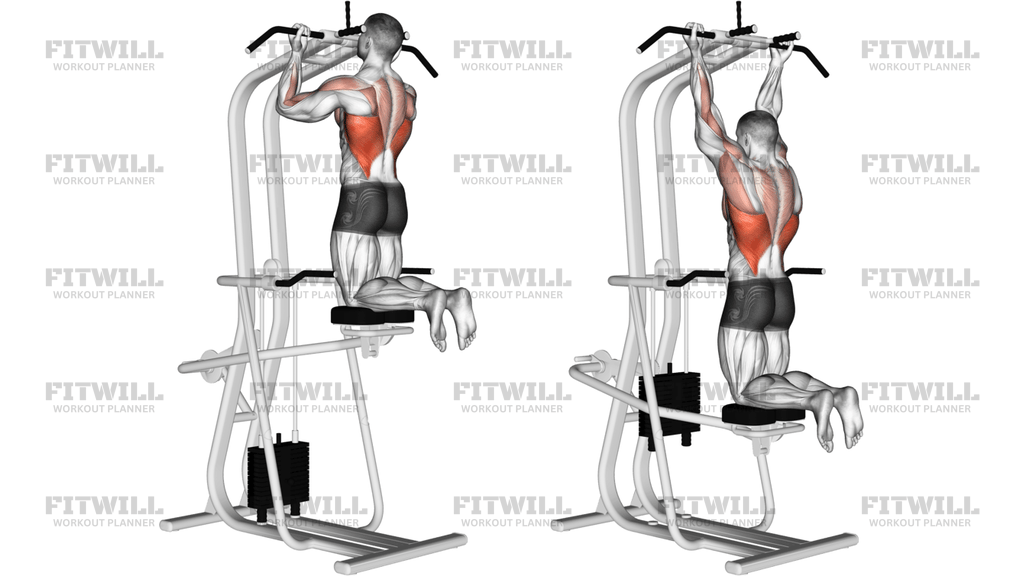
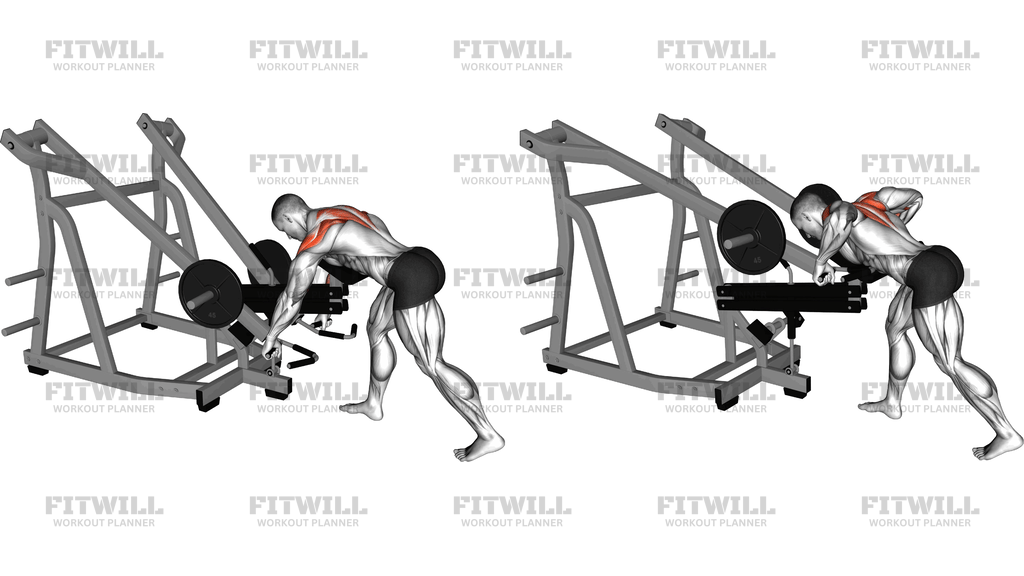
Lever Seated Row (Plate Loaded)
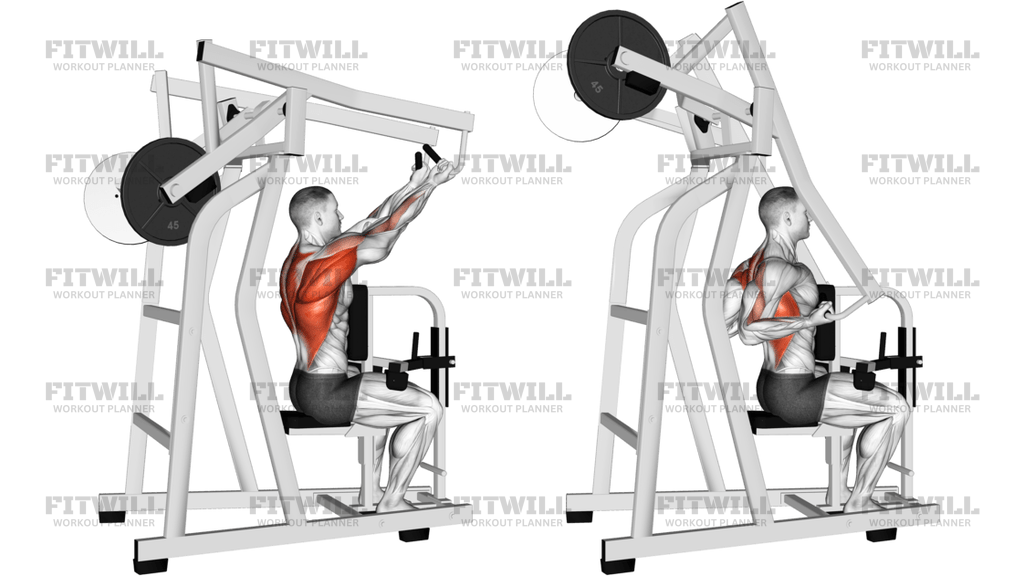
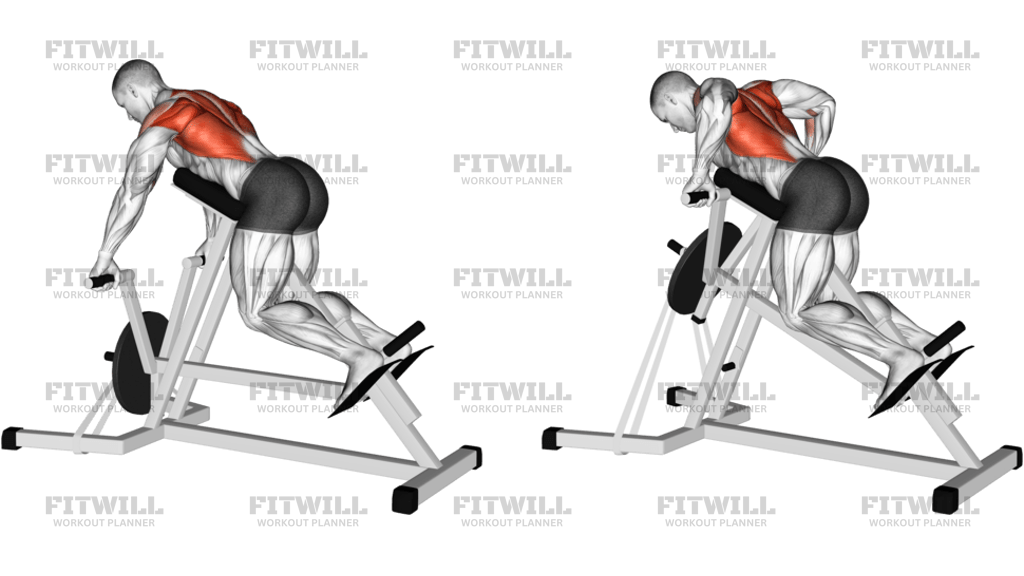
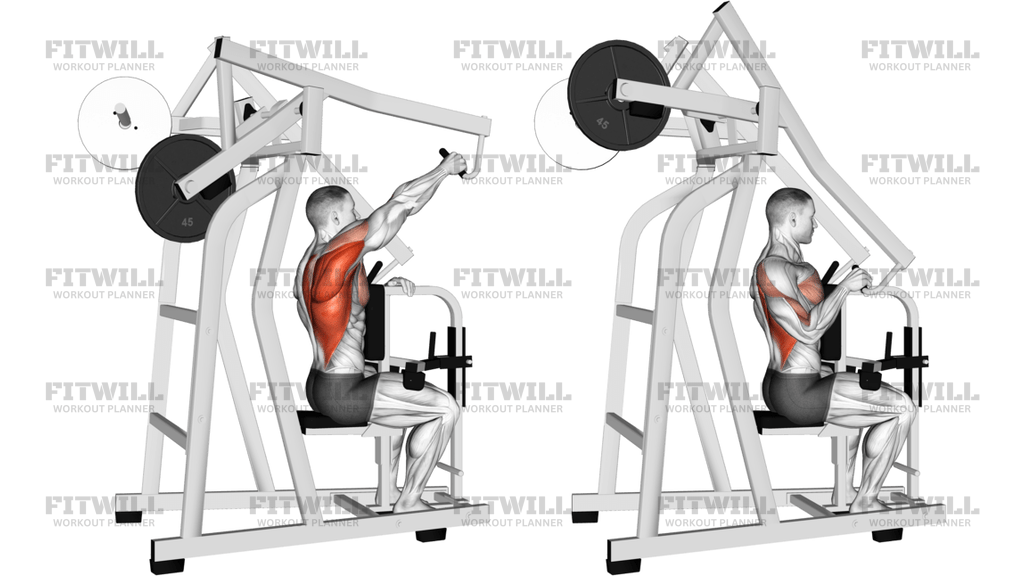
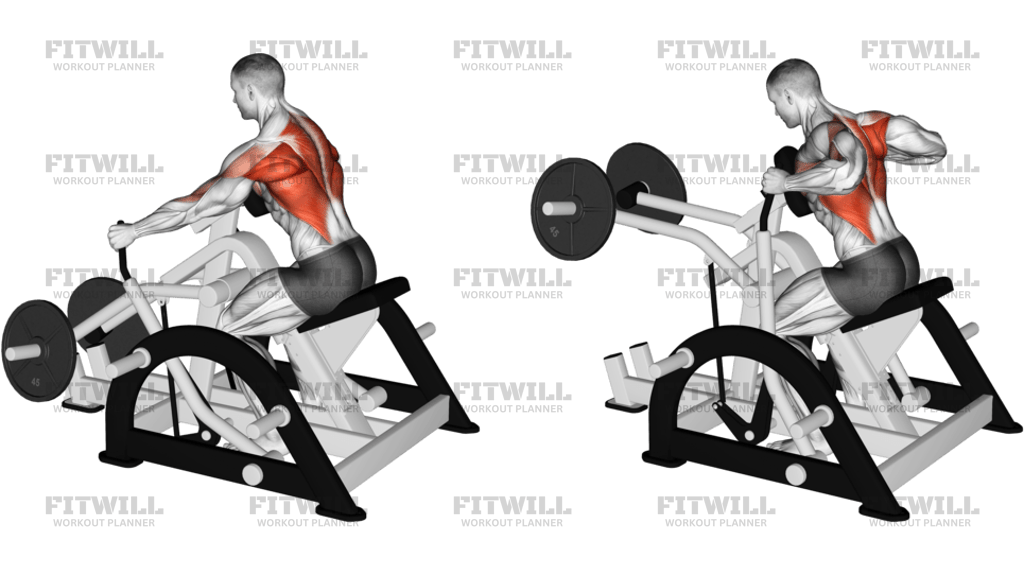
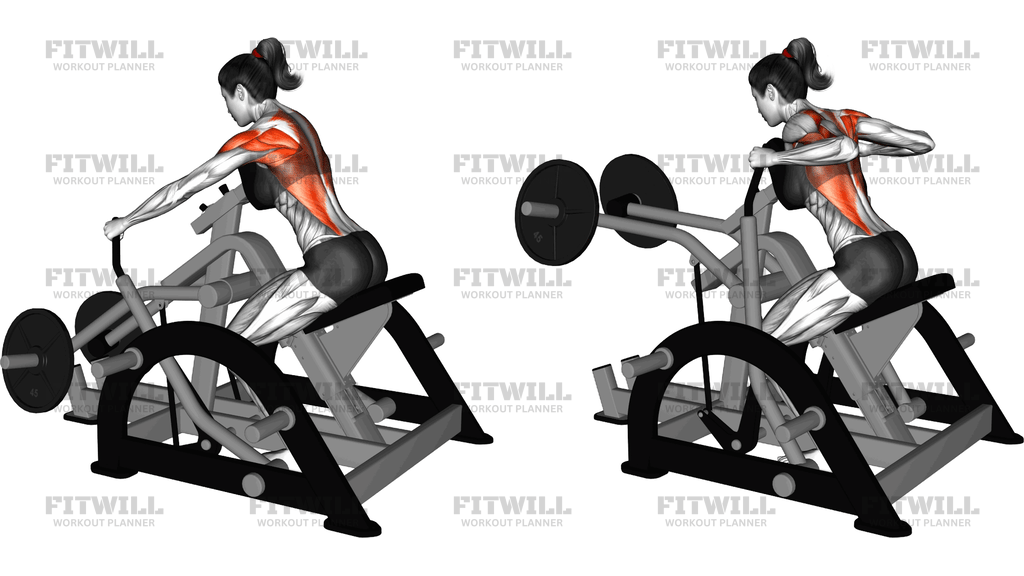
The Lever Seated Row (Plate Loaded) is a chest-supported rowing exercise performed on a plate-loaded leverage machine. You sit facing the machine's pad, brace your chest against the support, and pull a pair of angled handles back toward your torso by loading weight plates onto the machine's lever arms. Because the movement runs on a fixed lever path, the exercise removes much of the balance and stabilization demand of free-weight rows while still giving you the heavy, satisfying loading of plate-loaded training.
This movement primarily builds the lats, the large muscles of the back that drive the pulling action, along with the rhomboids and mid-traps that squeeze the shoulder blades together at the end of each rep. The rear shoulders assist throughout, and the biceps work as the elbow flexors. The chest pad is the key detail here: by pinning your torso against it, the machine takes your lower back and hips largely out of the equation, so the work stays focused on the upper back instead of being limited by how well you can hold a bent-over position.
That chest-supported setup makes this exercise a strong choice for people who want back volume without fatiguing the spinal erectors, which is useful after heavy deadlifts or barbell rows, or for anyone with a history of lower-back tightness. It is also beginner-friendly, since the fixed path teaches what a row should feel like — elbows driving back, shoulder blades retracting — before you progress to free weights.
Execution is straightforward but benefits from attention to detail. Sit with your chest firmly on the pad, reach forward to grip the handles, and let your arms extend fully so the lats get a stretch at the start. Pull the handles back toward your lower ribs, keeping your chest in contact with the pad the whole time, then squeeze briefly before letting the weight return under control. The leverage arms move plates on either side, so keep the pull even between your left and right arms.
In practice, this machine fits well as a main back builder on machine-based days or as an accessory after vertical pulling. Typical programming falls in the 8 to 15 repetition range, where the fixed path and pad support let you push close to fatigue safely. Adjust the seat height so your arms track slightly downward toward the handles at full extension — too high and you turn it into a shrug, too low and the stretch at the front becomes uncomfortable on the shoulders.
The main form cue to remember is that the pad does the stabilizing, not you. If you find yourself bouncing your chest off the pad or heaving your body into each pull, the weight is too heavy. Reduce the load until the only things moving are your arms and shoulder blades, and let the machine's path handle the rest.
[ Workout Log & Planner ]
Put your next workout in Fitwill
Keep your plan and training log ready when you are.


Instructions
- Load weight plates evenly onto both sleeve pegs of the machine's lever arms, matching the weight on each side.
- Adjust the seat so that when you sit facing the pad, your chest rests naturally against the support and your arms can reach the handles with a slight downward angle.
- Sit down and plant your feet flat on the floor or footrests, with knees bent comfortably and hips pressed back against the seat.
- Reach forward and grip the handles firmly, letting your shoulder blades spread apart and your arms extend fully to feel a stretch across your upper back.
- Brace your core lightly and keep your chest glued to the pad — this contact should stay constant for the entire set.
- Pull the handles back toward your lower ribs by driving your elbows down and back, keeping them close to your sides rather than flared wide.
- At the fully pulled position, squeeze your shoulder blades together and pause for a beat without letting your chest leave the pad.
- Slowly extend your arms back to the starting position, allowing the weight plates to lower under control rather than letting them drop.
- Exhale as you pull the handles back, inhale as you return to the stretched position.
- Complete your set, then wait for the lever arms to settle before releasing the handles and standing up.
Tips & Tricks
- If your chest pops off the pad at the start of each rep, you are using momentum instead of muscle — drop the plate load until you can keep torso contact from first rep to last.
- Check that both weight plates match before you sit down; an uneven load on a two-sided lever machine will pull you toward one side without you noticing.
- Stop the pull when your hands reach your lower ribs. Pulling the handles past your hips adds nothing for the back and just drags the shoulders into a shrug.
- Let your shoulder blades protract fully at the stretch position instead of starting each rep from a half-extended arm — the extra range is where much of the lat growth happens.
- Keep your elbows angled down toward your torso, not out at shoulder height; a low elbow path targets the lats, while a high flare shifts work to the rear delts and traps.
- Do not fully lock out or slam the plates at the top of the return. Lower the weight in about two seconds to keep tension on the back muscles.
- If your shoulders pinch at the fully stretched position, raise the seat one notch so your hands start slightly higher and the stretch is less aggressive.
- Grip the handles as lightly as you can while staying secure — a death grip shifts effort to the forearms and often causes the grip to fail before the back does.
- Because the pad supports your torso, resist the urge to rush; this machine is forgiving, and slow, deliberate reps are what separate it from a fast cable row.
Frequently Asked Questions
Which muscles does the Lever Seated Row (Plate Loaded) work?
The lats do most of the pulling, with strong assistance from the rhomboids and mid-traps as your shoulder blades retract. The rear shoulders and biceps contribute throughout, and grip muscles hold the handles.
Why does the Lever Seated Row (Plate Loaded) have a chest pad?
The pad supports your torso so your lower back and hips cannot help lift the weight. This keeps the load on the upper-back muscles and makes the exercise easier to perform strictly than a free-weight bent-over row.
Is the Lever Seated Row (Plate Loaded) good for beginners?
Yes. The fixed lever path and chest support remove balance demands, so a beginner can focus on learning to drive the elbows back and squeeze the shoulder blades without worrying about stabilizing the torso.
How is the Lever Seated Row (Plate Loaded) different from a cable seated row?
The leverage machine moves along a fixed arc with your chest supported, while a cable row leaves your torso free and relies on your lower back to hold you upright. The machine version is more forgiving; the cable version allows more torso angle variation.
Should my chest stay on the pad during the whole set?
Yes, chest contact should be continuous. If your chest lifts or bounces off the pad, the plates are too heavy or you are rushing, and the extra movement is coming from your body rather than your back muscles.
How high should I set the seat for this row?
Set it so your arms reach the handles with a slight downward angle and a full stretch without shoulder discomfort. If your hands start level with or above your shoulders at full extension, the seat is a bit too low.
What is the most common mistake on the Lever Seated Row (Plate Loaded)?
Loading too much and heaving the torso into each pull, which turns the exercise into a body swing rather than a row. Cutting the range short — never letting the arms fully extend at the front — is a close second.
Can I use the Lever Seated Row (Plate Loaded) if my lower back gets sore from barbell rows?
Often yes, because the chest pad removes most of the demand on the spinal erectors. Still, warm up normally and choose a weight you can control; if any position causes pain rather than muscle effort, stop and adjust.
What can I substitute if my gym has no plate-loaded row machine?
A chest-supported dumbbell row on an incline bench is the closest match, since it also pins the torso. A cable seated row with a neutral grip works well too, as long as you keep your torso from leaning back excessively.
How many sets and reps should I do on the Lever Seated Row (Plate Loaded)?
Three to four sets of 8 to 15 reps works well for most people. The chest support makes the machine suitable for training close to fatigue, so the upper end of that range is a good place to build back volume.