Sitting Row On A Chair
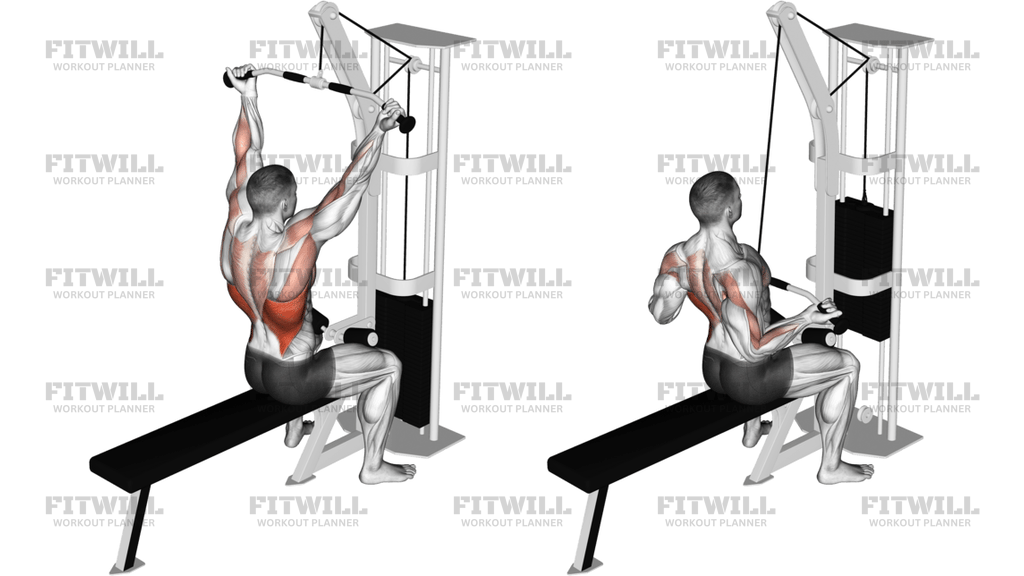
Sitting Row On A Chair is a bodyweight rowing movement performed seated on an ordinary chair. You sit tall, reach both arms straight out in front of you, then pull your elbows back and down toward your sides as if you were rowing a heavy weight toward your torso, squeezing the shoulder blades together at the back of the movement. Because there is no external load, the exercise relies entirely on deliberate muscle tension and a full range of motion, which makes it a gentle but genuine way to wake up the entire upper back.
The main work comes from the lats and rhomboids, with strong support from the rear shoulders, middle traps, and biceps, which bend the elbows as you pull. The seated position removes the balance and hip-strength demands of a standing or inverted row, so all of your attention can go into the shoulder blades gliding together and the elbows driving close to the ribs. That makes this a useful drill for people who spend long hours at a desk and tend to slump forward with rounded shoulders.
This movement suits beginners learning what a row should feel like before touching a cable machine or dumbbells, office workers fitting short movement breaks into the day, and older trainees who want back work without grip strain or heavy equipment. It also works well as a warm-up primer before weighted rows or pull-ups, or as a high-repetition finisher when you want extra back volume without loading the spine.
Setup matters more than it might seem. Sit toward the front edge of the chair with feet flat on the floor, or sit astride the chair facing its back so the torso stays upright and unsupported. A tall chest and level shoulders give the shoulder blades a stable base to retract against; if you slump, the row turns into a shallow arm movement and the back muscles barely contribute.
To execute it well, imagine your hands are hooked to something heavy in front of you. Pull the elbows straight back past your ribs, keep them at roughly torso height rather than flaring up toward the ears, and pause briefly when the shoulder blades are fully squeezed. Control the return so the arms extend fully forward instead of letting gravity or momentum snap them back. The pace should be slow enough that you feel the mid-back working on every rep.
A few practical points keep the exercise honest. Move only as far as your shoulders allow comfortably, keep the neck relaxed, and stop if you feel pinching at the front of the shoulder. Since the resistance is just muscular effort, aim for higher repetitions, anywhere from twelve to twenty per set, and focus on squeezing harder rather than moving faster to make the set more challenging.
[ Workout Log & Planner ]
Put your next workout in Fitwill
Keep your plan and training log ready when you are.


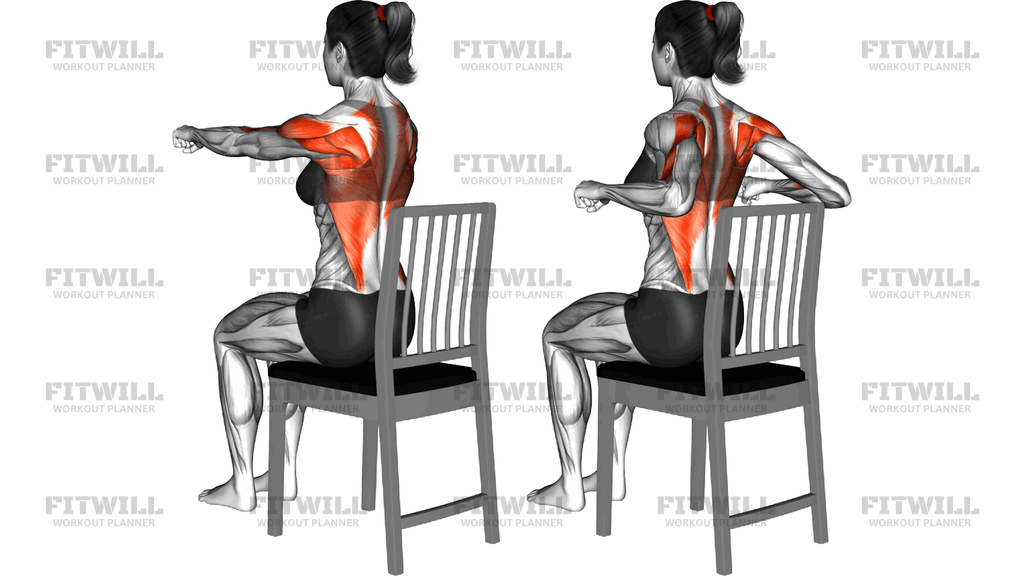
Instructions
- Sit on a sturdy chair, either straddling it and facing the backrest or sitting toward the front edge with your back free of the seat back.
- Place your feet flat on the floor about hip-width apart and sit up tall so your weight rests on your sit bones, not your tailbone.
- Extend both arms straight out in front of your chest, palms facing each other or down, with elbows fully straight and shoulders level.
- Brace your midsection lightly and lift your chest so your shoulder blades sit flat against your upper back.
- Pull your elbows straight back toward your sides, keeping them at chest height and close to your ribs rather than flaring them upward.
- At the end of the pull, squeeze your shoulder blades together and hold that contracted position for one to two seconds.
- Slowly extend your arms forward again over two to three seconds until your elbows are fully straight, resisting the urge to let them snap back.
- Exhale as you pull your elbows back, and inhale as you return your arms to the extended position.
- Complete your set, then shake out your shoulders and reset your posture before the next set.
- If you feel the movement only in your arms, lighten the effort, slow the tempo, and refocus on driving the elbows back with the shoulder blades.
Tips & Tricks
- The most common mistake is shrugging the shoulders up toward the ears as you pull; deliberately press them down and back so the mid-back does the work instead of the upper traps.
- Do not let the torso rock backward to fake a stronger pull; if your chest leans away from your arms each rep, reduce the effort and keep your torso still.
- Keep the elbows at chest height, not wide and high, or the exercise drifts toward a rear-delt fly and loses its rowing character.
- A full reach forward at the start of every rep matters here because there is no weight to stretch against; letting the shoulder blades spread apart at the bottom is what gives the muscles a complete range.
- Add a one-second pause at the point of maximum shoulder blade squeeze instead of adding speed; intensity of contraction is the only load in this exercise.
- If the chair has a backrest and you lean against it, the movement gets much easier; sit on the front edge or astride the chair to keep the torso self-supported.
- Imagine pulling something toward your lower ribs, not your chest, to keep the lats engaged and the elbows tracking close to the body.
- If your shoulders pinch at the front when reaching fully forward, reduce the extension slightly and work within a comfortable arc rather than forcing the end range.
- Use this as a pre-row primer: one or two slow sets of fifteen reps before cable or dumbbell rows often improves your feel for retracting the shoulder blades under load.
Frequently Asked Questions
What muscles does Sitting Row On A Chair work?
It primarily targets the lats and rhomboids of the upper back, with the rear shoulders, middle traps, and biceps assisting as you bend the elbows and squeeze the shoulder blades together.
Is Sitting Row On A Chair good for beginners?
Yes, it is one of the simplest ways to learn the rowing pattern because there is no weight to control and the seated position removes balance demands. Beginners should focus on slow tempo and a clear squeeze of the shoulder blades rather than rep speed.
Why sit astride the chair facing the backrest instead of leaning against it?
Sitting astride the chair keeps your torso upright and unsupported, which forces your own postural muscles to hold you tall. Leaning on a backrest removes that element and makes the row feel noticeably easier.
How many reps should I do if there is no weight involved?
Because the resistance comes from muscular effort alone, higher repetitions work best, typically twelve to twenty per set. Make the set harder by pausing longer at the shoulder blade squeeze rather than moving faster.
Can I do Sitting Row On A Chair every day?
For most people, yes, since the load is low and the movement is joint-friendly. It works well as a daily posture break, though you should still stop if you feel persistent shoulder discomfort.
What is the most common mistake in this exercise?
Shrugging the shoulders toward the ears and letting the arms do all the work. Fix it by pressing the shoulders down, keeping the elbows close to your ribs, and focusing on the shoulder blades pinching together.
What can I use instead of a chair?
Any stable seat works, including a bench or the edge of a sturdy ottoman. The key requirements are a firm surface at roughly knee height and enough room to extend both arms fully in front of you.
Should my palms face down or toward each other?
Either is fine. Palms facing each other tends to keep the elbows tracking close to the body and feels most natural for a rowing path, while palms down makes it slightly easier to keep the shoulders from shrugging.
Is this exercise safe if I have shoulder soreness?
The movement is generally low-load, but you should reduce the reach-forward range and avoid any position that causes pinching at the front of the shoulder. If discomfort persists, check with a qualified professional before continuing.
How is Sitting Row On A Chair different from a cable row?
A cable row provides external resistance and constant tension through the pull, while this version uses self-generated muscle tension, so the squeeze and tempo carry the load. It is best treated as a teaching, warm-up, or high-repetition endurance movement rather than a direct strength replacement.