Sitting Switching Palm Row On A Chair
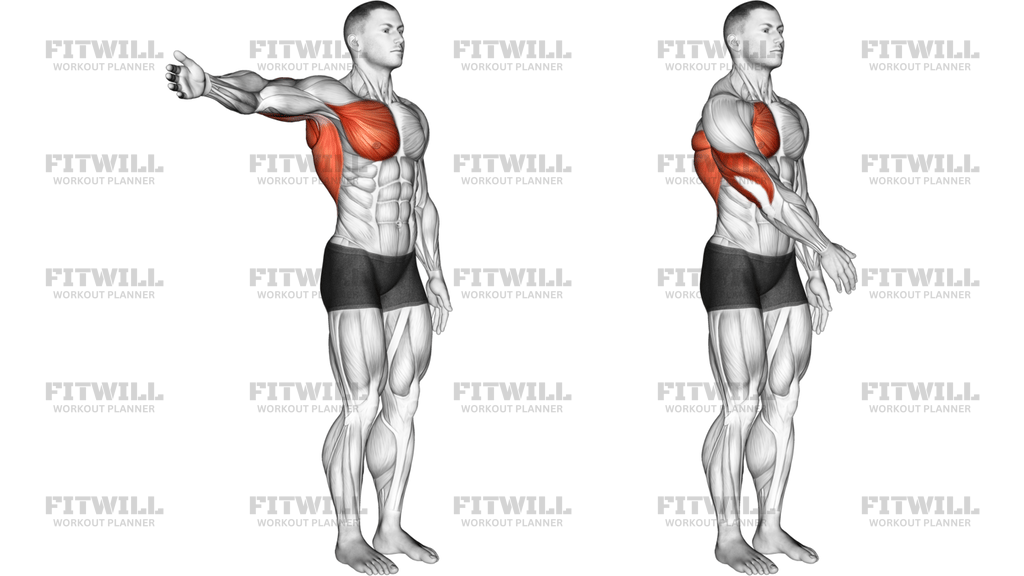
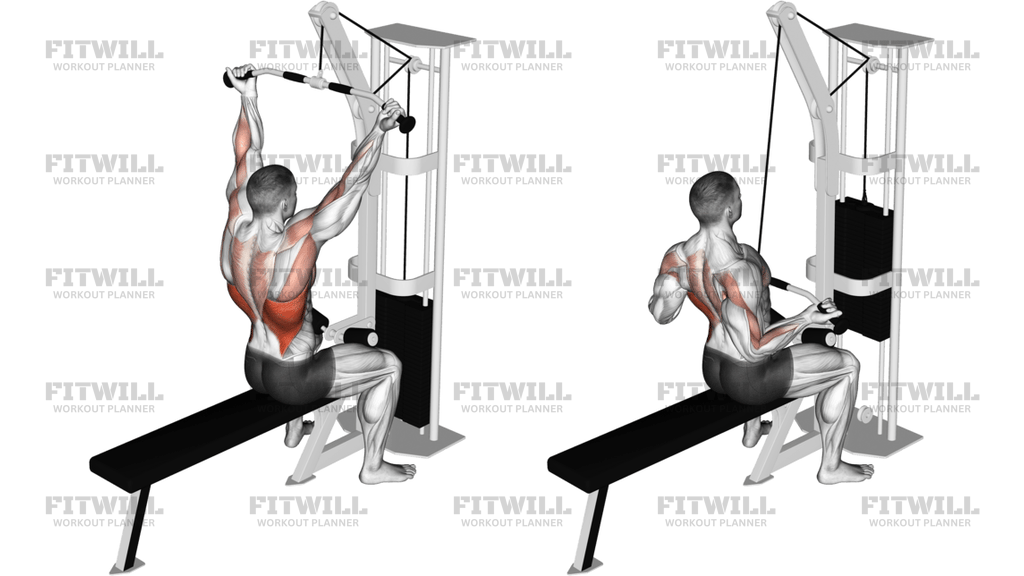
Sitting Switching Palm Row On A Chair is a bodyweight rowing pattern performed entirely from a seated position, using a standard chair as your only setup. You start with both arms extended forward at shoulder height, then drive your elbows back past your sides so your hands finish behind your hips, switching the palm orientation as you travel. Because there is no external load, the resistance comes from deliberately squeezing the shoulder blades and controlling the path, which makes this a low-threshold way to train the pulling muscles.
The movement primarily works the lats and the muscles between the shoulder blades, with strong involvement from the rear shoulders and biceps as the elbows travel back. The seated position is part of the design: with your hips fixed on the chair and feet planted, it is much harder to cheat by leaning or swinging than in a standing version, so the upper back has to do the actual work. The chair backrest also gives you a reference point, since your elbows should travel past it at the end of each pull.
This exercise suits people who sit for long hours, beginners building their first pulling strength, and anyone who wants a joint-friendly warm-up before heavier rows or pulldowns. It is also a practical option when you have no equipment available but still want to wake up the mid-back muscles that tend to go dormant at a desk. Older adults and people returning from time off often use it as a first step before adding resistance bands or weights.
Setup matters more than it looks. Sit tall on the front half of the chair with feet flat and roughly hip-width apart, and keep your ribs stacked over your pelvis rather than arching your lower back. Extending the arms forward first gives every repetition a full starting length, and pulling the elbows deliberately behind the torso ensures the shoulder blades actually retract instead of the movement turning into a small arm exercise.
To execute it well, move with intent rather than speed. Reach forward, then imagine dragging your elbows down and back toward your back pockets, letting the hands flip naturally as they pass your hips. Pause briefly at the back, feel the shoulder blades draw together, then return the arms forward under control. If you notice your shoulders shrugging toward your ears or your torso rocking, reduce the range and slow the tempo before continuing.
[ Workout Log & Planner ]
Put your next workout in Fitwill
Keep your plan and training log ready when you are.


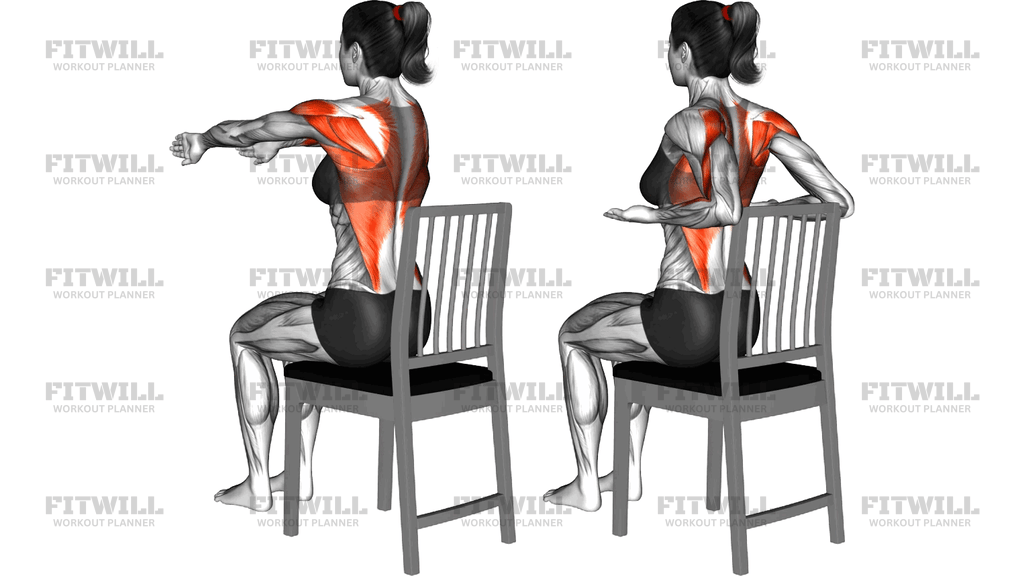
Instructions
- Sit sideways-tall on a sturdy chair with the backrest behind your right or left side, feet flat on the floor about hip-width apart.
- Extend both arms straight forward at shoulder height, palms facing each other, and lengthen through the fingertips.
- Brace your core lightly and sit up tall so your ribs stay stacked over your pelvis before the pull begins.
- Start the row by driving your elbows back and slightly down, keeping them roughly in line with your shoulders rather than flaring high.
- As your hands pass your hips, switch the palm position so they finish facing up or outward behind your body, elbows pointing backward past the chair backrest.
- Squeeze your shoulder blades together at the end position and hold for a brief pause.
- Reverse the path slowly, letting the palms rotate back as your arms return to the extended forward position.
- Exhale as you pull the elbows back, inhale as you reach forward again.
- Complete your repetitions, then rest with your hands on your thighs and reset your posture before the next set.
Tips & Tricks
- The most common mistake is shrugging as the elbows travel back, which shifts work to the upper traps; think of pressing your shoulders down and away from your ears throughout the pull.
- If your torso rocks forward on the way back, you are turning it into a lean instead of a row; anchor your sit bones into the chair and let only the arms and shoulder blades move.
- The palm switch should feel like a natural rotation as the hands pass your hips, not a forced wrist twist; if your wrists strain, make the flip smaller.
- Keep the elbows from dropping all the way to your ribs, which turns the movement into a narrow arm pull; holding them near shoulder line keeps the rear shoulders and upper back engaged.
- A brief one-second pause behind your hips is worth more than extra speed, because the squeeze is where the mid-back actually gets challenged.
- If the chair has arms or wheels, choose a different stable seat; a rolling chair is the main safety risk in this setup.
- Shorten the range instead of forcing the hands far behind you if your shoulders feel pinched at the end position.
- Sit on the front half of the seat so the backrest does not block your elbows; if it does, shift forward slightly rather than bending your torso around it.
Frequently Asked Questions
What muscles does Sitting Switching Palm Row On A Chair work?
It mainly targets the lats and the rhomboids and middle traps between the shoulder blades, with the rear shoulders and biceps assisting as the elbows pull back. The core works isometrically to keep you upright on the chair.
Why do the palms switch during the row?
The palm rotation follows the natural path of the arm as it travels from an extended forward reach to hands-up behind the hips. It also encourages full shoulder range and keeps you aware of the entire path rather than just the pull.
Is this exercise good for beginners?
Yes, it is one of the gentlest ways to learn a rowing pattern because there is no load and the chair fixes your hips in place. Beginners should focus on the shoulder blade squeeze before worrying about range behind the torso.
How should I sit on the chair during Sitting Switching Palm Row On A Chair?
Sit tall on the front half of the seat with feet flat and hip-width apart, so the backrest sits behind your side rather than blocking your elbows. Staying on the front edge also prevents you from slumping against the backrest mid-set.
My shoulders shrug every time I pull back. How do I fix it?
Slow the tempo down and consciously press your shoulders away from your ears before starting each rep. Reducing how far behind your hips the hands travel also helps until the shrug habit fades.
Can I do this exercise if my shoulders are stiff or sensitive?
You can, but work within a shorter range where the elbows only come back to your sides instead of past the chair backrest. Stop if you feel pinching, and consider a basic seated band row as a substitute that keeps the arms more forward.
How many repetitions should I do?
Because the movement is unloaded, higher repetitions work well, typically 12 to 20 controlled reps per set. Focus on a crisp squeeze at the back of each pull rather than rushing to a number.
What can I use if I do not have a suitable chair?
Any stable seat without wheels works, such as a bench or a sturdy stool. The key requirement is that your elbows can travel freely behind your torso while your hips stay supported.
Is it normal for my lower back to arch at the end of the pull?
Some people arch to fake extra range, but the movement should come from the shoulders, not the spine. Sit tall, brace lightly, and accept a slightly shorter range instead of extending your lower back.