Sitting Straight Arm Back Squeeze On A Chair
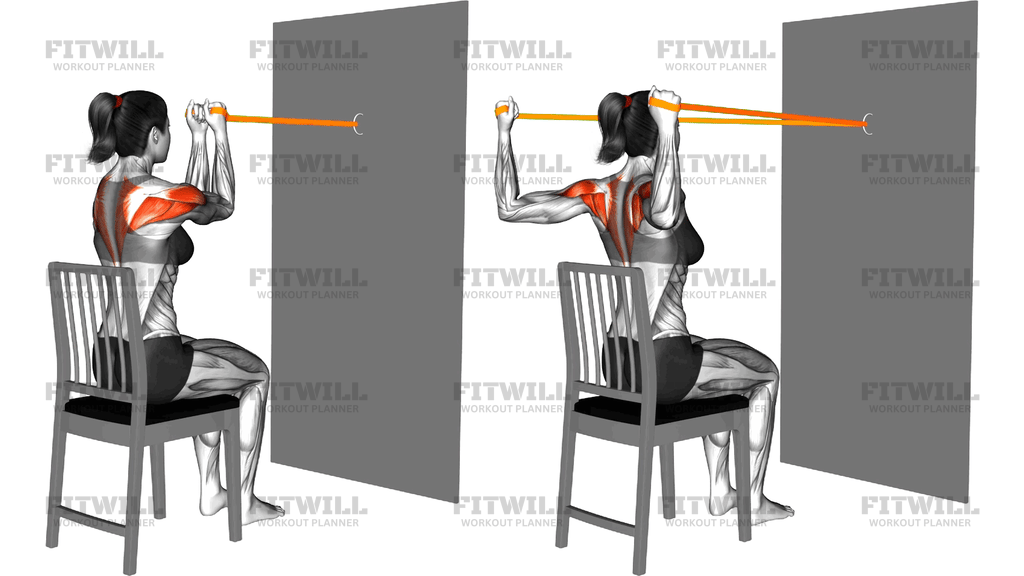
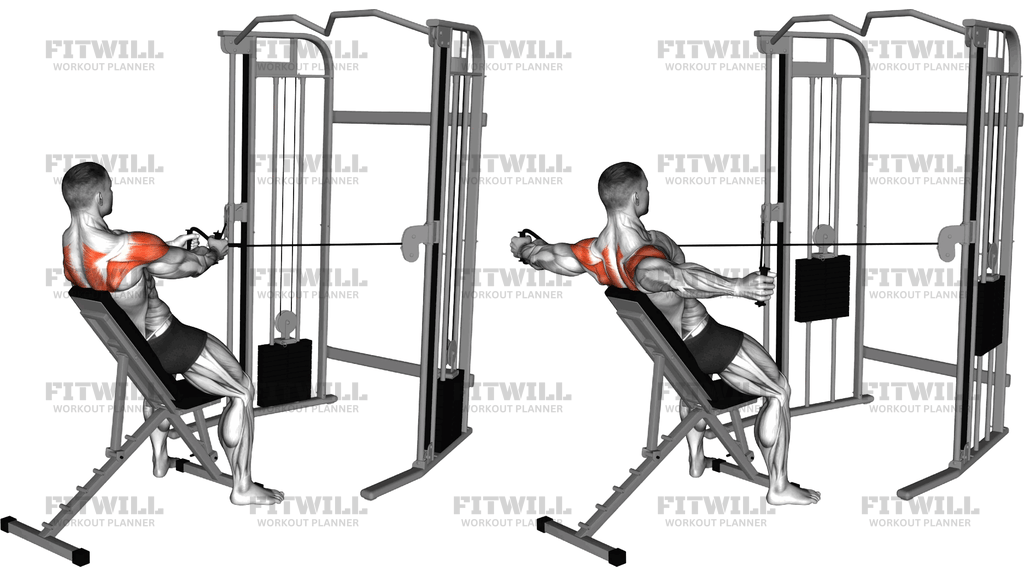
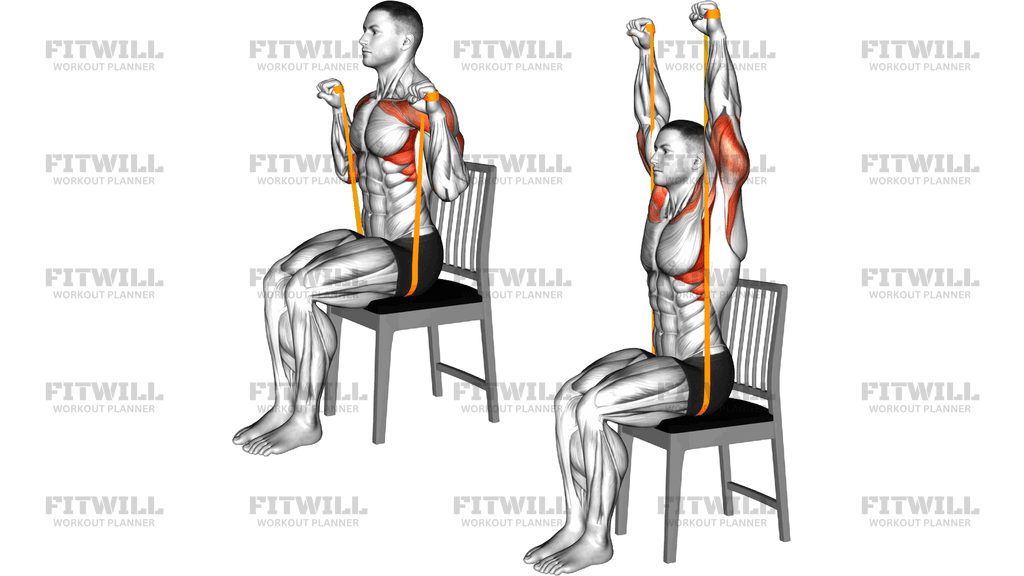
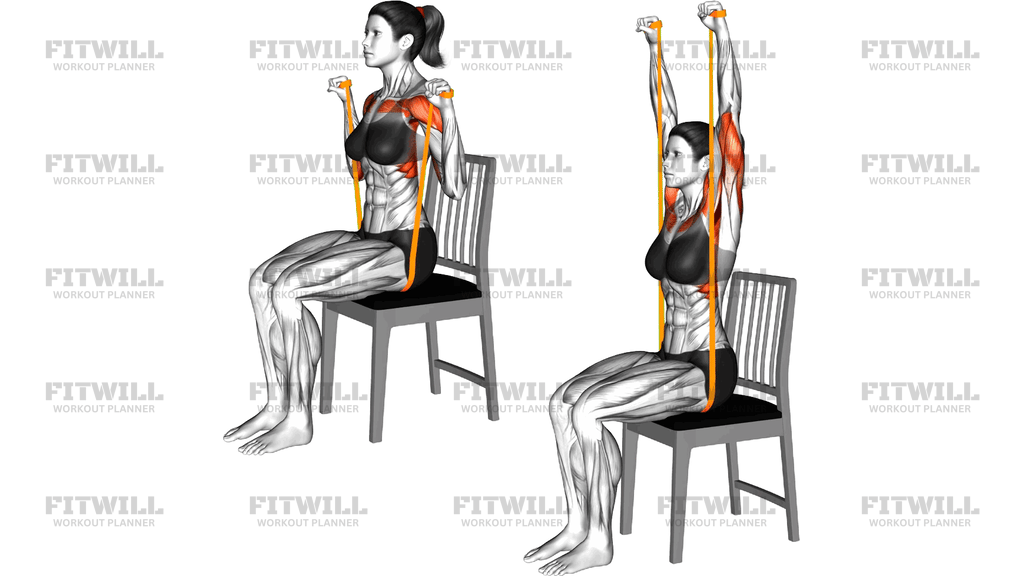
The Sitting Straight Arm Back Squeeze On A Chair is a seated bodyweight movement that targets the muscles between your shoulder blades. You sit on a sturdy chair with your torso upright and both arms extended straight out in front of you at shoulder height, palms facing each other. From there, you sweep your arms out wide to the sides, keeping the elbows fully locked, until your chest opens and your shoulder blades pull toward each other. The path looks a bit like a reverse snow angel done in a seated position.
Because the arms stay straight and there is no external load, the resistance comes entirely from your own body position and the deliberate squeeze at the back of the shoulders and upper back. This makes it an excellent activation drill for the rhomboids, middle traps, and rear deltoids, with the rotator cuff muscles working to control the arm path. People who sit at a desk for long hours often find this kind of movement especially valuable, since prolonged sitting tends to round the shoulders forward and switch these muscles off.
The chair setup matters more than it might seem. Sitting upright on a chair, rather than hinging forward like you would for a bent-over rear delt raise, removes momentum from the equation and makes it nearly impossible to cheat with your lower back. Your legs stay planted, your torso stays tall, and the only thing moving is your arms sweeping from front to side. If you feel the work happening between your shoulder blades rather than in your neck or front shoulders, the setup is right.
This exercise fits well as a warm-up before rows or pull-ups, as a filler between pressing sets, or as a standalone movement for anyone rebuilding upper back awareness. Office workers, beginners, and people recovering general posture habits all benefit from the low-load, high-control nature of the movement. It also works well in hotel room or home routines where no equipment beyond a chair is available.
Keep the intensity honest and the range comfortable. The goal is a strong, clean squeeze at the end of each sweep, not a bigger arc or a faster tempo. If your shoulders shrug toward your ears or your wrists bend, shorten the range and reset your posture before continuing.
[ Workout Log & Planner ]
Put your next workout in Fitwill
Keep your plan and training log ready when you are.


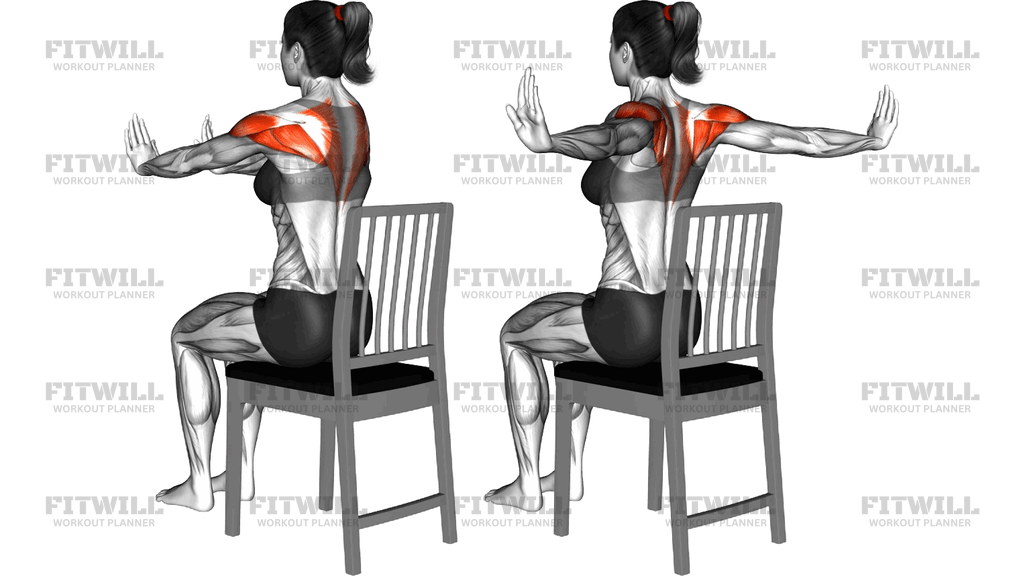
Instructions
- Sit sideways or straddle a sturdy chair so you can face forward with your torso upright and your feet flat on the floor, hip-width apart.
- Extend both arms straight out in front of your chest at shoulder height, elbows fully locked, palms facing each other.
- Sit tall and gently draw your shoulder blades down away from your ears before starting the movement.
- Brace your core lightly to keep your ribs stacked over your hips and prevent your lower back from arching.
- Sweep both arms out to the sides in a smooth arc, keeping the elbows straight the entire time, as if pushing the air apart.
- Continue until your arms are open wide and roughly in line with your shoulders or slightly behind them, and squeeze your shoulder blades together hard at the end range.
- Hold the squeeze for one to two seconds, feeling the work between your shoulder blades and across the back of your shoulders.
- Reverse the arc slowly, bringing your straight arms back together in front of your chest without letting them drop.
- Exhale as you sweep the arms open, inhale as you return them to the front.
- Reset your posture between reps, making sure your shoulders stay relaxed and low before starting the next sweep.
Tips & Tricks
- The most common mistake is shrugging as the arms open, which shifts the work to your upper traps and neck. If you feel tension climbing into your neck, consciously press your shoulders down and use a smaller arc.
- Bent elbows turn this into a different exercise. If your elbows soften mid-sweep, imagine your arms are steel rods and reduce the range until you can keep them locked.
- Do not let your wrists flop back. Keep your hands in line with your forearms, palms facing forward or slightly inward, so the sweep stays driven by your shoulders.
- If your chair has a backrest, do not lean into it. Your torso should support itself upright, or the squeeze through your upper back will lose its purpose.
- Keep the tempo slow, roughly two seconds out and two seconds back. Rushing lets momentum do the work your rhomboids should be doing.
- A useful cue is to imagine trying to pinch a coin between your shoulder blades at the widest point of the sweep.
- If your shoulders feel pinched at the back of the arc, bring the end position forward so your arms finish in line with your chest rather than behind your shoulders.
- Start with two or three sets of ten to fifteen controlled reps. Since the resistance is light, the quality of the squeeze matters far more than the rep count.
Frequently Asked Questions
What muscles does the Sitting Straight Arm Back Squeeze On A Chair work?
The primary muscles are the rhomboids and middle traps between the shoulder blades, with strong support from the rear deltoids and the rotator cuff, which controls the straight-arm path.
Why do the arms have to stay straight during this exercise?
Keeping the elbows locked removes the arms as levers and forces the shoulder blades and rear shoulders to do the work. The moment the elbows bend, the movement drifts toward a rear delt row and the squeeze changes character.
Is the Sitting Straight Arm Back Squeeze On A Chair good for beginners?
Yes. It is low-load, seated, and easy to feel in the right place, which makes it a great first exposure to upper back activation before progressing to band pull-aparts or rows.
How is this different from a bent-over rear delt raise?
The seated upright position removes gravity pulling on a hinged torso, so there is no momentum to hide behind. The resistance comes purely from the active squeeze, which makes it gentler on the lower back as well.
Can I do this exercise at a desk?
Absolutely. Any stable, armless chair works, and the movement is quiet and unobtrusive, which makes it a practical midday reset for people who sit for long stretches.
How many reps and sets should I do?
Two to three sets of ten to fifteen reps with a one to two second hold at the wide position is a solid starting point. Add reps or holds before adding any complexity.
Why do I feel this in my neck instead of my upper back?
That usually means your shoulders are riding up as your arms sweep out. Reset with your shoulder blades drawn down, use a shorter arc, and focus on squeezing the blades together rather than reaching your hands as far back as possible.
Can I add resistance bands or light weights to this movement?
You can progress to a band pull-apart with bent or straight arms later, but master the bodyweight version first. Adding load before you can keep the elbows straight and shoulders low tends to reinforce poor patterns.
Is the Sitting Straight Arm Back Squeeze On A Chair safe if my shoulders are sensitive?
The range is easy to scale: simply end the sweep earlier so your arms finish in line with your chest. Stop and consult a professional if you feel sharp pain rather than muscle effort.