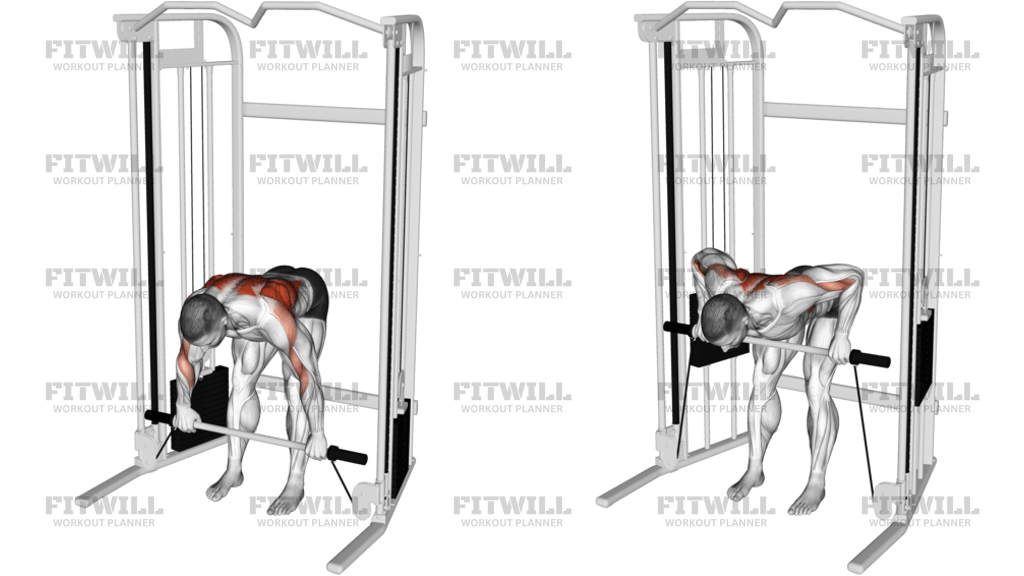
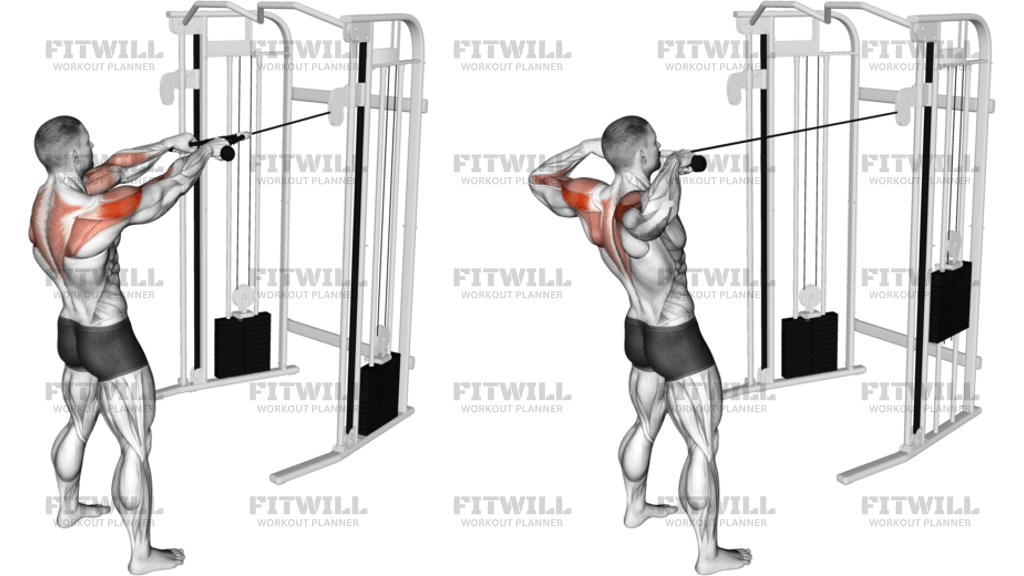
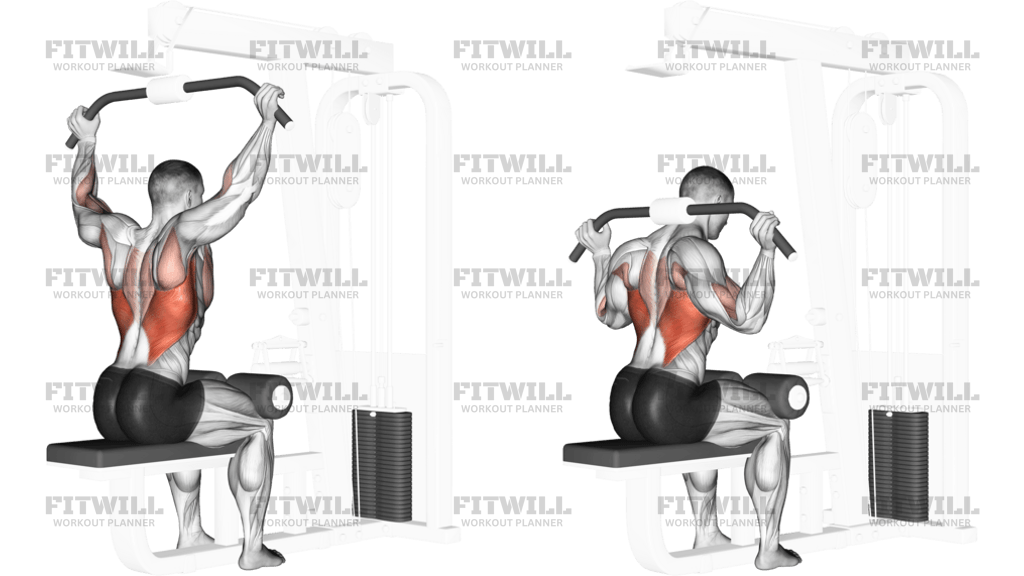
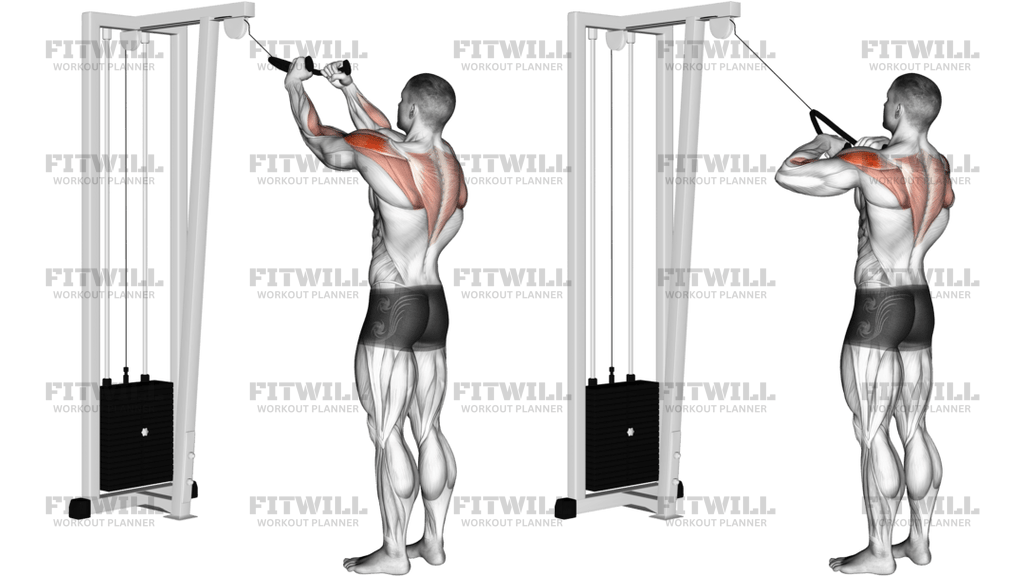
Cable Incline Rear Delt Fly With Back Support
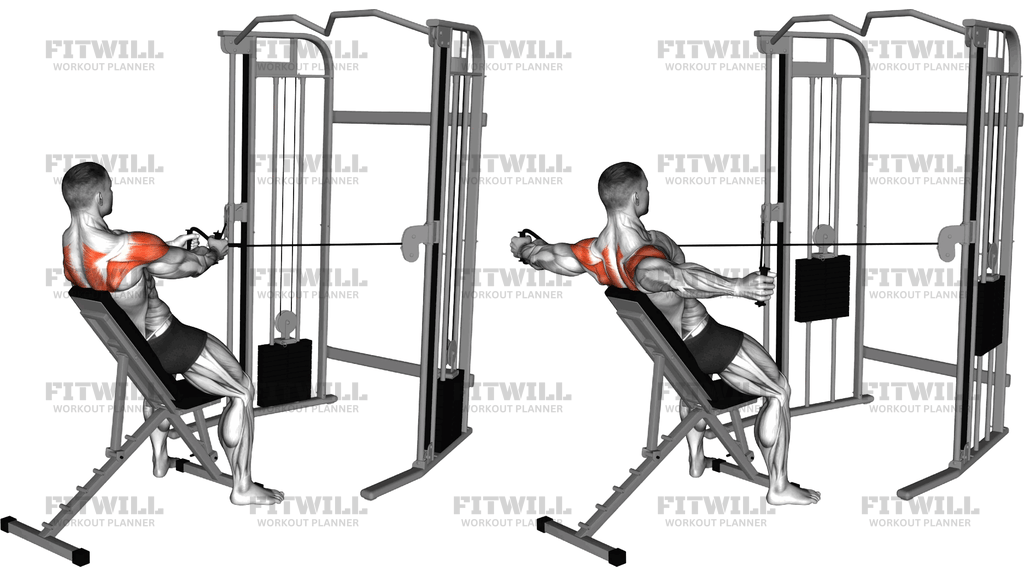
The Cable Incline Rear Delt Fly With Back Support is a rear delt isolation exercise performed on a dual-pulley cable setup while seated on an incline bench with your chest braced against the pad. You start with your arms extended forward and the cables crossed in front of you, then sweep your arms out and back until they form a wide T with your torso. The cable resistance stays constant through the entire arc, which is something dumbbells cannot provide on this movement.
The back support is the defining feature of this setup. Because your chest stays pinned to the incline pad, you cannot rock your torso backward or use momentum from your lower body to move the weight. That makes it one of the stricter ways to train the rear delts, and it suits lifters who tend to turn rear delt work into a sloppy rowing motion. It is equally useful for anyone building balanced shoulder development, improving posture-supporting upper back strength, or rehabbing around cranky shoulders with a smooth, guided resistance path.
The primary muscles worked are the posterior deltoids, with strong involvement from the rhomboids and mid-traps as the shoulder blades squeeze together at the end range. Because the arms stay nearly straight and move away from the body rather than toward it, the lats and biceps contribute very little compared to a row, keeping the tension where you want it.
Setup matters more here than in most fly variations. The bench angle, pulley height, and seat position determine where the resistance pulls from. If the pulleys sit too low or too high relative to your shoulders, the movement drifts toward a different fiber emphasis or pulls you out of position. Take a minute to align the pulleys roughly at shoulder height and sit far enough up the bench that your chest is firmly supported before you grab the handles.
To execute it well, think of the movement as a wide arc, not a pull. Keep a slight bend in the elbows and let the arms travel around the shoulder joint until your hands are level with or slightly behind your shoulders. Squeeze the shoulder blades together briefly, then return with control, allowing the cables to cross again in front of you for a full stretch. Use lighter weights than you would for rows — the rear delts are a small muscle and the back-supported position removes every cheat mechanism.
This exercise fits well as an accessory after pressing or pulling work, typically for 2 to 4 sets of 10 to 15 controlled reps. It is a common staple in physique-focused shoulder training and a practical option for anyone whose rear delts lag behind the front and side heads.
[ Workout Log & Planner ]
Put your next workout in Fitwill
Keep your plan and training log ready when you are.


Instructions
- Position an incline bench a short distance in front of a dual-pulley cable machine, with the pulleys set at roughly shoulder height and the pad angled so you can sit upright with your chest against it.
- Sit facing the machine with your chest and upper abdomen supported on the pad, feet planted on the floor on either side of the bench, and grab the left cable handle with your right hand and the right handle with your left hand so the cables cross in front of you.
- Extend your arms straight forward toward the machine with a soft bend in the elbows and neutral wrists, and let the weight stack lift the slack out of the cables.
- Brace your core lightly, keep your chest in contact with the pad, and pull your shoulders down away from your ears before starting the rep.
- Sweep both arms out to the sides in a wide, circular arc, keeping the elbows locked at the same slight bend and the cables traveling at shoulder height.
- Finish with your arms open in line with or slightly behind your shoulders, hands at shoulder level, and squeeze your shoulder blades together for a brief pause.
- Slowly reverse the arc, letting your arms travel back forward until the cables cross again and you feel a stretch across the back of your shoulders.
- Exhale as you open your arms out to the sides, and inhale as you bring them back to the starting position.
- Complete all reps with the current hand crossover, then switch your grip so the opposite cable is on top and perform an equal number of reps to keep both sides balanced.
- When finished, let the handles return forward under control, release one handle at a time, and allow the weight stacks to settle before standing up.
Tips & Tricks
- If you feel the work shifting into your biceps or the front of your shoulders, the weight is too heavy — the crossed-cable setup demands lighter loads than a standard rear delt fly because the cables add tension from the very first inch.
- Do not let your chest peel off the pad as you open your arms; if it does, you are arching and turning the movement into a row, so reduce the weight and keep the torso glued to the bench.
- Keep the arc at shoulder height. If your hands drift upward, your upper traps take over — cue yourself to sweep slightly down and out rather than up and back.
- The alternating grip crossover means the top hand does slightly different work each set; switching which cable is on top between sets keeps the two rear delts loaded evenly.
- Pause for one second at the open position instead of bouncing at the end range — the rear delts respond to the squeeze far more than to rep speed.
- Keep your neck relaxed and look down at the bench rather than forward; craning your head up to watch the machine tightens the upper traps and dulls the rear delt contraction.
- Use an open palm or a very loose grip on the handles. Squeezing the handles hard recruits the forearms and biceps and can pull you out of the pure shoulder arc.
- If your shoulders pinch at the fully stretched position, do not bring your arms so far forward that the cables tug hard on the shoulder joint — stop just short of the cables fully crossing.
Frequently Asked Questions
What muscles does the Cable Incline Rear Delt Fly With Back Support work?
The posterior deltoids are the primary movers, with the rhomboids and mid-traps assisting as the shoulder blades retract. Because the arms stay nearly straight and move away from the body, the lats and biceps stay largely out of the movement.
Why is the chest supported on an incline bench for this exercise?
The pad eliminates torso swing and lower body momentum, forcing the rear delts and upper back to do all the work. It also makes the movement easier to standardize from rep to rep than a standing cable reverse fly.
Why do the cables cross in front of the body in this setup?
Crossing the handles lets each arm pull across the midline toward the opposite side, which keeps tension on the rear delt through a longer range and adds a slight horizontal stretch at the start of each rep.
Is the Cable Incline Rear Delt Fly With Back Support suitable for beginners?
Yes, and the back support actually helps beginners because it removes the momentum cheat that makes standing rear delt work hard to feel. Start with a very light weight and focus on a smooth, wide arc before adding load.
How heavy should I go on this movement?
Go noticeably lighter than you would for cable rows or side raises — the crossed-cable position keeps the rear delts under tension the entire time, so most lifters get the best results in the 10 to 15 rep range with strict form.
Should I switch which hand crosses on top between sets?
Yes. The top arm travels a slightly different path than the bottom arm, so alternating the crossover between sets keeps both rear delts working through the same total range over the course of your session.
What is a good substitute if my gym has no dual-pulley cable station?
A bent-over dumbbell reverse fly or a single-arm cable rear delt fly using one pulley are the closest alternatives. You lose some of the constant tension from the crossed setup, but the target muscles are the same.
My shoulders click or feel pinched when my arms come forward — is that normal?
Some clicking without pain is common and usually harmless, but if you feel pinching, shorten the range by stopping before the cables fully cross, and make sure the pulleys are at shoulder height rather than above it. Persistent pain is a reason to check with a qualified professional.
Where should this exercise go in my workout?
It works best as an accessory near the end of a shoulder or upper body session, after your heavier presses and rows, when isolating the rear delts with lighter, controlled sets is the goal.