Dumbbell One-Arm Reverse Fly With Support
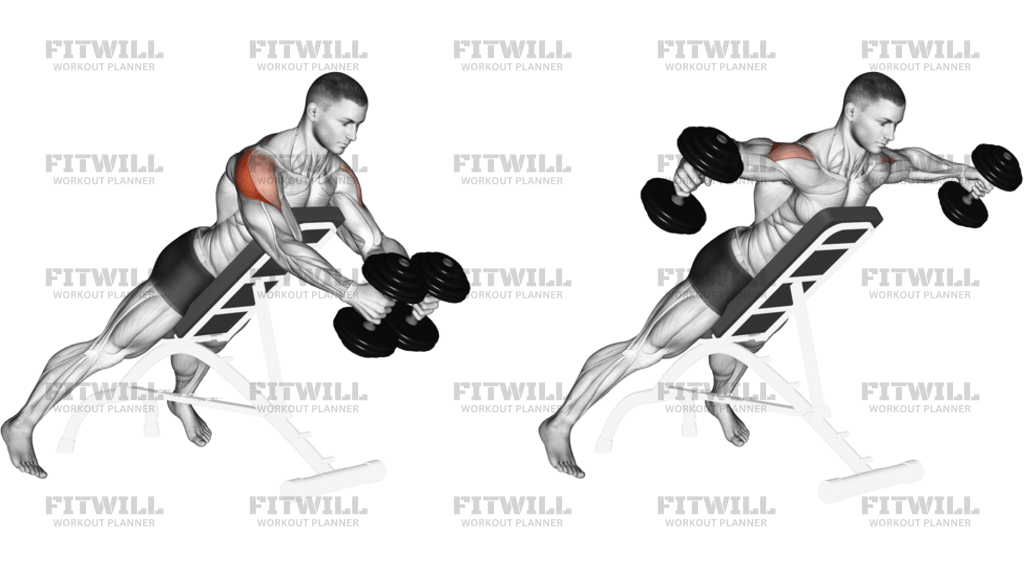
Dumbbell One-Arm Reverse Fly With Support is a supported rear-delt isolation exercise done with one hand braced on a bench or similar support while the other arm lifts a dumbbell out to the side. The supported setup removes a lot of body sway, which makes it easier to isolate the rear shoulder, upper back, and the small stabilizers that keep the shoulder joint centered.
The exercise is most useful when you want cleaner rear-delt work than a free-standing bent-over fly usually allows. Because one hand is anchored, you can keep the torso fixed, keep the neck relaxed, and compare both sides without turning the movement into a back swing. That makes it a good accessory choice for shoulder balance, posture work, and upper-back finishing volume.
Set the bench or support high enough that your braced arm can stay firm while your torso hinges forward. In the version shown, the working-side arm hangs under the shoulder, the free hand presses into the bench, and the feet stay staggered for balance. Keep a soft bend in the elbow and let the dumbbell start below shoulder level before you begin the raise.
On each rep, lift the dumbbell in a wide arc out and slightly back, as if you are trying to sweep the elbow toward the wall behind you. The rear shoulder should do the work; the upper trap should not take over with a shrug. Pause briefly at the top, then lower under control until the arm is back under the shoulder and the shoulder blade can reset without bouncing.
Use a light load and a slow tempo. If the torso twists, the shoulder rises toward the ear, or the dumbbell drifts into a row path, the weight is too heavy or the range is too large. This is an accessory movement, so the best reps are the ones that stay smooth, quiet, and symmetrical from set to set.
[ Workout Log & Planner ]
Put your next workout in Fitwill
Keep your plan and training log ready when you are.


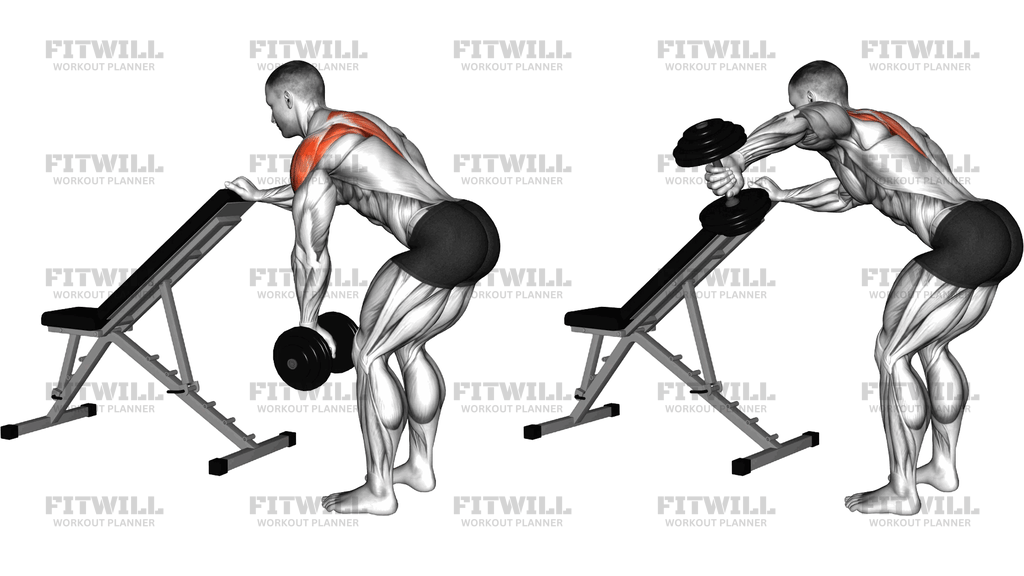
Instructions
- Place one hand on the bench or support and hinge forward until your torso is nearly parallel to the floor.
- Plant your feet in a staggered stance so your hips stay square and you can balance without twisting.
- Let the working arm hang under the shoulder with a soft bend in the elbow and a neutral wrist.
- Set the shoulder down away from the ear before the first rep.
- Lift the dumbbell out in a wide arc, leading with the elbow rather than the hand.
- Bring the dumbbell to about shoulder height only if you can keep the trap quiet.
- Pause briefly at the top while the rear delt is fully contracted.
- Lower the dumbbell along the same path until the arm is back under the shoulder.
- Reset the shoulder between reps and keep the torso still throughout the set.
Tips & Tricks
- Brace the non-working hand hard into the bench so the support arm does not collapse when the dumbbell gets heavy.
- Keep the chest angled toward the floor instead of rolling open as you lift; that keeps the move on the rear delt instead of turning it into a row.
- Use a long reach at the bottom so the shoulder blade can move, but do not let the shoulder dump forward or lose tension.
- Think about moving the elbow outward and slightly back; if the hand leads, the trap usually takes over.
- Choose a load that lets you pause for a count at the top without jerking your torso.
- Keep the neck in line with the spine and avoid looking up, which often causes an unwanted shrug.
- A shorter range is fine if full shoulder height makes you twist or pinch at the top.
- If your wrist bends back, the dumbbell usually feels heavier and the rear delt does less of the work.
- Control the lowering phase for a full count or two so the rear delt stays loaded instead of bouncing off momentum.
Frequently Asked Questions
What muscles does Dumbbell One-Arm Reverse Fly With Support work?
It mainly trains the rear delts, with help from the rhomboids, mid traps, and other upper-back stabilizers. The braced position also asks the torso and shoulder stabilizers to stay quiet while the working arm moves.
Where should I place my free hand on the bench?
Place the free hand firmly on the bench seat or top edge at a height that lets you hinge without rounding your low back. The support should feel stable enough that you can keep the torso fixed through the set.
How should my torso be angled during the set?
Hinge forward so your chest is close to parallel with the floor, then keep that angle steady. If your torso keeps rising and falling, the rear delt loses tension and the movement becomes a swing.
What should the dumbbell path look like?
The dumbbell should travel in a wide arc out and slightly back, not straight up or directly behind the body. The elbow should guide the motion, and the shoulder should stay down away from the ear.
Is this more of a shoulder or back exercise?
It is mainly a rear-shoulder exercise, but the mid-back muscles help control the shoulder blade during the lift and lower. That is why the movement feels stable when the support setup is correct.
Can I turn this into a row if I pull too hard?
Yes, and that is one of the main mistakes to avoid. If the elbow stays too close to the ribs and the weight moves backward instead of outward, you are drifting into a row pattern.
What is the best beginner load for this exercise?
Use a very light dumbbell first and earn the range with control, not with load. If you cannot hold the top for a brief pause without shrugging, the weight is too heavy.
Should I use a full arm lockout at the bottom?
No. Keep a soft bend in the elbow so the shoulder stays in control and the joint is not yanked into the bottom position. The arm should hang relaxed, not snap straight.
What if I feel it more in my upper trap than my rear delt?
Lower the weight, shorten the range slightly, and keep the shoulder blade down as you lift. A trap-dominant rep usually means the dumbbell is too heavy or the shoulder is shrugging at the top.