Resistance Band Sitting Military Press On A Chair
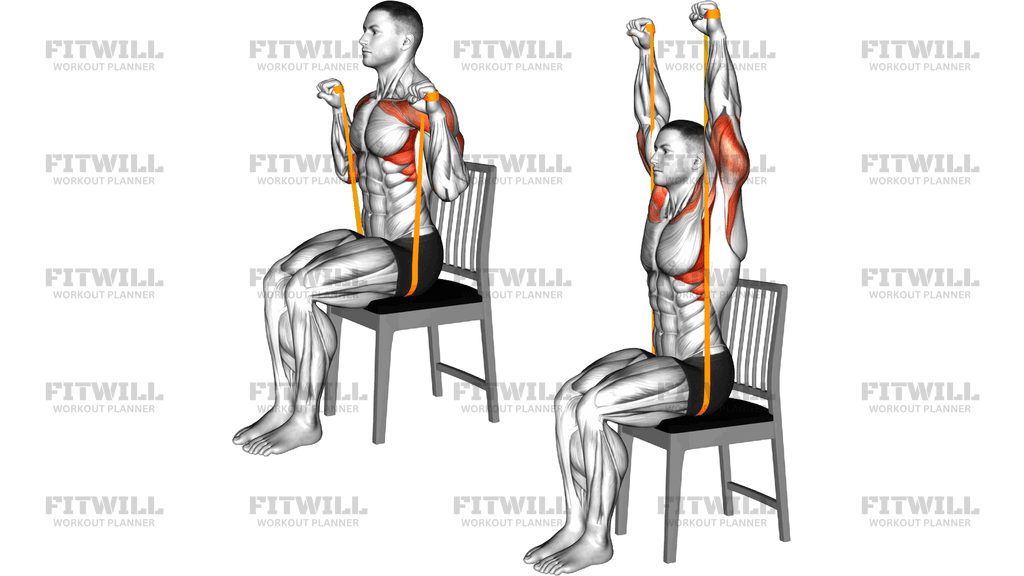
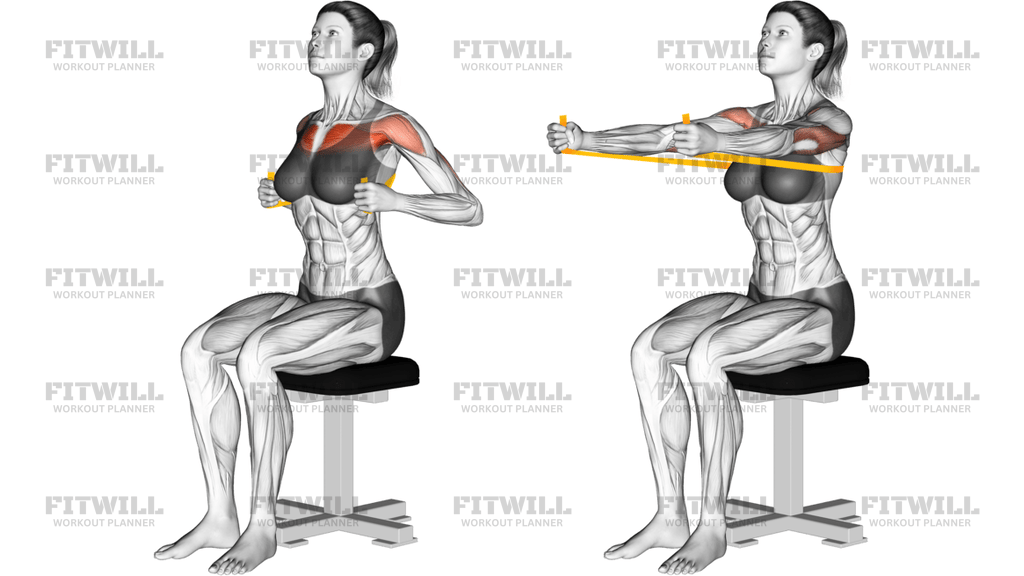
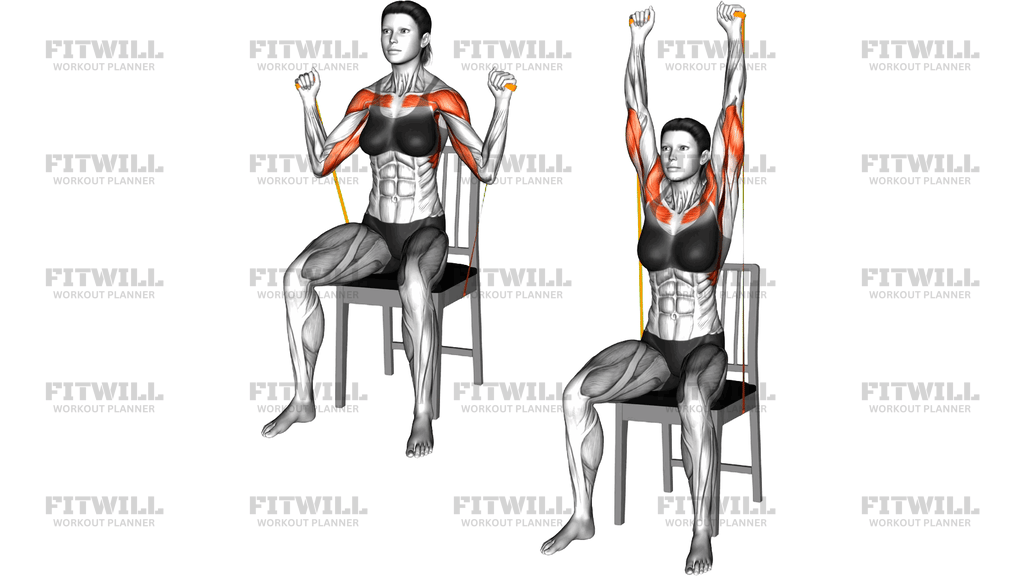
The Resistance Band Sitting Military Press On A Chair is a seated overhead press performed with a resistance band instead of free weights. You sit upright on a sturdy chair with the band anchored beneath the seat or under your feet, grip a handle in each hand at shoulder height, and press straight up until your arms are fully extended overhead. Because the band provides tension that increases as you press, the resistance feels light at the bottom and challenging near lockout, which is a different strength curve than dumbbells or a barbell provide.
This movement is especially useful for people training at home, beginners learning the overhead pressing pattern, and anyone who wants shoulder work without loading the spine with heavy weight. The seated position removes momentum from the legs and forces your torso to do the stabilizing, so you get honest feedback on whether your pressing is clean. Office workers and older trainees often like this variation because a chair is already available and the setup takes seconds.
The primary muscles worked are the front and side heads of the shoulders, which drive the band upward through most of the range. The triceps extend the elbows to finish each rep, the upper traps assist near the top, and the muscles around the shoulder blades help control the path. Your core stays engaged the whole time to keep the ribcage stacked over the pelvis, even though the legs are not doing the lifting.
Setup matters more than it looks. The band needs even tension on both sides so one arm doesn't take over, and the anchor point determines how much resistance you get before the press even starts. Sit tall with your feet flat and roughly hip-width apart, and keep your lower back in a neutral position rather than arching hard to fake extra range. If the chair is unstable or too low, the whole movement gets sloppy, so choose a seat that lets your thighs sit close to parallel with the floor.
To execute well, start with hands just outside shoulder width at ear level, elbows stacked under or slightly in front of the wrists. Press up and slightly inward until the arms are straight overhead without shrugging aggressively, then lower under control until the elbows drop back to about shoulder height. Exhale on the way up, inhale on the way down, and keep the ribcage from flaring as the band pulls you forward at the bottom.
Common use cases include warm-up pressing before heavier overhead work, high-rep shoulder endurance sets, rehab-friendly strength work when cleared by a professional, and travel or hotel-room training where a band and a chair are the only equipment. Keep the reps smooth and avoid locking out violently at the top; the band's peak tension at lockout is exactly where careless form shows up first.
[ Workout Log & Planner ]
Put your next workout in Fitwill
Keep your plan and training log ready when you are.


Instructions
- Place a sturdy chair on a non-slip surface and anchor the resistance band securely under the seat or under both feet so equal tension runs to each side.
- Sit tall on the chair with feet flat on the floor about hip-width apart, knees bent close to 90 degrees, and grab one handle in each hand with a palms-forward grip.
- Bring the handles up to shoulder height, just outside shoulder width, with elbows tucked slightly in front of the torso and wrists stacked over the elbows.
- Brace your core and pull your shoulder blades gently down and back so your lower back stays neutral instead of arching.
- Press both handles straight up overhead, letting the band stretch, until your arms are fully extended and your biceps end up near your ears.
- Pause briefly at the top without shrugging your shoulders up toward your neck.
- Lower the handles slowly back to shoulder height, resisting the band's pull so the elbows don't slam down past your torso.
- Exhale as you press up and inhale as you lower each rep.
- Complete your set, then release the handles one at a time while keeping tension off your face, and stand up carefully before removing the band.
Tips & Tricks
- If one side feels heavier, check that the band is anchored evenly under the seat or feet; uneven band length is the most common cause of a lopsided press.
- The band pulls your arms forward at the bottom of the rep, so actively keep your elbows under your wrists instead of letting them drift behind your head.
- Do not let your lower back arch as the press gets hard; if your ribs flare upward, the band tension is too high or your core has disengaged.
- Choose a chair without wheels or padding that collapses; a sliding chair is a real risk in this exercise because the band pulls you down into it.
- Shorten the band or use a thicker band to increase difficulty, but only after you can press without your torso leaning backward.
- Stop each rep at shoulder height on the way down rather than letting the hands sink to chest level, which shifts tension away from the shoulders.
- Keep your head neutral and look straight ahead; craning the chin up to 'make room' for the band is a sign the bar path, here the hand path, is drifting behind you.
- Slow the lowering phase to two or three seconds to get more out of light band tension, useful when you only have a thin band at home.
- If pressing overhead bothers your shoulders, reduce range slightly and stop just short of full lockout rather than forcing the top position.
Frequently Asked Questions
What muscles does the Resistance Band Sitting Military Press On A Chair work?
The front and side shoulders do most of the pressing, with the triceps extending the elbows to lockout. The upper traps, muscles around the shoulder blades, and core assist and stabilize throughout.
How do I anchor the band for this exercise?
Run the band under the seat of a sturdy chair or under both of your feet, holding a handle in each hand. The anchor should sit directly below your hands so tension stays even and vertical.
Is the Resistance Band Sitting Military Press On A Chair good for beginners?
Yes, it is one of the friendliest ways to learn overhead pressing because the band is light at the start of each rep and the chair removes the balance demands of standing. Start with a thin band and master the seated posture before adding tension.
Why is the press done sitting on a chair instead of standing?
Sitting removes leg drive and makes it harder to cheat with body English, so the shoulders and triceps do the work. The chair also makes the exercise accessible for people who have trouble standing for long sets.
What is the most common mistake in this exercise?
Arching the lower back and flaring the ribcage as the band gets harder near lockout. Fix it by bracing the core before each rep and reducing band tension if you cannot stay upright.
How do I make the Resistance Band Sitting Military Press On A Chair harder?
Use a thicker band, double up the band, or choke up on the handles to shorten the slack. You can also slow the lowering phase to increase time under tension without extra equipment.
Can I do this exercise if I only have one handle or a plain band?
Yes, you can loop a plain band under the seat and grip the ends, or press one arm at a time. Just keep your torso square and avoid twisting toward the working side.
How many reps should I do?
Because band resistance ramps up smoothly, sets of 10 to 15 controlled reps work well for most people. Adjust the band so the last two or three reps feel challenging without your form breaking down.
Is it safe to press overhead with a resistance band?
For most people yes, as long as the band is anchored securely and the chair cannot slide or tip. Check the band for worn spots before each session, since a snapped band snapping back toward the face is the main hazard specific to this setup.
What can I use instead of a chair?
A flat bench, sturdy ottoman, or stability ball against a wall can replace the chair as long as your feet stay flat on the floor and your torso stays upright. The key is a stable seat at a height that lets your thighs sit roughly parallel to the ground.