Dumbbell Side Lying Raises On Floor
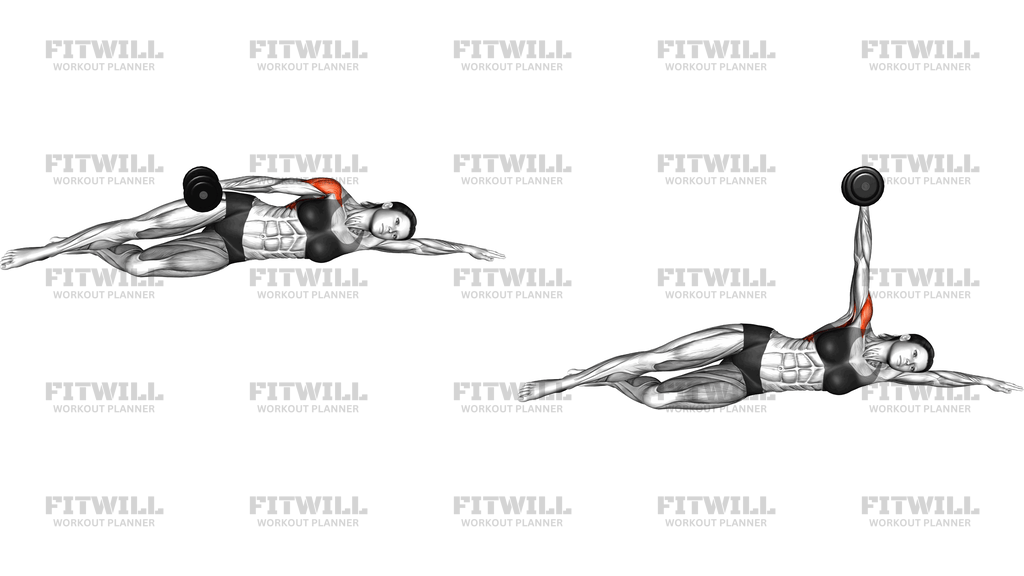
The Dumbbell Side Lying Raises On Floor is a single-arm lateral raise performed while lying on your side, usually on a mat or other soft surface. You rest your head on the lower arm, hold a dumbbell in the top hand, and lift the weighted arm straight up from your hip toward the ceiling until it is roughly vertical. Because you are lying down, gravity pulls the dumbbell straight down through the entire range, which places the side deltoid under consistent tension from the very bottom of the rep to the top.
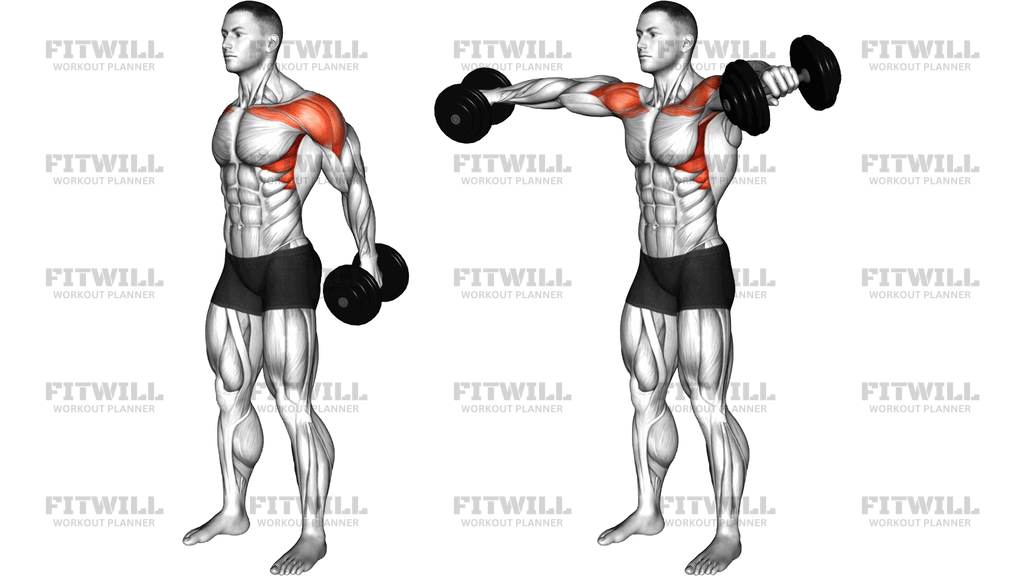
This position is one of the most honest ways to train the side delts. Standing lateral raises let people swing, use body english, or shift the load to the front shoulders and traps. Here, the floor pins your torso in place, so the shoulder joint has to do the work. The highlighted working muscle is the lateral deltoid, with the rear delt and upper traps assisting as the arm approaches the top of the arc.
It is a particularly good fit for beginners learning what a true lateral raise feels like, for lifters who cheat standing raises with momentum, and for anyone rehabbing or prehabbing the shoulder with light, controlled loading. Because only one arm works at a time and the floor stabilizes your body, you can use a surprisingly light dumbbell and still get a strong contraction, which makes the movement joint-friendly.
Setup details matter more than they might seem. Lying flat on your side with your head supported by the lower arm keeps your spine neutral and prevents you from rolling backward, which would turn the exercise into a front raise. Keep the top arm slightly in front of your torso rather than directly on top of it, since a small forward angle protects the shoulder joint and matches the natural line of the deltoid fibers.
Execution is simple but demands control. Lift the dumbbell up in a smooth arc, stopping when the arm points at the ceiling, pause briefly, then lower the weight back down slowly until the shoulder blade and arm are relaxed but the dumbbell does not slam into the floor. The lowering phase is where most of the benefit lives; a two- to three-second descent turns a light weight into a serious deltoid stimulus.
In practice, this exercise works well as an accessory after pressing movements, as a warm-up activation before standing lateral raises, or as a standalone deltoid exercise on days when standing work aggravates the shoulders or lower back. It is common in physique-focused shoulder training and in strength programs that emphasize strict, isolated delt work.
[ Workout Log & Planner ]
Put your next workout in Fitwill
Keep your plan and training log ready when you are.


Instructions
- Lie on your side on an exercise mat with your legs straight and stacked, and align your body so your shoulders and hips form a vertical line.
- Extend your lower arm along the floor past your head and rest the side of your head on it, letting it act as a pillow and stabilizer.
- Hold a dumbbell in your top hand with a neutral grip, palm facing your body, and let the arm hang against the side of your torso with a slight bend in the elbow.
- Angle the top arm a few degrees forward, in front of your torso, so the dumbbell does not rest directly on top of your body.
- Brace your core lightly and squeeze your glutes to keep your hips from rolling backward during the lift.
- Exhale as you raise the dumbbell straight up toward the ceiling in a smooth arc, leading with the elbow and keeping the bend in the arm constant, until the arm is roughly vertical.
- Pause for a beat at the top with the side shoulder fully contracted, without shrugging the weight up with your traps.
- Inhale as you lower the dumbbell back down along the same arc over two to three seconds until it is just above or lightly touching your hip.
- Complete all reps on one side, then roll over, switch the dumbbell to the other hand, and repeat with the opposite arm.
Tips & Tricks
- Use a much lighter dumbbell than you would for standing lateral raises; the lying position removes all momentum, so 2 to 5 kg is often enough to feel the side delt working hard.
- If the dumbbell clanks against the floor at the bottom, stop the descent an inch above your hip so the deltoid never loses tension between reps.
- Watch for the hips rolling back as the arm rises; this turns the movement into a front raise. Keep your torso stacked and let the floor hold you square.
- Keep a small forward angle in the top arm rather than lifting it straight up from directly on top of the body; this lines up with the deltoid fibers and is friendlier to the shoulder joint.
- Do not shrug at the top of the rep. If your upper trap is doing most of the work, the weight is too heavy or you are shortening the arc.
- Keep the elbow bend fixed throughout. Straightening the arm as you fatigue turns the exercise into a longer-lever movement and stresses the elbow.
- Lie close to the edge of the mat so your top arm can travel through a full arc without the dumbbell hitting the floor or your hand drifting behind your body.
- Slow the lowering phase deliberately; because gravity acts directly on the arm, a controlled two- to three-second descent is where most of the deltoid growth stimulus comes from.
- If your lower shoulder gets cramped from resting your head on it, bend the lower arm and place your head on your hand instead.
Frequently Asked Questions
What muscles do Dumbbell Side Lying Raises On Floor work?
The lateral deltoid on the side of the working shoulder is the primary muscle, with the rear delt and upper traps assisting near the top of the lift. The core works lightly to keep your torso from rolling.
Is Dumbbell Side Lying Raises On Floor good for beginners?
Yes, it is one of the best ways to learn a strict lateral raise because the floor blocks swinging and body english. Start with a very light dumbbell and focus on feeling the side of the shoulder contract.
How high should I raise the dumbbell when lying on my side?
Raise it until your arm points roughly at the ceiling; going higher than vertical mainly adds trap involvement and can roll your torso. A brief pause at the top is more valuable than extra height.
Why do I feel this more than standing lateral raises despite using less weight?
Lying down means gravity pulls straight on the deltoid through the whole range, and the floor removes your ability to swing the weight up. The tension per rep is higher even though the load is smaller.
Should I keep my arm straight or bent during the Dumbbell Side Lying Raises On Floor?
Keep a slight, constant bend in the elbow, around 10 to 20 degrees, and do not change it during the set. Straightening or bending the arm mid-rep shifts the load and strains the elbow joint.
What is the most common mistake in this exercise?
Rolling the torso backward to help lift the dumbbell, which converts the movement into a partial front raise. Keep your shoulders and hips stacked vertically and reduce the weight if you cannot stay square.
Can I do Dumbbell Side Lying Raises On Floor without a mat?
Yes, a carpeted or smooth floor works, but a mat or folded towel under your hip and lower shoulder makes longer sets more comfortable and keeps the dumbbell from clanking against the floor.
What can I use instead of a dumbbell for this movement?
A small weight plate held in the hand works, and a light resistance band can substitute if no dumbbells are available. The key is a light load you can lift strictly without rolling your body.
Where should I place this exercise in my shoulder workout?
It works well as an isolation finisher after presses, or as a strict delt builder on its own. Many lifters also use it as a short activation set before heavier standing lateral raises.
Is this exercise safe for cranky shoulders?
The floor-supported position and light loading make it one of the gentler deltoid exercises, but keep the arm slightly in front of the torso and stay within a pain-free range. Stop and reduce the weight if you feel pinching at the top.