Resistance Band Standing Trapezius Press
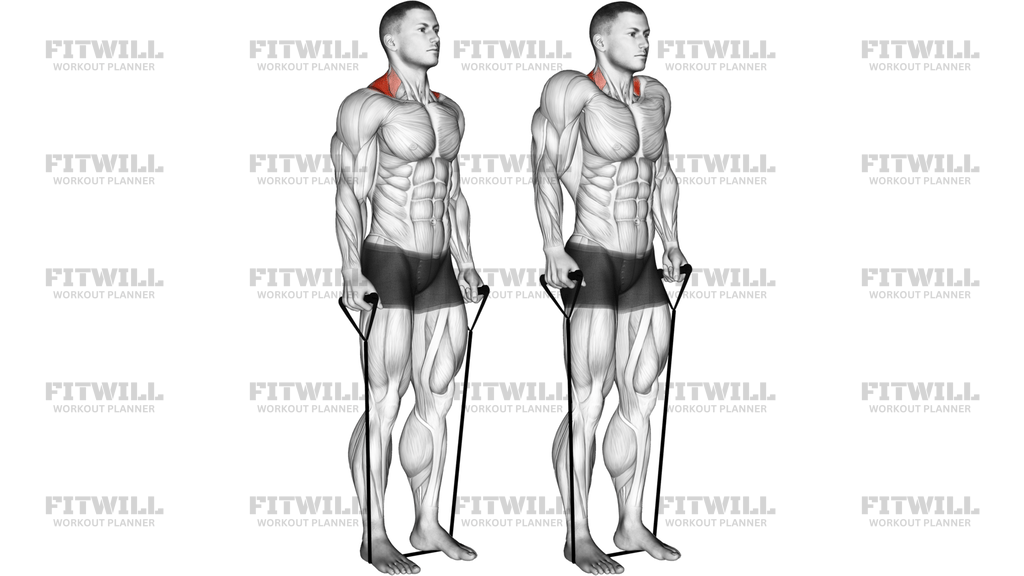
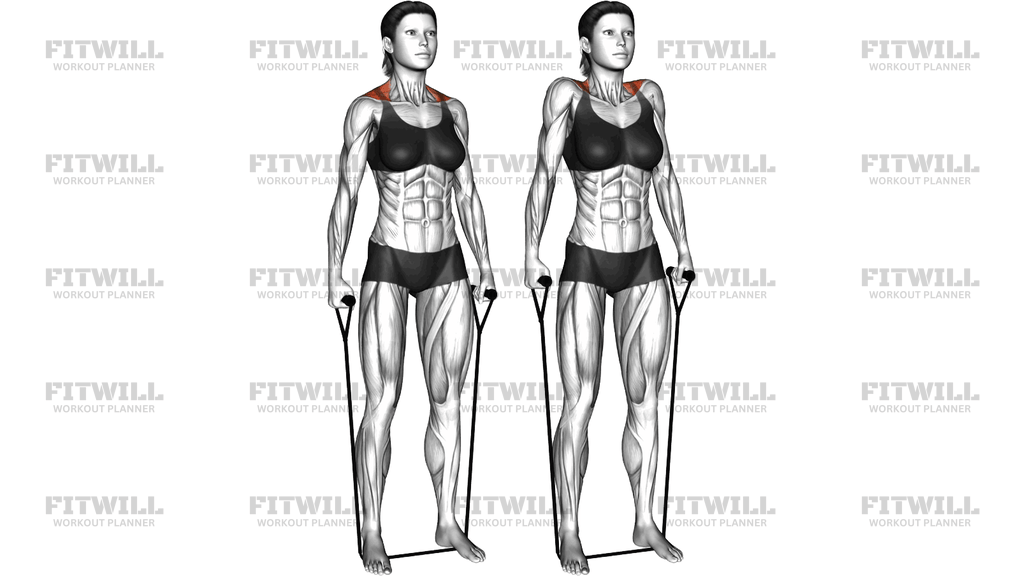
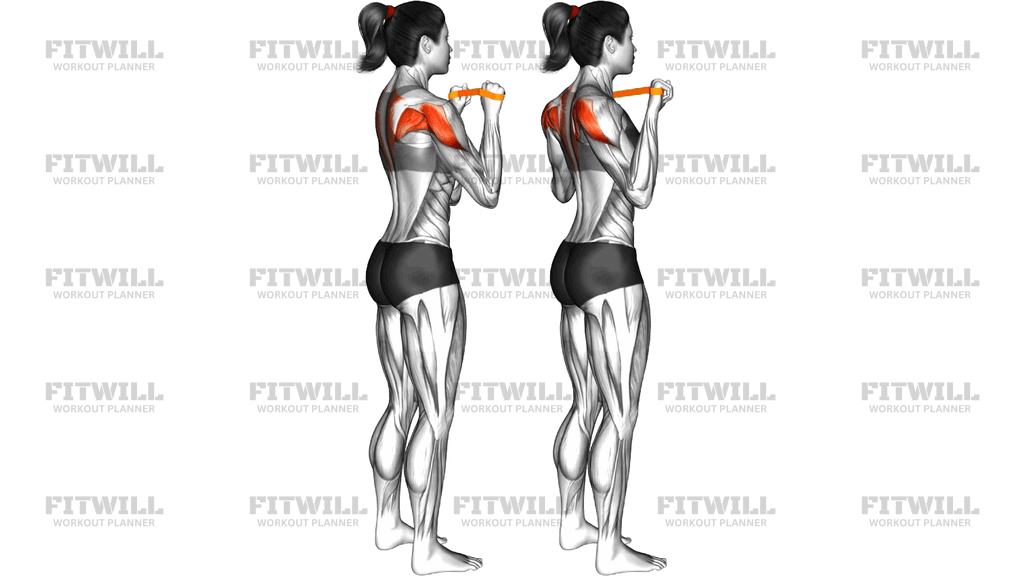
The Resistance Band Standing Trapezius Press is a simple standing exercise in which you hold a band taut between both hands at shoulder height and press your hands forward and slightly apart against the band's tension. Because your feet are planted and there is no anchor point, you create all of the resistance yourself — the harder you squeeze the band, the more work your upper trapezius and shoulder muscles have to do. This makes it one of the easiest band exercises to fine-tune on the fly.
The main muscles worked are the upper traps, which lift and support the shoulder girdle, along with the deltoids around the shoulders and the mid-back muscles that help control the shoulder blades. Your forearms and grip also stay busy the whole time, since they are responsible for keeping the band from slipping or going slack. It is a low-load, high-control movement rather than a heavy strength builder.
This exercise suits people who spend long hours at a desk and feel tight or stiff across the top of the shoulders, as well as anyone who wants a gentle way to warm up the shoulder girdle before pressing or pulling work. Because the resistance is self-generated, it is friendly for beginners, for people recovering general strength after a layoff, and for home trainees with nothing but a single loop band.
Setup matters here more than with most band exercises. Stand tall with soft knees and hold the band so it is already under light tension at shoulder height before you start pressing. If the band is too loose, the first part of the press does nothing; if it is too tight, you will shrug and hunch your shoulders toward your ears to force the movement. Elbows should stay bent and roughly under or slightly in front of your hands throughout.
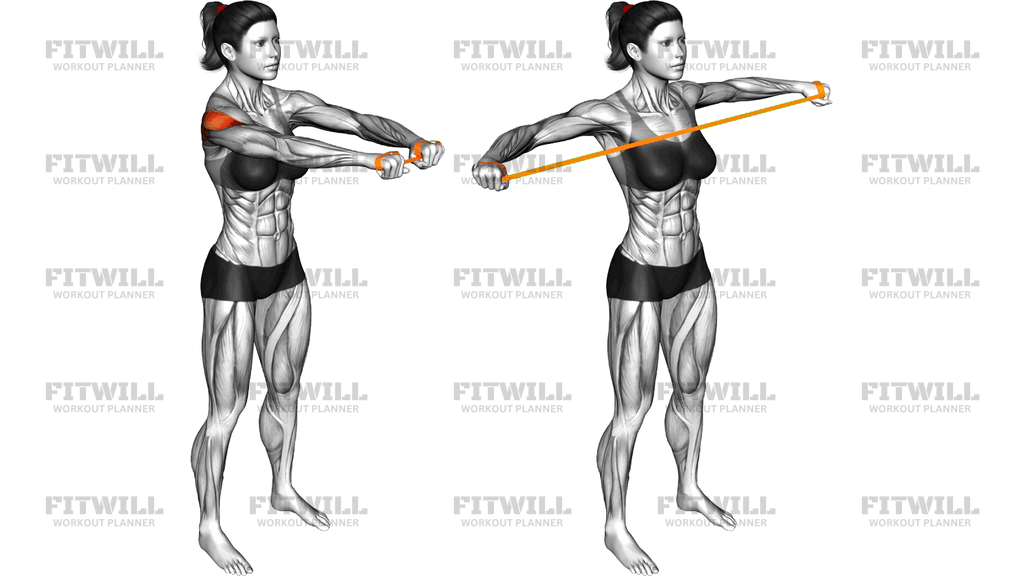
To execute it well, press your hands forward and apart in a smooth arc, as if pushing the band away from your upper chest, and hold the end position for a beat while you feel the top of your shoulders and upper back engage. Keep your neck long and your ribcage stacked over your hips — the press should come from the shoulders, not from leaning back. Return your hands slowly to the starting position while maintaining tension in the band.
A practical safety note: check the band for small tears before every session, and never position your face directly over a stretched band. If you feel pinching at the top of your shoulders or a strain in your neck, reduce the band tension or shorten the pressing range until the movement feels smooth and pain-free.
[ Workout Log & Planner ]
Put your next workout in Fitwill
Keep your plan and training log ready when you are.


Instructions
- Stand with your feet about hip-width apart, knees soft, and hold a resistance band in both hands in front of your upper chest at shoulder height.
- Grip the band so it is already under light tension between your hands, with your palms facing each other or slightly forward and your elbows bent and pointing down.
- Draw your shoulder blades down your back and keep your neck long — avoid letting your shoulders creep up toward your ears before the movement begins.
- Brace your core lightly and keep your ribcage stacked over your hips so your torso stays upright and still.
- Press your hands forward and slightly apart, stretching the band away from your chest in a smooth arc while your elbows stay bent.
- At the end of the press, pause for one to two seconds and feel the tension across the top of your shoulders and upper back.
- Slowly bring your hands back toward your chest, resisting the band's pull rather than letting it snap you back.
- Exhale as you press forward and inhale as you return to the starting position.
- Complete your chosen number of repetitions, then release the band tension carefully before lowering your hands to rest.
Tips & Tricks
- If you cannot feel your traps working, add pre-tension by bringing your hands closer together on the band before you press — a slack band makes the first half of the rep useless.
- The most common mistake is shrugging: if your shoulders end up next to your ears, shorten the press and focus on keeping space between your shoulders and neck.
- Do not lock your elbows out at the end of the press; keeping them bent keeps the load on the trapezius and shoulders instead of shifting it into the elbow joints.
- Keep the band at shoulder height, not chin height — raising your hands too high turns the press into a neck-dominant movement.
- If the band rolls or pinches in your hands, wrap it once around each palm for a secure grip instead of squeezing harder with your fingers.
- Move slowly enough that you could pause the press at any point; jerky, momentum-driven reps usually mean the band tension is too high.
- Watch yourself in a mirror from the side to make sure you are not leaning your torso backward as your hands press forward.
- For a warm-up, use 2 light sets of 15 reps with minimal tension; for muscle work, choose a thicker band and slow the return phase down to 3 seconds.
Frequently Asked Questions
Which muscles does the Resistance Band Standing Trapezius Press work?
The primary muscles are the upper trapezius at the top of the shoulders, with supporting work from the deltoids and the middle trapezius and rhomboids in the upper back. The forearms and grip stay active throughout because they hold the band under tension.
How is this exercise different from a band upright row or shrug?
In a shrug you elevate your shoulders under load, and in an upright row you pull the band upward with your elbows leading. In the Resistance Band Standing Trapezius Press you press your hands forward and apart against self-created band tension, so the traps and shoulders work isometrically and through a shorter arc rather than through heavy vertical movement.
Is the Resistance Band Standing Trapezius Press suitable for beginners?
Yes. Because you create the resistance yourself, you can start with very light tension and a short pressing range. Beginners should master the upright posture and no-shrug cue with a thin band before progressing.
Why should my elbows stay bent during the press?
Bent elbows keep the band positioned at shoulder height and stop the movement from turning into a chest or triceps press. Straightening your arms changes the leverage and shifts work away from the trapezius.
What kind of band works best for this exercise?
A short loop band or a longer band wrapped once around each hand works well, as long as you can create meaningful tension with your hands only about shoulder-width apart. Very long, light bands often cannot be tensioned enough while standing.
How many reps and sets should I do?
For warming up or relieving desk-related shoulder stiffness, try 2 sets of 12 to 15 smooth reps with light tension. For muscle-building intent, use a firmer band, 3 sets of 10 to 12 reps, and a slow, controlled return.
I feel this in my neck instead of my traps — what am I doing wrong?
You are most likely shrugging your shoulders toward your ears or pressing your hands too high. Reset with your shoulder blades drawn down, keep the band at shoulder height, and reduce the tension until the work sits on top of your shoulders rather than in your neck.
Can I use the Resistance Band Standing Trapezius Press as a warm-up before pressing exercises?
Yes, it works well as a shoulder girdle warm-up because it raises the working muscles' effort gently without heavy load. Use a light band, higher reps, and a full but comfortable pressing range before bench or overhead pressing sessions.
Are there any safety points to keep in mind with the band?
Inspect the band for cracks or tears before use, keep it out of direct sunlight when storing, and never release it under full tension near your face. If a band snaps, it can cause injury, so replace worn bands rather than risking it.