Resistance Band Pull Apart
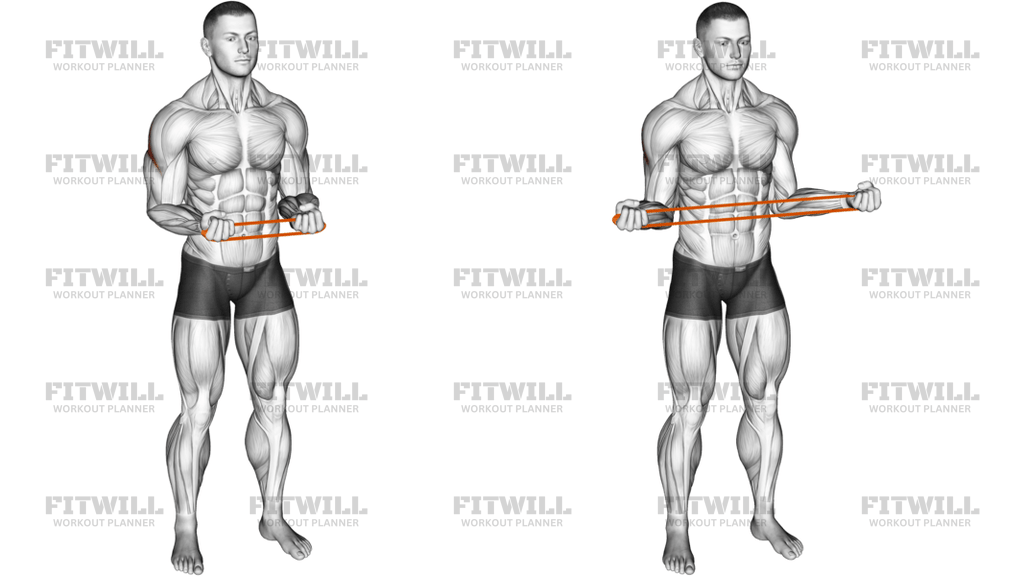
The Resistance Band Pull Apart is one of the simplest band exercises you can do, and one of the most useful. You hold a light band with both hands in front of your chest, arms straight, then pull your hands apart until the band stretches across your upper chest. The movement is small, the equipment is minimal, and the target area is one that most people neglect: the rear shoulders and the muscles that pull the shoulder blades together.
This is a go-to exercise for anyone who spends long hours at a desk, drives a lot, or trains a lot of pressing movements like push-ups, bench press, or overhead work. Those habits tend to roll the shoulders forward and weaken the upper back. The Resistance Band Pull Apart works in the exact opposite direction, pulling the shoulders back and down into a healthier position. It is common in warm-ups before upper-body training, in rehab-style shoulder routines, and as a daily posture drill.
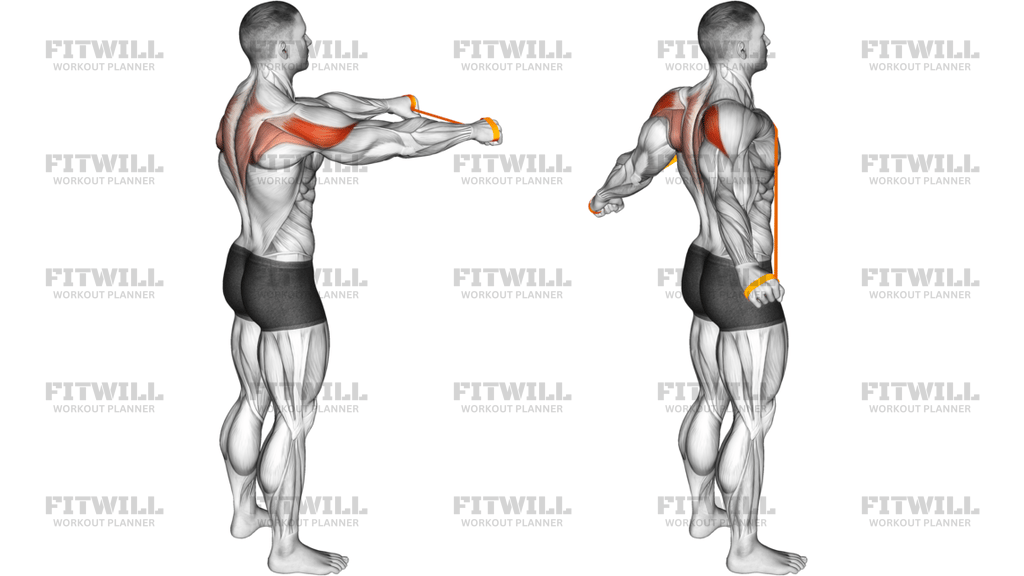
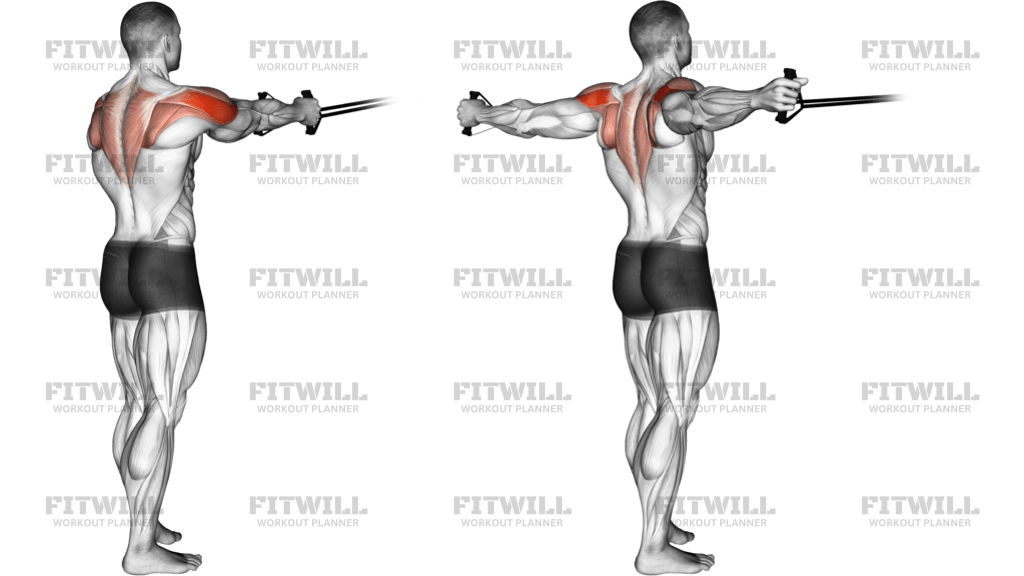
The main muscles working are the rear deltoids on the back of the shoulders, along with the rhomboids and mid-traps between the shoulder blades. The rotator cuff assists to keep the upper arm stable in the socket, and the forearm and grip muscles hold the band under tension. Because the band gets harder to stretch as you pull it wider, the resistance naturally peaks at the point where your shoulder blades squeeze together.
Setup matters more than it looks. The band height should sit around chest level, your arms should stay nearly straight without locking the elbows, and your wrists should stay neutral rather than bent back. Stand tall with feet about hip-width apart and ribs stacked over the pelvis. If you start with the band too high or too low, or let your shoulders creep up toward your ears, the target muscles stop doing the work.
To execute it well, think of spreading your hands apart on a horizontal path rather than pulling them back behind you. Lead with the elbows slightly, keep the band level, and finish with your chest open and shoulder blades drawn together. Pause for a beat at the widest point, then let the band return slowly instead of snapping back. The return is where many people lose control, so treat it as half the exercise.
Start with a light band and higher repetitions, typically 12 to 20 per set. This movement rewards consistency and control, not heavy resistance. If your shoulders shrug or your lower back arches, the band is too strong or the set has gone on too long. Two or three short sets before pressing workouts, or as a standalone daily habit, is plenty for most people.
[ Workout Log & Planner ]
Put your next workout in Fitwill
Keep your plan and training log ready when you are.


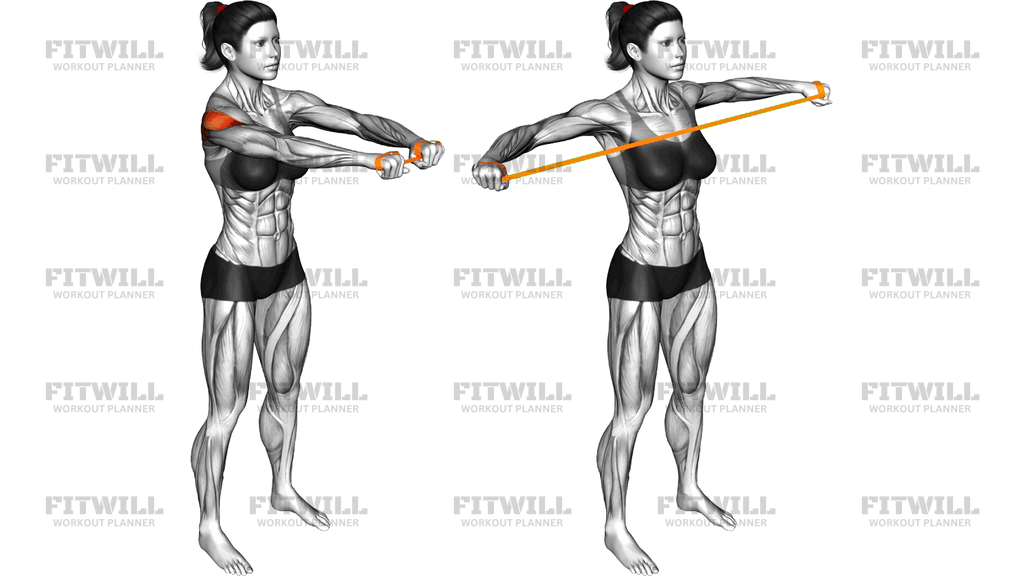
Instructions
- Stand with your feet about hip-width apart, knees soft, and hold a light resistance band with an overhand grip, hands roughly shoulder-width apart.
- Raise both arms straight out in front of your chest so the band is taut but not stretched, level with your collarbone.
- Roll your shoulders back and down, brace your core lightly, and keep your wrists straight in line with your forearms.
- Pull your hands apart sideways in a smooth horizontal arc, keeping your arms almost straight and the band at chest height throughout.
- Continue until the band touches or nearly touches your chest and your shoulder blades are squeezed together.
- Pause for one to two seconds in the wide position, feeling the muscles between your shoulder blades working.
- Slowly release your hands back toward the front, resisting the band's pull instead of letting it snap your arms in.
- Exhale as you pull apart, inhale as you return your hands to the starting position.
- Complete your repetitions, then step one hand out of the band carefully to release the tension rather than letting go suddenly.
Tips & Tricks
- If your shoulders rise toward your ears as you pull, the band is too heavy or you are rushing. Drop to a lighter band and focus on keeping the neck long and relaxed.
- Bending the elbows turns this into a rowing motion and shifts work away from the rear shoulders. Keep the arms straight with only a soft bend at the elbow.
- A common mistake is pulling the band backward behind the body instead of apart sideways. Keep the band path horizontal and in front of your chest.
- Do not let one arm do more work than the other. Check that both hands travel an equal distance and the band stays level, not tilted.
- A bent-back wrist position is a frequent culprit for forearm discomfort. Grip with your knuckles forward and your wrist in a straight line.
- Arching the lower back to help the band reach your chest means the range is too wide. Stop at the point where your chest stays open without your ribs flaring.
- The band should get challenging at the end range but never require a jerky pull. If you have to yank the last few inches, switch to an easier band.
- Control the return for two to three seconds. Letting the band snap back removes most of the benefit and can strain the shoulder.
- For extra work on the mid-back, try a slight pause and an extra squeeze of the shoulder blades at the widest point of every rep.
Frequently Asked Questions
What muscles does the Resistance Band Pull Apart work?
The rear shoulders do most of the work, supported by the rhomboids and mid-traps between the shoulder blades. The rotator cuff helps stabilize the upper arm, and the forearms and grip hold the band under tension.
Is the Resistance Band Pull Apart good for beginners?
Yes, it is one of the best beginner shoulder exercises because the setup is simple and the resistance is easy to adjust. Start with a light band and focus on keeping the arms straight and the shoulders relaxed.
Should I do the Resistance Band Pull Apart before or after my workout?
It works well as a warm-up before pressing exercises like bench press or overhead press because it activates the upper back and rear shoulders. It can also be done as a standalone drill on rest days.
Why does the band touch my chest during the pull apart?
That is the natural end position when you pull your hands fully apart at chest height. If the band slaps into your chest forcefully, slow down the final part of the pull and control the contact.
What band resistance should I use for the Resistance Band Pull Apart?
Choose a band you can pull apart for 12 to 20 controlled repetitions without shrugging your shoulders or bending your elbows. Most people are surprised by how light the band should be for this movement.
My shoulders shrug when I do pull aparts. How do I fix it?
Shrugging means the upper traps are taking over from the rear shoulders and mid-back. Actively press your shoulders down before each rep and reduce the band tension until you can keep your neck relaxed.
Can I do the Resistance Band Pull Apart every day?
Yes, because it is a low-load movement it tolerates frequent practice, and many people use it as a daily posture drill. Keep the daily volume modest, around two or three sets, and stop if the shoulders feel irritated.
What can I substitute if I do not have a resistance band?
Face pulls on a cable machine or reverse flyes with light dumbbells train similar muscles, though neither is as quick and portable. Resistance tubing with handles can also work if a flat loop band is unavailable.
Is it normal to feel the Resistance Band Pull Apart in the front of the shoulders?
No, the work should be felt across the back of the shoulders and between the shoulder blades. Front-of-shoulder discomfort usually means the band is too strong, the arms are pulling too low, or the shoulders are rolling forward.
How is the Resistance Band Pull Apart different from a band row?
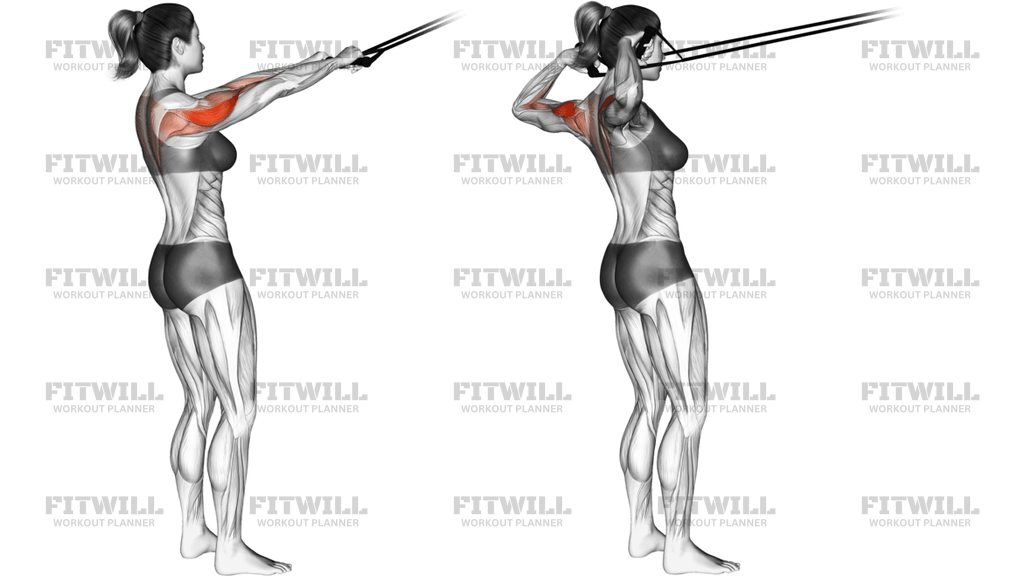
A row bends the elbows and pulls a anchored band toward your torso, while the pull apart keeps the arms straight and stretches the band sideways in front of you. Both hit the upper back, but the pull apart emphasizes the rear deltoids and shoulder blade squeeze more.