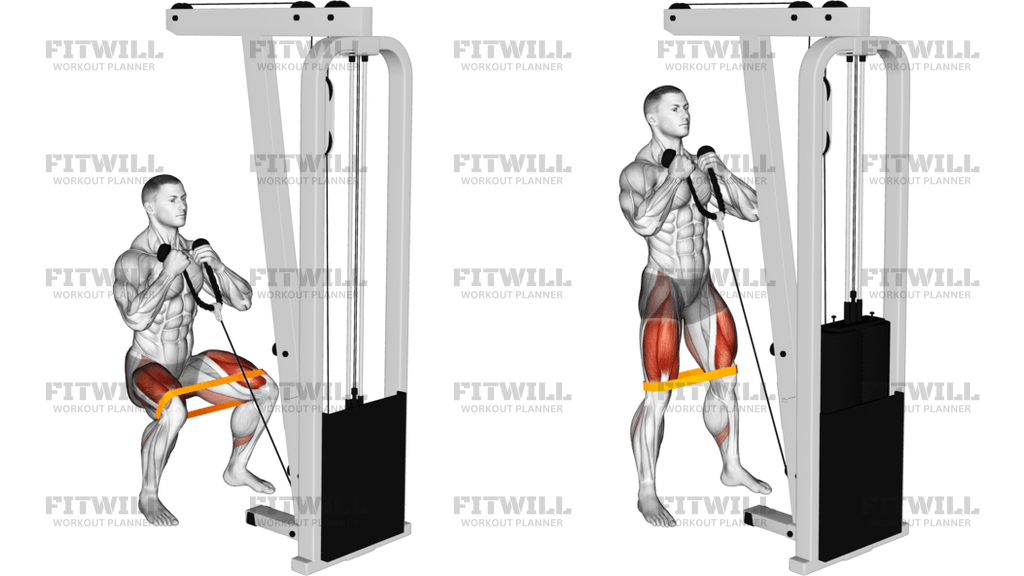
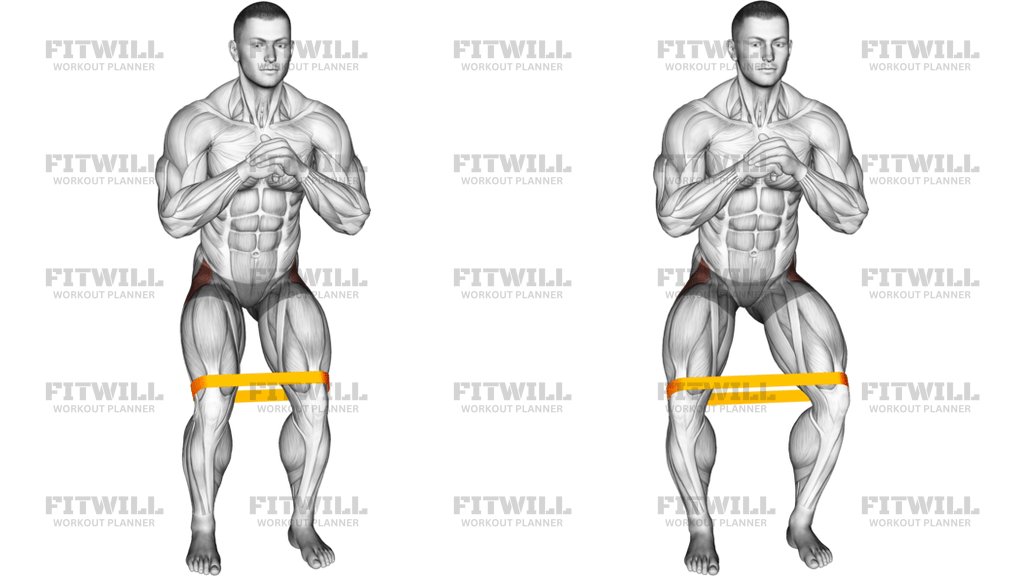
Resistance Band Smith Squat
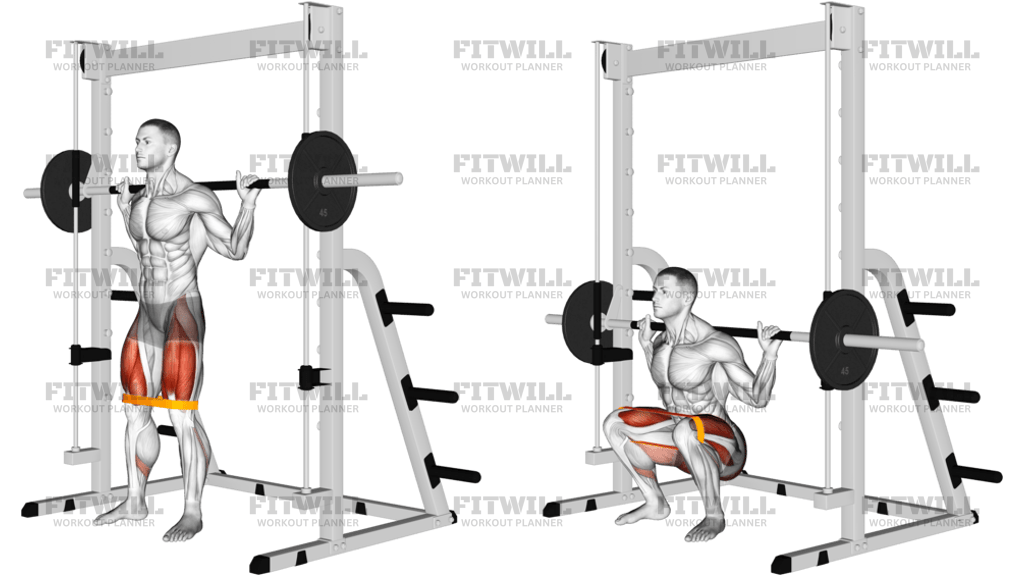
Resistance Band Smith Squat combines the guided bar path of a Smith machine with the outward tension of a band around the thighs. The result is a squat that keeps the lower body honest: the machine gives you a fixed track to work in, while the band asks your knees and hips to stay active through the entire rep.
This movement is mainly used to train the thighs, especially the quadriceps, while the glutes and outer hips help keep the knees tracking out against the band. Because the bar path is fixed, it is a useful option when you want squat volume with less balance demand than a free barbell squat, or when you want a clear cue to prevent the knees from collapsing inward.
Setup matters more here than in many other squat variations. The bar should sit across the upper traps or rear shoulders, the band should stay above the knees or across the upper thighs, and the feet should be placed far enough forward that you can sit down without being shoved into the machine. A stance that is too narrow or too close to the bar usually makes the squat feel cramped and forces the hips and knees into an awkward line.
On the descent, keep the chest lifted, let the hips sit down between the feet, and press the knees gently out into the band as you lower. At the bottom, the thighs should be as deep as your mobility allows without the pelvis tucking hard or the heels peeling up. On the way up, drive through the whole foot, keep tension on the band, and finish each rep by standing tall rather than leaning back to lock out the bar.
Resistance Band Smith Squat is a strong choice for hypertrophy work, controlled squat practice, or higher-rep lower-body training when you want a more stable path than a free squat. It can also be helpful for lifters who struggle with knee cave, because the band gives immediate feedback about hip position. Use a load and band tension that let you keep the same squat pattern from the first rep to the last, and stop the set if the machine path, band tension, or foot position starts to force compensation.
[ Workout Log & Planner ]
Put your next workout in Fitwill
Keep your plan and training log ready when you are.


Instructions
- Place the band above your knees or across the upper thighs, then step under the Smith bar so it rests across your upper traps or rear shoulders.
- Set your feet slightly in front of your hips, about shoulder-width apart or a little wider, with toes turned out just enough to let your knees track over them.
- Grip the bar evenly, unlock it from the hooks, and stand tall before starting the first rep.
- Take a breath, brace your torso, and sit your hips down between your feet while keeping steady pressure out into the band.
- Lower until your thighs reach a depth you can control without your heels lifting or your lower back rounding.
- Pause briefly at the bottom if you can keep tension through the band and the whole foot on the floor.
- Drive up through midfoot and heel, pushing the knees outward against the band as you rise.
- Stand fully at the top without leaning back, then re-rack the Smith bar by turning it into the hooks after the set.
Tips & Tricks
- Keep the band above the knees; if it slides onto the shins, the knee-tracking cue gets weaker and the setup usually feels unstable.
- If the Smith bar forces you to stay too upright or pitches you forward, move your feet a little farther in front of the bar until the squat path feels natural.
- Press the knees out only as far as your feet and hips can control; forcing a huge outward drive often collapses the arches instead.
- Let the bar travel in a smooth line while your torso stays stacked over the hips; bouncing out of the bottom usually shifts the work away from the thighs.
- Use a controlled lowering phase so the band stays active the whole way down instead of going slack at the bottom.
- A moderate band is usually enough; if the band is so tight that it changes your squat depth or stance, the setup is too aggressive.
- If your heels rise, shorten the depth, widen the stance slightly, or use a small heel wedge before adding more load.
- Stop the set when your knees stop tracking out or your pelvis starts tucking under at the bottom.
Frequently Asked Questions
What muscles does Resistance Band Smith Squat work most?
It mainly targets the quadriceps and glutes, with the band also asking the outer hips to keep the knees tracking out.
Where should the resistance band sit on Resistance Band Smith Squat?
Place it above the knees or across the upper thighs so it gives a clear outward cue without slipping into the lower leg.
How far in front of the bar should my feet be?
Usually just far enough forward that you can sit down into the squat without being forced into an overly upright or cramped position.
Why do my knees cave in during Resistance Band Smith Squat?
The stance may be too narrow, the band may be too light, or the load may be too heavy. Adjust the setup so you can keep pressure out into the band for the full rep.
Can beginners use Resistance Band Smith Squat?
Yes. Beginners usually do best with a light band and a shallow-to-moderate depth until the bar path and foot position feel consistent.
Should my heels stay flat in this squat?
Yes, if possible. If your heels lift, reduce the depth or use a small heel wedge before trying to force a deeper rep.
How is Resistance Band Smith Squat different from a regular Smith squat?
The band adds outward tension at the knees, which gives you extra feedback for hip position and can make the lower body work harder at the same load.
Where should I feel Resistance Band Smith Squat?
You should feel it mostly in the front of the thighs and glutes, with the outer hips working to keep the knees from drifting inward.