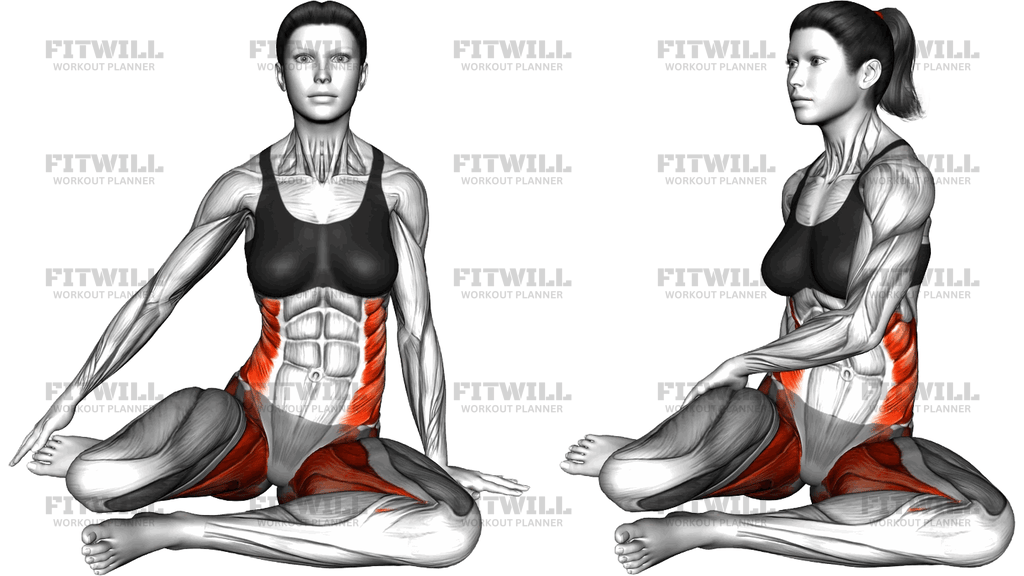
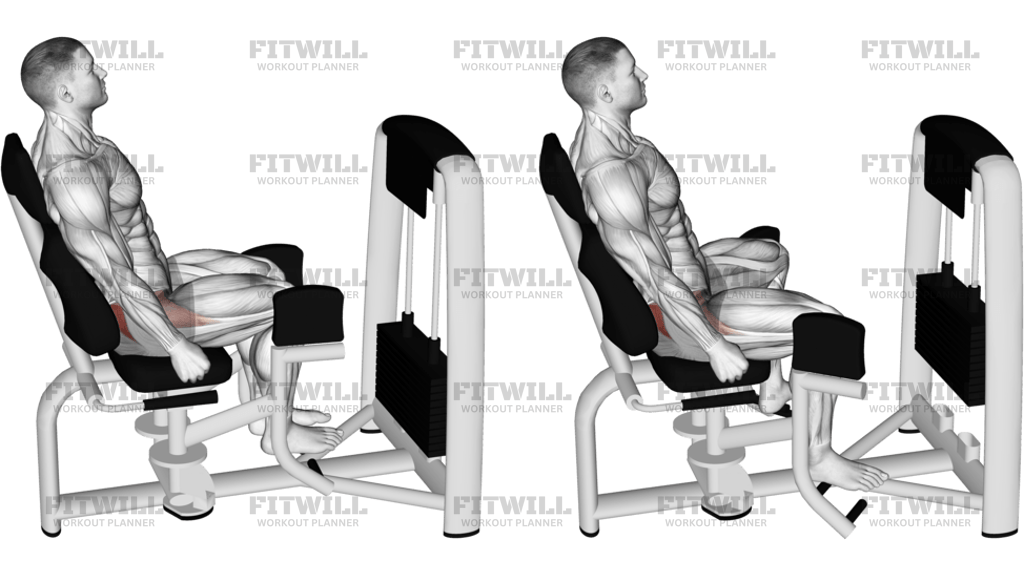
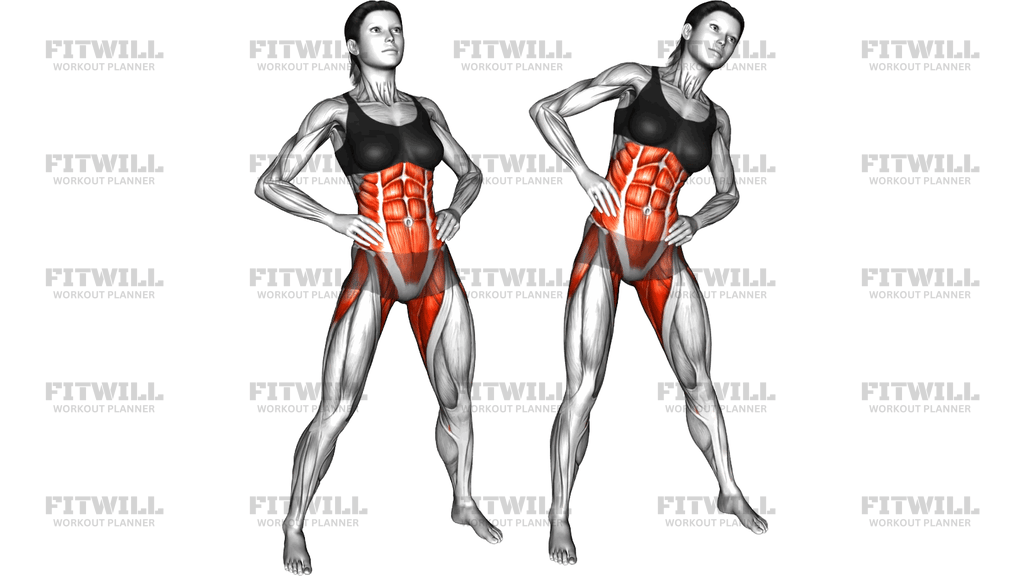
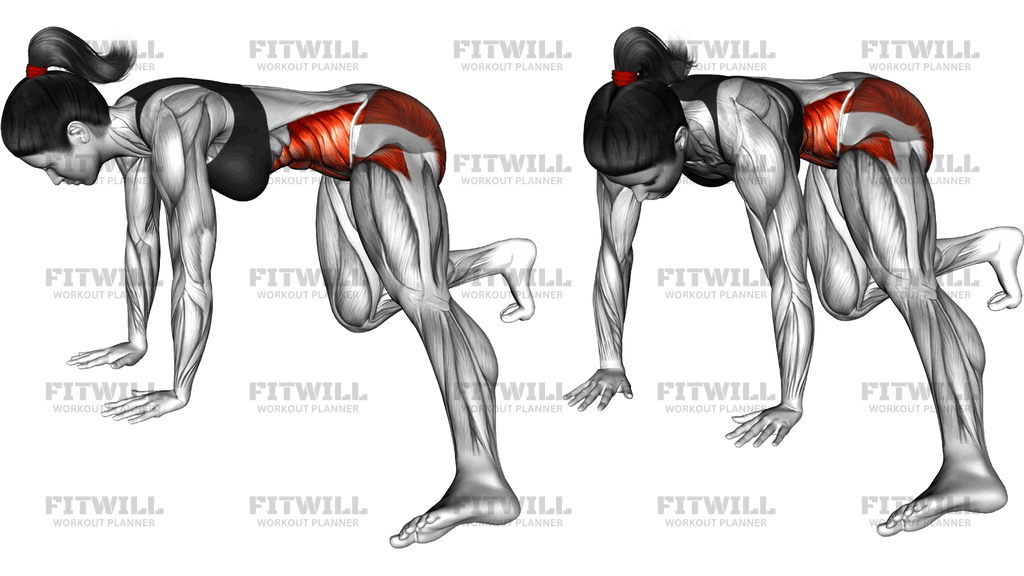
Kneeling External Rotation
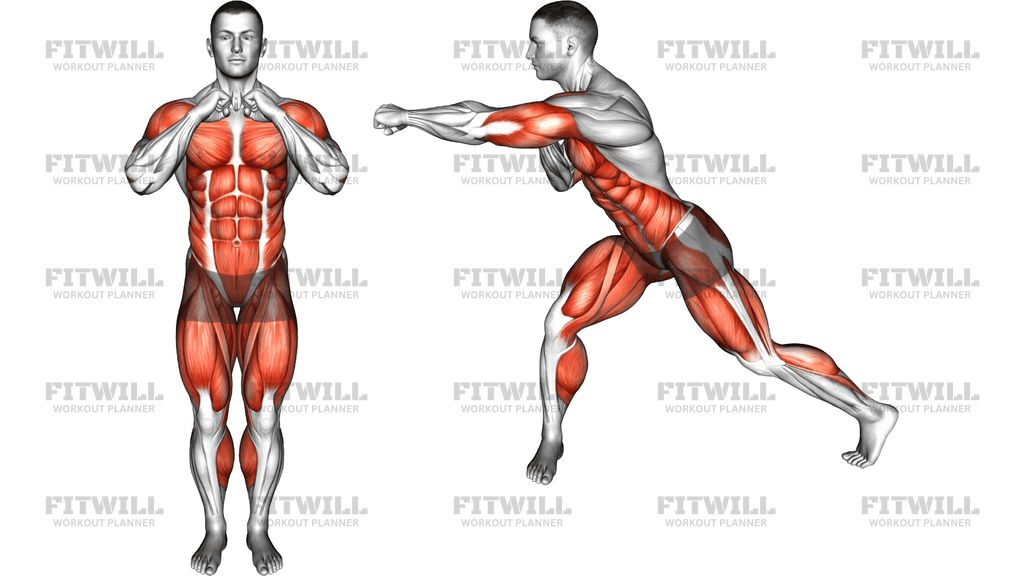
The Kneeling External Rotation is a body-weight hip mobility drill performed from a kneeling base. You begin in an upright tall-kneel with your hands clasped at chest height, then shift your weight and rotate one leg outward so the knee bends to the side and the hip moves into external rotation, before controlling the leg back to the center. Because there is no external load, the entire exercise is about precise joint movement, balance, and trunk control rather than force production.
This movement primarily trains the external rotators of the hip — the gluteal muscles and the small deep rotators under the glutes — while the front of the trailing thigh and the hip flexors get a productive stretch as the leg rotates away. The clasped-hands position at the chest means your abdominals and obliques have to work overtime to keep the torso facing forward and upright while the lower body turns, which is exactly what makes this drill harder than it looks.
The kneeling setup matters because it removes momentum from the equation. With both knees down and the torso tall, you cannot cheat the rotation by swinging or using a long lever arm; the hip has to produce the rotation on its own. Keeping the hands pressed together in front of the chest also anchors the ribcage, which prevents the common compensation of twisting the upper body to fake extra hip range.
To execute it well, think of the rotation coming from the hip socket, not from the lower back. Move slowly into the externally rotated position, pause where you feel a firm but comfortable tension through the outer hip, then return with the same control. The tempo should be even in both directions — if you fall into the rotation and yank back, you are going past the range your hip can actually control.
This drill is a solid fit for people who sit for long hours, lifters who want better hip range before squatting or lunging, and anyone rebuilding coordinated hip rotation after long periods of inactivity. It is also useful as a warm-up movement because it raises the working hip's temperature and primes the rotators without fatiguing them.
Practically, keep the movement on a mat or padded surface to protect the knees, and let your range improve over weeks rather than forcing depth in a single session. A little daily tension is far more valuable than one aggressive stretch, and stopping at the point where you can still breathe and stay tall will give you better long-term hip mobility than pushing into a painful end range.
[ Workout Log & Planner ]
Put your next workout in Fitwill
Keep your plan and training log ready when you are.


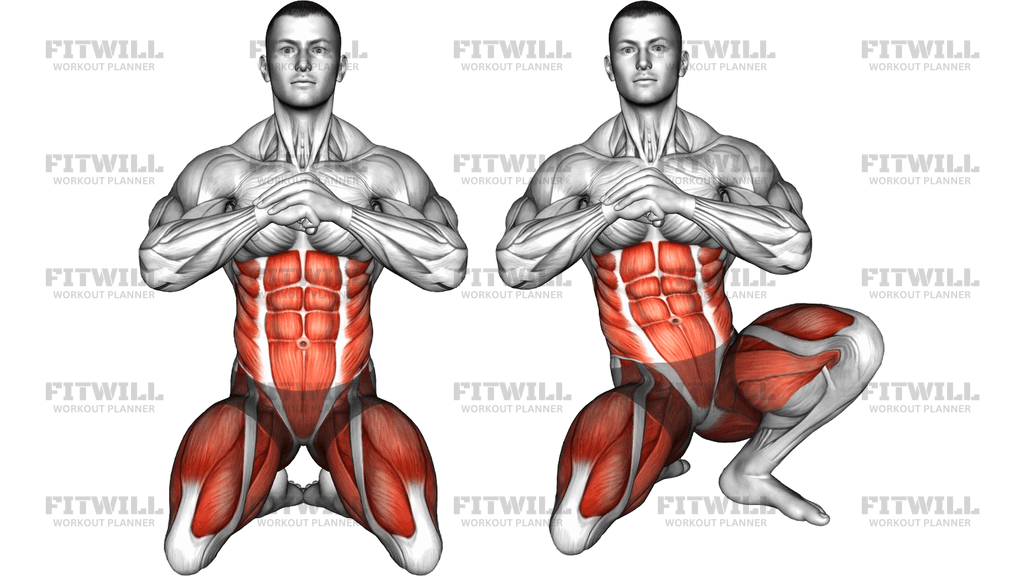
Instructions
- Kneel on a mat with both knees on the floor about hip-width apart, sitting tall so your shoulders stack over your hips.
- Clasp your hands together in front of your chest with your elbows pointing down and slightly out, and keep them there for the whole set.
- Brace your abdominals lightly and squeeze your glutes so your pelvis stays neutral and your lower back does not arch.
- Shift your weight toward one hip, then rotate that leg outward, letting the knee travel out to the side as the hip turns into external rotation.
- Keep the other knee planted and your chest facing forward — resist the urge to let your torso rotate with the moving leg.
- Pause briefly in the rotated position, holding the point where you feel tension through the outer hip without pain.
- Control the leg back to the centered kneeling position, reversing the exact path you rotated out on.
- Exhale as you rotate out, inhale as you return, and keep your breathing steady throughout.
- Complete your repetitions on one side, then switch and perform the same number on the other leg.
- Reset your tall kneeling posture between reps if you notice your hips drifting or your torso leaning.
Tips & Tricks
- If your torso twists toward the moving leg, the hip is borrowing range from your spine — press your clasped hands firmly together and pick a spot on the wall ahead to keep the chest square.
- Rotating too fast is the most common fault in this drill; count two seconds out and two seconds back so the hip rotators, not momentum, do the work.
- If the kneeling position bothers your knees, place a folded towel or extra padding under them before you start rather than shortening the set.
- Do not chase depth by collapsing your lower back into an arch — if the pelvis tilts forward as you rotate, reduce the range until you can keep the ribs stacked over the pelvis.
- Tight quads or hip flexors on the rotating leg can limit the range; a short kneeling hip flexor stretch beforehand often makes the rotation feel smoother.
- Keep the planted knee pointing straight ahead — it tends to cave inward as the other leg rotates, which steals tension from the working hip.
- A mild stretch through the outer hip or front of the thigh is expected; sharp pain in the groin or knee means you should ease off the range immediately.
- Start with fewer reps than you think you need, since the stabilizing demand on the trunk adds up quickly even without any load.
- If one side rotates noticeably further than the other, match the tighter side's range on both legs instead of training each side to its own maximum.
Frequently Asked Questions
What muscles does the Kneeling External Rotation work?
It primarily targets the hip external rotators, including the gluteal muscles and the deep rotators of the outer hip. The abdominals and obliques work isometrically to keep the torso upright and facing forward while the leg rotates.
Why are the hands clasped at the chest during the Kneeling External Rotation?
Clasping the hands in front of the chest anchors the ribcage and makes spinal twisting harder, forcing the rotation to come from the hip joint. It also helps you notice immediately when you start compensating with your upper body.
Is the Kneeling External Rotation suitable for beginners?
Yes, it is a low-load body-weight drill that most beginners can perform safely on a mat. Start with a small rotation range and only progress the depth once you can keep your chest tall and your planted knee stable.
Should I feel a stretch in my quads during this exercise?
A mild stretch through the front of the thigh is common because the rotating position lengthens the quadriceps and hip flexors. If the stretch becomes uncomfortable on the knee, reduce the rotation angle rather than pushing through it.
How is the Kneeling External Rotation different from a standing hip rotation drill?
The kneeling base removes your legs from balance duties and eliminates momentum, so the hip has to generate and control the rotation entirely on its own. That makes it easier to feel the correct muscles and harder to cheat the range.
Can I use the Kneeling External Rotation as a warm-up before squats or lunges?
Yes, it works well as a pre-lift warm-up because it mobilizes the hips and activates the rotators without creating fatigue. Two or three controlled sets of moderate reps are usually enough before a lower-body session.
What should I do if one hip rotates further than the other?
Some side-to-side difference is normal, but train both legs to the tighter side's range so the gap narrows over time. If the difference is large or accompanied by discomfort, it is worth having a professional assess the hip.
How many reps and sets of the Kneeling External Rotation should I do?
Start with 6-10 controlled repetitions per side for 2-3 sets, focusing on smooth tempo rather than depth. Because the drill is low intensity, it can be performed most days of the week.
Is it safe for my knees to kneel during this exercise?
Kneeling on a padded surface is generally well tolerated, and the knee itself stays bent in a static position during the drill. If kneeling causes knee discomfort, add padding, and if pain persists, choose a seated or lying hip rotation alternative instead.
What can I substitute if I cannot kneel comfortably?
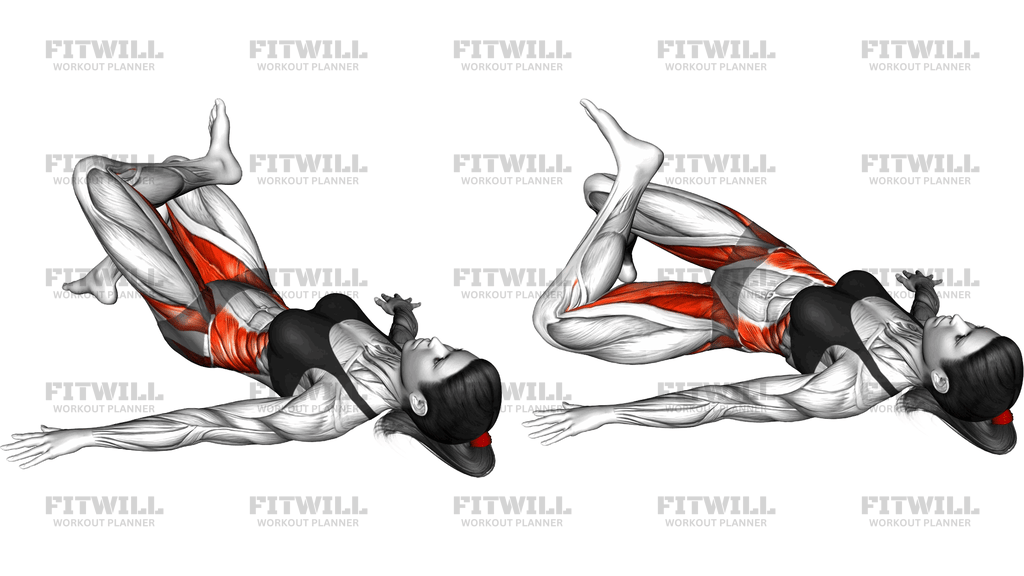
Seated hip external rotations or a supine figure-four stretch train the same rotators without loading the knees. Both options let you work the outer hip while keeping pressure off the kneecaps.