Lying Reverse Abdominal Press
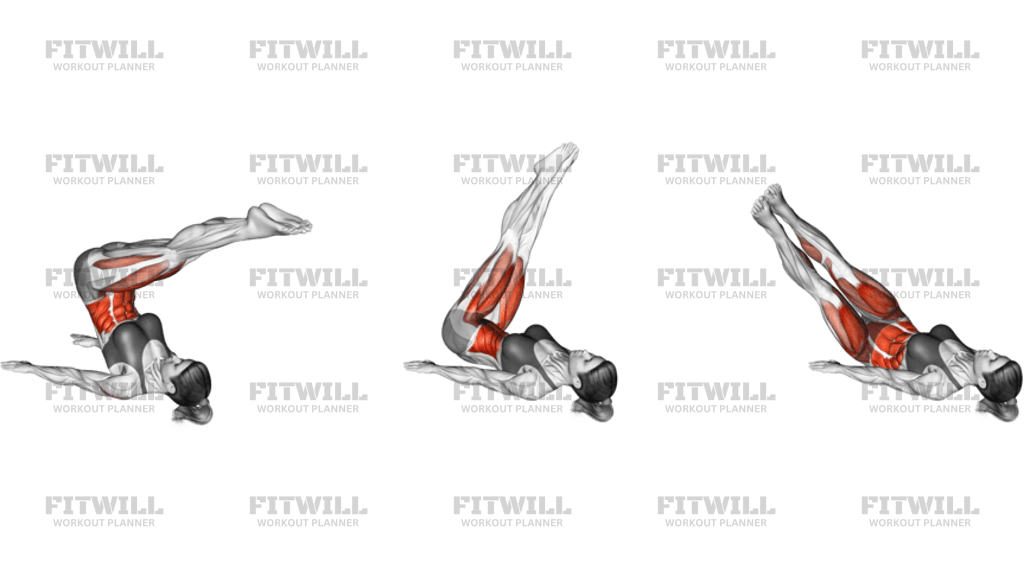
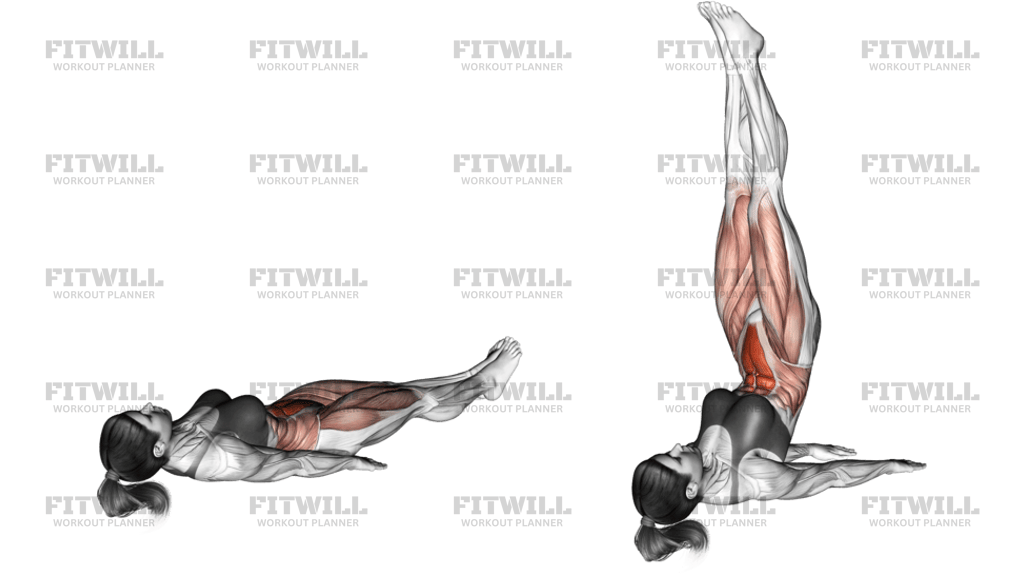
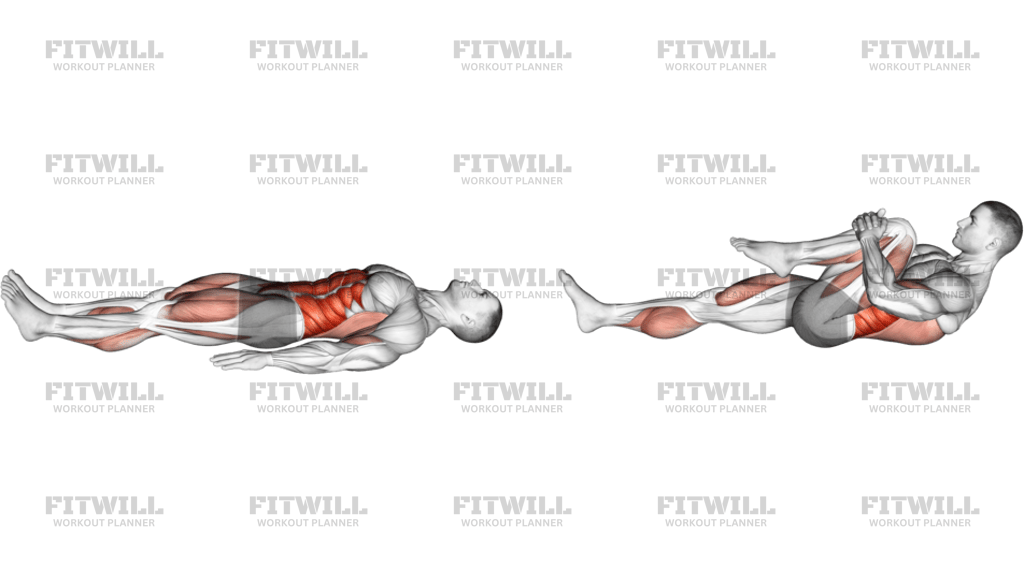
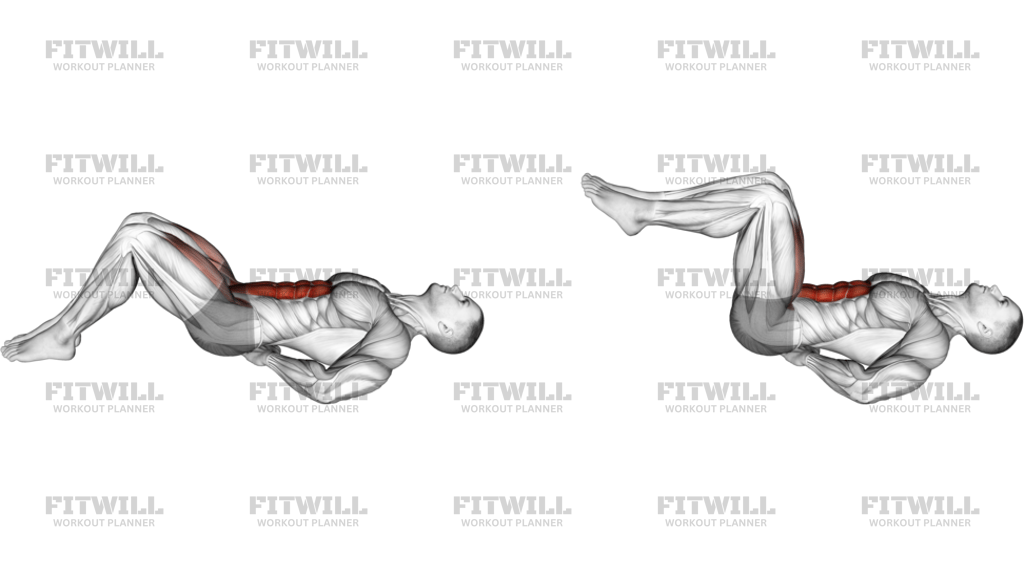
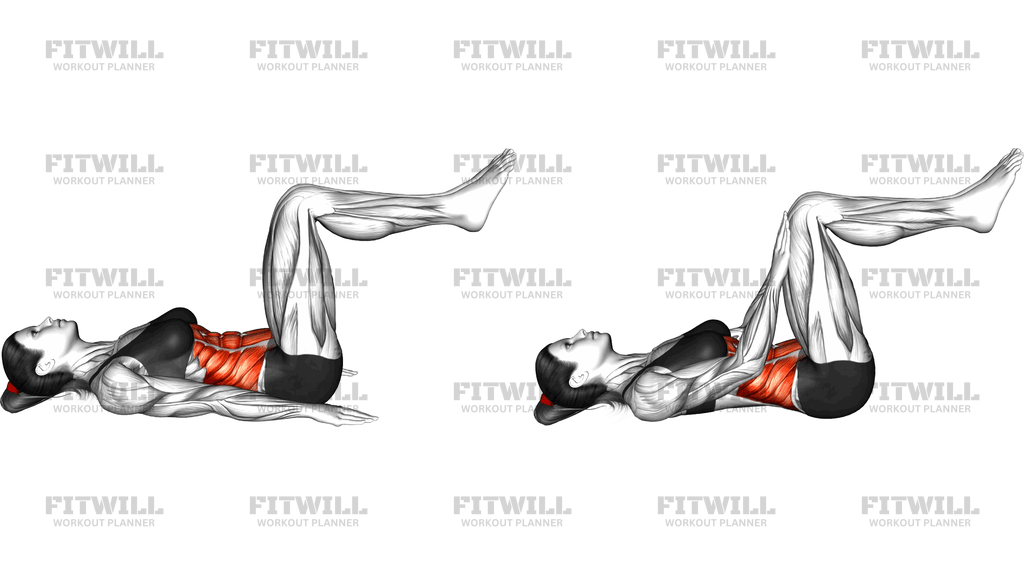
The Lying Reverse Abdominal Press is a bodyweight core exercise performed on your back with the hips and knees bent to roughly 90 degrees. Instead of lifting your legs or torso through a large range of motion, you drive your knees forward into your own hands while your hands push back with equal force. That opposing pressure forces the abdominal wall to work hard without any equipment beyond a mat or a patch of floor, which is why the rectus abdominis lights up so clearly in this position.
What makes this movement different from a crunch or a leg raise is the direction of effort. In a crunch you pull your ribcage toward your pelvis; here you press your knees away from your chest against resistance while your pelvis curls slightly upward off the floor. The lower abs and deep core stabilizers do most of the work, and because your hands control the resistance, you can scale the effort from gentle to very demanding in a second simply by pushing harder or easier.
This exercise suits a wide range of people. Beginners use it to learn what abdominal bracing actually feels like before progressing to harder floor work. People with sensitive lower backs often tolerate it well because the bent-knee position keeps the lumbar spine in a neutral, supported posture and there is no loaded spinal flexion. It is also a useful finisher for experienced lifters who want to fatigue the abs isometrically after heavy compound training, and a common choice in postpartum or return-to-training programs where high-tension but low-strain core work is preferred.
Setup matters more than it looks. Your shins should be parallel to the floor, your knees stacked directly over your hips, and your entire lower back in contact with the mat before you start pressing. If your knees drift toward your chest or your feet drop toward the floor, the leverage changes and the abs stop doing the job. Place your palms flat on the front of your thighs just above the knees so that the press happens through the arms in a straight line.
To execute it well, exhale and pull your belly button gently toward your spine, then drive your knees forward into your palms while actively resisting with your hands. The press should build smoothly over a second or two, not as a sudden jolt. Hold the peak tension for five to ten seconds while breathing shallowly and steadily, feeling your abdominals brace and your tailbone press lightly into the mat. Release the pressure slowly, let the abs relax for a breath, and repeat.
The most common errors are holding the breath, letting the lower back arch off the floor as pressure builds, and turning the drill into a leg extension by pushing the feet away instead of driving the knees into the hands. Keep the movement small and the tension high. If you cannot breathe during the hold, you are bracing too hard; reduce the pressing force and rebuild. Stop if you feel the work shifting into your neck, hip crease, or lower back rather than the front of your abdomen.
[ Workout Log & Planner ]
Put your next workout in Fitwill
Keep your plan and training log ready when you are.


Instructions
- Lie flat on your back on an exercise mat with your arms resting at your sides.
- Raise your legs and bend your knees so they sit directly over your hips, with your shins parallel to the floor and feet relaxed.
- Place your palms flat on the front of your thighs just above the knees, fingers pointing toward each other.
- Exhale and gently draw your lower back into the mat, feeling your abdominal wall tighten before any pressure is applied.
- Drive your knees forward and upward into your palms while pushing back with your hands, creating strong opposing pressure.
- At peak pressure, let your tailbone press lightly into the mat as your pelvis curls a few degrees upward, keeping the rest of your back in contact with the floor.
- Hold the press for five to ten seconds while breathing steadily and keeping the shins level and the knees over the hips.
- Release the pressure slowly over two to three seconds, letting your hands and knees separate without dropping your legs.
- Take one full breath in the reset position, re-brace, and begin the next repetition.
- Complete 8 to 12 repetitions, resting as needed between sets.
Tips & Tricks
- A frequent mistake is pressing the feet away and straightening the legs, which turns the drill into a quadriceps and hip flexor push. Keep the knees bent at 90 degrees throughout so the press stays between knees and hands.
- If your lower back peels off the mat as pressure builds, you are pressing too hard too fast. Build tension over a full two seconds and keep the force at a level where the lumbar spine stays in contact with the floor.
- Do not hold your breath through the hold. Short, shallow breaths through the nose while maintaining pressure are the sign of a properly braced abdominal wall; if you cannot breathe at all, reduce the pressing force.
- Check your hand position each set. Palms too close to the knee joint give poor leverage, while palms too high on the thigh shift work toward the hip flexors. Just above the knee is the sweet spot.
- Keep the neck relaxed and resting on the mat. If you catch yourself jutting your chin or lifting your head to feel the abs more, the extra tension is coming from the neck, not the abdomen.
- Progress by lengthening the hold from five toward fifteen seconds before increasing pressing force, since tension quality matters more here than pressure magnitude.
- If one side dominates, place only one hand on the opposite thigh and let the free arm rest on the floor, alternating sides to expose and correct the imbalance.
- The press should feel like your abdominals are forming a hard wall from pelvis to ribs. If you only feel the front of your hips working, lighten the effort and re-focus on drawing the belly toward the spine first.
Frequently Asked Questions
What muscles does the Lying Reverse Abdominal Press work?
The primary work comes from the rectus abdominis, with strong involvement of the deep core muscles that brace the trunk. The hip flexors assist isometrically to hold the knees over the hips, but they should not dominate the feel of the exercise.
Is the Lying Reverse Abdominal Press good for beginners?
Yes, it is one of the better starting points for core training because your own hands regulate the resistance. A beginner can press at 30 percent effort and still learn what a properly braced abdomen feels like before moving to harder floor exercises.
Why do my hands push back against my knees in this exercise?
The opposing pressure between your hands and knees is the resistance itself. Without it there is no load, so the exercise would simply be a static leg hold rather than an abdominal press.
Should my lower back stay flat on the floor during the press?
Your lower back should remain in contact with the mat, with only a slight pelvic curl from the tailbone at peak pressure. If the lumbar spine lifts or arches visibly, the pressing force has exceeded what your abdominals can control.
How long should I hold the press on each repetition?
Start with five to eight second holds and build toward ten to fifteen seconds as your bracing improves. Long, sloppy holds with a lost lumbar position are worth less than short, crisp ones.
Why do I feel this more in my hips than my abs?
That usually means the hip flexors are taking over because your knees have drifted toward your chest or your pressing force is too high for your current brace. Reset the knees directly over the hips, lighten the pressure, and draw the belly toward the spine before pressing again.
Can I do the Lying Reverse Abdominal Press if floor crunches bother my back?
Many people who dislike loaded spinal flexion tolerate this exercise well because the spine stays supported in a neutral position and nothing is lifted. Even so, start with light pressure, keep the range small, and stop if any discomfort appears.
What can I use instead if I have no exercise mat?
A carpeted floor, a folded towel, or any firm padded surface works fine, since the exercise requires no equipment beyond something comfortable to lie on. Just avoid very soft surfaces like a bed, which make it hard to judge your spinal position.
How does this differ from a reverse crunch?
A reverse crunch lifts the pelvis dynamically by curling the knees toward the chest through a range of motion. The Lying Reverse Abdominal Press is isometric at the knees and hands, so the tension is built through opposing pressure rather than movement.