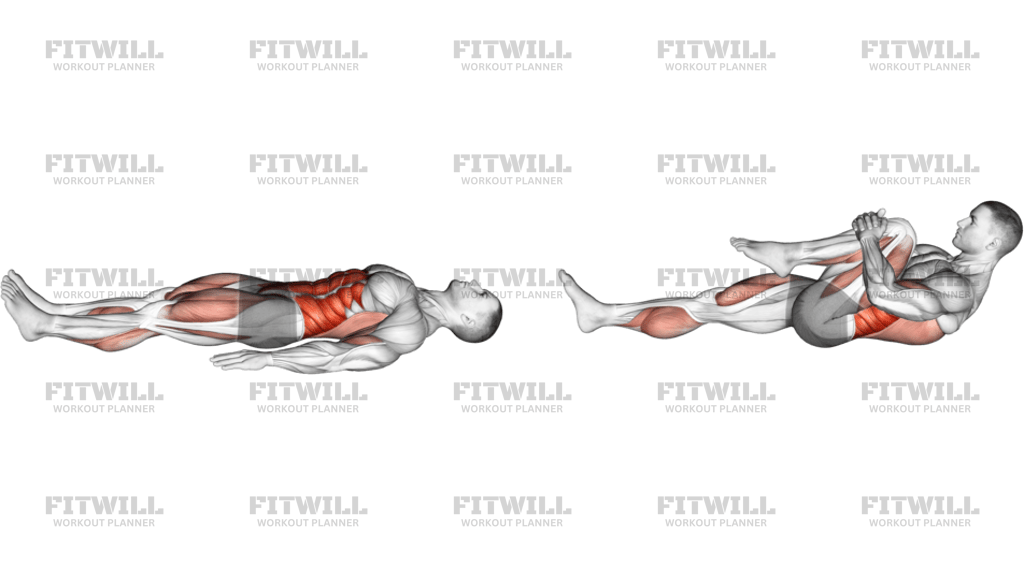
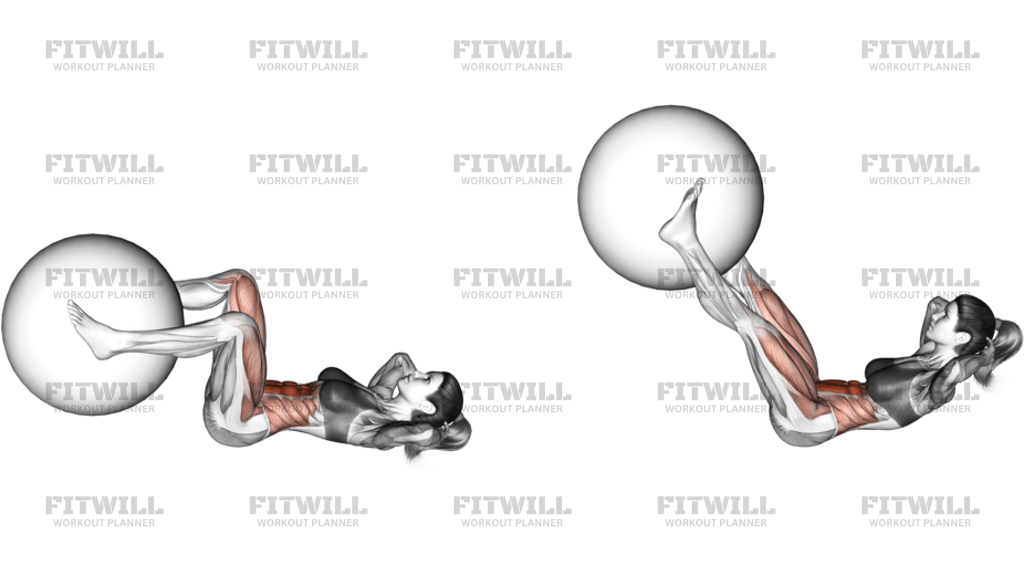
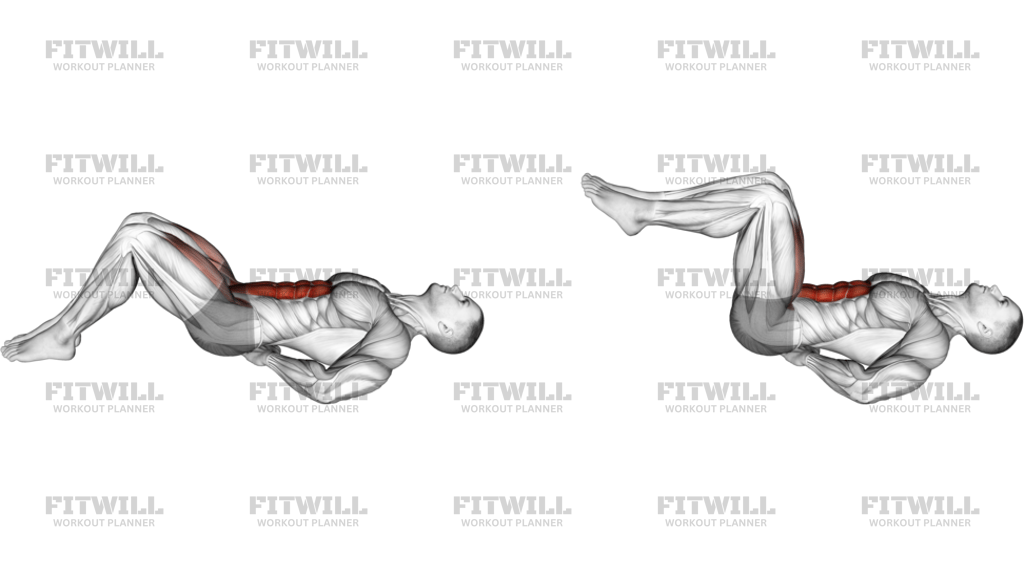
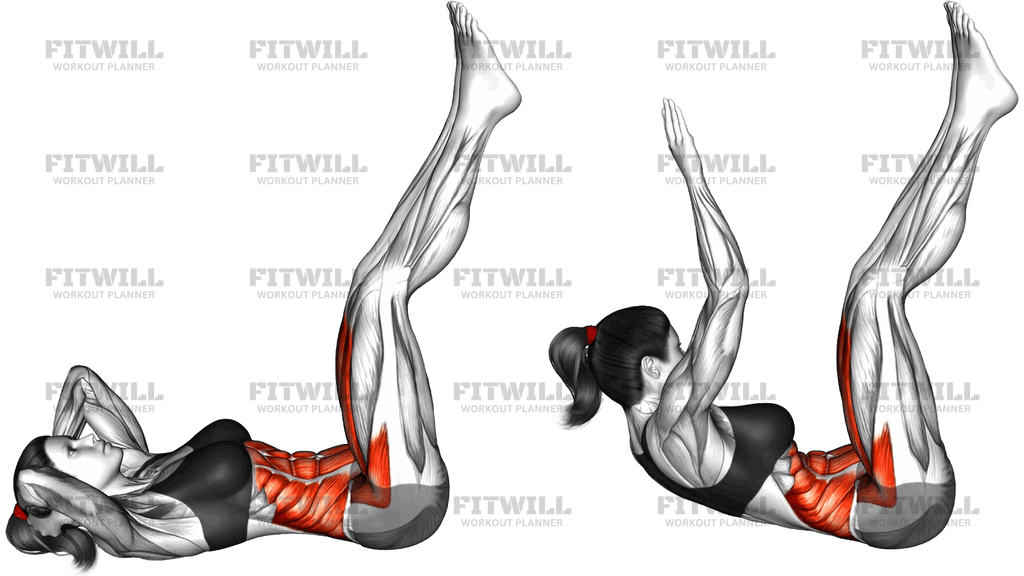
Sitting Floor Alternating Toe Touch
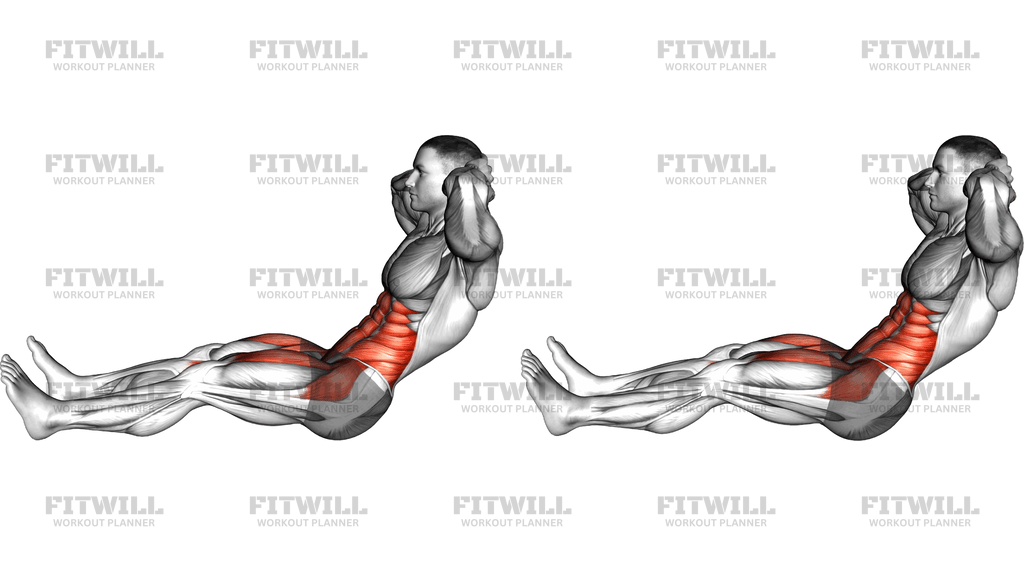
The Sitting Floor Alternating Toe Touch is a bodyweight core exercise performed seated on the floor with the legs extended straight in front of you. From a reclined torso position with the hands placed lightly behind the head, you alternately rotate and flex the trunk to reach one elbow toward the opposite foot, then switch sides in a steady rhythm. Because the legs stay long and anchored to the floor, every rep forces the abdominal wall and hip flexors to work together to control the lean of the torso while the obliques drive the rotation.
This movement suits a wide range of trainees. Beginners can use it to learn how to hinge and flex from the trunk without yanking on the neck, while more experienced lifters use it as a higher-rep finisher that trains rotation under continuous tension. It is also a practical choice for home workouts, warm-up circuits, and travel training, since the only real requirement is a patch of floor and, ideally, a mat to cushion the sit bones and tailbone.
The primary work comes from the rectus abdominis as it pulls the ribs toward the pelvis on each reach, with the external and internal obliques handling the cross-body rotation. The hip flexors, particularly the iliopsoas and rectus femoris, work isometrically to keep the extended legs from drifting, and the quadriceps help hold the knees straight. The seated, legs-long position is what separates this from a standard crunch: it raises the leverage demand on the trunk and makes the hips and core coordinate rather than work in isolation.
Setup matters more than speed here. Sit with your weight balanced just behind the sit bones, knees soft but legs essentially straight, and lean the torso back until you feel the abdominals engage. Your hands should cradle the head without pulling it forward. If you start too upright, the reach becomes an arm movement; if you collapse too far back, the lower back rounds and the reps lose their target. The sweet spot is a reclined angle where your abs are already under mild tension before you even begin reaching.
Execution should be deliberate. Rotate through the ribcage rather than swinging the elbow, exhale as you reach toward the opposite toe, and pause briefly at the closest point before returning to the shared reclined position. Alternate sides evenly so both obliques receive the same volume, and keep the shoulders relaxed away from the ears throughout.
A few practical points keep this safe and effective. Move within a range that lets you keep the chest tall and the rotation smooth; forcing the elbow to the toe by rounding hard through the spine defeats the purpose. If your hamstrings are tight and your lower back complains in the seated position, bend the knees slightly or prop yourself on a folded towel under the glutes. Stop and reset if you feel the movement shifting into your neck or lower back rather than your trunk.
[ Workout Log & Planner ]
Put your next workout in Fitwill
Keep your plan and training log ready when you are.


Instructions
- Sit on an exercise mat with your legs extended straight in front of you and your feet roughly hip-width apart, toes pointing up.
- Lean your torso back to about a 45-degree recline, balancing on the floor just behind your sit bones, and place your hands lightly behind your head with elbows open.
- Brace your abdominal wall as if preparing for a light push, keeping the chest lifted and the shoulders down away from your ears.
- Inhale to set your position, then exhale as you rotate your ribcage to one side and reach that elbow across your body toward the opposite foot's toe.
- Pause for a beat at your closest point to the toe, feeling the contraction through the abs and the rotating-side obliques, without rounding your lower back to gain extra distance.
- Control the return by unrotating slowly until your torso is square again in the reclined position, keeping tension in the trunk the whole way.
- Repeat the reach to the opposite side, touching the other toe with the other elbow, and continue alternating sides for even reps.
- Breathe out on every reach and in on every return, avoiding breath-holding as the reps accumulate.
- When the set is finished, sit fully upright, release your hands from behind your head, and shake out the hips before standing or moving to the next exercise.
Tips & Tricks
- The most common mistake is chasing the toe with the arm instead of rotating from the ribcage. If your elbow gets close but your torso stays square, think about turning your sternum toward the opposite leg.
- Do not interlace your fingers and pull your head forward; rest the hands behind the skull and let the abs bring the trunk down and across.
- If your hips keep sliding forward as you fatigue, widen your hand balance by extending your arms slightly or shift your weight back onto the sit bones before continuing.
- Bent knees are a legitimate adjustment for tight hamstrings. Slightly flexed knees keep the pelvis neutral so the rotation comes from the waist, not the lower back.
- Keep the reach distance honest. Touching the toe means little if your spine rounds to get there; a controlled reach that stops a few inches short beats a sloppy full contact.
- Slow the return phase deliberately. Most of the abdominal work in this seated position happens as you unrotate against the backward lean, not on the reach itself.
- Watch for the shoulders creeping up toward the ears as the set gets hard; drop them back down to keep the neck out of the movement.
- Alternate sides on every rep rather than doing all reps per side, so the rhythm stays even and both obliques fatigue at the same rate.
- Place a folded towel or mat edge under the glutes if your tailbone digs into the floor during the reclined hold.
Frequently Asked Questions
Which muscles does the Sitting Floor Alternating Toe Touch work?
The rectus abdominis is the primary driver, with the obliques producing the cross-body rotation. The hip flexors work steadily to hold your extended legs in place, and the quadriceps assist in keeping the knees straight.
Is the Sitting Floor Alternating Toe Touch good for beginners?
Yes, provided you keep the recline angle modest and the reach within a comfortable range. Beginners often benefit from bending the knees slightly until they can rotate without rounding the lower back.
Why are my hip flexors sore after the Sitting Floor Alternating Toe Touch?
Because the legs stay extended on the floor, the hip flexors contract isometrically for the entire set to keep them from lifting or drifting. Some fatigue there is normal, but if it dominates over the abs, reduce your recline angle so the trunk does more of the work.
Do I need to actually touch my toes for the Sitting Floor Alternating Toe Touch to count?
No. Contact is secondary to rotation quality; if reaching the toe forces your spine to round or your shoulder to swing, stop at the point where your ribcage rotation ends cleanly.
How is the Sitting Floor Alternating Toe Touch different from a seated toe-touch stretch?
A seated toe-touch stretch is a static forward fold for the hamstrings and lower back, while this exercise is a dynamic, repeated rotation and trunk flexion against a reclined position, so it trains the abs and obliques rather than stretching the back of the legs.
Can I do the Sitting Floor Alternating Toe Touch on a hard floor without a mat?
You can, but a mat or folded towel makes it far more comfortable because your sit bones and tailbone carry your weight for the whole set. Discomfort on hard surfaces often causes people to shift position and lose the reclined angle.
How many reps should I do of the Sitting Floor Alternating Toe Touch?
Because it is a bodyweight movement, moderate to higher reps work well, typically 10 to 20 reaches per side for two to four sets. Stop the set when your rotation slows or your lower back starts taking over.
My neck hurts when my hands are behind my head during the Sitting Floor Alternating Toe Touch. What should I change?
You are likely pulling on your head to drive the reach. Rest the hands behind the skull without interlacing the fingers, keep the elbows open, and let the trunk rotation create the movement instead of the arms.
What can I substitute for the Sitting Floor Alternating Toe Touch?
Seated Russian twists, lying cross-body toe touches, or standing cross-body reaches all train similar rotation and trunk control. Choose the standing version if sitting on the floor is uncomfortable for your hips or lower back.
Should I keep my legs completely straight during the Sitting Floor Alternating Toe Touch?
Straight legs maximize the demand on the hip flexors and quads, but a small knee bend is fine if tight hamstrings pull your pelvis into a rounded position. Prioritize a neutral pelvis and clean rotation over locked-out knees.