Lever Alternating Pullover (Plate Loaded)
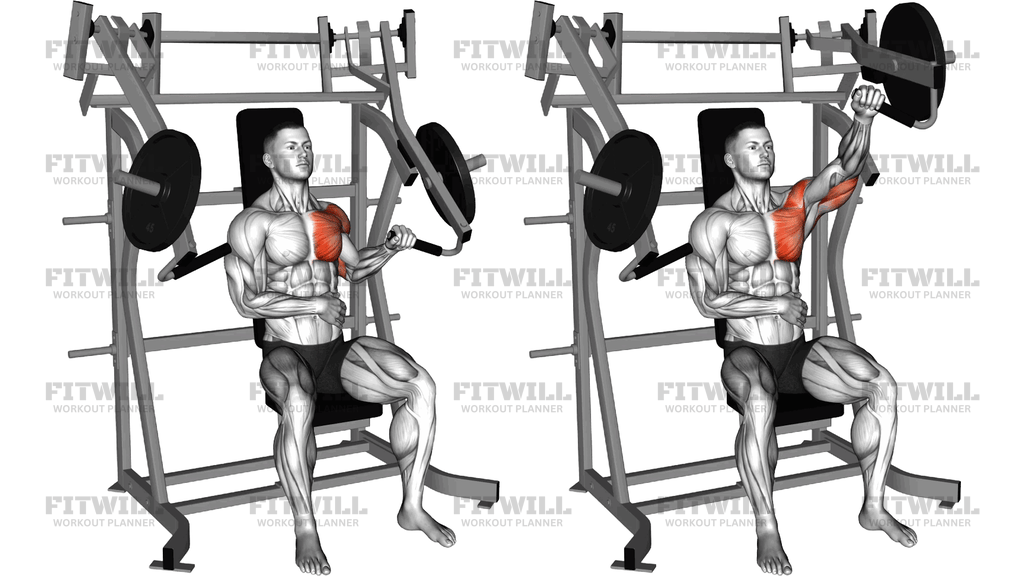
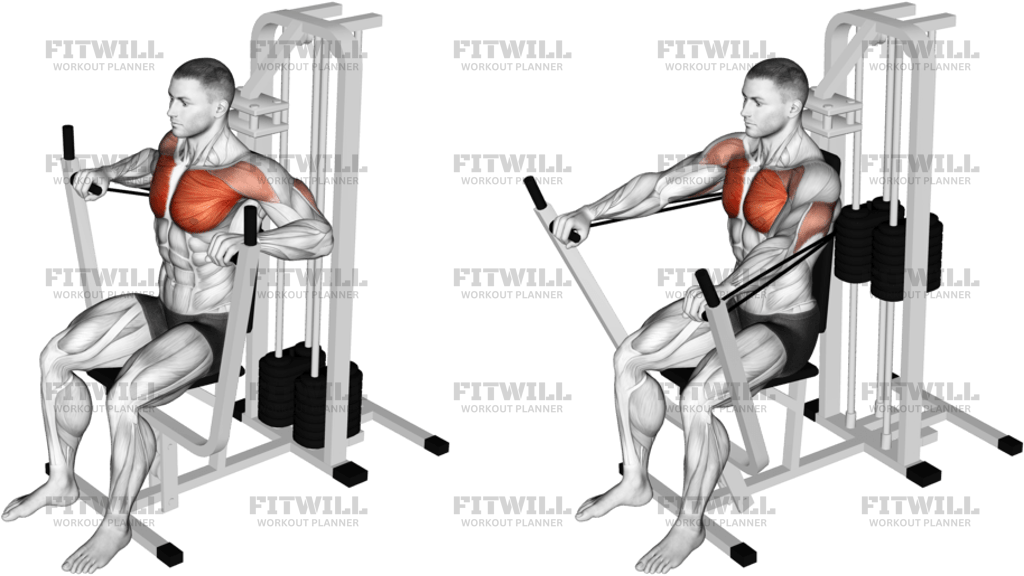
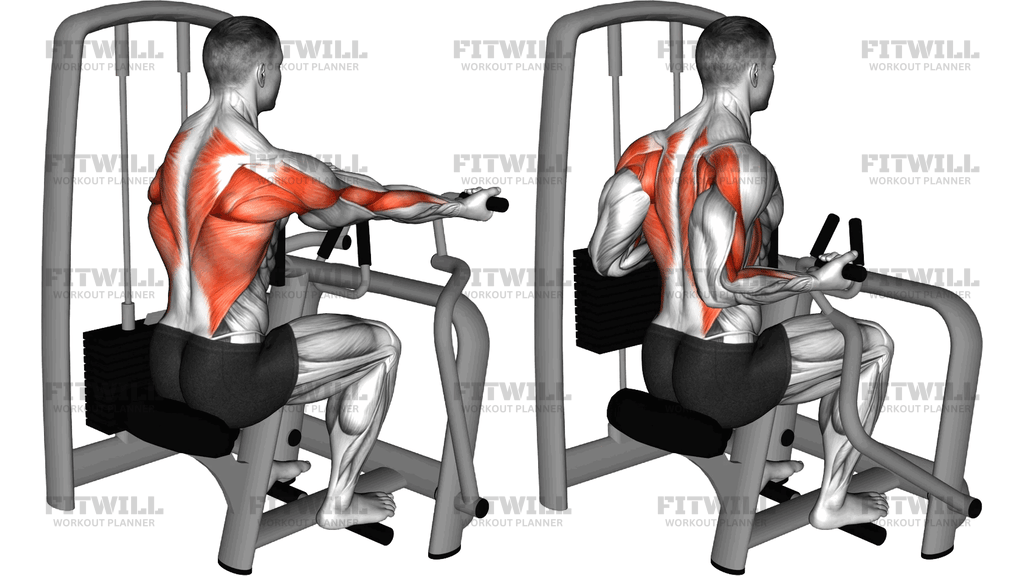
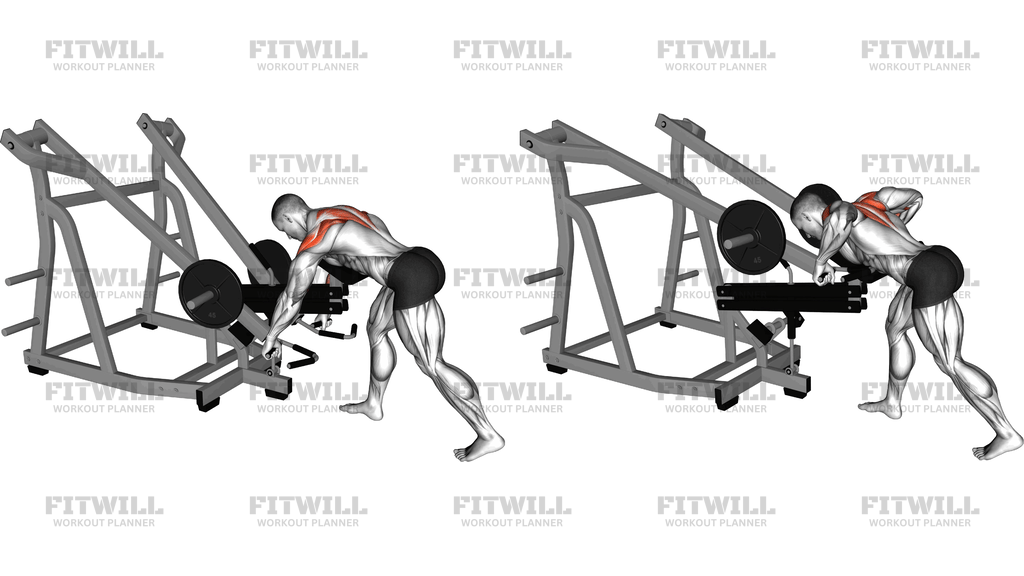
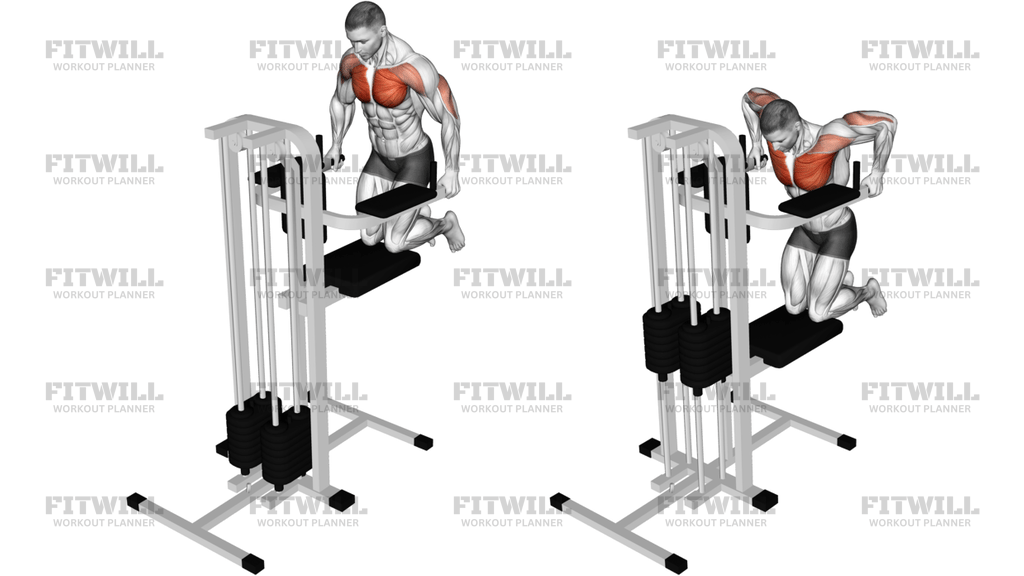
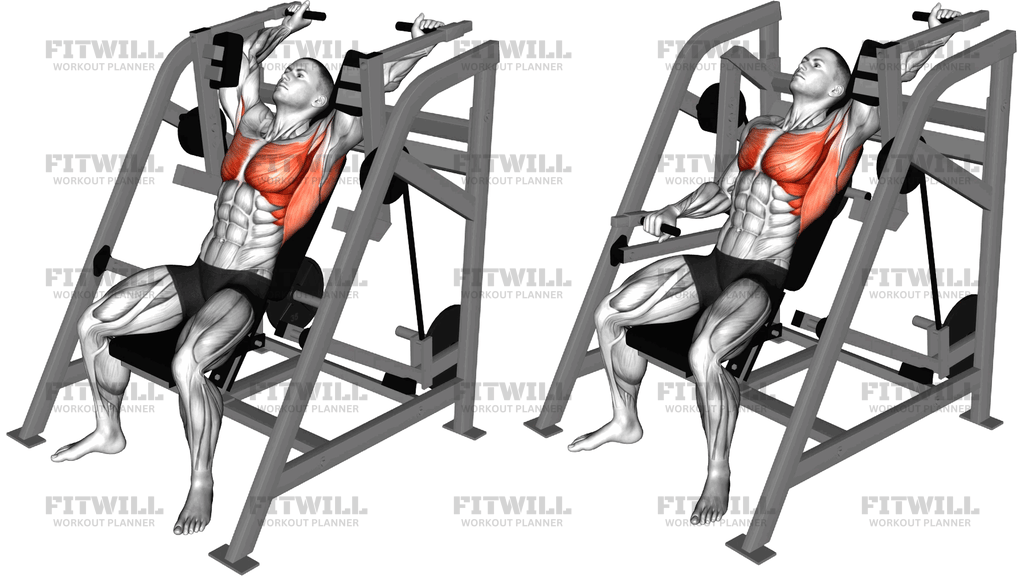
The Lever Alternating Pullover (Plate Loaded) is a seated machine exercise that recreates the classic dumbbell pullover arc with a fixed, guided path. You sit back against an angled pad, grip two overhead handles, and pull one arm down and around in a wide arc until your hand ends up near your hip, then return it overhead and repeat with the other side. Because the machine is plate loaded, the resistance stays smooth and consistent through the entire range, which is hard to achieve with a free-weight pullover.
This movement primarily trains the chest, with strong involvement from the lats as the arms travel from an overhead position down toward the hips. The triceps work isometrically to hold a fixed elbow bend, and the front shoulders and serratus assist through the arc. The alternating pattern adds a coordination element and lets each side work independently, which helps expose and correct left-to-right strength differences that stay hidden when both arms move together.
The setup matters more than most people expect. Because your torso is pinned against the back pad, your ribcage position is largely fixed for you, which removes the lower-back arching and hip shifting that often creep into dumbbell pullovers done lying across a bench. Getting the seat height right so the handles line up above your shoulders keeps the arc traveling through the chest rather than turning into a straight-arm pulldown dominated by the lats.
Execution is simple but rewards control. Keep a soft, almost-fixed bend in the elbow, think about sweeping the handle through a wide arc, and finish with the hand down by the hip while the opposite arm stays extended overhead. Avoid rushing the return; the eccentric portion where the arm travels back overhead is where a lot of the stretch on the chest fibers happens.
This exercise suits lifters who want chest and lat work without needing a spotter or bench setup, people with cranky shoulders who do better with a guided arc than a free weight, and anyone using a bodybuilding-style split who wants a focused finisher after presses or pulldowns. Because the machine stabilizes your torso, it is also a reasonable introduction to pullover mechanics before attempting the free-weight version.
From a safety standpoint, the fixed path is your friend, but only if you respect your shoulder range. Do not chase a deeper stretch by letting your arms drift behind you or your shoulders roll forward off the pad. Keep the seat position locked in for every set, start lighter than you think you need, and stop the set if you feel pinching at the top of the arc rather than a comfortable stretch across the chest.
[ Workout Log & Planner ]
Put your next workout in Fitwill
Keep your plan and training log ready when you are.


Instructions
- Sit on the machine seat and plant your feet flat on the floor about hip-width apart, with your knees bent comfortably.
- Adjust the seat height so the handles sit roughly above your shoulders and your entire back, including your head, rests against the angled pad.
- Grip the two overhead handles with a neutral or slightly angled palm-inward grip, arms extended up and slightly out to the sides.
- Lighten your grip tension on the working side just enough to pull one handle down and the other stays put; keep the opposite arm extended overhead throughout.
- Brace your core and keep your ribs and shoulders pinned to the pad before you start the pull.
- Pull the handle down in a wide arc with a soft, fixed bend in the elbow, sweeping it down and out until your hand finishes near hip level beside you.
- Pause briefly at the bottom, feeling the chest and lat on that side shorten, then slowly let the arm travel back overhead along the same arc.
- Once the working arm is fully back overhead, switch sides and pull the opposite handle down with the same controlled path.
- Exhale as you pull down, inhale as the arm returns overhead, and keep the breathing rhythm steady through the alternation.
- Complete equal reps per side, then let both handles return to the top before releasing your grip and standing up.
Tips & Tricks
- The most common mistake is turning this into a straight-arm pulldown by dropping the elbow and pulling with the arms close to the body; keep the elbow wide and think about sweeping a big circle with the hand.
- If you feel the work shifting into your biceps, you are bending the elbow more as you pull; lock in the elbow angle at the top and hold it for the whole rep.
- Do not lift your head or shoulders off the pad to chase the handle down; if you have to, the weight is too heavy or the seat is set too high.
- Let your ribcage stay quiet on the pad. Arching your lower back off the pad to get extra range takes tension away from the chest and loads the lumbar spine instead.
- Alternating arms means the torso will want to rotate toward the working side; press the opposite shoulder blade into the pad to keep the pull honest.
- The stretch position overhead is where people rush; take one full second to let the arm travel back up rather than letting the weight yank it there.
- Start with a plate or two lighter than your pulldown weight. The overhead stretched position is the weak point of the range for most lifters.
- If one side fatigues noticeably before the other, finish your set with the weaker side first on following sets so the imbalance closes instead of widening.
Frequently Asked Questions
Which muscles does the Lever Alternating Pullover (Plate Loaded) work?
The chest is the primary mover, especially through the mid and lower portion of the arc. The lats assist strongly as the arm travels from overhead toward the hip, and the triceps and front shoulders contribute by stabilizing the arm.
Is this machine pullover good for beginners?
Yes, it is one of the more beginner-friendly pullover variations because the fixed path and back pad handle stabilization for you. Start light, learn the wide arc, and focus on keeping your back flat against the pad.
How is the Lever Alternating Pullover (Plate Loaded) different from a dumbbell pullover?
The machine guides the arc and supports your torso, so you cannot arch your lower back or drift the weight path the way you can with a dumbbell. The alternating arms also let each side train independently, while a dumbbell pullover moves both arms together.
Why do the handles travel in an arc instead of straight down?
The curved path mirrors how the shoulder actually moves in a pullover, keeping tension on the chest and lats through the whole range instead of only at one point. A straight path would dump tension at the top or bottom of the rep.
How far should I pull the handle down?
Pull until your hand finishes beside your hip and you feel the chest and lat fully shortened on that side. If your shoulder rolls forward off the pad to get there, the seat position or weight needs adjusting rather than the range.
What is the most common mistake on this exercise?
Bending the elbow progressively through the rep, which turns the pullover into a triceps press or straight-arm pulldown. Set your elbow bend at the top and treat it as fixed for the entire arc.
Can I use the Lever Alternating Pullover (Plate Loaded) on shoulder day or back day?
It fits both, since the chest and lats share the workload. On chest day use it after presses as a stretch-focused finisher; on back day pair it with pulldowns or rows to emphasize the lats.
Should both arms work at the same time or one at a time?
One at a time, as the name suggests. Pull one handle to your hip while the other stays extended overhead, return it fully, then switch sides. This exposes side-to-side strength differences and keeps tension continuous on one side at all times.
Is it safe if I feel a pinch at the top of the movement?
A pinch rather than a stretch is a signal to stop the set. Check that your shoulders stay on the pad, reduce the depth of the overhead return slightly, and lower the weight; if the pinching continues, choose a different chest exercise.