Glute Bridge And Double Open Up
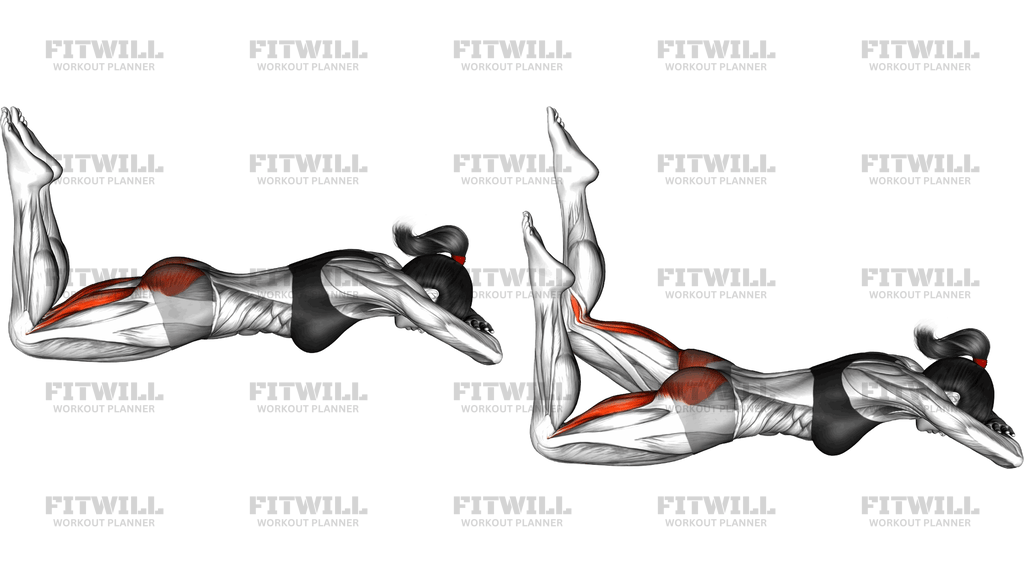
The Glute Bridge And Double Open Up is a floor-based hip extension exercise with a built-in abduction element. You lie on your back with knees bent, drive the hips up into a bridge, and open both knees out to the sides before closing them and lowering back down. That "open up" phase is what separates this from a standard glute bridge — instead of only extending the hips, you also work the outer hips through a controlled range while holding the bridge position.
This combination makes the exercise especially useful for people who feel standard bridges mostly in their hamstrings or quads. Opening the knees at the top shifts demand toward the gluteus medius and the deeper hip rotators, the muscles responsible for controlling the thighs as they move away from the midline. Because you hold the bridge while the legs move, your gluteus maximus has to stay contracted to keep the hips elevated, which turns the whole rep into a sustained squeeze rather than a quick up-and-down.
The setup matters more than most people expect. Your foot position, knee position, and the height of your bridge all determine which muscles take over. If the bridge is too low, you are just holding a hollow position with your thighs; if it is too high and arched through the lower back, you lose hip extension and invite lumbar strain. A moderate bridge with ribs down and a straight line from shoulders to knees gives you the stable platform the leg movement needs.
Execution is about sequencing: lift first, then open, then close, then lower. Rushing all four phases together turns the movement into a bouncing motion where momentum does the work. Done slowly, each rep trains the glutes in two roles at once — as hip extensors holding the bridge and as hip abductors controlling the knees. That dual demand is why this version feels harder than it looks, even with no weight.
You will see this exercise used in glute-focused warm-ups, hip stability programs, postpartum and low-back-friendly training, and as a primer before squats or deadlifts. It requires only floor space, so it travels well and fits easily into home routines. The main safety point is keeping the movement in the hips, not the lower back: if you feel lumbar arching or pinching, lower the bridge height slightly and reduce how far the knees open until control improves.
[ Workout Log & Planner ]
Put your next workout in Fitwill
Keep your plan and training log ready when you are.


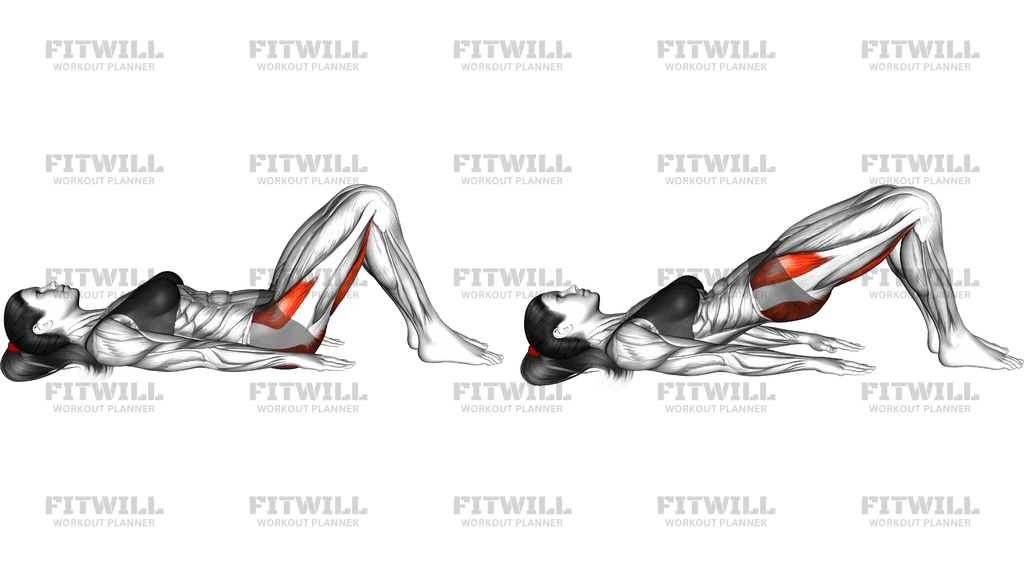
Instructions
- Lie on your back on an exercise mat with your arms relaxed at your sides, palms down.
- Bend your knees and place your feet flat on the floor, about hip-width apart, with heels roughly a hand's distance from your hips.
- Brace your abs gently and tuck your pelvis so your lower back rests flat against the mat before you lift.
- Press through your heels and squeeze your glutes to raise your hips until your body forms a straight line from shoulders to knees.
- From the top of the bridge, slowly open both knees out to the sides, keeping your feet planted and your hips level and elevated.
- Pause briefly with the knees open, then bring them back together without letting your hips drop.
- Lower your hips back to the mat under control, letting your upper back and shoulders stay in contact with the floor.
- Exhale as you lift into the bridge, inhale as you open the knees, and exhale again as you close and lower.
- Reset your pelvic position on the mat between reps so each repetition starts from the same braced position.
Tips & Tricks
- If your hamstrings cramp at the top, walk your feet slightly closer to your hips — overreaching heels shift the work toward the hamstrings.
- Watch for the bridge collapsing on one side when the knees open; both hips should stay at the same height throughout.
- Do not let your lower back take over the lift — if you feel arching at the top, reduce the bridge height and re-tuck the pelvis.
- The knees should open by rotating at the hips, not by sliding the feet wider; keep your feet in the same spot for every rep.
- A slow two-second open and two-second close will do more for the outer glutes than fast bouncing reps.
- If your heels lift as the knees open, your stance is too narrow — set the feet a touch wider before starting.
- Push the floor away with the outer edges of your feet during the open phase to keep tension in the glutes rather than the knees.
- Keep your neck relaxed and your gaze straight up; craning the chin forward is a common sign you are straining instead of bracing.
- If holding the bridge while opening the knees is too demanding at first, practice the knee opening from a low bridge or even from the floor to build hip control.
Frequently Asked Questions
Which muscles does the Glute Bridge And Double Open Up work?
The glutes are the primary movers, with the gluteus maximus holding the bridge and the gluteus medius and deep hip rotators controlling the knee-opening phase. The hamstrings assist with hip extension and the core stabilizes the trunk.
How is the Glute Bridge And Double Open Up different from a regular glute bridge?
A regular glute bridge only extends the hips up and down. Here, the knees open outward at the top, which adds hip abduction and keeps the glutes under continuous tension for longer.
Is this exercise suitable for beginners?
Yes, it uses body weight only and needs no equipment beyond a mat. Beginners should start with a smaller range of knee opening and focus on keeping the hips level and the lower back quiet.
Why do I feel this in my lower back instead of my glutes?
That usually means the bridge is too high or the pelvis is not tucked, so the lumbar spine is extending instead of the hips. Lower the bridge slightly, brace the abs, and re-squeeze the glutes before opening the knees.
Should my feet move when I open my knees?
No, the feet stay planted in the same spot while the knees rotate outward. If your feet slide, the movement is coming from the ankles rather than the hips and you lose glute tension.
Can I add resistance to the Glute Bridge And Double Open Up?
Yes, a light band around the thighs just above the knees adds outward resistance during the opening phase. Start with a light band, as holding the bridge becomes noticeably harder with added tension.
How many reps and sets should I do?
For activation or warm-up use, 2 to 3 sets of 10 to 15 slow reps works well. For dedicated glute training, stay in the 10 to 15 range but prioritize a full squeeze at the top over adding speed.
What can I substitute if opening the knees is uncomfortable?
A standard glute bridge trains the same hip extension, and a seated or standing hip abduction can cover the outer-hip portion separately. Once hip mobility improves, you can combine them again.
Is it safe to do this exercise every day?
For most people, light reps of this body weight movement are fine daily as activation work. If you train it hard with bands or high volume, give the glutes a day of recovery between sessions.