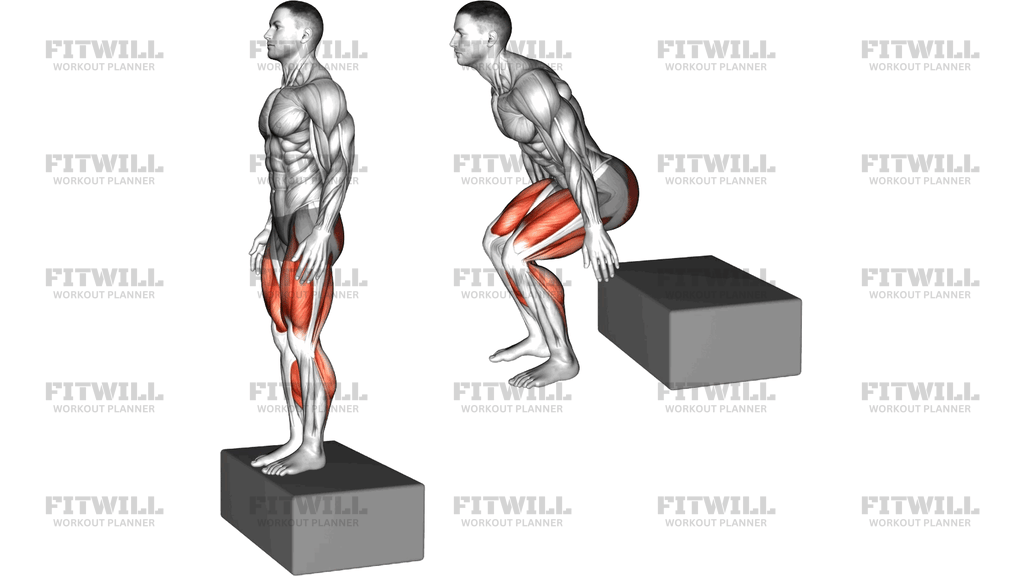
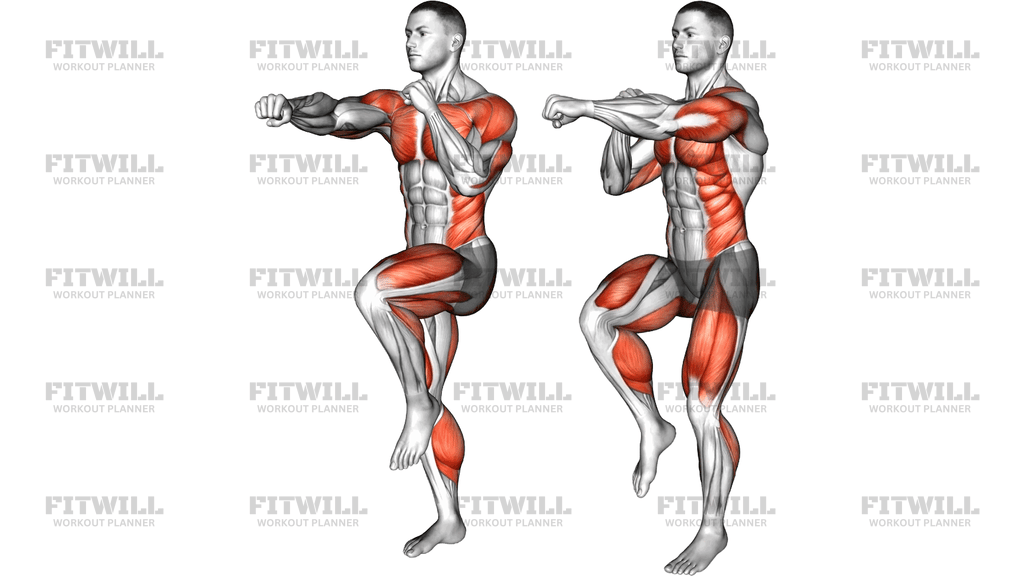
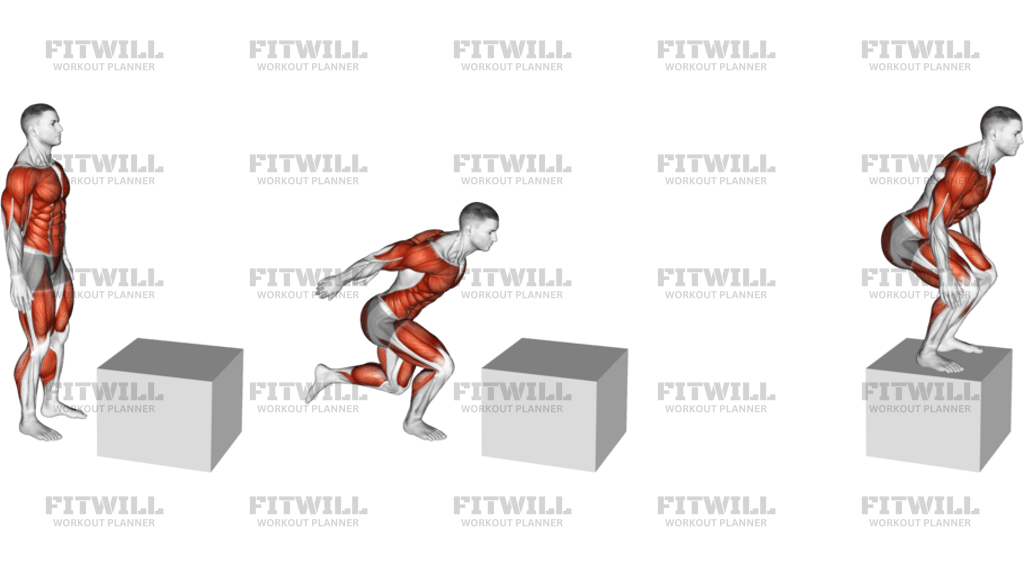
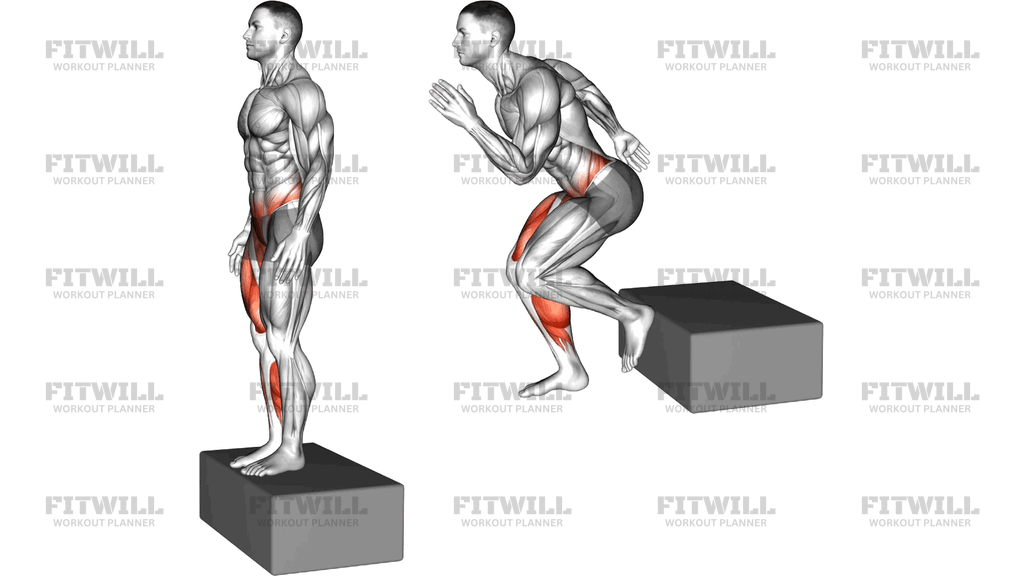
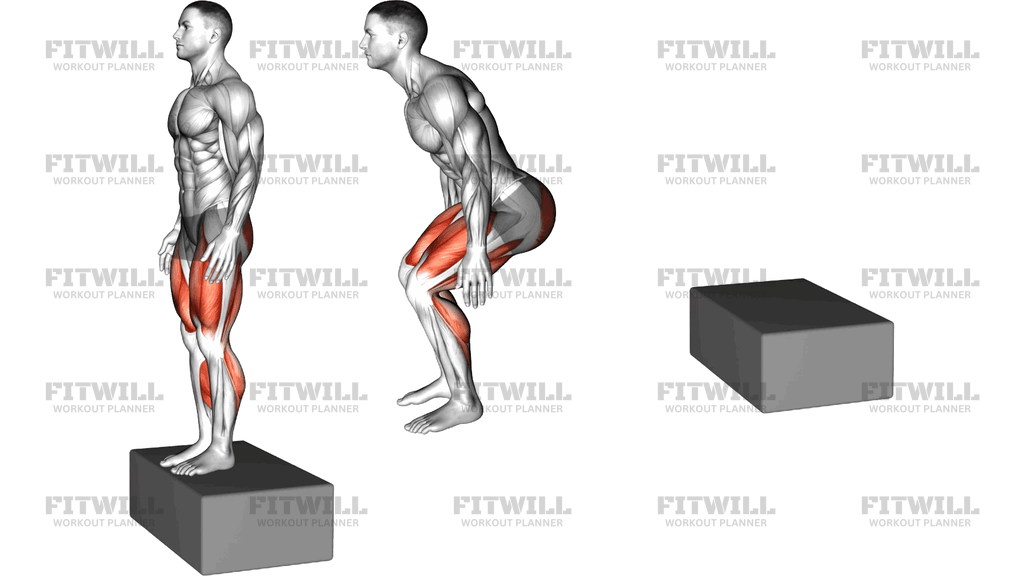
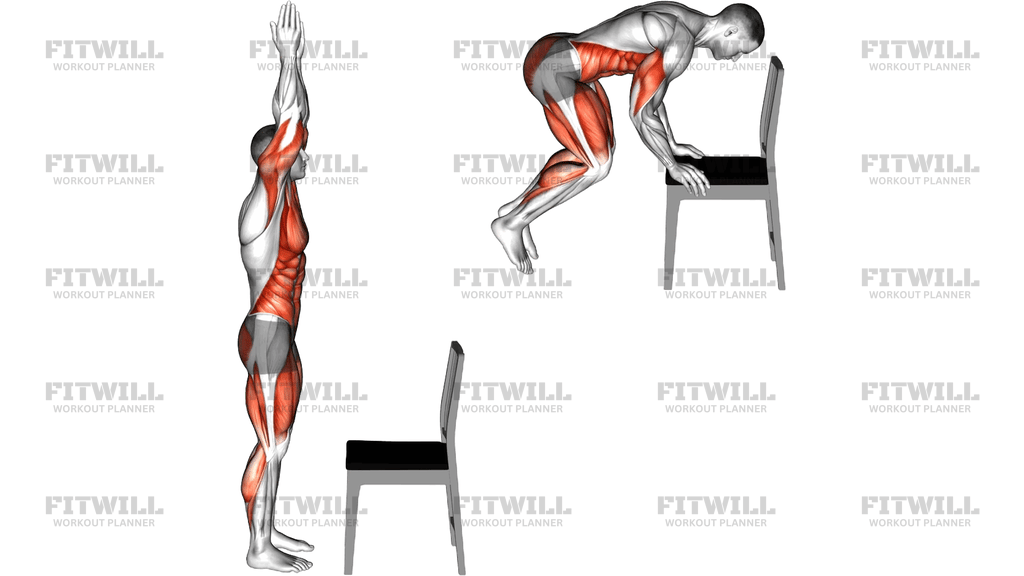
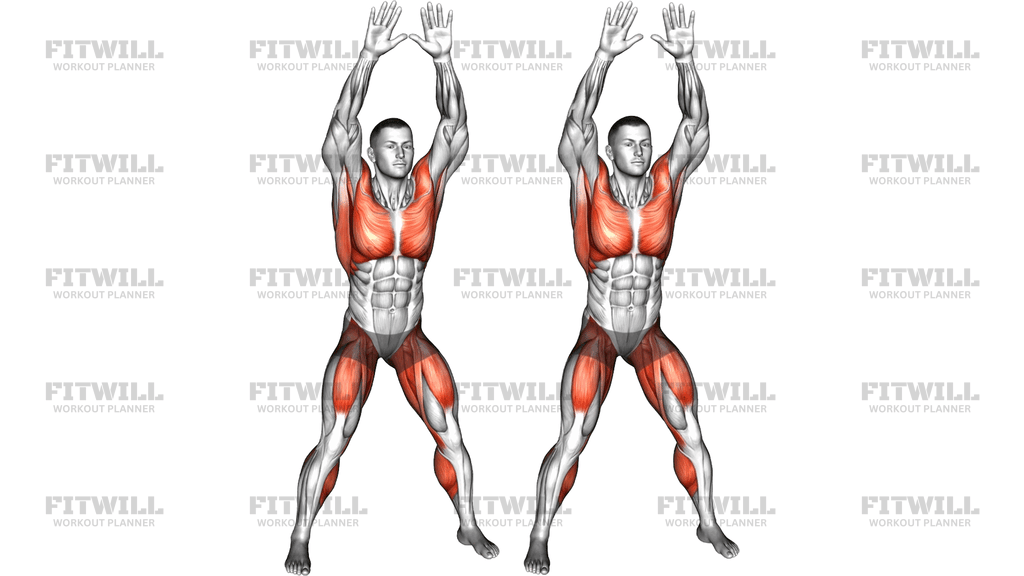
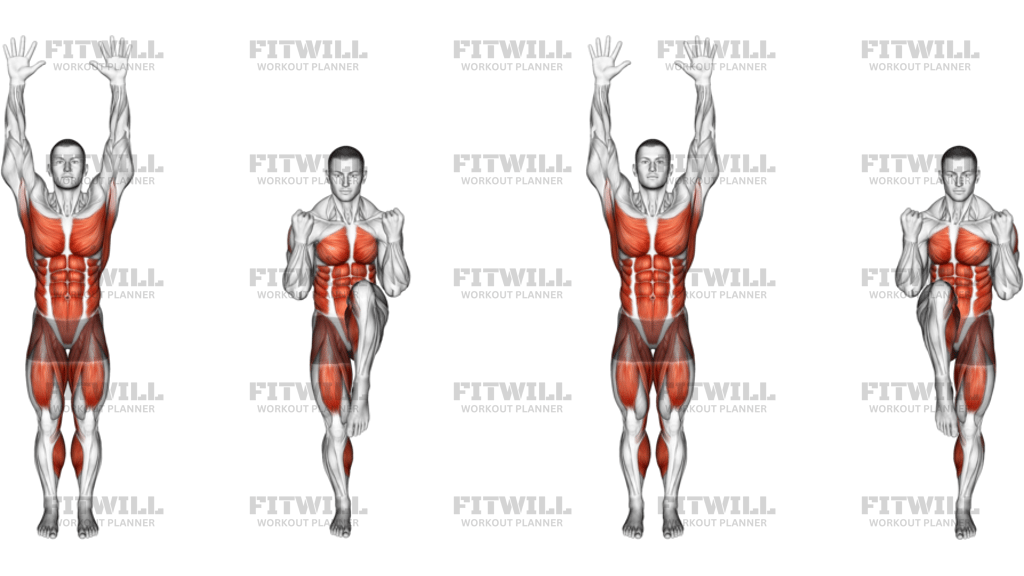
Countermovement Jump Arms Pull
The Countermovement Jump Arms Pull is a vertical jump variation where the arms actively drive the movement. Instead of simply dipping and hopping, you pull your arms down and back as you drop into a quick quarter squat, then violently swing them forward and overhead as you extend your hips, knees, and ankles. This arm action is not decoration — a well-timed arm swing can add meaningful height to a vertical jump because the momentum of the arms pulls down on the body during the countermovement, pre-loading the legs, then pushes the body upward during takeoff.
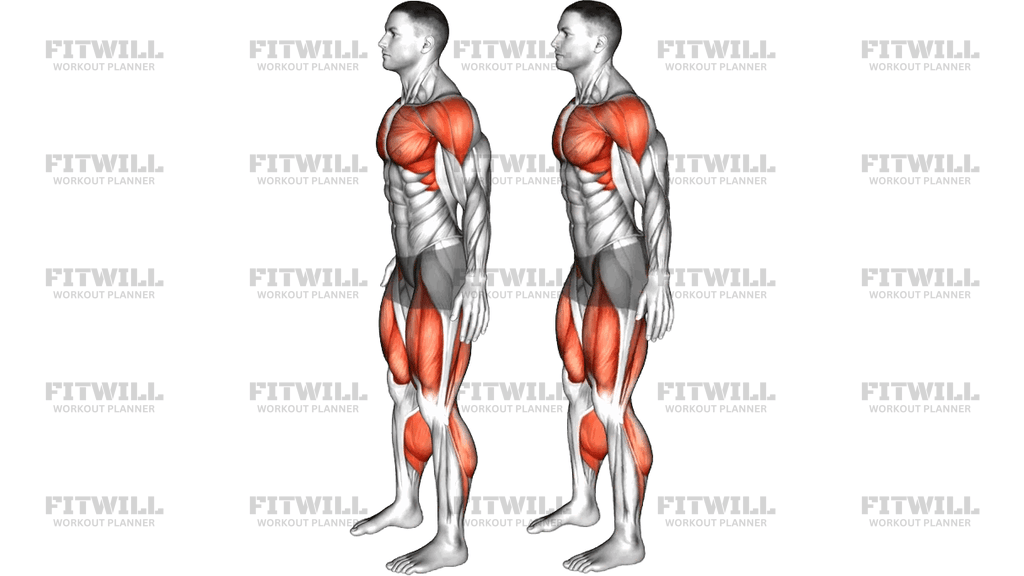
This movement trains the stretch-shortening cycle: the rapid switch from lowering to exploding. Your quads, glutes, and hamstrings absorb the fast dip and immediately rebound into full triple extension, while your calves finish the jump with a strong push through the balls of the feet. The coordinated arm pull also engages the shoulders and trunk, teaching your whole body to work as one linked chain rather than as separate parts.
The Countermovement Jump Arms Pull is a staple in athletic testing and training for good reason. Volleyball and basketball players, sprinters, and anyone who needs reactive lower-body power benefits from practicing it, and it is commonly used to measure explosive strength and track progress over time. Because it requires no equipment, you can perform it almost anywhere — on grass, a gym floor, or a rubberized training surface.
Setup and surface matter more than most people expect. Jump from a flat, non-slippery surface with enough overhead clearance for your arms to swing fully overhead, and always land with space around you. A stiff, quiet dip followed by an aggressive arm swing and full extension is the goal; a slow, deep squat turns an explosive plyometric into a sluggish strength exercise and blunts the training effect.
Land with control every single rep. Aim to touch down on the balls of your feet with knees tracking over your toes, hips back, and chest up, absorbing the landing by sinking into a partial squat rather than stiff-legged. Quality of takeoff and landing matters far more than the number of repetitions — a few crisp, maximal jumps with full recovery will do more for your power than dozens of tired, half-hearted hops.
[ Workout Log & Planner ]
Put your next workout in Fitwill
Keep your plan and training log ready when you are.


Instructions
- Stand tall with your feet about hip-width apart, weight distributed across the whole foot, and your arms hanging relaxed at your sides.
- Set your gaze on a fixed point ahead of you at eye level or slightly above, and make sure the surface under you is flat, dry, and free of obstacles.
- Brace your core lightly and inhale to prepare for a fast, aggressive movement.
- Begin the countermovement by pulling your arms down and behind your hips while quickly dipping into a shallow quarter squat — heels stay down, knees track over your toes.
- Without pausing at the bottom, reverse the motion instantly: swing your arms forcefully forward and up toward the ceiling as you drive your hips, knees, and ankles into full extension.
- Push through the balls of your feet to finish the jump, pointing the ankles at the top and reaching maximum height with your arms overhead.
- Exhale sharply as you explode upward.
- Prepare to land by keeping your eyes forward and your core braced; touch down on the balls of your feet, then roll back toward the heels as you sink into a controlled quarter squat to absorb the impact.
- Reset to a full standing position, take one or two slow breaths, and give yourself several seconds of rest before the next jump so each rep stays explosive.
- Complete your planned repetitions with maximal intent, stopping the set when jump height or landing quality noticeably drops.
Tips & Tricks
- The most common mistake is pausing at the bottom of the dip. The countermovement should flow straight into the jump — if you stop, you lose the elastic rebound from the stretch-shortening cycle.
- Do not dip too deep. A quick quarter squat is enough; dropping into a deep squat slows the transition and turns the jump into a slow squat-and-hop.
- Time the arm pull precisely: arms go back as you drop, and swing up as you extend. Swinging the arms late robs you of height and can throw off your balance in the air.
- Keep your heels down during the dip. Rising onto the toes early reduces how much the glutes and quads can contribute to takeoff.
- Land quietly. A loud, stiff landing means your knees and hips are not absorbing force — sink into the landing by pushing your hips back and letting the knees bend naturally.
- Keep your knees aligned over your second toes on both the dip and the landing; caving knees under fatigue are the main injury risk in repeated jumping.
- Rest 30 to 60 seconds or more between sets. This is a maximal-effort power exercise, and jumping while fatigued trains slowness instead of explosiveness.
- If you want more load once your landings are solid, hold a light medicine ball or wear a weighted vest — but only after your technique is consistent with body weight.
- Perform this drill on a forgiving surface such as grass, a track, or rubber gym flooring rather than concrete to reduce repeated impact on the joints.
Frequently Asked Questions
Which muscles does the Countermovement Jump Arms Pull work?
The main drivers are the quads, glutes, and hamstrings, with the calves finishing each jump through the ankle. The shoulders and core assist by powering the arm swing and stabilizing the trunk during takeoff and landing.
Why does swinging the arms make the jump higher than a regular Countermovement Jump?
Pulling the arms back during the dip adds downward momentum that pre-stretches the leg muscles, and swinging them up during takeoff transfers that momentum into the body. This is why the arm pull version is often used as the standard way to test vertical jump height.
Is the Countermovement Jump Arms Pull suitable for beginners?
Yes, as long as beginners start with low volume and focus on controlled landings before chasing height. Someone new to training may first practice a simple squat jump to groove the landing pattern, then progress to the full countermovement with the arm swing.
How deep should the dip be before jumping?
A shallow quarter squat is enough. The dip should be fast and shallow — if you sink into a deep squat or pause at the bottom, you lose the elastic rebound that makes the countermovement effective.
What is the most common mistake with the arm pull?
Poor timing: either the arms never come back during the dip, or they swing up too late. Cue yourself to pull the arms down-and-back as you drop, then throw them overhead the instant you start extending.
How should I land to protect my knees?
Land on the balls of your feet with knees bent and tracking over your toes, hips pushed back, and chest up. Absorb the impact by sinking into a partial squat instead of landing stiff-legged, and keep the landing quiet.
How many jumps and sets should I do?
For power development, 3 to 5 sets of 3 to 6 maximal jumps with full rest between sets works well. Stop the set when your jump height or landing quality noticeably declines, because tired repetitions reinforce slow movement.
Can I use a medicine ball with this exercise?
Yes — holding a light medicine ball and swinging it down and up follows the same timing as the arm pull and adds load. Only add weight once you can land consistently with control using your body weight.
How is this different from a squat jump?
A squat jump usually starts from a static squat position and removes the pre-stretch, while the Countermovement Jump Arms Pull uses a fast dip plus an arm swing to exploit the stretch-shortening cycle. That is why the countermovement version typically produces a higher jump and better reflects explosive athletic performance.
Is it safe to do this exercise every day?
Daily high-volume jumping is not recommended because the joints and connective tissue need recovery from repeated impact. Two to three focused sessions per week with rest days in between is a more sustainable approach.