Lat Stretch Against Wall
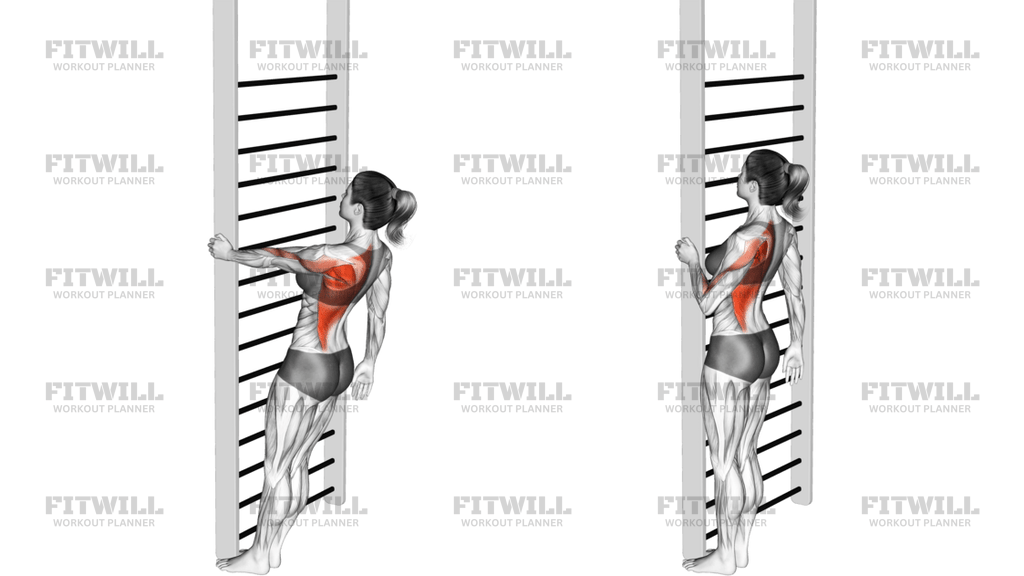
The Lat Stretch Against Wall is a self-supported stretch that lengthens the latissimus dorsi, the broad muscles running from your upper arms across your mid-back to your pelvis. You stand facing a wall, plant your hands on it at about hip to chest height, then walk your feet back and hinge forward until your torso and arms form one long line. Pressing the hands into the wall while sinking the chest toward the floor creates a strong, adjustable pull through the lats and the sides of the back.
This movement is especially useful for anyone whose lats tend to run tight: people who lift with a lot of pulling, climbers, swimmers, and anyone who spends long hours sitting with rounded shoulders. Because the lats also attach near the pelvis, tightness there can limit overhead reaching, pull-ups, and even how freely you can extend through the mid-back. Regular use of this stretch can make overhead positions feel less cramped and help the shoulders move with less resistance during presses and pulls.
The setup matters because the wall acts as a fixed anchor for your hands. That anchor lets you relax your arms completely and let your trunk drop into the stretch, which is hard to achieve when you are holding your arms up unweighted. Your hand height, foot distance, and how far you hinge all act as dials: the lower the hands and the further the hips travel back, the longer the lat line becomes.
To execute it well, keep the knees soft but not deeply bent, the hips pushed back behind the heels, and the spine long rather than rounded into a hump. Let the chest sink between the shoulder blades and breathe steadily, allowing a little more range on each exhale. Avoid shrugging the shoulders toward the ears, since that shortens the very muscles you are trying to lengthen.
Common use cases include warming up before upper-body training, cooling down after pulling sessions, breaking up desk-bound stiffness, and improving overhead mobility for sports. It requires nothing but a clear stretch of wall, takes under a minute per set, and the intensity is easy to regulate, which makes it suitable for beginners and experienced lifters alike.
[ Workout Log & Planner ]
Put your next workout in Fitwill
Keep your plan and training log ready when you are.


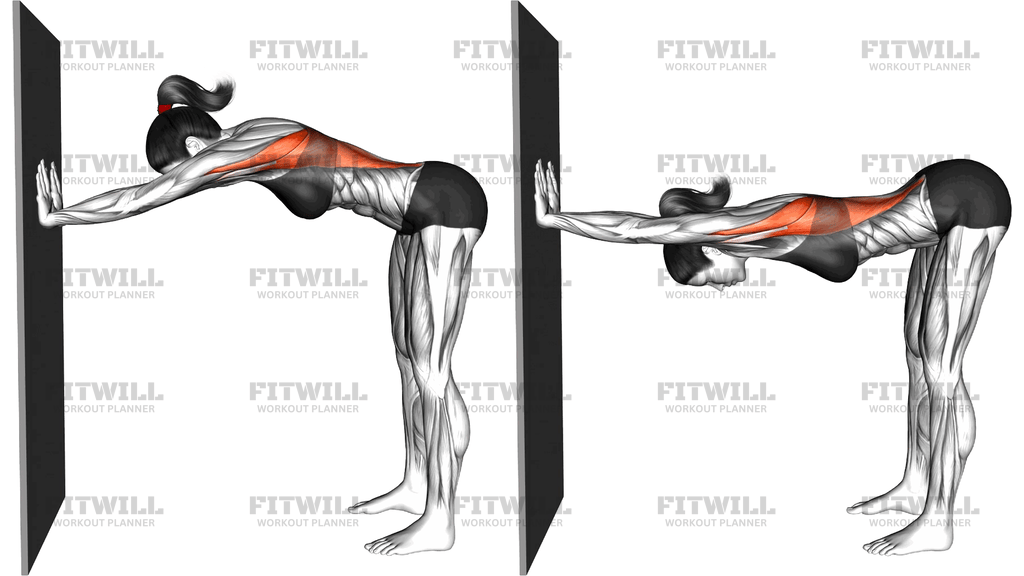
Instructions
- Stand facing a clear stretch of wall and place both palms flat against it at about chest to shoulder height, fingers spread and arms fully straight.
- Step both feet back one to two feet and set them hip-width apart, keeping a soft bend in the knees so the legs can support you.
- Push your hips back and hinge forward from the hips until your torso approaches horizontal and your arms, back, and hips form one long line.
- Press your palms firmly into the wall and let the chest sink down between the shoulders, feeling the lengthen along the sides of the back.
- Keep the neck relaxed and in line with the spine, eyes looking down toward the floor rather than forward.
- Hold the position for 20 to 40 seconds, breathing slowly and letting the ribs settle a little lower with each exhale to deepen the stretch gradually.
- To emphasize one side at a time, shift your hips slightly away from the arm you want to lengthen and hold there.
- Release by walking the feet toward the wall and standing up slowly, letting blood flow return to normal before repeating.
- Repeat for 2 to 3 holds, adjusting hand height or foot distance between rounds if you want more or less intensity.
Tips & Tricks
- If you feel the stretch only in the shoulders or behind the armpits and nothing along the side of the back, your hands are probably too high; lower them toward hip height to shift tension into the lats.
- A rounded upper back is the most common fault in this position. Think about pushing the chest toward the floor instead of just dropping the head, and keep a slight inward curve in the lower back.
- Do not lock the knees completely. Locked knees plus a long lever arm can strain the hamstrings and lower back, so keep a small bend and let the hips do the hinging.
- Avoid shrugging. If your shoulders creep toward your ears, actively press the palms down and slightly back into the wall to open the space around the shoulder blades.
- Keep the weight in the middle of the feet. If your heels lift or your weight shifts to the toes, step the feet slightly closer to the wall and reset.
- Breathe out slowly during the hold rather than holding your breath; the rib cage drops on the exhale, which naturally lengthens the lats a little more.
- Ease in over the first few seconds. Dropping straight into the deepest hinge can make the lats guard and tighten instead of release.
- If your wrists complain from pressing on a hard surface, place a folded towel under the palms or rest the base of the palm lower on the wall.
- Skip or reduce this stretch if pressing on the wall causes shoulder pain rather than a comfortable stretch sensation, and shorten the range until the shoulder is comfortable.
Frequently Asked Questions
Which muscles does the Lat Stretch Against Wall target?
It primarily lengthens the lats along the sides of the back, with supporting stretch through the teres major, rear shoulder area, and the tissues around the shoulder blades. The hamstrings also get a mild pull from the hip hinge.
How high should my hands be on the wall?
Chest to shoulder height is a good starting point. Lower hands bias the lats and the side of the back, while higher hands shift more of the feeling toward the shoulders and upper back.
Is the Lat Stretch Against Wall suitable for beginners?
Yes. The wall provides support, and the intensity is controlled entirely by how far you walk the feet back and how deeply you hinge, so beginners can start very conservatively.
Why do I feel this more in my hamstrings than my lats?
That usually means you are hinging straight down with a flat back rather than pushing the hips back while pressing the chest toward the floor. Soften the knees slightly, keep the hands pressing, and focus on sinking the chest rather than dropping the hips lower.
Should my arms be completely straight during the stretch?
Yes, straight arms keep the lats on stretch. Bending the elbows removes tension from the target muscles and turns the hold into a shoulder press against the wall.
How long should I hold each repetition?
Twenty to forty seconds per hold works well for most people, repeated two to three times. Longer, calmer holds tend to be more effective for this stretch than short, forceful ones.
What can I use instead of a wall if none is available?
A sturdy counter, a railing, or the back of a bench at a similar height works the same way. You can also do a kneeling child's pose with arms reaching forward, though it is harder to load and adjust the angle.
When is the best time to use this stretch?
It fits well as a warm-up before presses, pull-ups, or throwing, and as a cool-down after heavy pulling days. Gentle versions also work mid-day to counteract desk posture.
Can I stretch one lat at a time in this position?
Yes. Keep both hands planted and walk your hips slightly toward the opposite side, or walk one hand further along the wall, to bias the stretch into a single side.
Is it safe if I have lower back discomfort?
Keep the knees bent, hinge only as far as feels comfortable, and avoid forcing the chest down. If any position produces pain rather than a stretching sensation, reduce the range or choose a supported alternative and check with a qualified professional.