Ez Bar Incline Pronated Grip Front Raise
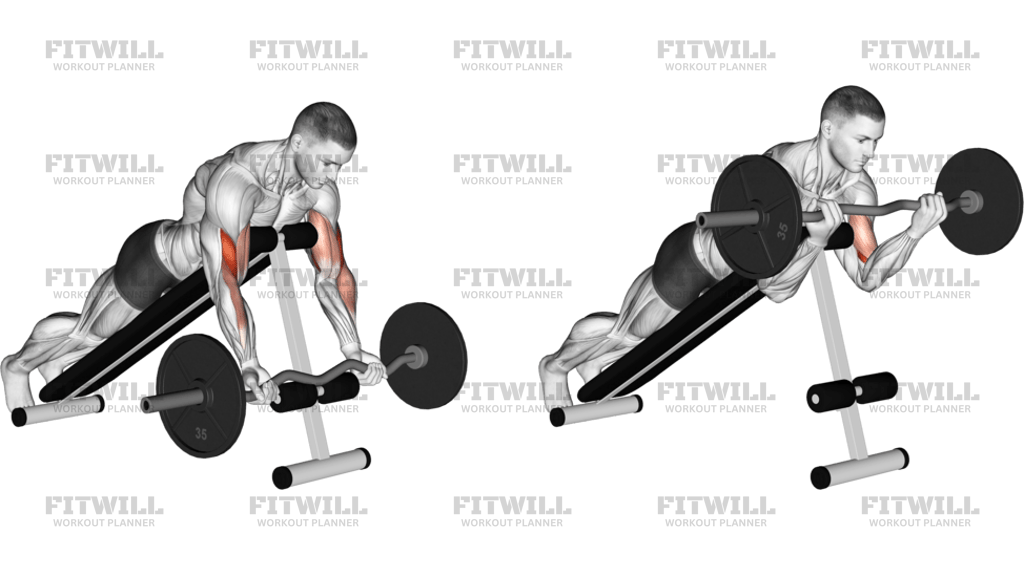
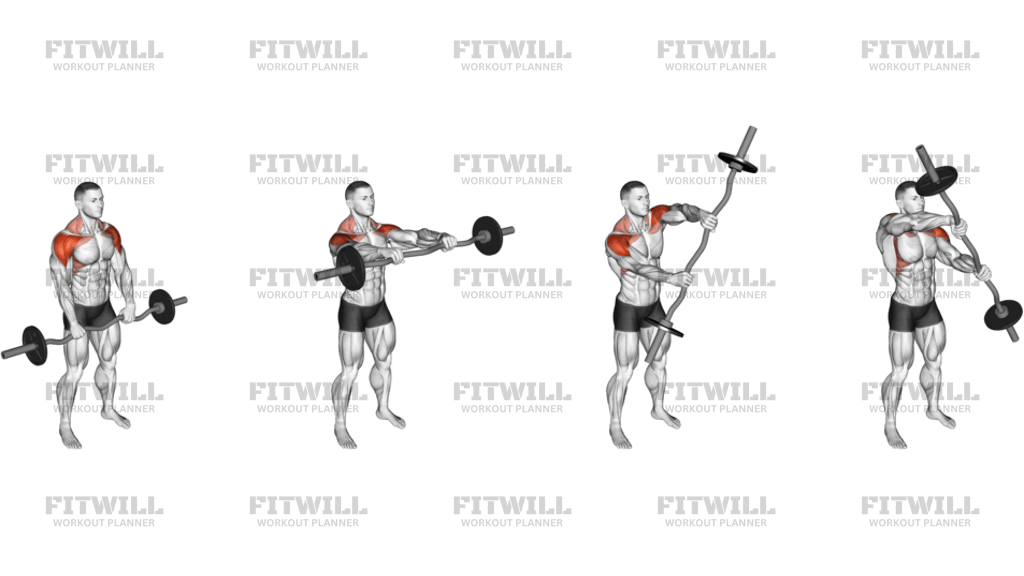
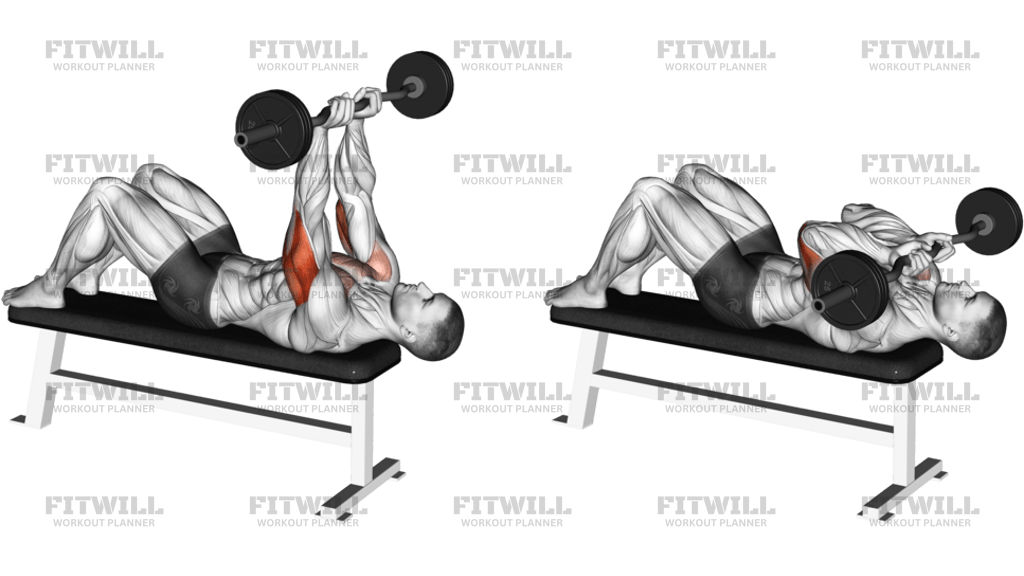
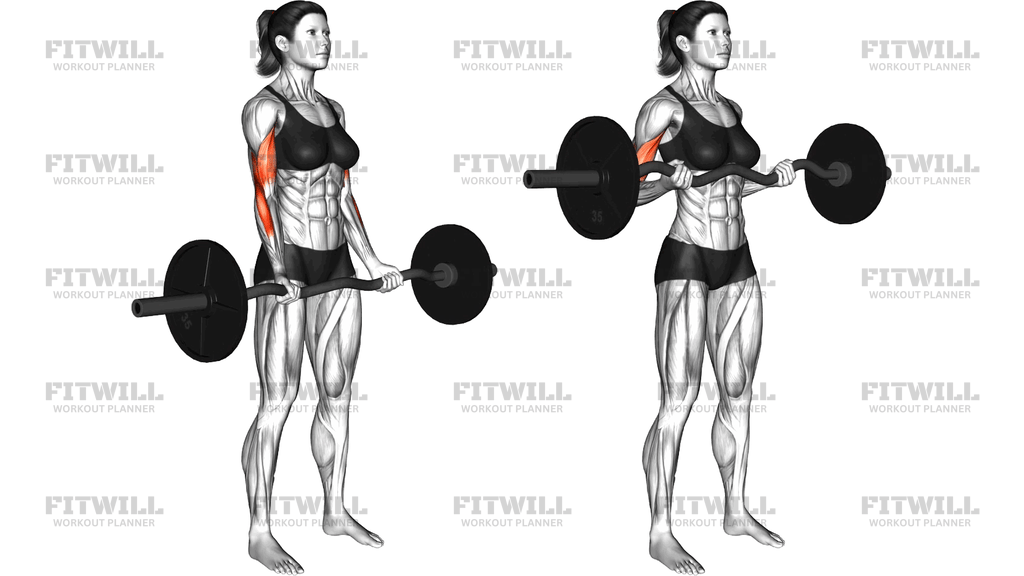
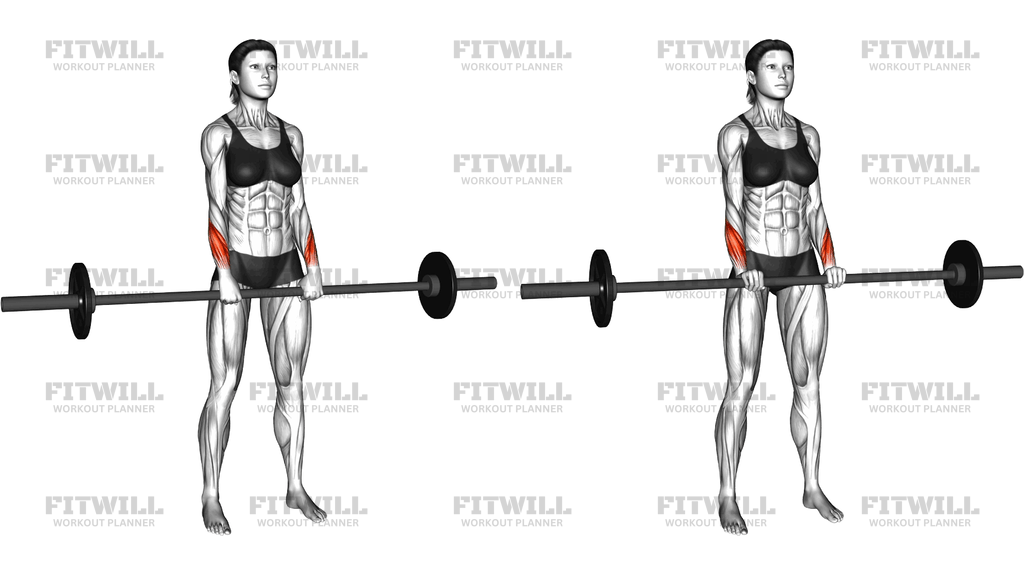
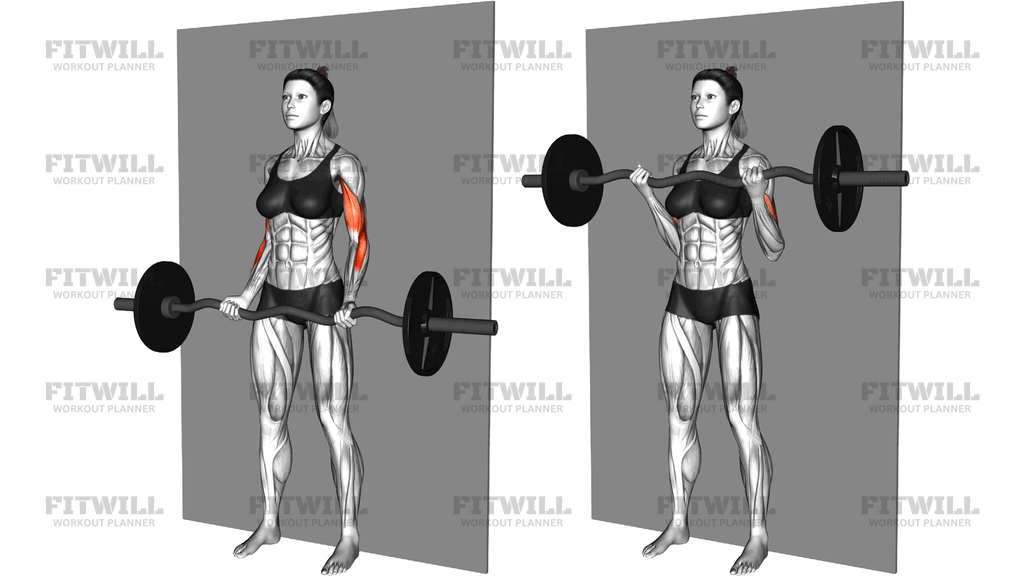
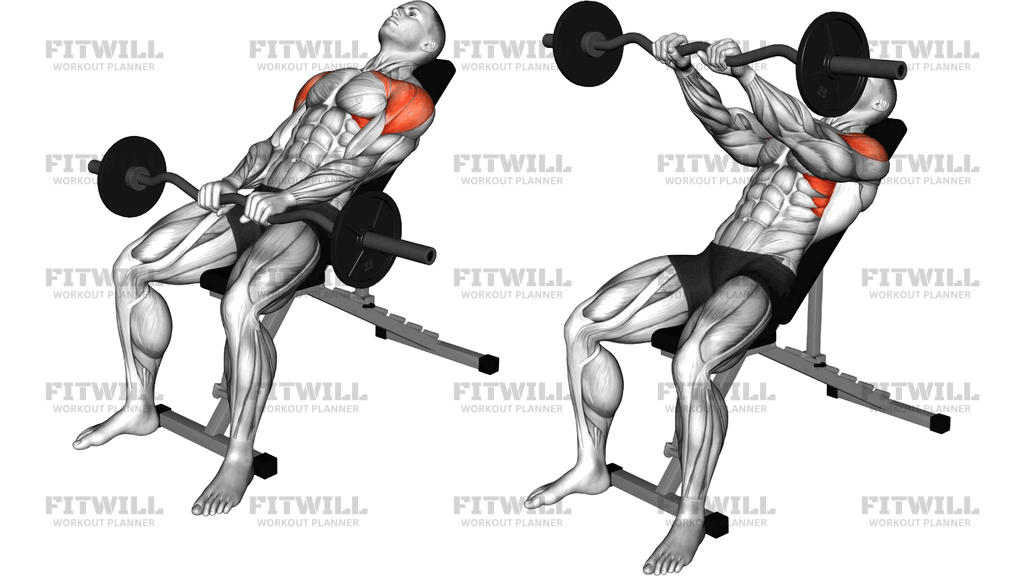
The Ez Bar Incline Pronated Grip Front Raise is a seated front raise performed while leaning back on an incline bench. You hold an EZ bar with an overhand (pronated) grip, let it rest against the front of your thighs, and raise it straight up in front of your body until your arms are roughly vertical or slightly above shoulder height. The angled bench is what separates this from a standard standing front raise: by reclining your torso, the front delts and upper chest fibers work through a longer range and with more constant tension than they get when you're upright.
The primary muscles worked are the front shoulders (anterior deltoids), with strong assistance from the clavicular head of the upper chest, especially as the bar travels up and slightly outward from the thighs. The side delts help stabilize and steer the bar, the upper traps assist near the top, and the forearms and grip work to control the EZ bar throughout. Because you're seated and braced against the bench, the lower back and legs are largely taken out of the movement, which is exactly why this setup rewards strict form.
This is a useful variation for lifters who have plateaued on standing front raises or who tend to swing the weight with body English. The incline position removes the momentum cheat almost entirely — if you swing, you slide off the pad — so the delts have to do the work. It also places tension on the front delts at an angle that standing raises can't replicate, making it a good accessory for anyone chasing fuller shoulder development or strengthening the front delts for pressing movements.
The EZ bar is a smart tool choice here. The angled hand positions of the cambered bar sit more comfortably for many wrists than a straight bar, reducing strain during the raise and letting you focus on the target muscles instead of joint discomfort. The added weight of the bar also makes the movement feel stable and balanced between both arms, so a stronger side can't quietly take over the way it can with a single dumbbell.
Execution is straightforward but unforgiving. Sit back on an incline bench set to roughly 30-60 degrees, plant your feet flat, and keep your head and shoulders in contact with the pad. From the bar resting on your thighs, raise it with slightly soft elbows on a smooth arc in front of your torso, pause briefly near the top, then lower under control to the start. Load conservatively — the reclined angle makes the bar feel heavier than a standing raise, and ego lifting here shows up immediately as jerking or lower-back pressure.
Use this exercise as a secondary shoulder movement after your main presses, typically for moderate sets in the 10-15 rep range. It pairs well with lateral raises in the same session to cover the front and side heads of the delt together, and it's particularly popular in physique-focused programs where strict, angle-specific delt work matters more than the amount of weight on the bar.
[ Workout Log & Planner ]
Put your next workout in Fitwill
Keep your plan and training log ready when you are.


Instructions
- Set an adjustable bench to an incline of roughly 30-60 degrees and sit back on the pad with your feet flat on the floor.
- Grip an EZ bar with an overhand (pronated) grip, hands about shoulder-width apart on the angled sections of the bar.
- Let the bar rest against the front of your thighs with your arms extended and elbows slightly soft, then lean your head and shoulders back against the pad.
- Brace your core lightly and press your lower back into the bench so your torso stays fixed before the first rep.
- Exhale and raise the bar straight up in front of your body, keeping it centered and your elbows locked in their slightly bent position.
- Continue until the bar reaches roughly eye level or just above shoulder height, with your arms close to vertical and in line with your shoulders.
- Pause for a beat at the top and squeeze the front delts without shrugging the bar higher.
- Inhale and lower the bar along the same path until it touches or nearly touches your thighs.
- Reset your torso against the pad before starting the next rep, and avoid letting your hips or shoulders lift to help the bar.
Tips & Tricks
- If the bar drifts out in front of you as it rises, the weight is too heavy or your elbows are flaring — think of lifting in a narrow lane directly over your thighs.
- Watch for shrugging at the top: if your upper traps take over, cut the range so the bar stops around shoulder height instead of chasing extra inches.
- Bending the elbows more as the set gets hard shortens the lever and turns the raise into a semi-curl — pick a lighter load and keep the elbow bend consistent from start to finish.
- Because you're reclined, the bar's arc runs close to your face at the top; keep your chin tucked slightly and never bounce the bar off your thighs to launch the next rep.
- Set the bench angle deliberately: a steeper incline shifts more work toward the upper chest, while a lower angle around 30 degrees keeps the emphasis on the front delts.
- Warm up the shoulders with a lighter raise or band work first — the incline position loads the front delts in a stretched position that feels tighter than a standing raise.
- If your wrists ache with the pronated grip, narrow your hand spacing slightly on the EZ bar's angled sections before switching equipment.
- Keep your head and shoulder blades in contact with the pad for every rep; once they peel off, you're using momentum and losing the benefit of the incline setup.
- Slow the lowering phase to two or three seconds — the descent is where this angle gives you the most tension on the front delts.
Frequently Asked Questions
What muscles does the Ez Bar Incline Pronated Grip Front Raise work?
The front shoulders (anterior deltoids) are the primary movers, with the upper chest's clavicular head assisting significantly because of the reclined torso angle. The side delts, upper traps, and forearms contribute as stabilizers and helpers.
Why use an incline bench instead of doing front raises standing?
The incline pins your torso back and eliminates the hip and lower-back swing that makes standing raises easy to cheat. It also changes the resistance angle so the front delts and upper chest work through a slightly different and more demanding path.
Is the pronated grip on the EZ bar better than a straight bar?
The EZ bar's angled hand positions are usually easier on the wrists and elbows during an overhand-grip raise than a fully supinated straight bar. If your wrists feel fine with a straight bar, both work, but the EZ bar is often the more comfortable option for higher-rep sets.
How high should I raise the bar?
Raise it to about eye level or just above shoulder height, with your arms close to vertical. Going much higher tends to shift work to the upper traps and can irritate the shoulder, so stop where the front delts are still doing the lifting.
What bench angle works best for this exercise?
Around 30-45 degrees is a good default for emphasizing the front delts. A steeper setting pushes some of the work toward the upper chest, which can be useful if you want that bias, but it makes the bar harder to control at the top.
Is this exercise suitable for beginners?
Yes, provided you start with a very light EZ bar or even an unloaded bar to learn the path. The bench actually helps beginners because it enforces a fixed torso, but the reclined angle makes moderate weights feel heavier than expected, so progress slowly.
What's the most common mistake with the Ez Bar Incline Pronated Grip Front Raise?
The most common error is lifting the head and shoulders off the pad or bouncing the bar off the thighs to start each rep. Both turn a strict front raise into a momentum-driven swing and take tension away from the front delts.
What can I substitute if I don't have an EZ bar?
A barbell with a shoulder-width overhand grip, a plate held with both hands, or dumbbells raised together all replicate the movement. The dumbbell version lets you work each arm independently, while the plate keeps the hands in a neutral-friendly position.
How many sets and reps should I do?
Two to four sets of 10-15 controlled reps works well as an accessory after your main shoulder or chest pressing work. Keep the load light enough that every rep touches your thighs at the bottom and stops at shoulder height without swinging.
Is it safe to do this movement with shoulder problems?
The incline front raise loads the front delts in a stretched position, which some irritated shoulders tolerate poorly. If you have a history of shoulder pain, use a lighter load, reduce the bench angle, shorten the range, and stop if you feel pinching rather than muscle effort.