Lying Single Leg Extension
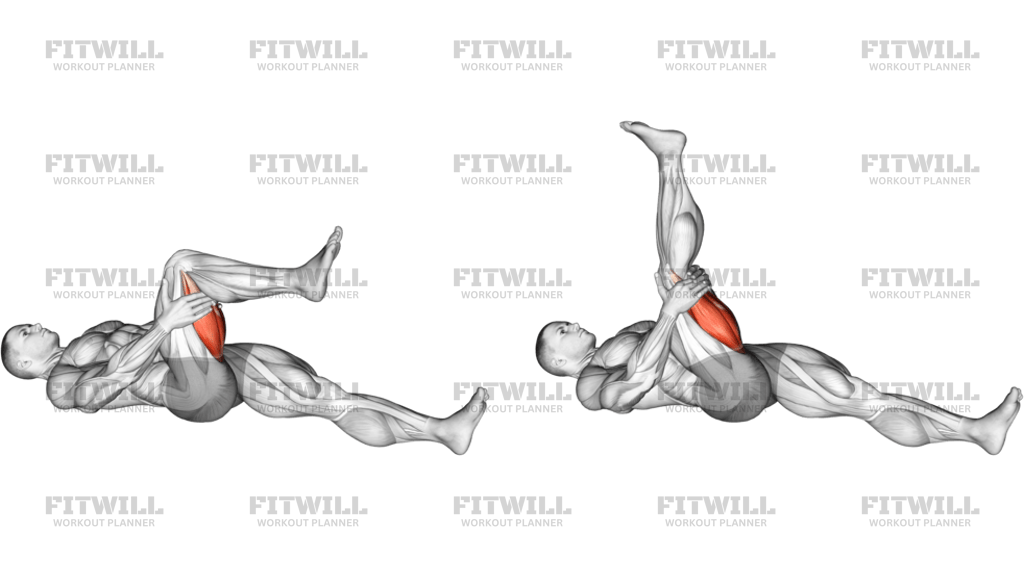
The Lying Single Leg Extension is a supine flexibility drill that takes one leg at a time from a bent-knee position to a fully straightened knee while you lie on your back. You draw one knee in toward your chest, cradle the thigh with both hands, and then slowly extend that knee so the leg rises toward the ceiling. The stretch lands squarely on the hamstrings along the back of the thigh, and straightening the knee completely also lengthens the calf, since the gastrocnemius crosses the knee joint. Because the work is unilateral, you can feel and address the difference between your left and right sides instead of letting the flexible side hide the tight one.
This is one of the most accessible hamstring stretches available. It suits desk workers whose hips and posterior chain have adapted to long sitting, runners and cyclists who habitually finish sessions with shortened hamstrings, and lifters who want to restore knee extension range after heavy leg training. It is also a common pick in gentle mobility and rehab-style routines, because straightening the knee under no load takes the joint through its full extension range without compression.
The setup is what separates a useful stretch from a pointless one. Your pelvis has to stay anchored to the floor while the knee straightens. Pulling the opposite knee in and holding the moving thigh from behind keeps the lower back flat and stops the hips from rolling up as the leg rises. Holding behind the thigh rather than behind the knee or on the kneecap also means you never drag on the joint itself, which matters if you have cranky knees.
Execution should feel slow and patient. Straighten the knee on an exhale and stop as soon as you get a clear, tolerable pull along the back of the thigh or calf, not at the point of strain. Hold there, keep breathing, and let the muscle lengthen a little more on each breath out. When you finish, bend the knee back in before switching sides rather than letting the leg drop.
In practice, the Lying Single Leg Extension fits best at the end of a workout, after a run, or in an evening mobility routine when the muscles are warm and respond more willingly. Two or three holds of twenty to thirty seconds per side is a typical dose, and doing the tighter leg first, or twice, is a simple way to chip away at side-to-side differences.
A few safety points are worth respecting. Never bounce or pulse at end range, and skip any aggressive stretching right after a hamstring strain or if a sharp pain, tingling, or numbness shows up during the hold. A mild stretch sensation that eases as you breathe is the target; anything sharp or radiating means back off or leave it out.
Fitwill
Log Workouts, Track Progress & Build Strength.
Achieve more with Fitwill: explore over 9600 exercises with images and videos, access built-in and custom workouts, perfect for both gym and home sessions, and see real results.
Start your journey. Download today!




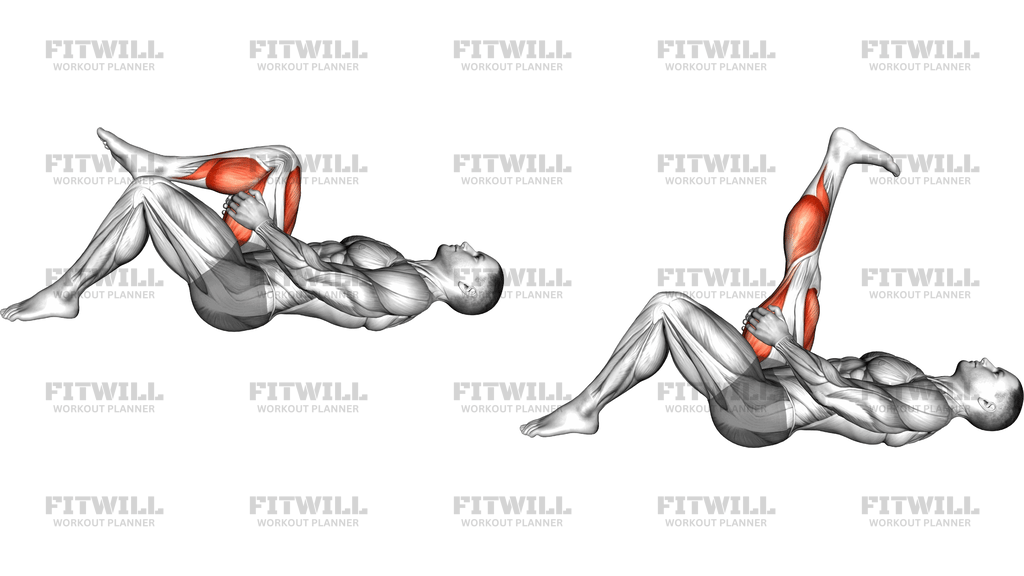
Instructions
- Lie flat on your back on an exercise mat with both legs extended and your arms resting by your sides.
- Draw your right knee in toward your chest and clasp both hands behind that thigh, fingers resting on the hamstring just above the back of the knee.
- Keep your low back pressed into the mat. If it wants to arch, bend your left knee and place that foot flat on the floor first.
- Lighten your grip so your hands support the thigh instead of forcing it, and let your head, neck, and shoulders stay relaxed on the mat.
- Exhale and slowly straighten the held knee, letting the foot travel up toward the ceiling until you feel a steady stretch along the back of the thigh and possibly the calf.
- Keep the tailbone and the opposite hip grounded the whole time so the pelvis does not tilt or roll as the leg rises.
- Hold the extended position for 20 to 30 seconds, breathing calmly and letting the leg drift a little higher on each exhale if the stretch allows.
- Bend the knee back in toward your chest to release, then switch legs and repeat on the left side.
- Complete 2 to 3 holds per side, spending an extra round on whichever leg feels tighter.
Tips & Tricks
- The most common mistake is hauling the thigh down so hard that the tailbone lifts off the mat, which tilts the pelvis and steals the stretch from the hamstring. Anchor the pelvis first, then chase knee extension.
- If your knee will not straighten completely, that is fine. Work to a soft bend and let full extension arrive over weeks of consistent holding rather than muscling it straight.
- Pull your toes gently back toward your shin once the knee is straight. This adds a calf stretch through the gastrocnemius, which crosses the knee just like the hamstrings do.
- Grip the thigh, never the kneecap or the back of the knee. Pressing on the joint line is uncomfortable and does nothing to lengthen the muscle.
- If your lower back complains, keep the resting leg bent with the foot on the floor instead of flat. This shortens the front of that hip and makes it much easier to keep the spine neutral.
- Do not bounce at the top of the rep. Repeated pulsing triggers a protective contraction in the hamstring and usually leaves you tighter than you started.
- Save this drill for after training or a warm shower. Stretching cold hamstrings hard first thing in the morning tends to feel grabbing and unproductive.
- Watch the foot of the resting leg. It often sneaks off the floor or rolls outward as the other leg extends, which quietly rotates the pelvis and changes where you feel the stretch.
Frequently Asked Questions
Which muscles does the Lying Single Leg Extension target?
The primary target is the hamstrings on the back of the extended thigh. Because straightening the knee also lengthens the gastrocnemius, you will often feel it in the calf of the same leg as well.
Why do I hold the thigh instead of grabbing behind the knee or the calf?
Supporting the thigh keeps the pressure off the knee joint itself. Grabbing the knee or lower leg lets you yank on the joint without actually adding much length to the hamstring.
Is the Lying Single Leg Extension suitable for beginners?
Yes, it is one of the friendliest hamstring stretches to start with. The floor supports your spine, the intensity is fully self-regulated by how far you straighten the knee, and there is no balance demand.
Should my non-working leg be flat on the floor or bent with the foot down?
Either works, but a bent resting leg makes it far easier to keep your lower back neutral, especially if your hamstrings or hip flexors are tight. Flat is a small progression once the bent version feels comfortable.
My knee will not fully straighten during the Lying Single Leg Extension. Is that a problem?
Not usually. Knee extension range varies a lot between people, and tight hamstrings or calves limit it further. Hold at your available range and expect gradual improvement with regular practice.
How long should I hold each repetition?
Aim for 20 to 30 seconds per hold, repeated 2 to 3 times per side. Longer, calmer holds beat short tugs for changing how the hamstring feels over time.
Can the Lying Single Leg Extension replace other hamstring stretches?
It covers the supine unilateral angle very well, but it is still worth pairing with a standing or seated hamstring stretch occasionally, since those load the muscle in a different hip position.
Is it normal to feel this stretch more in one leg than the other?
Yes, side-to-side differences are extremely common, particularly if you favor one leg in sport or sit with one crossed over the other. Give the tighter side an extra hold or two.
When is the best time to do the Lying Single Leg Extension?
It works best after training, running, or any warm-up that has heated the legs, such as at the end of a session or in an evening routine. Avoid deep stretching on completely cold hamstrings.
Are there situations where I should skip this stretch?
Hold off if you have a recent hamstring strain, sharp pain in the back of the thigh, or any tingling or numbness that appears during the hold. A gentle pulling sensation is expected; sharp or radiating symptoms are a signal to stop.