Cable Seated High Triceps Extension
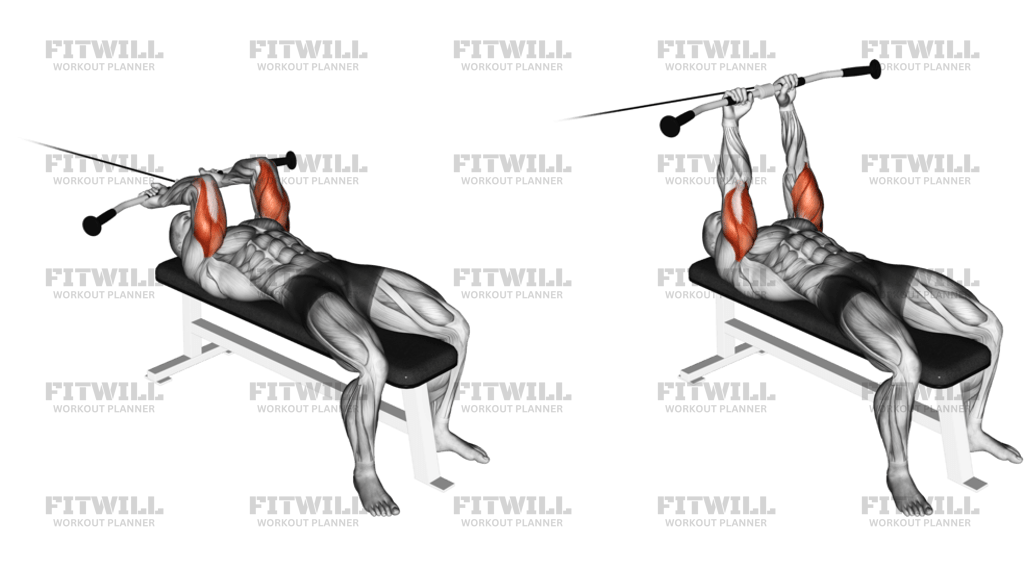
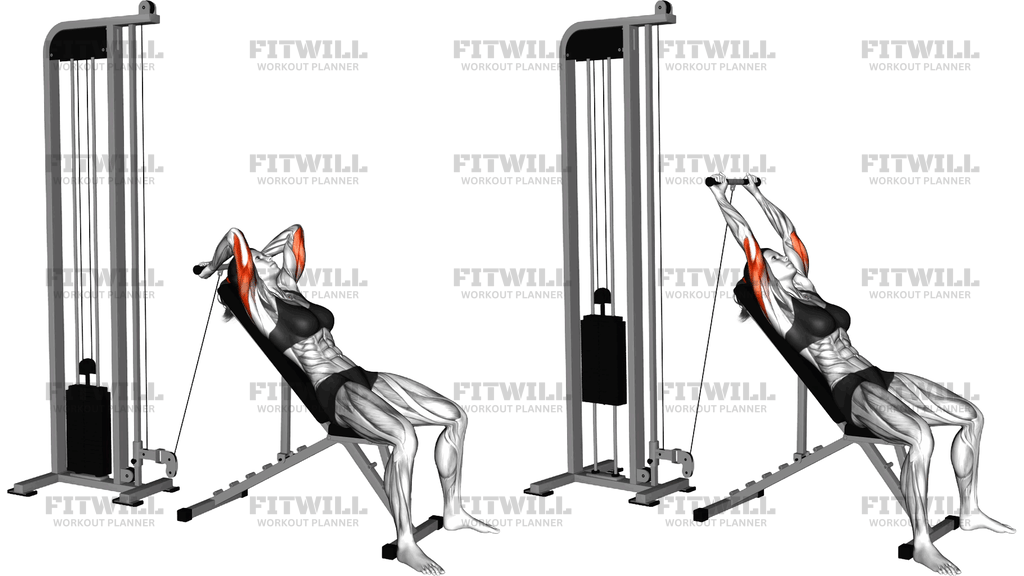
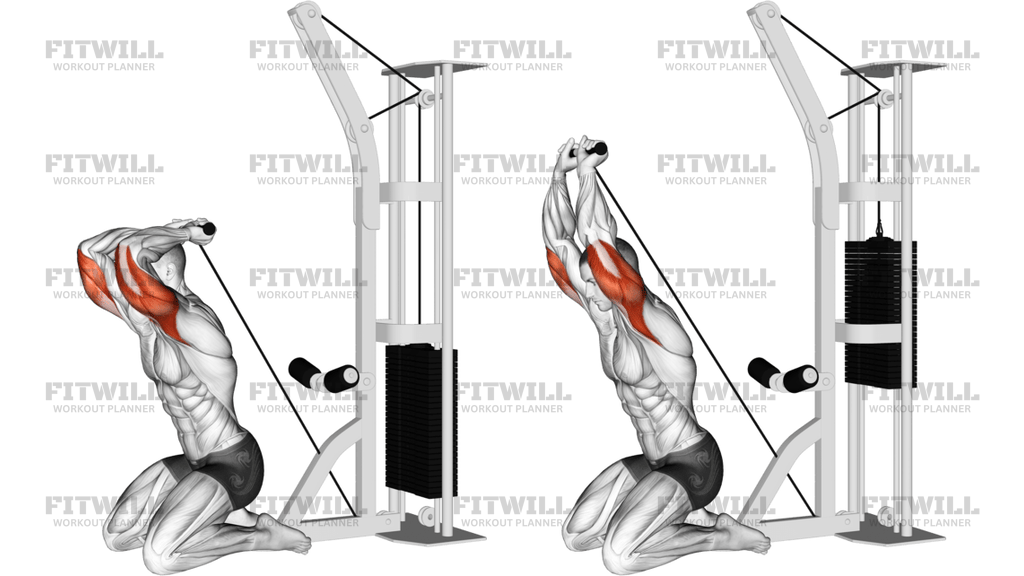
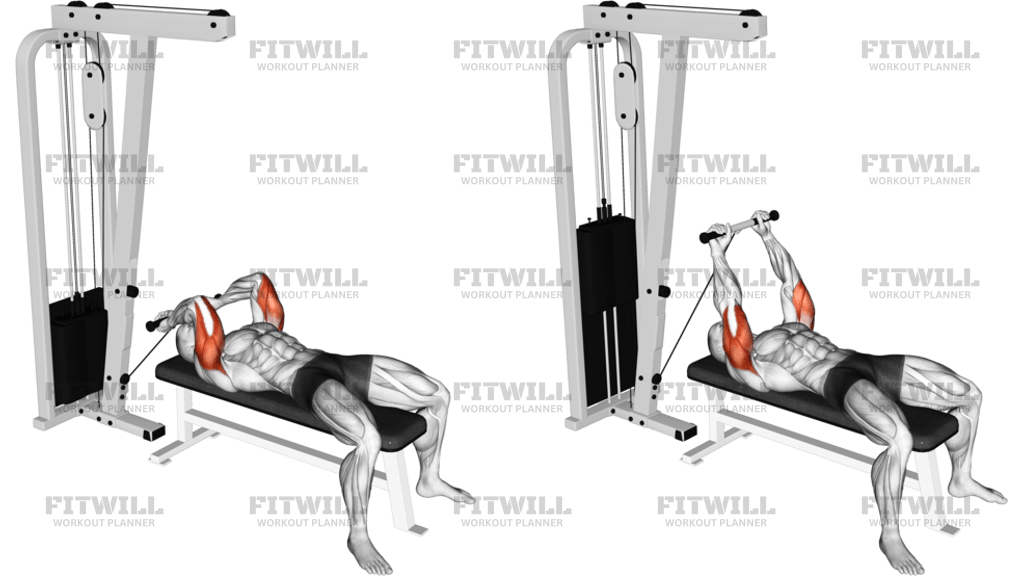
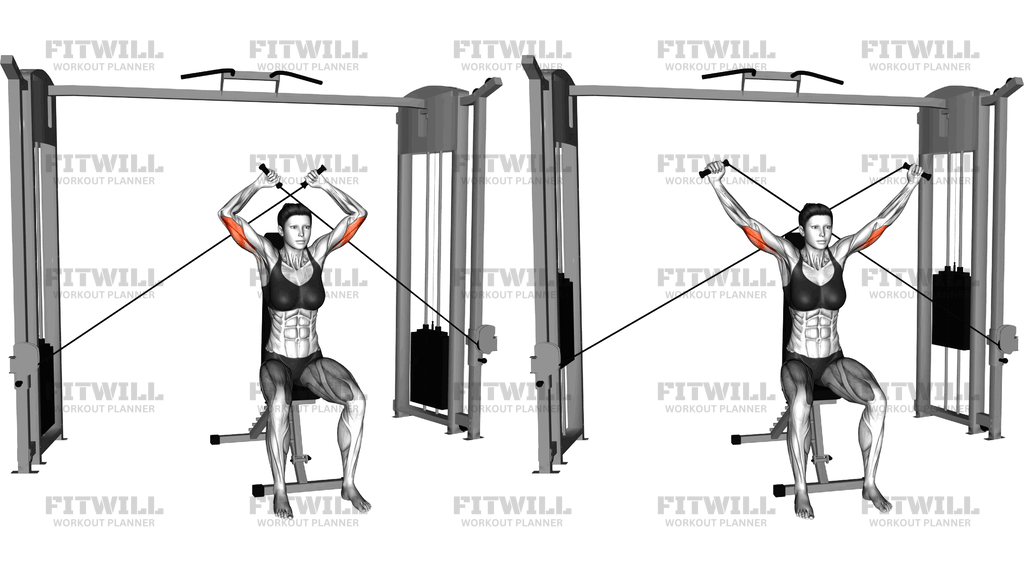
The Cable Seated High Triceps Extension is an overhead triceps movement performed on a dual-cable setup. You sit on an upright bench positioned between two low pulleys, take one handle in each hand, and raise the cables so they cross behind your back as your arms go overhead. From there, you extend your elbows outward and upward until your arms are straight above and slightly wider than shoulder height, then lower the handles back under control. Because the cables pull from low behind you, the resistance stays on the triceps through the entire range, including the fully stretched position at the bottom.
This exercise places the arms in an overhead position, which puts the long head of the triceps on stretch. The long head only crosses the shoulder joint, so it lengthens far more when the arm is raised than it does in pressing or pushdown variations. If your goal is complete triceps development, an overhead cable extension like this is one of the most direct ways to load that part of the muscle, while the cable path keeps tension constant where free-weight overhead extensions often go slack.
The seated posture is what makes this version approachable. Sitting on a bench with a supportive backrest removes the need to brace your torso against the pull the way you would in a standing overhead cable extension, so the focus stays on elbow extension rather than whole-body balance. The two independent handles also let each arm travel its own path, which is useful if one side tends to do more work than the other.
Setup matters here. The bench height, the seat position between the pulleys, and where you grip the handles all determine whether the cables cross cleanly behind you or drag sideways across your shoulders. Take a moment to center yourself and confirm the cable tension feels symmetrical before your first rep. Once set, the movement itself is simple: keep your upper arms wide and relatively still, bend and straighten only at the elbows, and let the handles track up and out in an arc.
You will see this exercise used as a secondary triceps movement on arm days, often after presses or pushdowns, or as a finisher for 2 to 3 sets of 10 to 15 reps. Because the cables assist you on the way up, getting into position is easier than with a heavy dumbbell overhead, which makes it a practical choice for lifters who find heavy overhead dumbbell work awkward on the shoulders. Keep the load honest: the setup and the seated position reward smooth, controlled reps far more than heavy, jerky ones, and straining at the shoulder joint is the most common way this exercise goes wrong.
[ Workout Log & Planner ]
Put your next workout in Fitwill
Keep your plan and training log ready when you are.


Instructions
- Position a bench with an upright backrest in the center of a dual-cable station and set both pulleys to the lowest position.
- Attach a handle to each pulley, sit down facing away from the pulleys, and plant your feet flat on the floor about hip-width apart with your back against the pad.
- Grip one handle in each hand with your palms facing inward, then raise both arms overhead, letting the cables cross behind your back as your elbows point out wide to the sides.
- Set your starting position with elbows bent above shoulder height, forearms angled inward toward your head, and shoulders pulled down away from your ears.
- Brace your core lightly and keep your ribcage down so your lower back does not arch as the cables pull behind you.
- Exhale and press the handles up and out by straightening your elbows, finishing with your arms extended overhead and slightly wider than shoulder width.
- Squeeze the triceps briefly at the top without locking the elbows hard or letting the shoulders shrug upward.
- Inhale and bend your elbows slowly, lowering the handles in a controlled arc until you feel a clear stretch along the back of the upper arms.
- Keep the upper arms stationary and wide throughout; only the forearms should travel as the elbows hinge open and closed.
- Complete your reps, then release one handle at a time and let the cables return to the stack before standing up.
Tips & Tricks
- If the cables scrape across your shoulders or pull you backward, you are sitting too far forward or too far from the pulleys; shift the bench so the cables cross behind your upper back, not over it.
- The most common mistake is turning this into a shoulder press. If your elbows rise and drop with the handles, fix the elbows wide and high and let only the forearms move.
- Flaring the elbows out to the sides is intentional in this exercise, but keep them under the handles; elbows drifting behind your head shifts stress onto the shoulder capsule.
- Lower back arch usually appears at the bottom of the rep when the stretch is deepest. Tighten your abs and think about keeping your back flat against the pad rather than chasing extra range.
- Use a lighter weight than you would for pushdowns. Overhead positions are weaker for most people, and the crossed cables make any sway in the torso very visible.
- Grip the handles loosely with your wrists neutral. Squeezing hard tilts the wrists back and steals tension from the triceps at the top of the extension.
- Pause for a full second in the stretched position on the last few reps of a set. The overhead stretch is the most valuable part of this exercise, and pausing keeps it honest.
- If one arm fatigues before the other, the crossed cable setup makes it easy to cheat with the stronger side. Watch your hands in a mirror and check that both elbows open at the same speed.
- Set the bench backrest upright rather than slightly reclined. A reclined pad invites arching, while an upright one keeps the torso stacked over the hips.
- When racking the weight, let go of one handle fully before the other so the recoiling cable does not whip the free handle into your head.
Frequently Asked Questions
Which muscles does the Cable Seated High Triceps Extension work?
The triceps are the prime movers, with the long head working hardest because the arms are overhead and stretched. The shoulders, especially the front delts, help hold the arms up and stabilize the position.
Why are the cables crossed behind me in this exercise?
The handles come from the low pulleys on either side, so the cables cross behind your back as you raise your arms. This gives you a smooth upward pulling angle and keeps tension on the triceps even in the stretched position at the bottom.
Is the Cable Seated High Triceps Extension good for beginners?
Yes, provided the weight is kept light. The bench supports your torso and the cables help you get into position, which makes it easier to learn than a heavy standing or dumbbell overhead extension.
How is this different from a standing overhead cable extension?
Sitting against a backrest removes the balance and core demands of the standing version, so you can focus purely on extending the elbows. The tradeoff is that you cannot lean or adjust your torso to help grind out reps.
Why do my shoulders feel this exercise instead of my triceps?
This usually means your elbows are dropping or drifting as you press, turning the movement into a partial shoulder press. Keep the elbows pinned wide and high and move only the forearms, and reduce the weight if needed.
How heavy should I go on the Cable Seated High Triceps Extension?
Choose a load you can control for 10 to 15 smooth reps with a slow lowering phase. The crossed cables and overhead position make torso sway obvious, so if your back is coming off the pad, the weight is too heavy.
What can I substitute if my gym has only one cable pulley?
A single-arm version with one low-pulley handle works well; just sit sideways or center yourself so the cable runs behind you. Overhead dumbbell extensions or a band overhead extension are reasonable alternatives if no cable station is free.
Should my elbows stay wide or point forward during the extension?
In this exercise the elbows stay out wide to the sides, roughly in line with the handles. That flared position is part of what separates it from a skull crusher or a forward-facing overhead extension.
Is it safe to do this exercise if my shoulders feel pinched overhead?
If you feel pinching rather than muscle effort, stop and check your setup first, since a lower seat height or less range at the bottom often solves it. If the discomfort persists, choose a triceps pushdown variation and have a coach assess your overhead position.
Where should this exercise fit in my arm training?
Treat it as a secondary or finishing movement after pressing or pushdown work, using 2 to 3 sets of 10 to 15 reps. Its main value is loading the stretched overhead position that pushdowns do not cover.