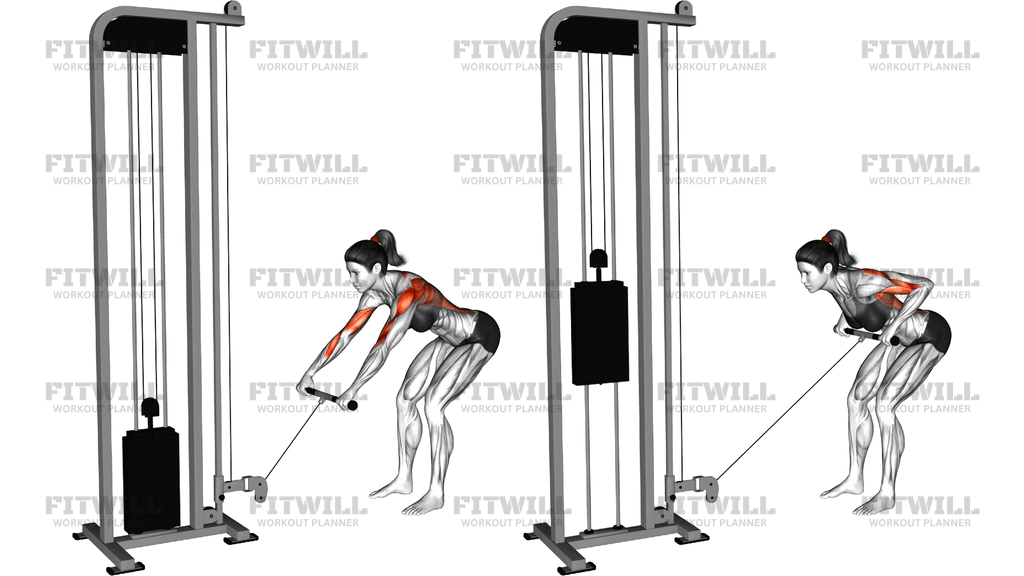
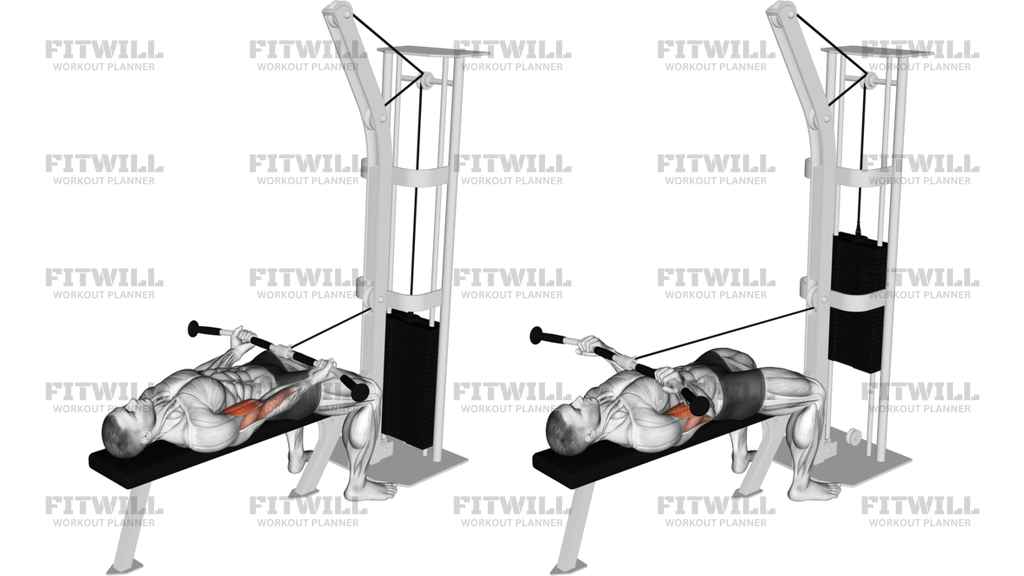
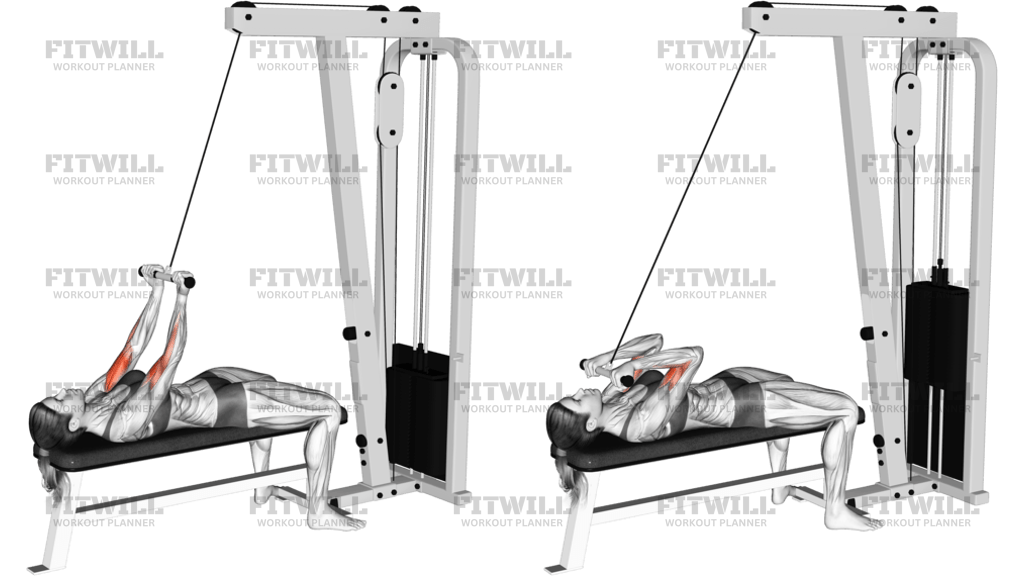
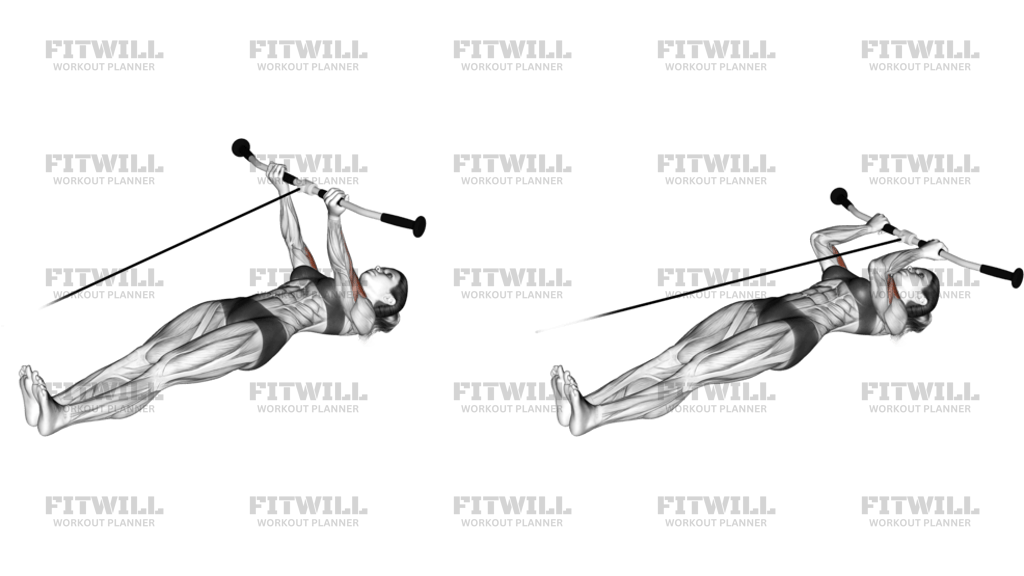
Cable One Arm Inner Biceps Curl
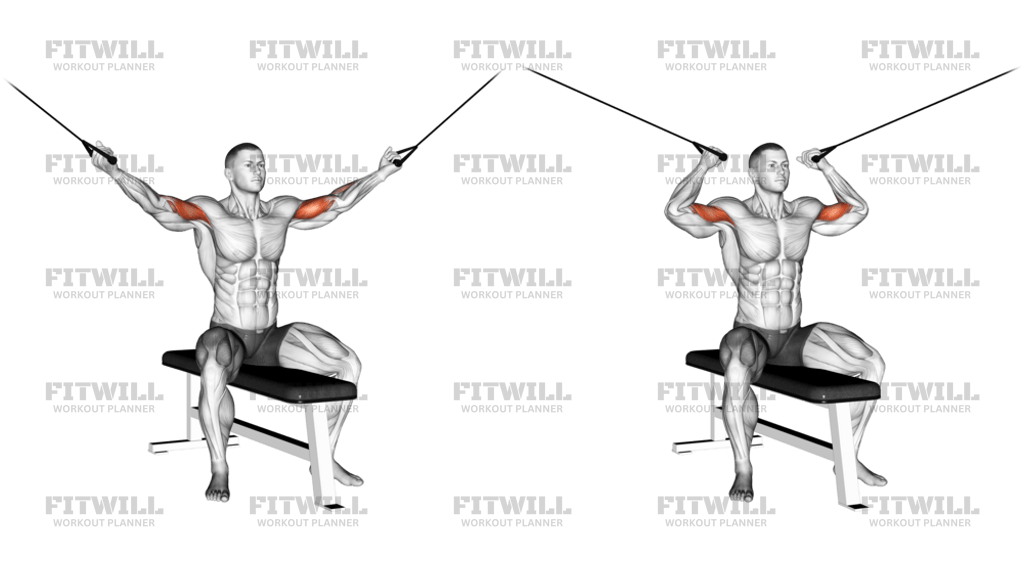
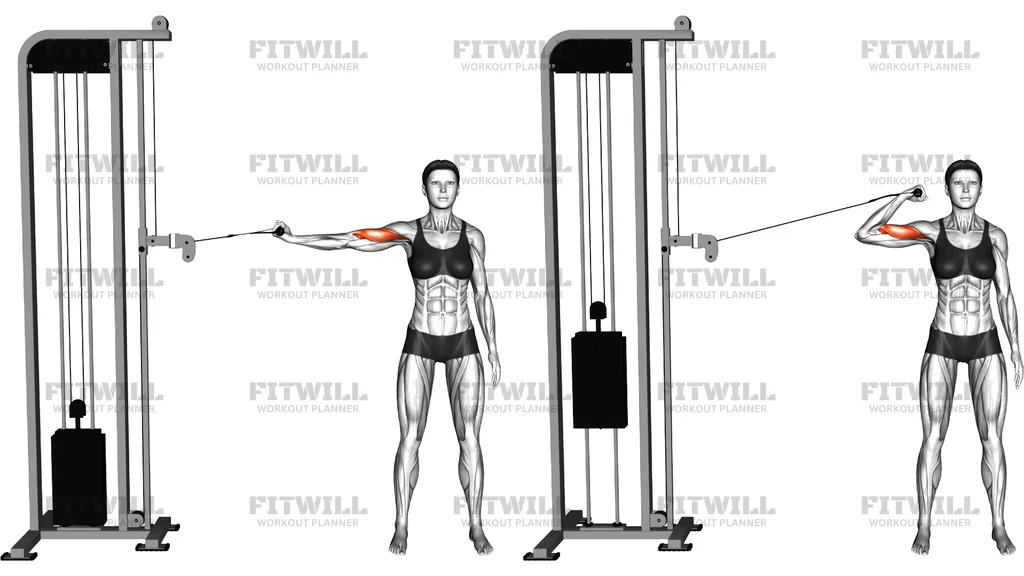
The Cable One Arm Inner Biceps Curl is a unilateral cable curl performed with the pulley set at about shoulder height and the working arm held out to the side, roughly level with your shoulder. Instead of curling with the upper arm hanging at your side, you keep the arm horizontal as you flex the elbow, drawing the handle in toward your head or ear and then slowly extending back out along the cable line. This position places the biceps under tension from a stretched, horizontally abducted setup, which is exactly what the name "inner" refers to — the pull angle comes from the side and loads the muscle through a range a standing dumbbell curl never touches.
This movement suits intermediate lifters who want to finish off arm day with something more targeted than a standard curl, and it also works well for anyone dealing with elbow discomfort from heavy barbell curls, since the cable provides smooth, even resistance without momentum. Because you train one arm at a time, it is easy to spot and fix a side-to-side strength difference. Bodybuilders use it to emphasize the biceps peak and the short head, and the constant cable tension gives you a strong squeeze at the top that free weights cannot match when your arm is in this position.
The primary muscles working are the biceps brachii, with solid support from the brachialis and brachioradialis in the forearm. Because the upper arm is held out to the side, the front of the shoulder and the muscles around the shoulder blade also work isometrically to keep your arm from drifting — that supporting role is part of what makes the exercise valuable, but it also means you should not load it as heavily as a regular curl.
Setup matters more here than in most curls. The pulley height determines your entire line of pull: set too low, the movement turns into an awkward front curl; set at shoulder height with your arm horizontal, the cable resistance pulls your arm back and out, keeping the biceps loaded through the full arc. Stand far enough from the machine that the cable does not slacken at the start, and keep your torso upright so your body does not twist into the pull.
To execute it well, think of your elbow as a fixed hinge bolted at shoulder height. The forearm is the only thing that moves — it sweeps up and in until your hand is near your head, then lowers under control until the arm is nearly straight. Resist the cable on the way out rather than letting it yank your arm back, since the eccentric half is where much of the benefit lives.
Use moderate weight, higher reps, and slow tempo. This exercise is best placed at the end of a pull or arm session, when the biceps are already warm, rather than as your first heavy movement.
[ Workout Log & Planner ]
Put your next workout in Fitwill
Keep your plan and training log ready when you are.


Instructions
- Set the pulley of a cable machine to approximately shoulder height and attach a single handle.
- Stand side-on to the machine, gripping the handle with the arm nearer the machine or crossing your body to take it with the far arm, so the cable runs across in front of you.
- Take a small step away from the machine until the cable is taut with your working arm extended straight out to the side at shoulder height, palm facing up.
- Plant your feet about hip-width apart, brace your core, and keep your shoulders square and chest tall.
- Keeping your upper arm locked at shoulder height and completely still, curl the handle up and in toward your head or ear by bending only at the elbow.
- Pause briefly at the top, squeezing the biceps as your hand reaches its closest point to your head.
- Slowly extend your arm back out along the cable line until it is almost straight, resisting the pull of the stack the whole way.
- Exhale as you curl in, inhale as you lower the handle back out.
- Complete all repetitions on one arm, then switch sides and match the rep count.
- Rest the handle back on the stack carefully and let the cable come to a stop before letting go.
Tips & Tricks
- The most common mistake is drifting the elbow forward or dropping it as you fatigue — imagine the elbow is glued to an invisible shelf at shoulder height so only the forearm moves.
- If the cable loses tension at the start of each rep, you are standing too far away; step in slightly until the arm is fully extended with the stack still loaded.
- Do not twist your torso toward the handle to help the weight up — if your shoulders start rotating, the weight is too heavy for your biceps to control alone.
- Keep the palm facing up throughout the curl; letting the wrist roll back turns it into a partial grip movement and shifts stress away from the biceps.
- Stop the extension just short of a locked-out elbow rather than slamming the joint straight, which keeps constant tension and protects the elbow.
- Use a lighter load than you would for a standing dumbbell curl — the horizontal arm position puts the shoulder under extra stabilizing demand, and heavy weights here usually break form before they build muscle.
- A slow three-second lowering phase out of the curl does more for this movement than extra reps, because the cable pulls hardest on the way back.
- If your shoulder complains about the horizontal arm position, lower the pulley a notch and let the arm sit slightly below shoulder level rather than forcing the exact line.
- Do your weaker arm first and match its reps with the stronger arm to keep both sides even.
Frequently Asked Questions
Which muscles does the Cable One Arm Inner Biceps Curl work?
The biceps brachii is the primary mover, with the brachialis and brachioradialis assisting. The front shoulder and upper back muscles also work statically to hold your arm out at shoulder height.
What makes this curl an "inner" biceps curl?
The cable pulls from the side at shoulder height, so your arm is held horizontally out from your body instead of hanging down. This angle changes the line of resistance and targets the inner portion and short head of the biceps differently than a standard curl.
Why is the pulley set at shoulder height for this exercise?
A shoulder-height pulley matches the height of your extended arm, so the cable keeps tension on the biceps through the entire arc. A low pulley changes the exercise into a different curl variation entirely.
Is the Cable One Arm Inner Biceps Curl suitable for beginners?
It can be, as long as beginners start with a very light weight and focus on keeping the elbow stationary. The shoulder stabilizing demand makes it slightly harder to control than a regular curl, so learning it after mastering standard cable curls is a sensible order.
Why can I lift less weight on this than on a normal cable curl?
Holding your upper arm horizontally removes momentum and body English, and the biceps work from a stretched position. The weaker numbers are normal and are actually a sign the exercise is isolating the muscle properly.
Should I curl the handle toward my head or across my chest?
Toward your head or ear, keeping the elbow fixed out at shoulder height. Pulling across your chest means the elbow is drifting, which turns the movement into a different pattern and reduces biceps isolation.
What can I substitute if my gym has no cable machine?
A single dumbbell lateral raise position with a slow curl, or a resistance band anchored at shoulder height, comes closest. The key detail to keep is the arm held out to the side with only the forearm bending.
How many sets and reps should I do?
Two to four sets of 10 to 15 reps per arm works well, usually as a finishing movement after heavier curls. The constant cable tension makes moderate loads feel harder than they look on the stack.
Is it safe for the shoulder and elbow?
For healthy joints it is generally fine with moderate weight, and the cable's smooth resistance is gentle on the elbows compared with heavy free-weight curls. If holding the arm at shoulder height causes shoulder discomfort, drop the pulley slightly or reduce the weight.