Cable Overhead Tricep Extension Straight Bar
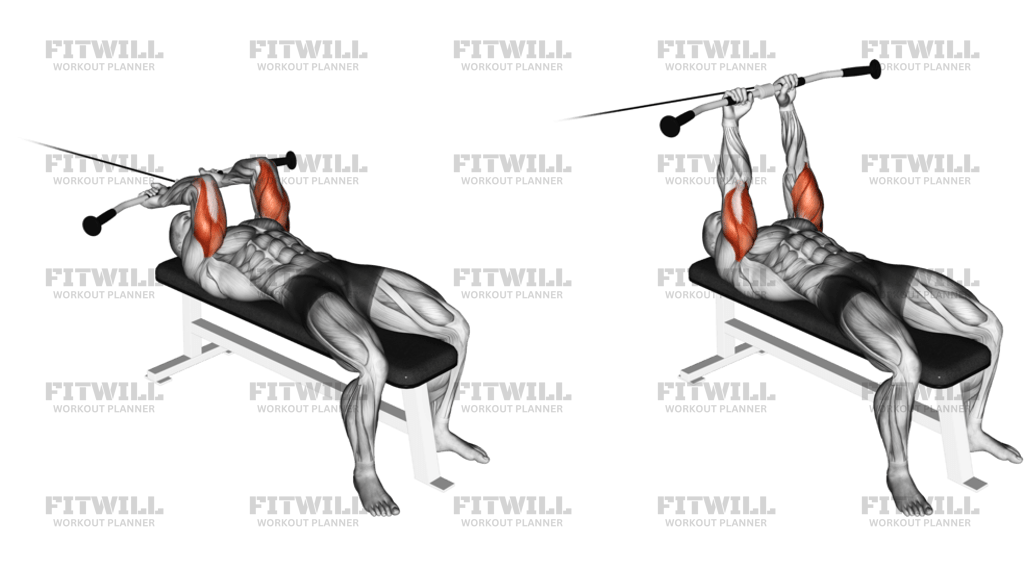
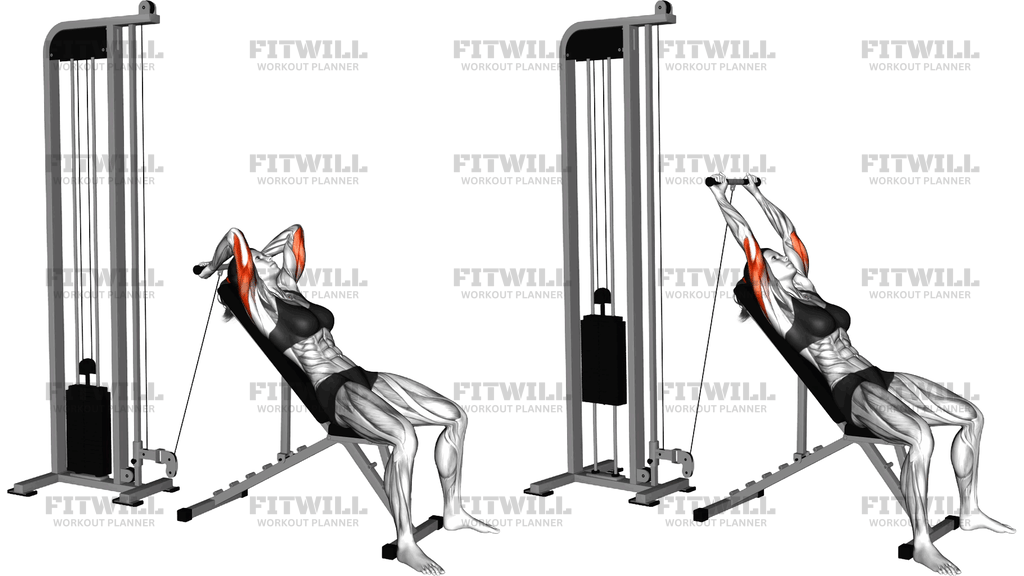
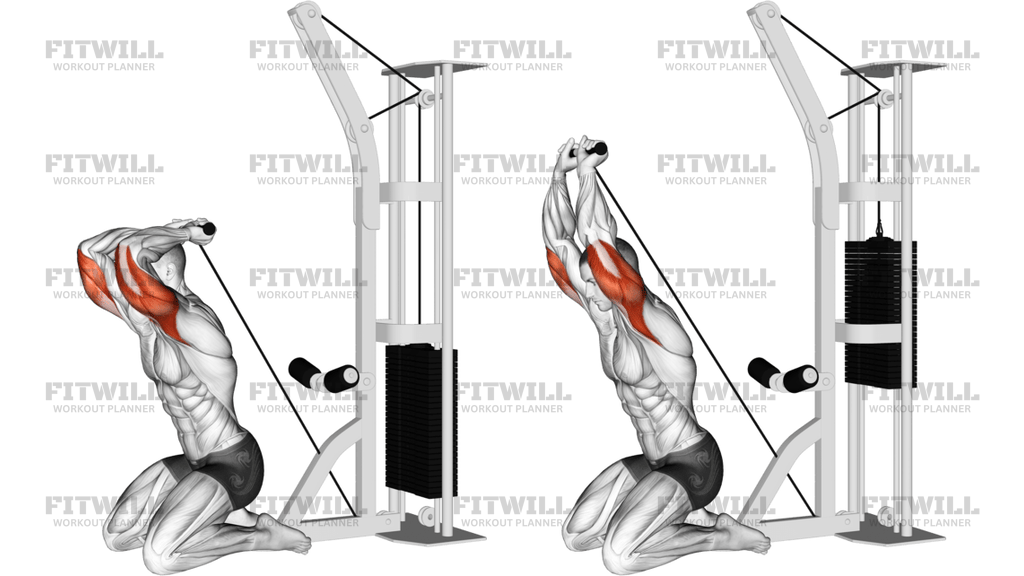
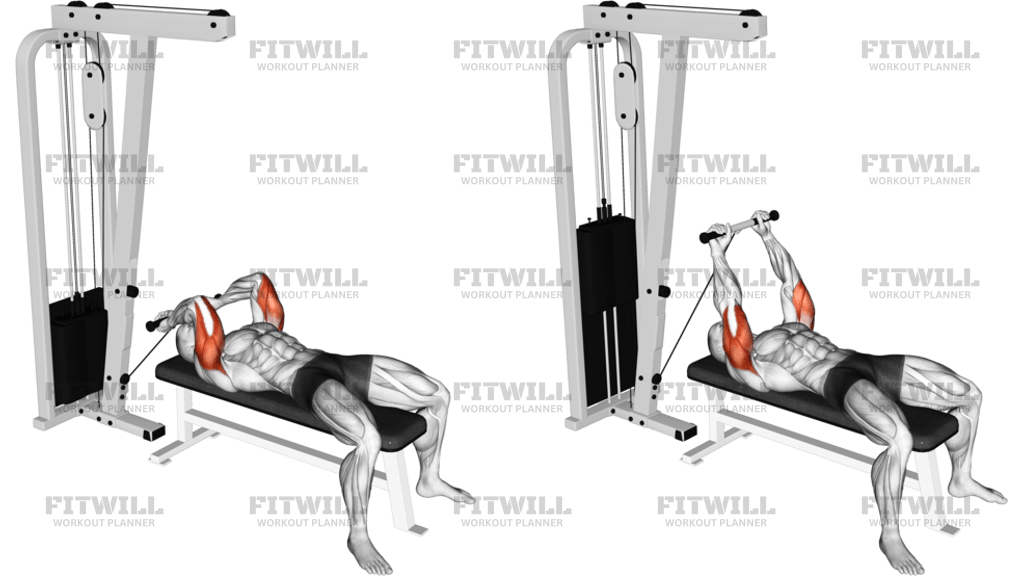
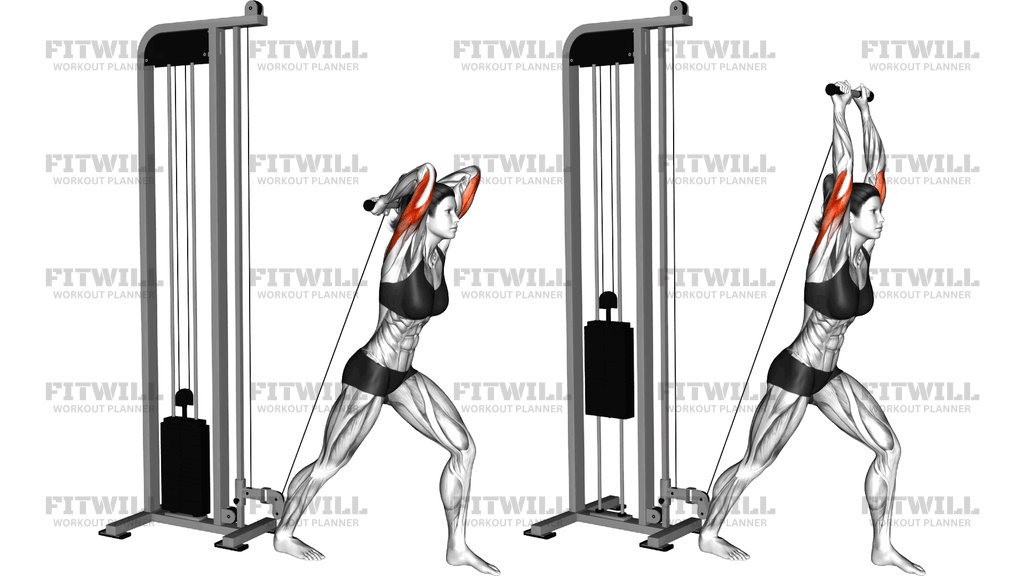
The Cable Overhead Tricep Extension Straight Bar is an isolation movement performed facing away from a low pulley. You hold a straight bar attachment behind your head with elbows bent, then press it up and forward until your arms are fully extended overhead. Because the cable pulls from behind and below you, the resistance stays on the triceps through the entire arc, including the stretched position at the bottom where most tricep exercises go slack.
This exercise is especially good for training the long head of the triceps, which only reaches a full stretch when the shoulder is flexed overhead. If your main tricep work is pushdowns, adding an overhead cable extension fills the gap. It suits lifters who want fuller-looking arms, and it also works well as a finishing movement after presses or close-grip work.
The setup matters more here than in most tricep moves. You will stand in a staggered stance facing away from the machine, torso leaning slightly forward, with the cable running behind your back to the bar in your hands. That lean and the split stance give you a stable base so the cable's pull does not drag you backward. Keeping the upper arms close to the head and relatively fixed turns this into a true elbow extension rather than a half press.
To execute it well, hinge forward a few degrees, brace your core, and extend your elbows in a smooth arc until the bar travels over and slightly in front of your head. Squeeze the triceps at the top, then lower the bar under control until you feel a solid stretch behind the arms. Avoid letting the elbows flare wide or drift forward as you fatigue, since that shifts work away from the triceps and toward the shoulders.
A common use case is 2 to 3 sets of 10 to 15 reps at moderate weight. The cable provides a consistent resistance curve, which makes it easier on the elbows than heavy free-weight overhead extensions. If you have cranky elbows, warm up first, keep the load modest, and prioritize a full controlled stretch over adding plates.
Safety-wise, keep your neck neutral and avoid jerking the weight up with your lower back. The staggered stance and forward lean protect your spine; your arms do the moving. Control the descent rather than letting the cable snap the bar back down behind your head.
[ Workout Log & Planner ]
Put your next workout in Fitwill
Keep your plan and training log ready when you are.


Instructions
- Attach a straight bar to the low pulley of a cable machine and select a light-to-moderate weight before your first set.
- Grip the bar with an overhand grip, hands about shoulder-width apart, then step forward and turn so you are facing away from the machine with the cable running between your legs and up behind your back.
- Take a staggered stance with one foot forward, brace your core, and hinge slightly forward from the hips so the cable pull does not pull you off balance.
- Start with the bar held behind your head, elbows bent and pointing up, upper arms close to the sides of your head.
- Exhale and extend your elbows, pressing the bar up and slightly forward until your arms are straight overhead.
- Hold the locked-out position for a moment and squeeze your triceps.
- Inhale as you slowly bend the elbows and lower the bar back behind your head until you feel a deep stretch in the triceps.
- Keep your upper arms steady throughout; only the elbows should hinge and straighten.
- Complete all reps, then carefully release the bar and let the weight stack settle before letting go of the cable.
Tips & Tricks
- The most common mistake is letting the elbows flare outward, which turns the movement into a shoulder press. Keep them pointing forward and close to your ears.
- If the cable pulls you backward at the bottom of each rep, lean forward more from the hips and widen your staggered stance rather than reducing weight right away.
- Do not shorten the stretch. Stopping the descent too early skips the position where the long head of the triceps benefits most.
- Keep your wrists firm and neutral; bending the wrists back under the bar as you press signals the weight is too heavy.
- Avoid turning this into a standing overhead press. If your torso rocks back and forth to move the bar, drop the load and re-anchor your stance.
- Use slower lowering than pressing. A two to three second descent makes the stretch phase productive without needing extra weight.
- If your elbows complain during the set, warm them up with lighter extensions first and avoid fully locking out forcefully at the top.
- Chalk or a firm full grip helps with the straight bar, since sweaty hands make the behind-the-head position less secure.
- Stack this after pressing or pushdown work so the triceps are pre-warmed and you do not need heavy weight to feel it.
Frequently Asked Questions
What muscles does the Cable Overhead Tricep Extension Straight Bar work?
It primarily targets the triceps, with particular emphasis on the long head because the arms are overhead. The shoulders and core work in a supporting role to hold your stance and posture.
Why do the arms go overhead instead of in front of the body like a pushdown?
The overhead position stretches the long head of the triceps, which does not fully lengthen during pushdowns. This makes the movement a good complement to standard cable pushdowns.
Is the Cable Overhead Tricep Extension Straight Bar suitable for beginners?
Yes, as long as you start with a light weight and practice the staggered stance and forward lean first. Beginners should master controlling the bar behind the head before adding load.
Why do I feel off balance facing away from the cable machine?
The cable pulls backward and downward from the low pulley, so you need a staggered stance and a slight forward lean to counter it. Widening your stance usually fixes the problem immediately.
Can I use a rope instead of a straight bar for this exercise?
You can, and a rope allows slightly more freedom at the wrists. The straight bar keeps both hands locked on a fixed path, which some lifters find easier to control behind the head.
How many sets and reps should I do?
Two to three sets of 10 to 15 reps works well as an accessory or finishing movement. Keep the weight moderate so you can get a full stretch behind the head on every rep.
Why do my shoulders take over during this exercise?
That usually happens when the elbows drift forward or outward, turning the movement into a press. Keep your upper arms vertical and fixed beside your head so only the elbows move.
Is this exercise hard on the elbows?
The cable's smooth resistance curve makes it gentler than heavy free-weight overhead extensions, but the stretched position still loads the elbows. Warm up thoroughly and use controlled reps if your elbows are sensitive.
What can I substitute if my gym has no low pulley available?
A dumbbell or EZ-bar overhead extension delivers a similar overhead stretch, though the resistance drops at the top. The cable version keeps tension on the triceps through the whole range.
How far should I lower the bar behind my head?
Lower it until you feel a clear stretch along the back of your upper arms while your elbows stay pointed up and forward. Do not force extra depth by letting the elbows flare or drop.