Cable Preacher Curl
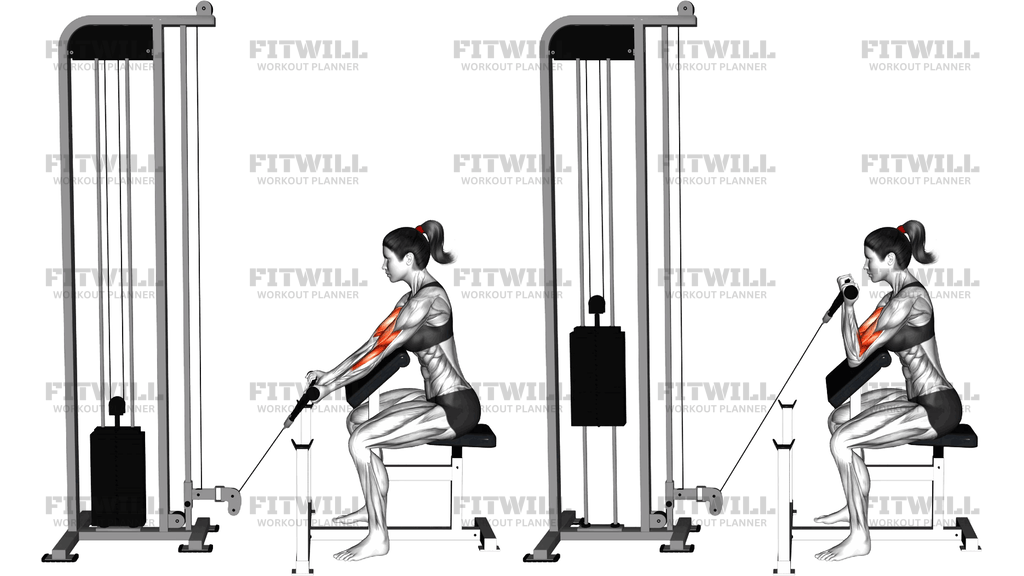
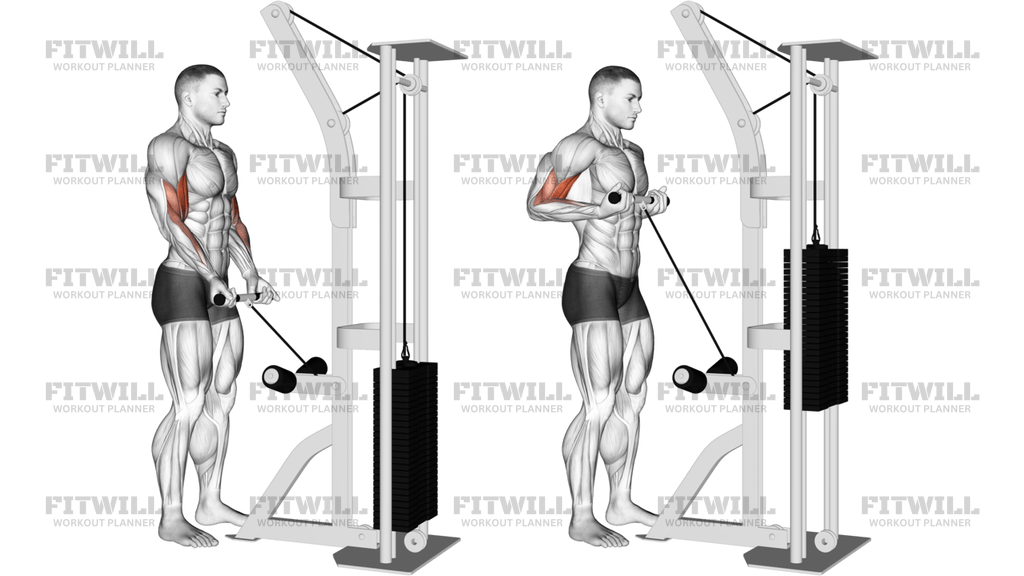
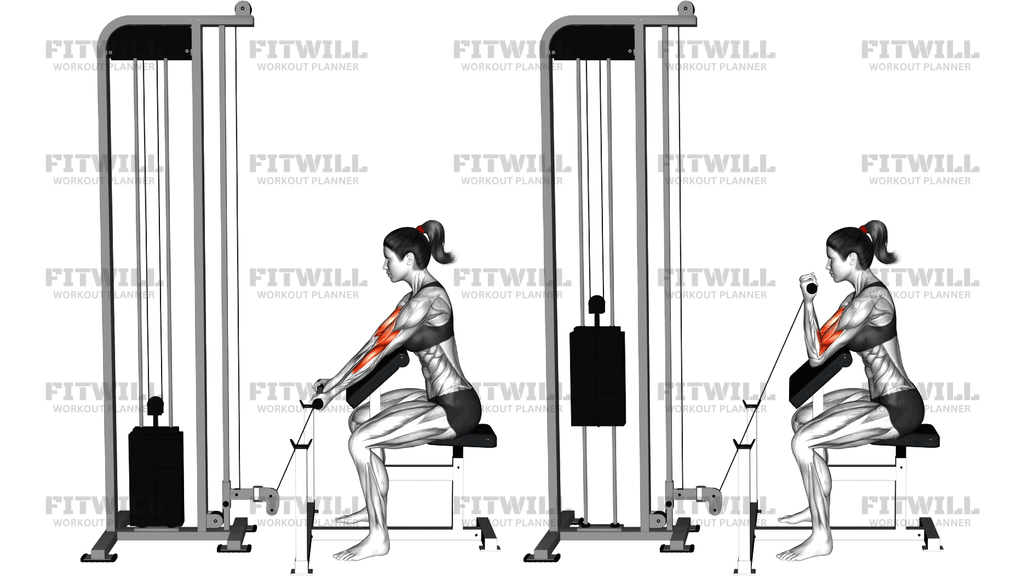
The Cable Preacher Curl is a seated arm exercise that combines a preacher bench with a low pulley on a cable machine. You sit facing the machine, drape your upper arms over the angled preacher pad, and curl a handle attached to the low pulley toward your shoulders. Because the cable pulls from a low point behind the pad, the tension stays on the biceps through the entire range of motion, including the bottom of the rep where a dumbbell curl is often easiest.
This setup is particularly useful for lifters who want strict, isolated biceps work. The preacher pad fixes your upper arms in place, which removes most opportunities to swing, lean, or recruit your shoulders and lower back. That makes it a strong choice for anyone building arm size, for intermediate lifters who have outgrown looser curl variations, and for people who want a constant-resistance alternative to free-weight preacher curls.
The primary muscle at work is the biceps brachii, with the brachialis and brachioradialis assisting and the forearm flexors working to hold the handle. Since the cable provides a backward pull at the top, you also have to actively control the eccentric portion instead of letting gravity do it for you. This smooth, continuous tension is the main reason many coaches favor the cable version of the preacher curl.
Setup matters more here than in most curls. The seat height should place your armpits and the backs of your upper arms firmly on the pad, with your chest supported and your feet flat on the floor. If the pad sits too high or low, your elbows drift and the angle of tension changes, shifting work away from the biceps. Position the bench close enough to the pulley that the cable runs cleanly from the handle to your hands without rubbing the pad or your legs.
To perform the movement well, keep your upper arms glued to the pad and curl by bending only at the elbows. Squeeze at the top, then lower the handle slowly until your arms are nearly straight, stopping just short of locking out so the tension never leaves the biceps. A common use case is as a finishing exercise at the end of an arm or upper-body session, typically for sets of 8 to 15 reps with a moderate weight.
From a safety standpoint, keep your wrists neutral rather than bent back, and never drop the handle forward at the end of a set. The cable will pull your arms back down with force if you let go or lose control, so stay connected to the pad and maintain tension until the set is finished.
[ Workout Log & Planner ]
Put your next workout in Fitwill
Keep your plan and training log ready when you are.


Instructions
- Position a preacher bench in front of a cable machine so the angled pad faces the low pulley, and set the seat so your upper arms rest fully on the pad when seated.
- Attach a short single handle to the low pulley and set the stack to a moderate weight you can control for at least 8 reps.
- Sit down facing the machine, plant both feet flat on the floor, and take the handle with an underhand grip, hands roughly shoulder-width apart.
- Lean forward slightly and rest the backs of your upper arms and armpits on the pad, letting the cable draw your arms down the incline until your elbows are almost straight.
- Brace your core and keep your chest supported on the bench so your torso stays still throughout the set.
- Curl the handle up by bending your elbows, keeping your upper arms in contact with the pad and your wrists straight, until your hands are near shoulder height.
- Pause briefly at the top and squeeze your biceps before beginning the descent.
- Lower the handle slowly and under control back down the pad, stopping just before your elbows fully lock out so the tension stays on the biceps.
- Exhale as you curl up and inhale as you lower the handle back down.
- Complete your reps, then set the handle down on the pad or gently let the cable return before standing up to adjust the weight.
Tips & Tricks
- The most common error is lifting the elbows off the pad as fatigue sets in. Once your upper arms rise, the shoulders take over, so drop the weight rather than breaking contact with the pad.
- Do not fully straighten your elbows at the bottom. Locking out on a preacher curl removes tension and places a stretch load on the joint, so stop just short of full extension.
- Avoid letting the handle drift back toward the pulley at the top. Keep the cable path tight to the pad so the biceps, not the shoulders, finish each rep.
- Keep your wrists in line with your forearms. Bent-back wrists at the top of a cable curl shorten the biceps' working range and strain the forearm flexors.
- Because the cable is strongest at the bottom, use a slower lowering phase than you would with dumbbells. Count two to three seconds down to get the most from the eccentric.
- If your lower back aches, you are probably sitting too far back or lifting your chest off the bench. Move your hips forward so your torso is genuinely supported by the pad.
- Experiment with seat height in small increments. A pad that lets your armpit sit snugly over the top edge will keep the elbow in the correct position better than one that sits too low.
- Do not jerk the first rep off the stack. Take the slack out of the cable before starting, since yanking the weight into motion is a frequent cause of sloppy preacher curl form.
- For a harder squeeze, try a brief pause at the top of each rep instead of adding more weight to the stack.
Frequently Asked Questions
What muscles does the Cable Preacher Curl work?
The biceps brachii is the primary mover, with the brachialis and brachioradialis assisting elbow flexion. The forearm flexors also work isometrically to grip and stabilize the handle throughout each rep.
Why use a cable instead of dumbbells for preacher curls?
A low pulley pulls the handle downward and backward, so the biceps stay loaded even at the top of the curl where a dumbbell would provide little resistance. The cable also makes the eccentric phase a deliberate part of the rep rather than a free drop.
Is the Cable Preacher Curl suitable for beginners?
Yes, provided you start light. The preacher pad restricts cheating, which helps beginners learn what a strict curl feels like, though the stretched bottom position means conservative weights are wise at first.
How should the bench be positioned relative to the cable machine?
Place the pad facing the low pulley and sit close enough that the cable runs straight from the handle to your hands without scraping the pad or your thighs. The seat height should let your upper arms and armpits rest fully on the incline.
Should my elbows stay on the pad the entire time?
Yes. The whole point of the preacher setup is to pin the upper arms so the biceps do the work alone. If your elbows lift, the weight is usually too heavy for clean reps.
What is the most common mistake with this exercise?
Using too much weight and bouncing at the bottom. Because the cable pulls hardest when your arms are extended, swinging into the stretch position shifts stress to the elbow joint and away from the biceps.
Can I use a straight bar or an EZ bar attachment instead of a single handle?
Yes. A straight bar or cambered attachment on the low pulley works the same way, with the EZ bar often being more comfortable for wrists. The form cues stay identical regardless of the attachment.
Where should the Cable Preacher Curl fit in my workout?
It works well as an isolation finisher after compound pulling or pressing, typically for 2 to 4 sets of 8 to 15 reps. Because the pad limits momentum, it is also a good tool for slow-tempo or high-rep burnout sets.
Is it safe to fully straighten my arms at the bottom of the rep?
Stopping just short of lockout is the safer and more productive choice. Full extension under cable tension places the elbow in a stretched, loaded position, so control the descent and reverse before the arm completely straightens.