Cable Preacher Curl (Rope Attachment)
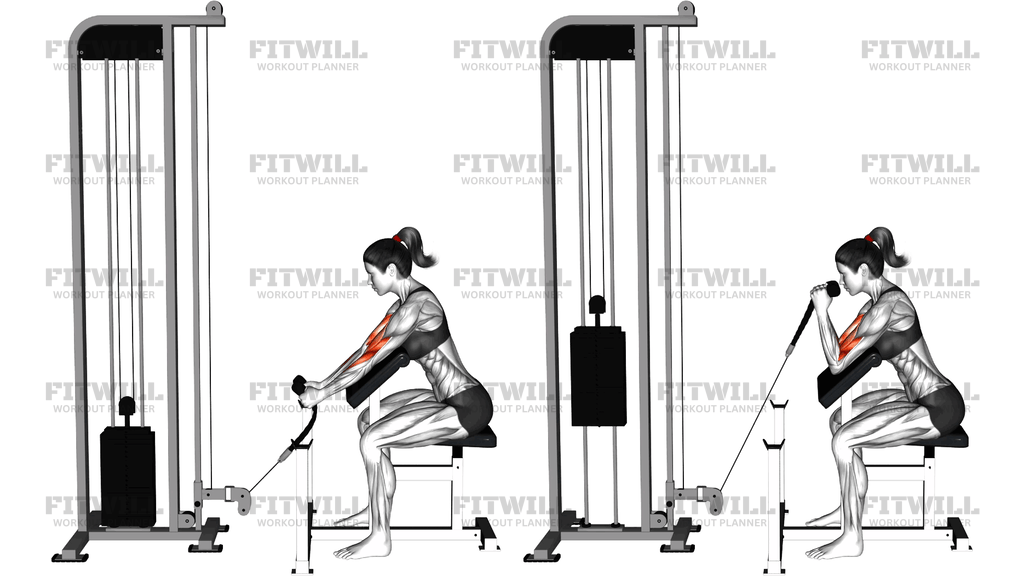
The Cable Preacher Curl with a Rope Attachment is an arm isolation exercise performed seated at a preacher bench with the resistance coming from a low pulley. You sit facing the cable machine, rest the backs of your upper arms on the angled pad, and curl the two ends of the rope up toward your shoulders. Because the cable pulls from a low point in front of you, the tension on the biceps is strongest at the bottom of the movement and stays continuous through the entire range, unlike a dumbbell curl where resistance fades as the arm rises.
This exercise suits anyone who wants focused biceps work with a strict, locked-in arm position. The preacher pad removes the chance to swing your torso or drift your elbows forward, so lifters who tend to cheat on standing curls often get more honest reps here. It is also a good choice for people managing lower back fatigue, since the seated, supported setup puts no demand on the spine.
The main muscles worked are the biceps brachii on the front of the upper arm, with strong contributions from the brachialis underneath and the brachioradialis and forearm flexors in the forearms. The rope grip lets your hands turn slightly outward at the top, which many lifters find allows a fuller, more comfortable contraction than a fixed straight bar. Because the arms are angled in front of the torso on the pad, the biceps are loaded in a stretched position at the bottom, which is demanding and requires lighter weight than a standard curl.
Setup matters more here than in most arm exercises. The seat height should place your armpits and the backs of your arms firmly on the pad with your elbows just past its edge, and the bench should sit close enough to the pulley that the cable does not drag across your thighs or the pad. If your shoulders are shrugging up or your elbows are lifting off the pad, the setup needs adjusting before you add load.
To perform it well, keep the pull controlled, curl until your hands are near shoulder height, and let the rope ends spread slightly apart as you squeeze. Lower slowly until the arms are nearly straight, keeping constant tension rather than letting the stack slam down. Common uses include finishing an arm day, adding strict volume after heavier compound pulls, and breaking through plateaus on standard curls by training the biceps in a stretched, fixed-position setup.
For safety, start lighter than you think you need, since the stretched bottom position magnifies the load on the elbow and shoulder. Avoid bouncing out of the bottom rep and never fully relax the arm while the cable is taut.
[ Workout Log & Planner ]
Put your next workout in Fitwill
Keep your plan and training log ready when you are.


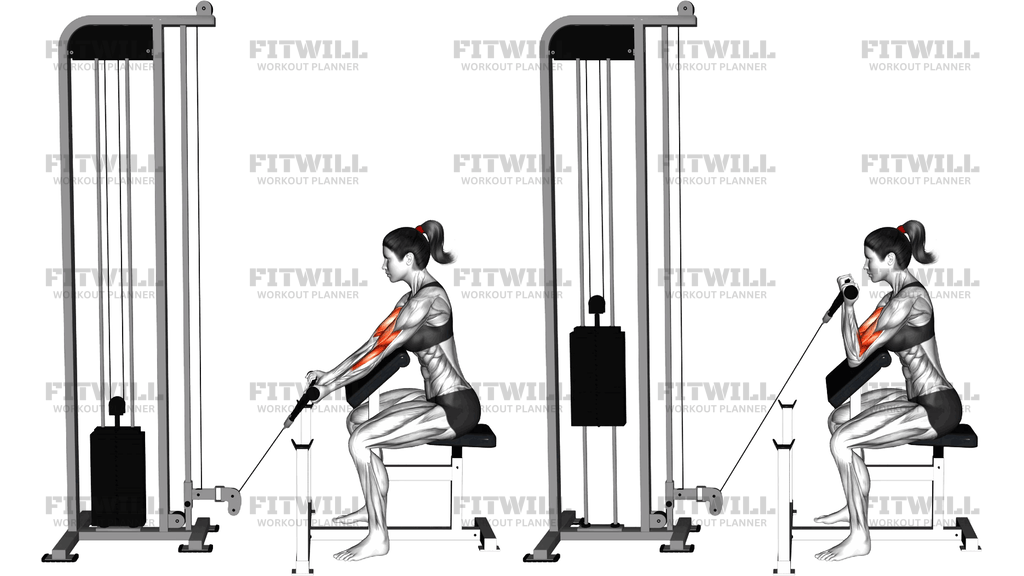
Instructions
- Attach a rope to the low pulley of a cable machine and position a preacher bench so the angled pad faces the pulley.
- Sit on the bench with your chest against the pad's support, feet flat on the floor, and set your upper arms along the angled pad so your elbows sit just past its edge and your arms hang down toward the pulley.
- Grip the two ends of the rope with a neutral grip, palms facing each other, and take up the cable tension before starting your first rep.
- Brace your core lightly, pull your shoulders down away from your ears, and press the backs of your arms into the pad.
- Curl your hands up toward your shoulders by bending at the elbows only, letting the rope ends spread slightly apart as your hands rise.
- Squeeze at the top when your hands are near shoulder height and your biceps are fully contracted, keeping your elbows glued to the pad.
- Lower the rope slowly over two to three seconds until your arms are almost straight, stopping just short of letting the weight stack touch down.
- Exhale as you curl up and inhale as you lower the rope under control.
- Complete your reps, then re-rack the rope gently rather than letting the stack pull your arms straight suddenly.
Tips & Tricks
- Set the seat height so your armpits sit comfortably on the top of the pad; if your shoulders are pushed up toward your ears, you are set too high and will lose range at the bottom.
- The most common mistake is letting the elbows lift off the pad as the weight gets heavy, which turns the exercise into a standing-style swing. If this happens, drop the load by one plate and refocus on pressing the arms down.
- Do not fully lock out and relax at the bottom. Because the low pulley loads the stretched biceps heavily, stopping just short of complete elbow extension keeps tension without straining the joint.
- Let the rope ends rotate outward naturally as you curl instead of forcing a rigid grip; this small supination matches the biceps' function and improves the top-end squeeze.
- If the cable rubs against your thighs or the pad, scoot the bench closer to the machine so the line of pull stays clear.
- Keep your chest in contact with the bench support. Leaning back to help the rope up is a sign the weight is too heavy for strict preacher work.
- Use a slower lowering phase than you would on standing curls; the fixed arm position makes the eccentric especially productive here.
- Alternate which hand leads if you notice one arm fatiguing noticeably faster, and consider single-arm rope curls to correct a side-to-side strength gap.
- Warm up your elbows with a few light partial curls first, since the stretched position at the bottom is unforgiving on cold joints.
Frequently Asked Questions
What muscles does the Cable Preacher Curl with a Rope Attachment work?
The biceps brachii are the primary movers, with the brachialis and brachioradialis assisting and the forearm flexors working to hold the rope. Because the arms are fixed on the pad, almost all of the work is isolated to the elbow flexors.
Why use a rope instead of a straight bar on the preacher curl?
The rope lets each hand move and rotate slightly outward at the top, which allows a stronger squeeze and is often easier on the wrists and elbows than a fixed bar. It also lets you spread your hands for a slightly different contraction angle.
Is the Cable Preacher Curl good for beginners?
Yes, as long as beginners start with light weight, because the locked arm position actually teaches strict form. The main caution is the stretched bottom position, so new lifters should stop short of full elbow extension at first.
Why is the preacher curl harder than a standing curl with the same weight?
The angled pad places the biceps in a lengthened position at the start and removes all momentum from the torso and shoulders. Less weight is normal, and strength built here carries over well to other curl variations.
How do I know if my preacher bench is positioned correctly for this exercise?
Your armpits should rest on top of the pad, elbows just past its edge, with the cable running freely toward the pulley without dragging on your legs. If your shoulders shrug or the cable scrapes the pad, adjust the bench or seat height before loading.
Should my elbows ever leave the pad during the rep?
No. Once the elbows drift off the pad, the exercise becomes a generic curl and the shoulder starts contributing, which defeats the purpose of the setup. Reduce the weight if you cannot keep them planted.
What can I substitute if my gym has no preacher bench?
You can do a seated or standing cable rope curl facing the low pulley, bracing your elbows against your sides, or use a stability ball or incline bench to support your upper arms. The key is fixing the elbow position while the cable provides tension.
How heavy should I go on the Cable Preacher Curl?
Choose a weight you can lower slowly for all reps without your elbows lifting or your chest leaving the pad. Most lifters need noticeably less weight here than on standing curls because of the stretched starting position.
Where should this exercise fit in my arm workout?
It works well as a strict finishing movement after heavier pulling or curling exercises, when you want maximum biceps isolation without lower back or shoulder fatigue. It also pairs nicely with hammer curls to cover the brachialis and forearms.
Is it safe to let the weight stack slam down between reps?
No, dropping into full extension suddenly puts an abrupt load on the elbow at its most vulnerable angle. Keep tension through the whole set and stop each rep just short of the stack touching down.