Lever Single Arm Chest Press (Plate Loaded)
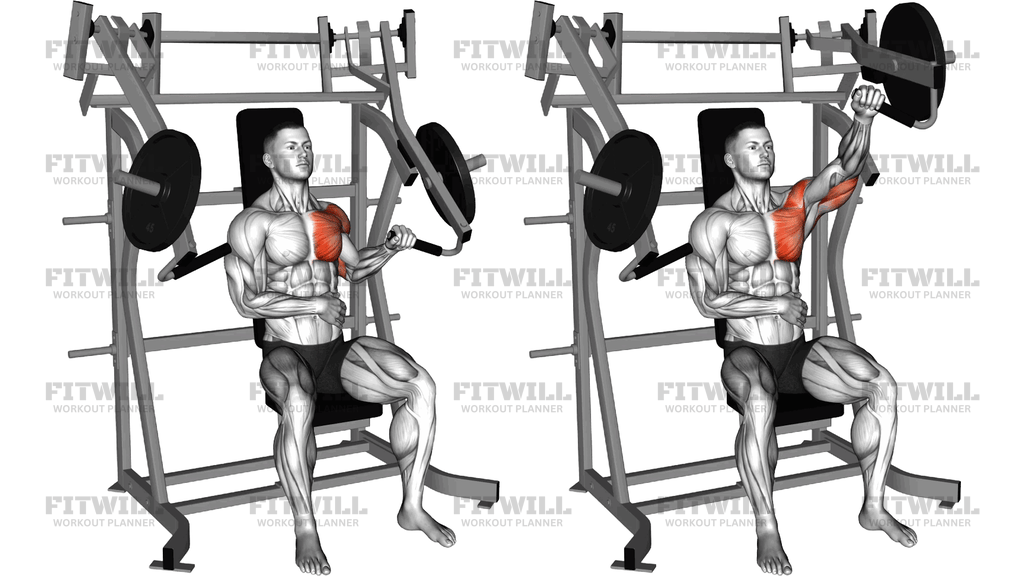
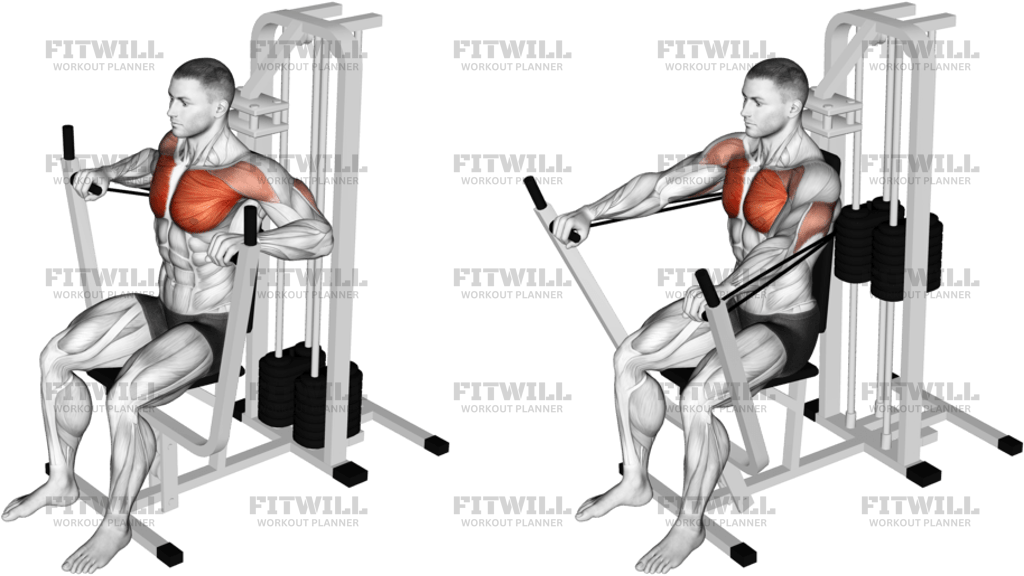
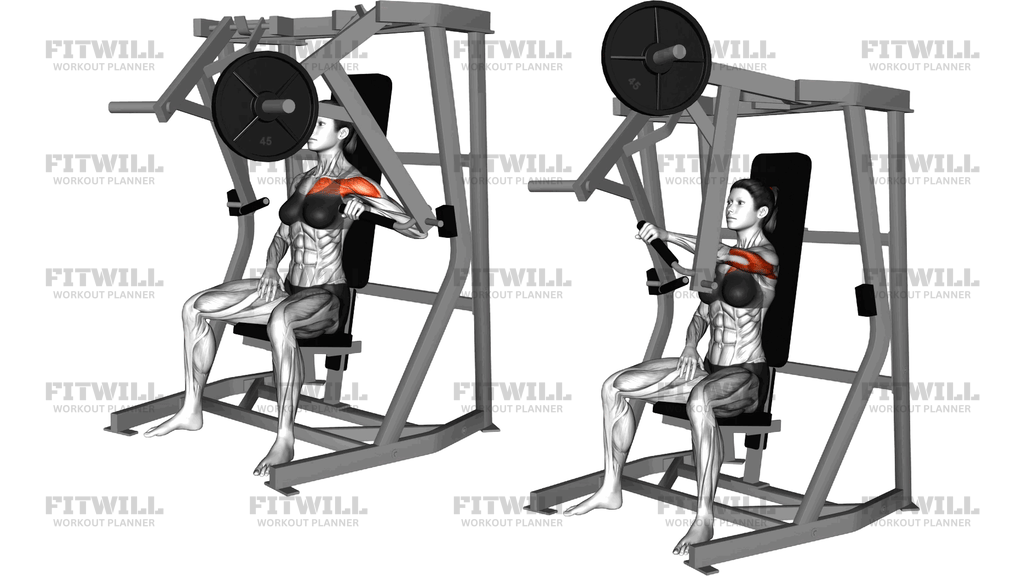
The Lever Single Arm Chest Press (Plate Loaded) is a seated machine exercise performed one side at a time on a plate-loaded leverage machine. You sit upright against a padded backrest with your feet planted on the floor, grip a single handle at chest height, and press it forward and slightly across your body until the arm extends, then control the lever arm back to the start. Plates loaded on the machine's lever arm provide the resistance, and the fixed lever path takes the guesswork out of pressing mechanics.
The primary target is the pectoralis major of the working side, with the front delts assisting through the press and the triceps extending the elbow at the top. Because you train one arm at a time, the stabilizing demand shifts toward the trunk and the non-working side, which quietly works your core and obliques to keep your torso square against the backrest. The seat and back support also remove standing balance from the equation, letting you focus purely on driving through the handle.
This exercise is a strong pick for anyone with side-to-side strength differences. A dominant arm can't hide behind a weaker one the way it can on a barbell or dual-handle machine press, so each side gets honest work at its own capacity. It's also useful late in a chest session when fatigue makes free-weight bar path control sloppy but you still want a heavy pressing stimulus with built-in support.
Setup details matter more than they first appear. Seat height determines where the handle tracks relative to your chest: too high and the movement drifts toward a shoulder press, too low and it starts to feel like a dip. Adjust the seat so the handle lines up with mid-chest when your arm is bent, and keep your head, upper back, and hips in contact with the pad throughout. Your free hand can rest on your thigh or a spare handle for balance, but avoid using it to twist against the load.
Execution comes down to pressing with the chest rather than shrugging with the shoulder. Drive the handle forward while keeping your shoulder blade controlled, extend to a comfortable lockout without jamming the elbow, and pause briefly before lowering under control. Because one arm presses at a time, expect a slight rotational pull through the torso; that's normal, and resisting it is part of the exercise's value.
In practice, you'll see this movement used for unilateral chest development, rehab-friendly pressing on a guided path, and as a machine option when a rack or bench station is busy. Start light to learn the lever's feel, keep both sides even by matching reps to your weaker arm, and progress by adding small plate increments once every rep looks identical from set to set.
[ Workout Log & Planner ]
Put your next workout in Fitwill
Keep your plan and training log ready when you are.


Instructions
- Adjust the seat height so the machine's handle sits level with your mid-chest when your working arm is bent.
- Sit with your back and hips flat against the backrest and plant both feet firmly on the floor about hip-width apart.
- Grip the single handle with a neutral or slightly turned-in palm, elbow bent and tucked close to your ribs; rest your free hand on your thigh or the unused handle.
- Load plates evenly according to your plan and check that the lever arm moves freely before starting.
- Brace your core and keep your shoulders down and back so your torso stays square to the machine.
- Press the handle forward and slightly inward across your body, exhaling as you extend the arm.
- Stop at full but not locked-out elbow extension, with the handle roughly in line with your chest, and squeeze for a beat.
- Inhale as you lower the handle back along the same path until your elbow sits just behind your torso and you feel a mild stretch across the chest.
- Complete all reps on one side, then reposition and match the reps on the other arm.
- After the final rep, guide the lever arm back gently to rest rather than letting it slam against the stack.
Tips & Tricks
- A common mistake is letting the working shoulder ride up toward the ear as the handle moves forward; keep the shoulder blade anchored down so the chest, not the trap, drives the press.
- If your torso rotates toward the non-working side as you press, lighten the load; the twist usually means the weight exceeds what your core can stabilize in this seated position.
- Watch the elbow path: it should travel back and slightly out from the ribs, not flare wide above shoulder line, which shifts work away from the chest.
- Don't let the backside slide forward off the seat during hard reps; wedging your hips back into the corner of the seat keeps your pressing angle consistent.
- Start with your weaker arm and match the reps and weight on the stronger side to close any strength gap over time.
- A brief pause at full extension, rather than bouncing off the machine's stop, makes the triceps do real work at the top of each rep.
- Because the lever arm is asymmetric with plates on one side, control the return with your working arm the whole way; letting gravity pull it down is where most sloppy reps come from.
- If the handle path feels like it's pulling your shoulder forward at the bottom, you're likely seated too low or gripping with the elbow flared; raise the seat slightly and reset.
- Keep your wrist neutral over the handle rather than bent back, especially as the load gets heavier.
Frequently Asked Questions
Which muscles does the Lever Single Arm Chest Press (Plate Loaded) work?
The chest on the working side is the primary mover, with the front delt assisting and the triceps straightening the elbow at lockout. The core works to keep your torso from rotating as one arm presses.
Why press one arm at a time instead of using both handles?
Unilateral pressing exposes and corrects side-to-side strength differences, since your stronger arm can't compensate. It also adds a trunk-stabilizing element that a two-arm press doesn't provide.
Is the Lever Single Arm Chest Press (Plate Loaded) suitable for beginners?
Yes. The fixed lever path and back support make it one of the more forgiving ways to learn pressing, though beginners should start with light plates to learn the seat setup and handle path first.
How high should the seat be set?
Set it so the handle lines up with mid-chest when your arm is bent at the start. If the handle sits at shoulder height or above, you'll turn the movement into more of a shoulder press.
My torso twists when I press. What should I fix?
That usually means the load is too heavy for your core to stabilize or your feet aren't planted. Lighten the weight, brace your abs, press both feet into the floor, and keep your free hand resting on your thigh.
Can I use this exercise if I can't do barbell bench presses?
It's a reasonable substitute when you need supported pressing without a spotter, since the machine guides the path and the backrest stabilizes your torso. It won't replicate free-weight stabilization, but it trains the same pressing muscles.
Should I lock out my elbow at the end of each press?
Extend fully but stop just short of a hard, jammed lockout, especially with heavier plates. A controlled finish with a brief squeeze keeps tension on the chest and is kinder to the elbow joint.
How do I keep both sides progressing evenly?
Start with your weaker arm, and only add weight once that side completes all prescribed reps with clean form. Match the weight and reps exactly on your stronger arm rather than going heavier with it.
Is it safe to let the lever arm drop on the way back?
No. Because the plates sit on an offset lever, letting it fall back uncontrolled jerks the shoulder at the bottom of the range. Lower it under tension until your elbow is just behind your torso.
Where should my non-working arm be during the set?
Rest that hand on your thigh or on the unused handle to help keep your shoulders level. Avoid pushing off the seat or machine frame with it, which would reduce the stabilizing work your trunk is doing.