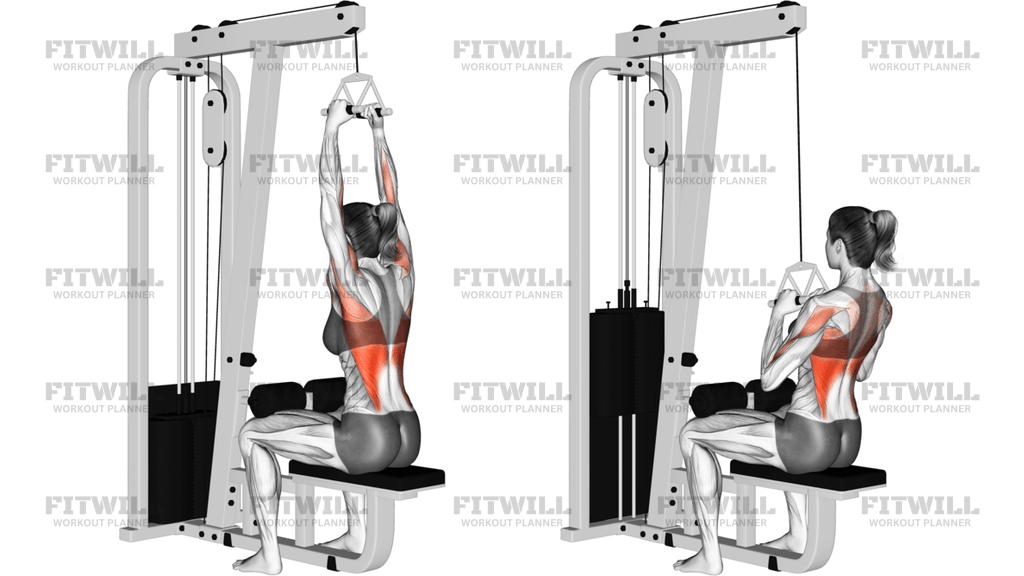
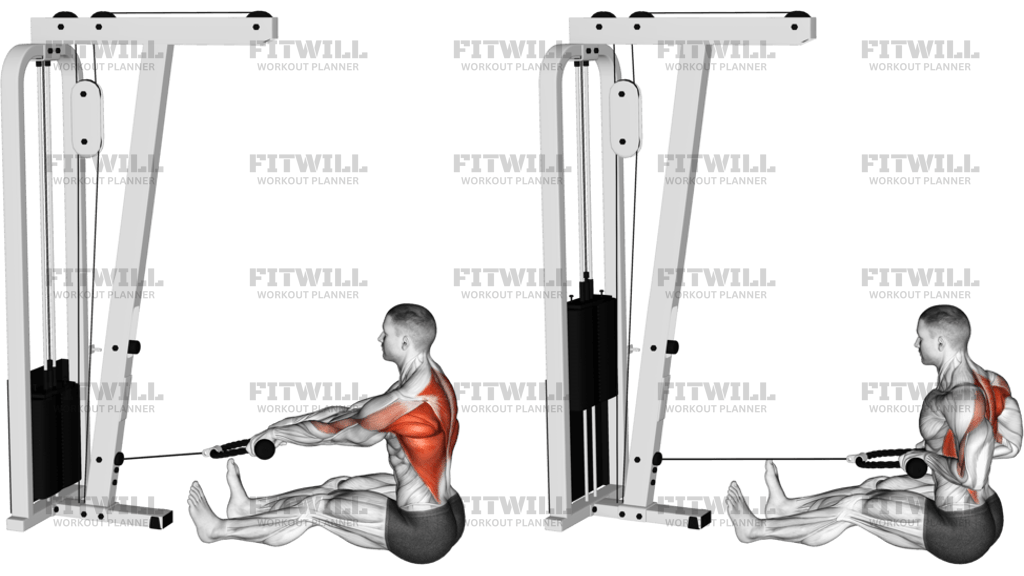
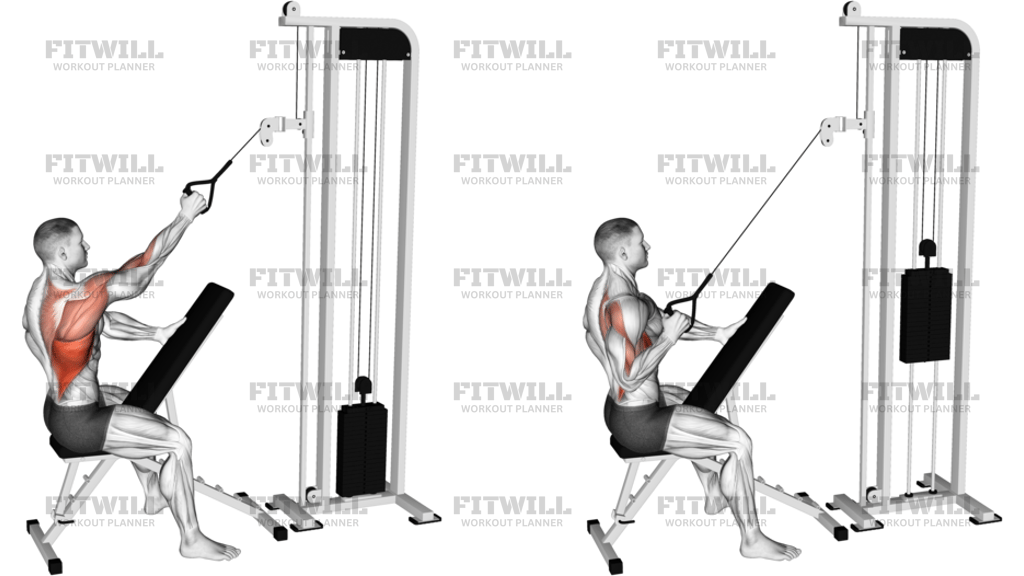
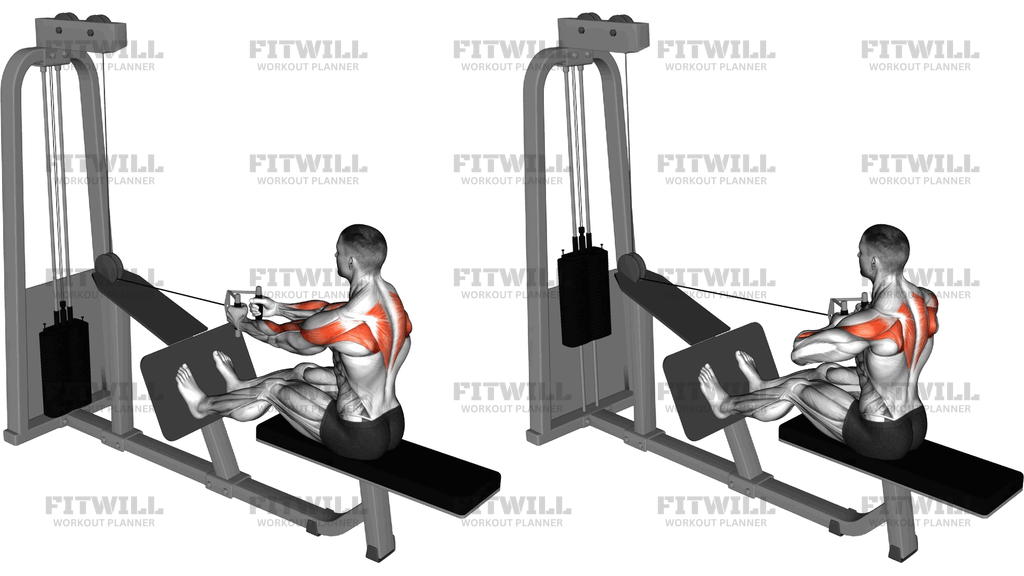
Cable Single Arm High Row
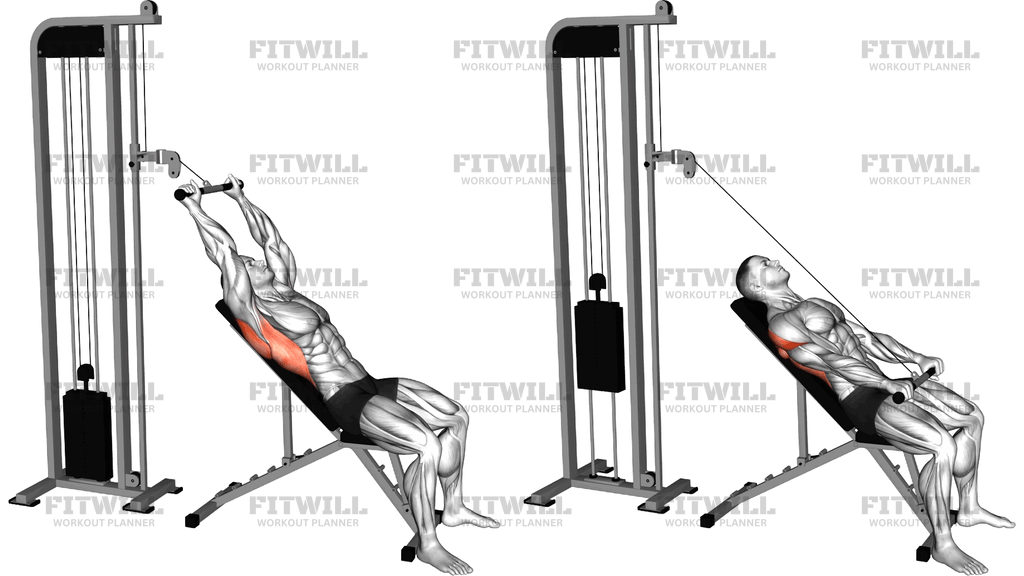
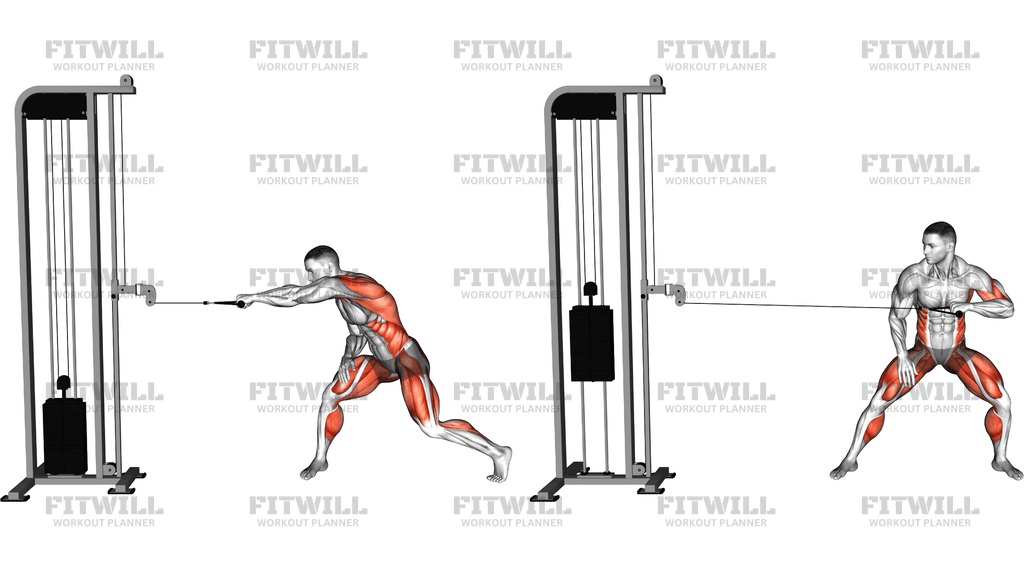
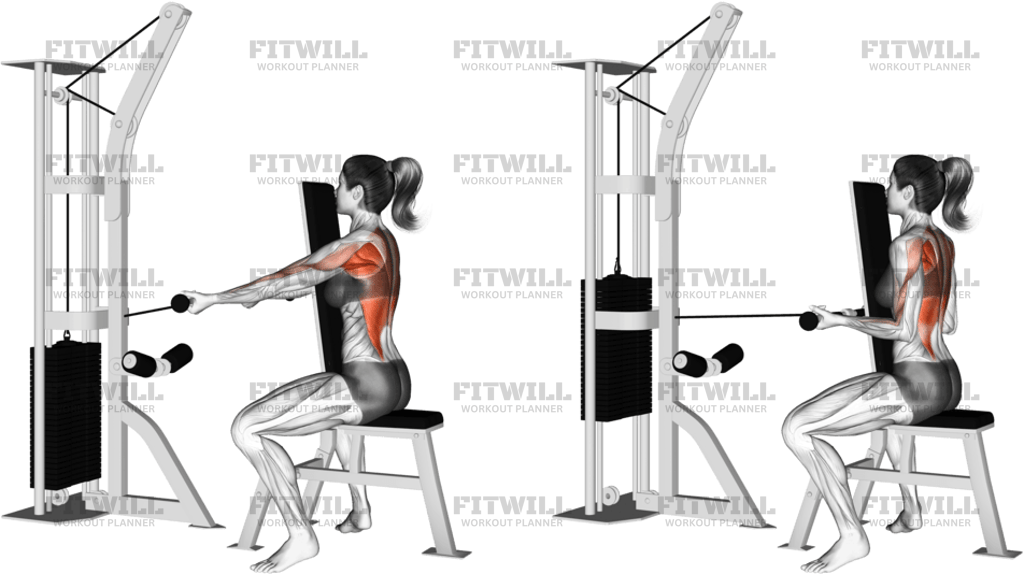
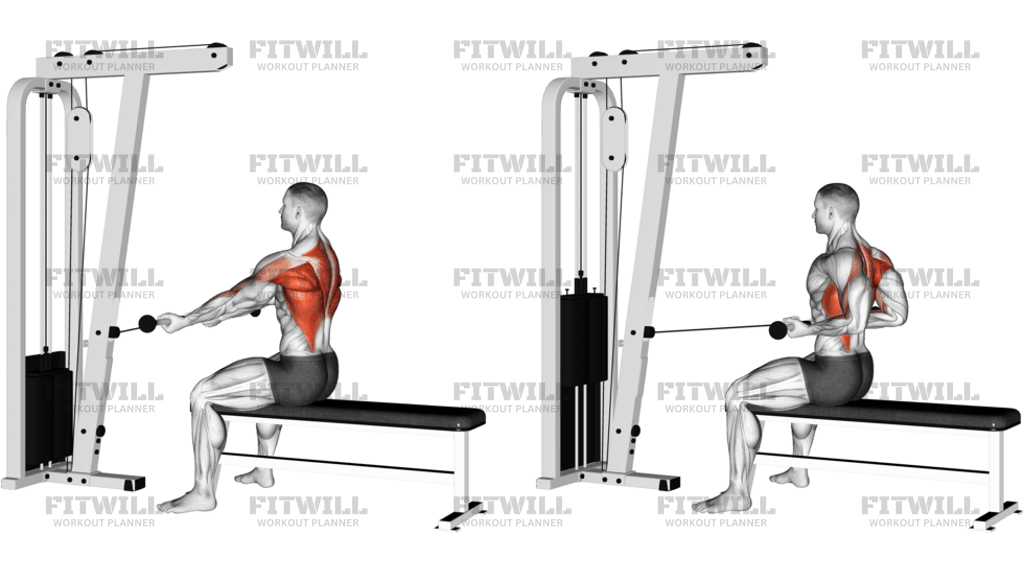
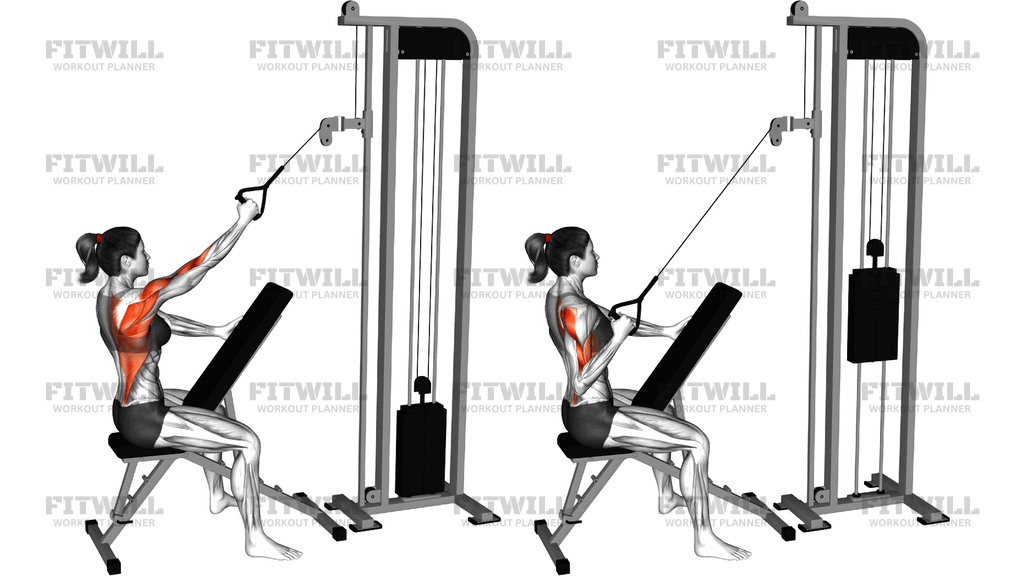
The Cable Single Arm High Row is a seated cable exercise where you pull a single handle from a high pulley down and in toward your torso, one side at a time. You sit sideways on an adjustable bench with your chest tall and feet planted, so the cable travels on a downward diagonal from above shoulder height to your upper abdomen or lower chest. This angled pull sits somewhere between a lat pulldown and a traditional seated row, which makes it a useful way to load both the lats and the upper back in one movement.
Working one arm at a time is the defining feature here. Because the cable loads only one side, you can spot and fix left-to-right strength differences that often stay hidden in two-arm rows. The single handle also frees your shoulder blade to move through a fuller range than a fixed bar allows, letting the muscle stretch at the top and squeeze completely at the bottom. Many lifters find they feel this variation more directly in the working-side back muscles than they ever did with a standard row.
The main work is done by the lats as the arm travels down and back, supported strongly by the rhomboids and mid traps as the shoulder blade retracts near the end of the pull. The rear delt assists the horizontal component, the biceps and forearm flexors handle the elbow bend and grip, and the trunk works to stop the cable from rotating your torso. That anti-rotation demand is modest but real, and it is one reason this exercise carries over well to real-world pulling.
Setup matters more than it looks. The bench needs to be angled and positioned so the cable passes just outside your working shoulder without scraping your body or your head, and your non-working hand should brace against the bench pad to keep your ribcage square. If you sit too close or too far from the machine, the cable angle changes and the pull becomes awkward at either end of the range. Take a moment to get this right before adding weight.
To execute well, start each rep with the arm nearly extended overhead and a slight bend in the elbow. Lead the pull with the elbow, driving it down and back past your ribs while the handle tracks toward your torso, then pause with the shoulder blade pulled back before letting the arm travel back up under control. Keep your torso still throughout; if the weight is heavy enough to require leaning and twisting, it is too heavy for this setup.
This movement fits well as a main back exercise on its own, particularly for lifters without a dedicated row machine, or as an accessory after heavier rows or pulldowns. It is also a common choice in rehab-friendly and general strength programs because the cable provides smooth tension and the single-arm setup encourages balanced development on both sides.
[ Workout Log & Planner ]
Put your next workout in Fitwill
Keep your plan and training log ready when you are.


Instructions
- Set an adjustable bench to a moderate incline and place it sideways next to a cable machine, close enough that a single handle attached to the high pulley sits just outside your working shoulder.
- Attach a single handle to the high pulley, select your weight, and sit on the bench facing the stack with your feet flat on the floor and your bracing hand resting on the top of the bench pad.
- Grip the handle with your working hand using a neutral palm-facing-in grip and let the cable draw your arm up and out until it is nearly extended above shoulder height.
- Sit tall with your chest up and brace your trunk lightly so your ribcage does not flare as you pull.
- Pull the handle down and in toward your upper abdomen or lower chest by driving your elbow down and back, keeping the elbow close to your ribs rather than flaring it wide.
- At the end of the pull, squeeze your shoulder blade back and down and hold for a brief pause while your hand finishes near your torso.
- Reverse the movement slowly, letting the arm travel back up to the extended start position while your shoulder blade rotates forward and the lat lengthens.
- Exhale as you pull down, inhale as you return, and keep breathing steadily through the set.
- Complete all repetitions on one side, then reposition or switch the handle to the other hand and match the reps on the second side.
- Reset your seated posture, bracing hand, and foot position between sets so each side starts from the same position.
Tips & Tricks
- The most common error is turning this into a torso twist: as fatigue builds, the trunk rotates toward the cable to cheat the handle down. Watch that your chest stays facing the stack on every rep.
- Do not let the shoulder shrug up toward your ear as you pull. If your upper trap is doing the work, lower the weight and think about driving the elbow toward your hip instead.
- Stopping the pull too early shortchanges the upper back. Take the handle all the way in so your hand finishes beside your torso and the shoulder blade is fully retracted.
- Avoid locking the elbow out hard at the top. Keep a soft bend so the tension stays in the back muscles and the elbow joint is not loaded at the extreme of the range.
- Let the arm rise fully on the return before starting the next rep. Half-range reps from a half-extended position turn the set into a short, bicep-heavy pull.
- If the cable drags across your forearm or head, adjust the bench distance rather than changing your arm path; the cable should run just outside the working shoulder.
- Keep the bracing hand as an actual anchor, not a prop to lean into. Pushing hard against the bench pad to lever the weight up takes work away from the target muscles.
- Choose a load you can control on the way back up. The eccentric portion of this exercise is where most people lose position, and dropping the arm quickly releases tension entirely.
- Match reps and weight exactly between sides, and always start with your weaker arm so both sides get the same total work.
Frequently Asked Questions
What muscles does the Cable Single Arm High Row work?
The lats do the main pulling, with strong contributions from the rhomboids and mid traps as the shoulder blade retracts. The rear delts, biceps, and forearms assist, and your trunk works to keep you from rotating toward the cable.
Why is this done from a high pulley instead of a low one?
The high pulley creates a downward diagonal pull that blends the paths of a pulldown and a row, loading the lats and the upper back together. It also lets the arm start in an extended overhead position for a longer stretch at the top.
Is the Cable Single Arm High Row suitable for beginners?
Yes, provided you start light and learn to keep the torso still. The single-arm setup actually helps beginners because it makes side-to-side differences obvious and the cable path is smooth and easy to control.
How should I position the bench for this exercise?
Set the bench at a moderate incline, place it sideways facing the machine, and sit close enough that the cable runs just outside your working shoulder. Your non-working hand should reach the bench pad comfortably for bracing, and both feet should stay flat on the floor.
Why do I feel my biceps more than my back during this row?
This usually means the elbow is bending first and the shoulder is not driving the handle down and back. Cue yourself to lead with the elbow toward your hip, and consider using a looser grip or a lifting strap if your grip keeps failing early.
What can I use instead if my gym has no adjustable bench near a cable machine?
A standing or half-kneeling single-arm high cable row works with just the handle and pulley, or you can substitute a single-arm dumbbell row supported on a bench. Both hit similar pulling muscles, though the cable version keeps tension more constant.
Should both sides get the same weight and reps?
Yes. Always start with your weaker or less coordinated side, then match that side's weight and repetitions on the stronger side so the imbalance does not widen over time.
Can I do this exercise if my lower back bothers me with barbell rows?
Often yes, because the seated position with a bracing hand removes much of the spinal loading and support demand of bent-over rowing. Still, choose a comfortable weight and stop if the position provokes discomfort.
How does the Cable Single Arm High Row differ from a regular seated cable row?
A regular row uses both arms on a bar with a mostly horizontal pull, while this version pulls one arm on a downward diagonal from a high pulley. That angle biases the lats more, allows a bigger stretch at the top, and exposes any strength gap between your two sides.
How many sets and reps should I use?
Two to four sets of 8 to 12 reps per side works well for muscle building, while 10 to 15 reps at a lighter load suits those focusing on control and positioning. Keep the last rep of each set clean, since twisting to finish a rep defeats the purpose of the single-arm setup.