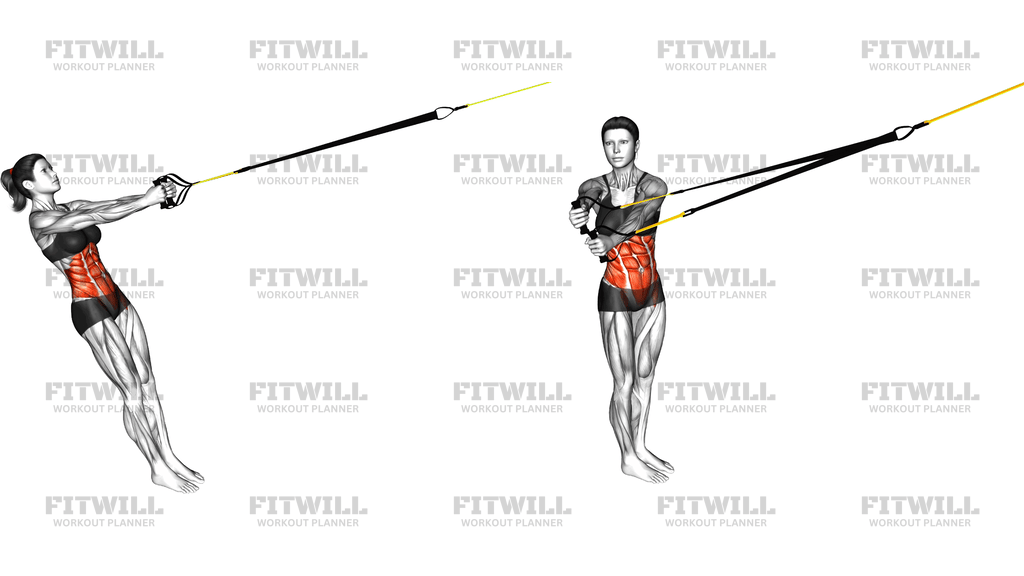
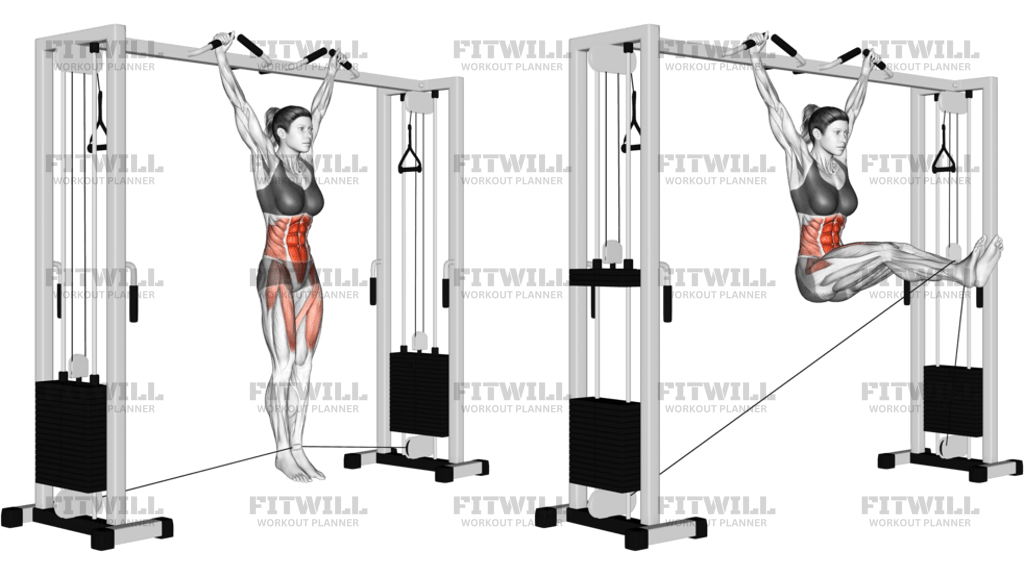
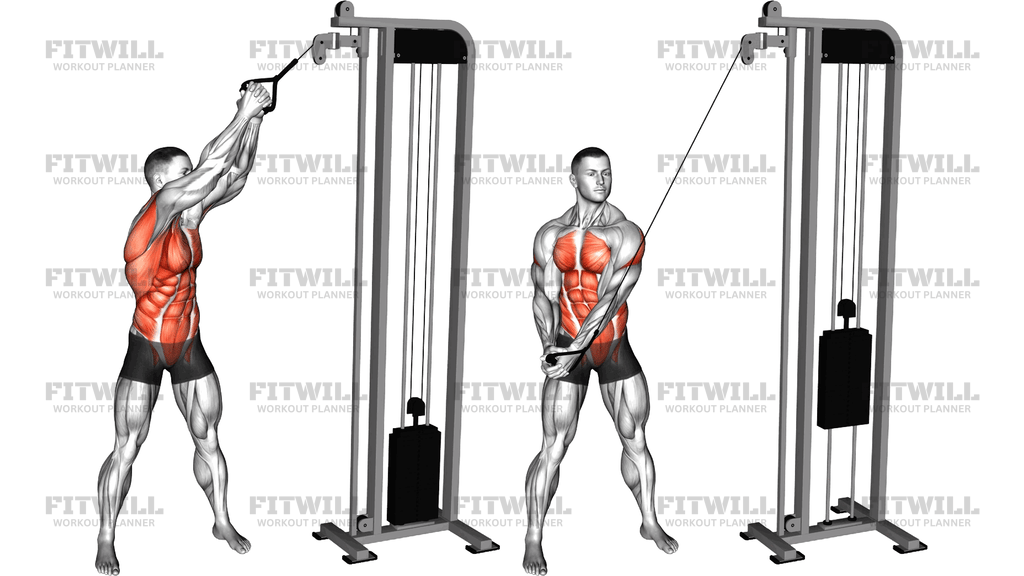
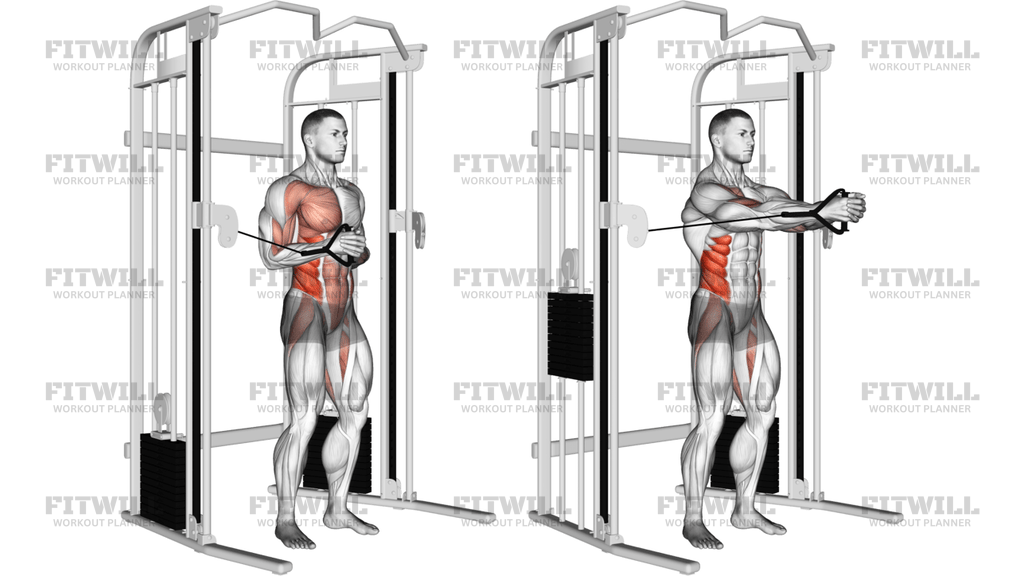
Cable Rotary Pull
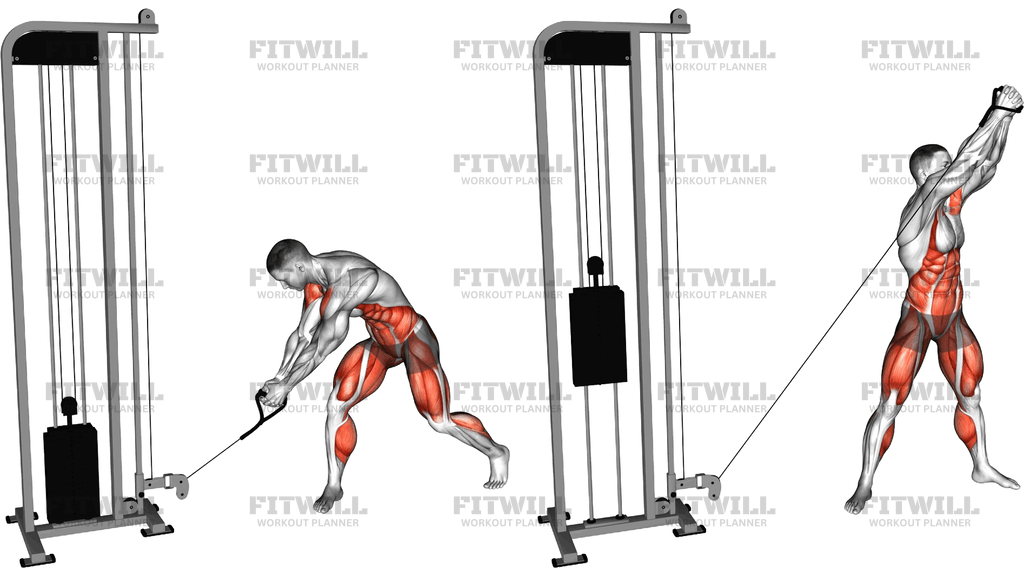
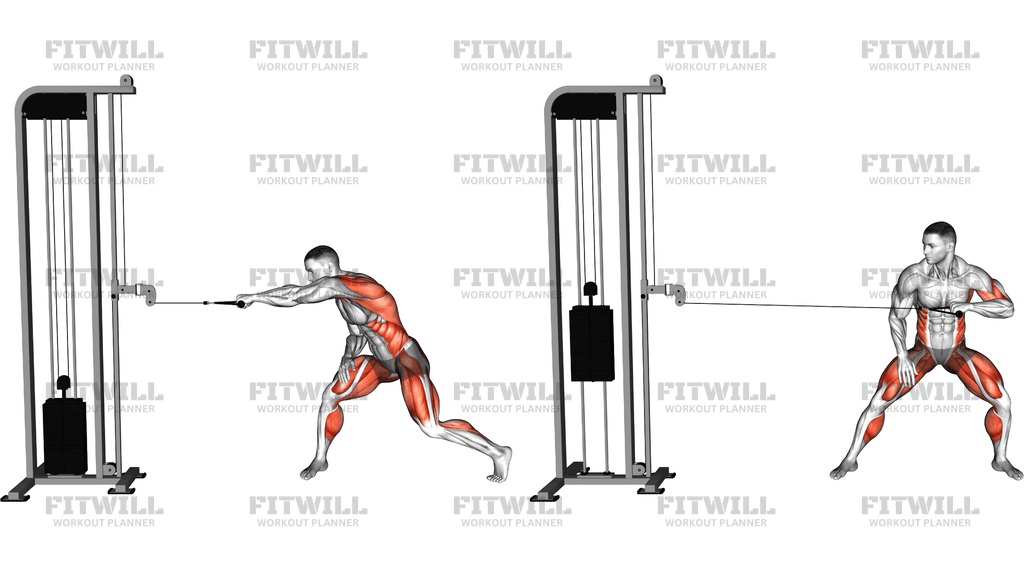
The Cable Rotary Pull is a rotational pulling exercise performed at a cable stack with a single handle set at roughly chest height. You stand side-on to the machine, reach across your body to grip the handle, and then pull it back toward your torso while rotating your trunk away from the machine. The result is a movement that blends a horizontal row with a controlled trunk rotation, so the obliques do much of the work while the lats, rear shoulders, and upper back handle the pulling portion.
This exercise is especially useful for anyone who needs rotational strength that carries into sport or daily life. Swinging a bat, throwing, changing direction, or simply turning to grab something behind you all rely on the same pattern of force moving from the hips through a rotating torso into the hands. Traditional rows and presses train pushing and pulling along straight lines, but they leave the twisting element untouched. The Cable Rotary Pull fills that gap with a smooth, adjustable resistance that a band or free weight often cannot match.
The setup matters because the cable keeps constant tension throughout the arc, and your body position determines where that tension goes. A staggered or wide stance with a slight knee bend gives you a stable base, and holding the lower body still forces the rotation to come from the trunk and hips rather than from drifting or swaying. If your stance is too narrow or too loose, you will find yourself leaning back and muscling the weight with your arms instead of rotating through the midsection.
To execute it well, start with your arm extended toward the machine and your shoulders turned slightly toward the stack. Pull the handle in an arc toward the side of your torso, letting your hips and shoulders rotate together while the cable stays level. Your hand should finish near your ribs or chest, with your elbow driving back rather than flaring up. Pause briefly at the end of the turn, then resist the cable as it pulls you back to the start, keeping the same controlled path. That return phase is where most of the oblique work actually happens, so do not rush it.
A common use case is pairing one or two sets per side at the end of a back or core session, or using lighter loads as part of a warm-up for rotational sports. Because each side works independently, it also helps you spot and correct left-to-right differences in strength and control. Keep the load moderate at first; this is a movement built on hip and trunk control, and a weight that is too heavy shows up immediately as jerking, shrugging, or a loss of footing.
[ Workout Log & Planner ]
Put your next workout in Fitwill
Keep your plan and training log ready when you are.


Instructions
- Attach a single handle to a cable pulley set at approximately chest height and select a light starting weight.
- Stand side-on to the machine, about an arm's length away, with your feet wider than shoulder width or in a comfortable staggered stance.
- Reach across your body with the far hand, grip the handle, and allow your shoulders and torso to rotate toward the stack so the cable pulls slightly across your front.
- Bend your knees slightly, brace your abdominal muscles, and keep your head and chest facing forward as your torso turns.
- Pull the handle in a smooth arc back toward the side of your ribs, rotating your trunk away from the machine and pivoting your back foot and hip with the turn.
- Finish with the handle beside your chest or waist, your shoulders square in the new direction, and your elbow tucked close to your torso.
- Hold the end position for a second, feeling the contraction through the obliques on the working side.
- Slowly resist the cable as it draws your arm and torso back to the starting position, controlling the rotation the whole way instead of letting the weight snap you around.
- Exhale as you pull and rotate, inhale during the controlled return.
- Complete all repetitions on one side, then switch sides so your opposite hand leads the pull.
Tips & Tricks
- Rotate from the hips first, not the arms. If your feet stay glued and your hand does all the traveling, your obliques are barely involved and your shoulder takes the strain.
- Watch for the cable rising or dropping during the pull. A level cable path means the pulley height matches your setup; adjust the pulley rather than compensating with your posture.
- Do not let the weight stack slam down on the return. Free-spinning back to the start is the most common mistake with this exercise and removes the hardest part of the movement.
- Keep the pulling elbow tracking behind you at roughly rib height. If it flares up toward your shoulder, the rear delts and traps take over the rotation.
- Grip the handle firmly but stay relaxed through the forearm and neck. Excess grip tension tends to travel up into the shoulder and disrupt the rotation.
- If you lose balance at the end of the turn, widen your stance or shorten the range slightly before reducing the load.
- Start with your torso rotated toward the machine rather than squaring up first, so the cable stretches across your body and the rotation has room to travel.
- Match reps and load exactly on both sides. Most people have a stronger rotational side, and letting the weaker side set the standard keeps imbalances from growing.
Frequently Asked Questions
Which muscles does the Cable Rotary Pull work?
The obliques are the primary movers because they drive the trunk rotation. The lats, rear shoulders, and biceps handle the pulling, while the glutes and deep core stabilize your lower body as you pivot.
How high should I set the pulley for the Cable Rotary Pull?
Set it at roughly chest or mid-torso height so the cable stays level as you pull. If the cable rises or drops during the movement, the pulley is out of position and the resistance angle will feel awkward.
Is the Cable Rotary Pull suitable for beginners?
Yes, as long as beginners start with a light load and focus on the rotation coming from the hips and trunk. It is actually a good early introduction to rotational training because the cable guides the path and gives feedback.
Should I use a staggered stance or a wide parallel stance?
Either works. A staggered stance feels more sport-specific and allows a fuller hip turn, while a wide parallel stance offers more lateral stability. Choose the one where you can rotate without your heels lifting or your balance wavering.
Why do I feel the Cable Rotary Pull mostly in my arms instead of my core?
This usually means your feet and hips are not rotating and your arm is doing the arc alone. Deliberately pivot your back foot and turn your whole torso toward the finish position so the trunk leads and the arm follows.
What can I substitute if my gym has no cable machine?
A resistance band anchored at chest height is the closest replacement, though the tension drops at the start of the pull. Band chops or landmine rotations are reasonable alternatives that train a similar twisting pattern.
How heavy should I go on the Cable Rotary Pull?
Stay moderate. The moment you have to jerk the handle, lean back, or lose your footing, the weight has outpaced your control, and the rotational benefit disappears. Build the load only when the full arc stays smooth both ways.
Is this exercise safe for people with lower back issues?
Repeated loaded trunk rotation is not appropriate for everyone, so anyone with a history of lower back problems should get clearance from a qualified professional first. When cleared, keep the range short, the load light, and the rotation driven by the hips rather than a rounded spine.
How do I breathe during the Cable Rotary Pull?
Exhale as you pull and rotate into the end position, then inhale as you control the cable back to the start. Holding your breath through the turn is common at heavier loads but makes the rotation stiffer and less controlled.